The Quiet Professional: Why Seasoned B2B Executives Are Flocking to Low-Growth Tech Giants

The executive landscape across the technology sector is undergoing a quiet, structural transformation. For years, the gold standard for top-tier B2B leadership—chief revenue officers, chief marketing officers, vice presidents of customer success, and heads of product—was tied to hyper-growth startups. Executives chased the adrenaline of triple-digit growth, venture capital influxes, and the elusive promise of the next massive initial public offering. However, as the macroeconomic environment matured and the technological paradigm shifted drastically with the arrival of the artificial intelligence boom, a counter-trend has emerged. A growing cohort of seasoned executives is intentionally stepping away from the chaotic 996 work culture of early-stage, high-burn startups to join mature technology companies and unicorns that are growing at a modest pace of zero to ten percent.
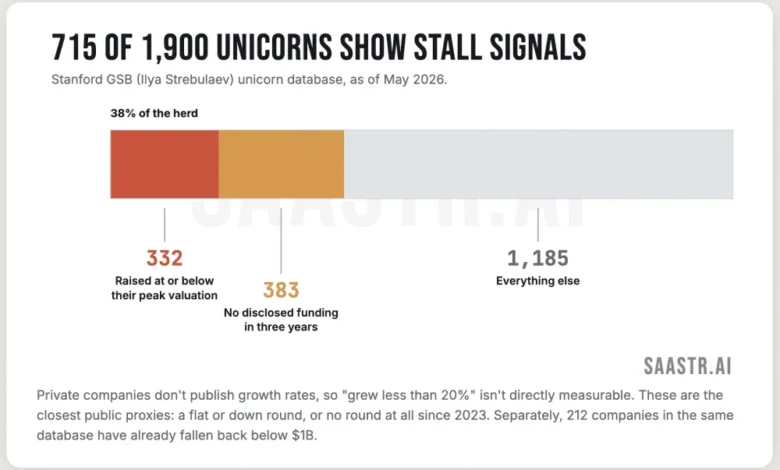
This movement, once a private strategy for leaders seeking a better work-life balance, has materialized into a distinct, viable career option. While it may initially sound counterintuitive for a high-performing corporate leader to seek out a stagnating or flatlining organization, the mechanics of maintaining a multibillion-dollar footprint reveal a different reality. The technology ecosystem is currently populated by a vast number of private, high-valuation enterprises commonly referred to as unicorns. According to market trackers such as the Hurun Global Unicorn Index, CB Insights, and Eqvista, the global count of unicorns hovers between 1,400 and 1,700 companies. A significant portion of these entities achieved their lofty valuations during the venture capital frenzy of 2021 and 2022. Today, many of those companies are no longer expanding rapidly, yet they are far from failing. They are stable, cash flow positive, and navigating a steady, incremental growth bracket of zero to ten percent.
The Anatomy of Zero Percent Growth
Maintaining a flat growth rate in a mature, mid-to-large-scale enterprise is far from passive management; it requires rigorous, active strategic execution. To understand the operational weight of this mandate, industry analysts point to the mathematics of enterprise churn. Consider a business generating $150 million in annual recurring revenue (ARR) with a standard gross revenue retention rate of 88 percent. Under this operational model, approximately $18 million of ARR quietly walks out the door every single year due to customer churn, account downgrades, seat contractions, client acquisitions, or the departure of an internal corporate champion.
To achieve a flat net growth rate of zero percent under those conditions, the corporate sales and account management teams must successfully close $18 million in brand-new and expansion ARR just to stand still. Assuming an average enterprise deal size of $150,000, that requires capturing 120 new corporate logos annually alongside a robust, functioning expansion motion. Sustaining this output necessitates a fully staffed sales organization consisting of 30 to 50 quota-carrying representatives, a comprehensive marketing and lead-generation funnel, a dedicated sales engineering team, and a customer success apparatus fighting continuously for every renewal and upsell. Furthermore, it requires a responsive product organization capable of shipping continuous updates to prevent customer dissatisfaction from boiling over during contract renewal cycles. Consequently, these low-growth tech giants continue to demand elite talent across all executive leadership pillars.
The Clash of Eras: Traditional Playbooks Versus AI-Native Chaos
The division between modern career tracks largely boils down to the utility of historical experience. At an AI-native company experiencing hyper-growth rates of 300 to 1,000 percent or more, conventional wisdom is frequently discarded. Nearly every foundational pillar established between 2012 and 2022 faces constant scrutiny. Corporate boards and founders debate compensation plans, the viability of traditional sales development representative (SDR) models, innovative pricing units, and whether human-led product demonstrations are obsolete. The overarching pressure to master agentic workflows, product-led growth paradigms, and relentless technological disruption can create an exhausting environment for leadership.
Conversely, at a mature $150 million ARR company growing at three percent, the operational prescription looks markedly different. The executive toolkit required to succeed in these environments relies heavily on the pre-AI corporate playbook—territory design, strict pipeline coverage ratios, rigorous win/loss analysis, functional sales enablement, and tactical pricing adjustments. Leaders focus on fixing localized bottlenecks, such as resolving onboarding gaps that trigger month-eleven churn, or tightening the ideal customer profile to prevent sales teams from targeting accounts with low renewal probability. For an executive with fifteen years of enterprise sales and marketing experience, these challenges can be diagnosed and addressed immediately, without requiring them to reinvent their core professional capabilities from scratch.

Financial Realities and Cash Compensation Incentives
Beyond day-to-day operational stress, the financial structures of mature, low-growth companies offer distinct advantages that appeal to risk-adjusted executive preferences. Early-stage AI startups operating at an $8 million ARR with hyper-growth targets often compensate leadership with modest base salaries, high-risk equity packages, and grueling workloads. In contrast, a mature company generating $150 million or more in revenue frequently operates at or near cash flow breakeven, particularly following structural cost-cutting initiatives executed in preceding fiscal years.
Because these organizations generate substantial, predictable revenues, they possess the financial liquidity to offer competitive cash compensation. For vice-presidential and C-suite hires, the baseline salary and bonus structures often outpace what early-stage startups can afford. Additionally, these companies offer established corporate infrastructure, including robust operating budgets for subordinate teams, extensive customer reference lists, and recognizable brand equity within their respective market sectors. Incoming executives are not required to spend their initial quarters explaining their organizational identity to skeptical prospects; instead, their primary objective is to optimize existing pipelines and guide the company from a six percent growth rate to eleven percent—a challenging yet achievable task for seasoned leadership.
Strategic Diligence and the Risk of the Downward Spiral
Despite the operational stability associated with flat growth, market analysts and executive recruiters issue strict warnings regarding corporate diligence. A company categorized as flat is often dangerously close to a downward trajectory. In the context of corporate restructuring, entering a "down" phase introduces an entirely different set of operational realities, including workforce reductions, private equity intervention, asset sales, and executive teams spending their tenures trapped in data rooms rather than engaging with customers.
Consequently, prospective executives must thoroughly evaluate the underlying financial health, debt obligations, and board dynamics of a low-growth organization before accepting a role. The margin for error is narrow; misjudging the true momentum of a flat company can quickly entangle a leader in a turnaround scenario they never signed up to manage.
Implications for the Future of Executive Leadership
The rising preference for employment within low-growth, cash-flow-positive technology companies reflects a broader maturation of the tech sector workforce. Not every veteran executive desires to participate in late-night Slack debates regarding autonomous AI agents or navigate the perpetual anxiety of hyper-growth metrics. Many leaders prioritize personal sustainability, family commitments, or a preference for structured, predictable work hours over the relentless disruption of the modern startup ecosystem.
For these professionals, joining a stable mid-market or enterprise-level firm with a clear, established playbook represents a rational career choice. It offers an opportunity to deploy proven expertise within a reliable structure, supported by adequate resources and fair financial compensation. As the technology sector continues to segment between high-velocity AI pioneers and foundational enterprise software anchors, the role of the steady-handed, traditional executive will remain a cornerstone of corporate resilience.
Related posts: