Leveling Up the Mind: How Competitive Multiplayer Gaming Cultivates Adaptive Problem-Solving Skills

The intersection of cognitive psychology and digital entertainment has long been a subject of intense academic scrutiny, particularly regarding whether the rapid-fire decision-making required in competitive multiplayer gaming translates into real-world adaptability. While the debate persists, emerging evidence suggests that the value of video games may lie not in innate intelligence gains, but in the cultivation of a "growth mindset"—a psychological framework defined by the belief that abilities can be developed through dedication, strategic failure, and continuous iteration. This process, often practiced subconsciously by millions of players, mirrors the iterative cycles of lean startup methodologies and continuous improvement strategies found in high-performance professional environments.
The Evolution of Growth Mindset Theory
The concept of the growth mindset, popularized by Stanford psychologist Carol Dweck, posits that individuals who view intelligence as a malleable trait are more likely to persevere through setbacks compared to those who view intelligence as a fixed, finite resource. In her seminal research, Dweck observed that students who focused on the process of learning—rather than the validation of their status—exhibited greater resilience when faced with academic difficulty.
This paradigm shifted significantly when Sal Khan, founder of Khan Academy, expanded the discourse by emphasizing that difficulty should be treated as data rather than a verdict. Khan argues that the traditional educational system often penalizes students for failing early, whereas mastery-based learning rewards the correction of errors. In the context of modern competitive gaming, this "mastery-based" loop is the fundamental mechanic of play. Players are forced to reconcile their performance against human opponents, where static strategies are quickly neutralized, necessitating a rapid shift in approach.
Chronology of Cognitive Gaming Research
The investigation into the cognitive benefits of gaming has evolved through distinct phases over the past two decades.
- 2003–2008 (The Recognition Phase): Early studies, such as those conducted by Daphne Bavelier at the University of Rochester, began to identify links between action-oriented video games and improvements in visual attention and spatial cognition. Researchers observed that gamers could process visual information faster than non-gamers.
- 2010–2015 (The Nuance Phase): As research matured, the focus shifted from "gaming makes you smarter" to "gaming influences specific neural pathways." Meta-analyses during this period began to warn against overgeneralization, noting that the benefits were highly context-dependent.
- 2019–Present (The Integrative Phase): Contemporary research, including large-scale longitudinal studies published in Nature, has sought to reconcile previous findings. The current consensus suggests that while "brain training" games often show limited transferability to real-world tasks, complex multiplayer environments offer high-fidelity practice in executive function, stress management, and iterative learning.
The Feedback Loop: Mechanics of Adaptive Learning
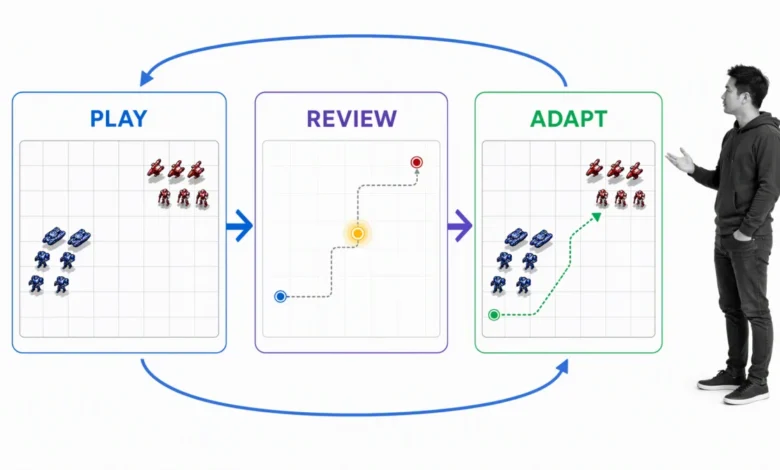
In titles like Counter-Strike or StarCraft, the player engages in a rigorous cycle: formulate a strategy, execute, face immediate opposition, observe the outcome, and adapt. This cycle is distinct from traditional learning in its speed. In a typical match lasting only a few minutes, a player may encounter dozens of "failure events"—being eliminated, losing a map, or misjudging an opponent’s maneuver.
This environment acts as a low-stakes simulator for high-stakes decision-making. When a player is eliminated, the feedback is binary and immediate. The player is then forced to perform a post-mortem analysis: Was the failure due to poor mechanical execution, a strategic misread, or a communication breakdown with teammates? By identifying the variable that caused the failure, the player effectively practices "continuous improvement." This is a foundational pillar in business management, mirroring the Plan-Do-Check-Act (PDCA) cycle utilized in engineering and corporate project management.
Supporting Data and Scientific Skepticism
Despite the anecdotal evidence, the scientific community maintains a cautious stance. A meta-analysis published in 2023 examining the training effects of video games noted that while modest improvements in attention and spatial reasoning occur, these effects are rarely "broad-spectrum."
Critically, the data suggests that the benefits are tied to specific gameplay features rather than the genre. Games that demand long-term planning, social coordination, and rapid pattern recognition—elements found in modern esports—yield more significant cognitive "returns" than games that rely on repetitive, low-complexity tasks. Furthermore, publication bias remains a concern; positive results are more frequently reported in academic journals than null results, potentially inflating the public perception of gaming’s cognitive impact.
Professional and Institutional Perspectives
The American Academy of Pediatrics (AAP) has long cautioned against viewing digital media as a panacea for cognitive development. Their guidance emphasizes that the value of gaming is heavily moderated by the "four Cs": child, content, context, and connections. The AAP encourages parents to move beyond the binary of "good vs. bad" media and instead focus on how digital engagement is integrated into a child’s life.
For parents and educators, the takeaway is not that gaming is an educational tool in the traditional sense, but rather a digital laboratory for behavioral psychology. When guided by reflection, the competitive gaming experience can teach children how to handle frustration, how to evaluate their own performance objectively, and how to view a "Game Over" screen as a source of information rather than a personal failure.
Broader Implications for Skill Transfer
The transferability of these skills into the professional sphere—such as in startup management, engineering, or creative fields—is perhaps the most compelling area of current interest. Entrepreneurs often report that the resilience built through competitive gaming provides a psychological buffer against the volatility of the market.
The ability to maintain emotional regulation while receiving immediate, negative feedback is a hallmark of high-level professional performance. When a software project fails or a marketing campaign underperforms, the individual who has been conditioned to "reset and iterate" is statistically more likely to pivot effectively than one who views the failure as an indication of their lack of capability.
Conclusion: Reframing the Digital Experience
Ultimately, the value of video games in developing a growth mindset is contingent on the player’s agency. If a player merely consumes content, the cognitive benefits are likely negligible. However, if the player treats the game as a series of problems to be solved, the environment serves as a rigorous training ground for cognitive flexibility.
As we look toward the future of human-computer interaction, it is clear that the line between play and work is blurring. Whether through competitive gaming or professional simulations, the ability to operate within high-velocity, high-feedback loops will remain a critical skill in the modern workforce. By understanding the mechanics of the "play-review-adapt" loop, individuals can better harness the lessons learned in the digital realm and apply them to the complexities of the physical world. The goal is not to become a "smarter" person through screen time, but to become a more adaptable one—a transformation that begins not with the game itself, but with the intent brought to the controller.