How to Automate McDonald’s Systems for Your Business: A Blueprint for Operational Excellence

Business systemization is the practice of turning recurring work into documented, repeatable processes with clear owners, triggers, inputs, outputs, and exception paths. It helps a small business deliver consistent results without requiring the owner to solve every problem personally. By adopting the principles of high-volume, high-consistency environments like the global McDonald’s franchise model, modern enterprises are discovering that operational success is less about individual brilliance and more about the architecture of their workflows.
The fundamental premise of systems thinking is that a system consists of any set of rules and defined patterns that produce a consistent outcome. While creative professionals often fear that standardization stifles innovation, the reality of organizational scaling suggests the opposite. By automating the predictable, repetitive tasks—such as creditor management, employee onboarding, or compliance reporting—businesses free their human capital to engage in complex judgment, customer experience, and creative problem-solving.
The Evolution of Operational Standardization
The concept of systemization gained mainstream recognition in the mid-20th century, most notably through the rapid expansion of the McDonald’s franchise model under Ray Kroc. Kroc did not merely sell hamburgers; he sold a system. In 1948, the McDonald brothers introduced the "Speedee Service System," a radical departure from the traditional carhop model. By focusing on a limited menu and a highly choreographed kitchen layout, they shifted the culinary process from an artisanal craft to a deterministic, repeatable workflow.
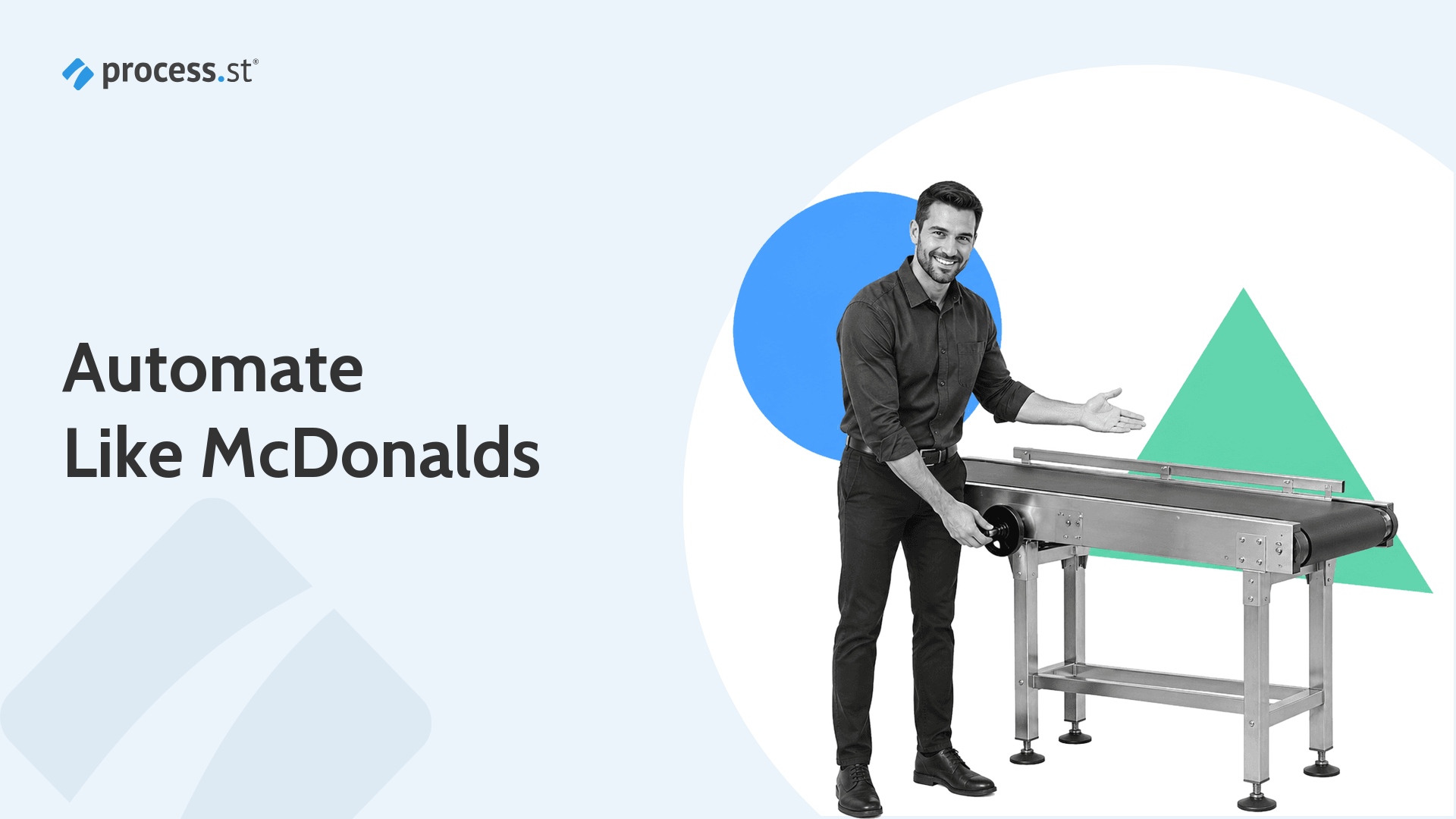
This shift set the stage for modern operational management. The chronology of this transformation follows a clear trajectory:
- The Manual Era (1950s–1980s): Standard operating procedures (SOPs) were printed in physical binders. Training relied on apprenticeship and physical oversight.
- The Digital Transition (1990s–2010s): Businesses moved to static digital documentation—Word files and PDFs saved on local servers. While accessible, these files lacked the ability to track execution or enforce compliance.
- The Workflow Automation Era (2020s–Present): The integration of AI and cloud-based compliance platforms has allowed for dynamic, "living" processes where the documentation and the execution exist within the same interface.
The Mechanics of a Controlled Loop
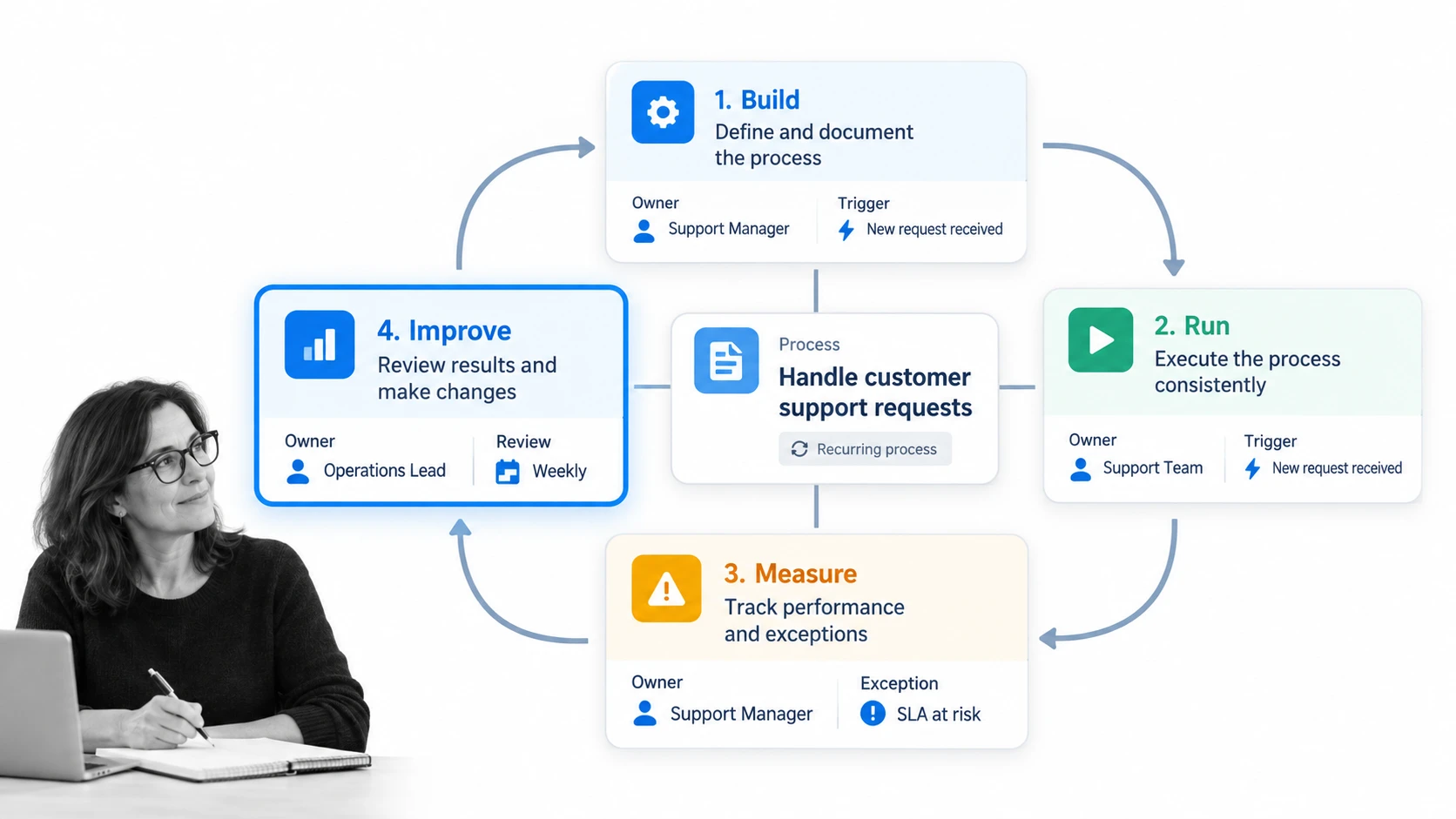
To automate effectively, businesses must move beyond simple digitization. A truly effective system operates as a "control loop." This involves four critical stages: Build, Run, Measure, and Improve.
Data from industry analysts suggest that companies with documented and automated workflows reduce operational errors by approximately 40% within the first year of implementation. When a process is defined by clear inputs and triggers, the variation in output is minimized. For instance, in an automated employee onboarding process, the "trigger" might be a signed offer letter. The "inputs" are employee data and tax forms, and the "outputs" are provisioned accounts, hardware access, and completed HR training. If an exception occurs—such as a missing document—the system automatically flags the human operator, ensuring that the "exception path" is as well-defined as the "happy path."
Bridging the Gap Between Policy and Execution
One of the primary failures in organizational management is the "static document" syndrome. When policies reside in a manual that no one reads, the organization effectively operates without a brain. Modern compliance platforms, such as Process Street, attempt to solve this by embedding the procedure into the task itself.
"The goal is not to force employees into a box, but to provide a map for the work," says one operational consultant familiar with franchise-model scaling. "When an employee knows exactly what the next step is, their anxiety decreases and their productivity increases. You are no longer managing people; you are managing the process, which in turn supports the people."
By shifting the burden of record-keeping to software, organizations can maintain an audit trail that is critical for industries with high regulatory requirements, such as finance, healthcare, or food service. AI-driven systems can now monitor these audit trails in real-time, identifying bottlenecks before they escalate into systemic failures.
Broader Economic and Organizational Implications
The implications of widespread systemization extend well beyond the restaurant industry. For small-to-medium-sized businesses (SMBs), the ability to scale is often hindered by "owner dependency." When the business owner is the only person capable of solving complex problems, growth becomes physically impossible. Systemization removes the bottleneck of the owner’s personal attention.
Furthermore, there is a measurable impact on institutional knowledge. In an era of high labor mobility, the cost of losing an experienced employee is significant. A robust system mitigates this risk by ensuring that the "how-to" of the business resides in the system, not in the departing employee’s memory. When a new hire enters a systemized environment, they follow the same established, verified sequence as their predecessor, significantly reducing the "time-to-competence."
Strategic Implementation: A Step-by-Step Approach
Organizations looking to emulate the McDonald’s model of consistency should not attempt to overhaul their entire operation overnight. Instead, the most successful implementations follow a targeted, iterative approach:
- Identify the "Pain Point": Select one recurring process that is currently causing the most friction, whether through delay, error, or customer complaint.
- Define the Workflow: Map the process from the initial trigger to the final deliverable. Clearly label the "owner" of each step.
- Establish Controls: Build in checkpoints or "approvals" where a human must review the work before it proceeds to the next stage.
- Automate Deterministic Tasks: Use software to handle the handoffs. If Task A is completed, the system should automatically notify the owner of Task B.
- Measure and Optimize: Review the performance data after 30 days. Where are the delays? Where are the exceptions? Update the system based on these findings.
Conclusion
The pursuit of systemization is an ongoing discipline, not a one-time project. As technology evolves and customer expectations shift, so too must the operating system of the business. By creating a culture that values standard work as a foundation for innovation, businesses can achieve the same scalability and reliability that defined the rise of global franchises.
Ultimately, the most successful companies are those that realize that efficiency and creativity are not mutually exclusive. When the predictable, routine work is handled by a well-oiled system, the human workforce is liberated to tackle the unpredictable challenges that truly define a business’s competitive advantage. By focusing on the architecture of their operations today, businesses ensure that they remain relevant and resilient for the challenges of tomorrow.