LaunchDarkly Unveils Release Autopilot to Automate Software Delivery and Mitigate Risks Associated with AI-Generated Code


Oakland, California, has become the epicenter of a significant shift in software engineering as LaunchDarkly, a leader in feature management, officially announced the introduction of Release Autopilot. This new automated system is designed to address the growing friction between the rapid generation of code via artificial intelligence and the traditional, often manual, safety protocols required to deploy that code into production environments. As software development cycles shrink, the ability to release features safely without human-intensive oversight has become the primary challenge for engineering organizations worldwide.
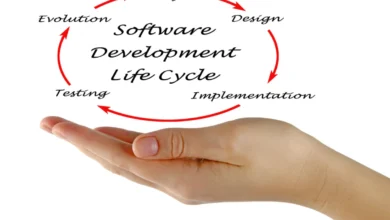
The Evolution of the Software Development Lifecycle
For decades, the software development lifecycle (SDLC) followed a predictable, albeit slow, trajectory: coding, testing, manual quality assurance, and deployment. The introduction of DevOps and continuous integration/continuous deployment (CI/CD) pipelines in the early 2010s revolutionized these workflows, but the emergence of generative AI has created a new, unforeseen strain.
By utilizing AI-assisted coding tools, developers are now able to commit code at unprecedented velocities. While this has eliminated many of the historical bottlenecks in writing code, it has created a "release bottleneck." When code is produced faster than it can be safely reviewed, the risk of production incidents—bugs, latency issues, or performance regressions—increases exponentially. LaunchDarkly’s internal metrics serve as a case study for this transformation: the company reports that 80% of its own pull requests are now assisted by AI. This transition has resulted in a 2.1x increase in merged pull requests without requiring a corresponding increase in headcount, while time spent resolving high-severity incidents has plummeted by 70%.
The 2026 AI Control Gap Report: A Quantitative Analysis
The necessity for a tool like Release Autopilot is underscored by data from the recently published LaunchDarkly 2026 AI Control Gap Report. The findings highlight a profound psychological and operational divide within engineering teams. While 94% of respondents confirmed that AI has significantly bolstered their code velocity, a staggering 91% reported an increased sense of trepidation regarding the stability of their production environments.
This "Control Gap"—the discrepancy between the speed of creation and the confidence in deployment—is forcing teams to take calculated risks. The report indicates that 82% of developers have admitted to shipping code with unresolved risks within the last six months due to the sheer pressure to maintain delivery schedules. This data point is critical: it suggests that current manual release processes are no longer adequate for the sheer volume of output generated by modern AI agents.
Core Functionality and Technical Architecture
Release Autopilot operates as an intelligent layer above the existing CI/CD infrastructure. Rather than forcing teams to replace their current toolsets, it integrates into the existing pipeline to provide automated governance. The system functions through a sophisticated four-stage process:
- Risk Assessment: Upon code submission, the tool analyzes the change’s scope, complexity, and potential impact on the system.
- Flag Orchestration: It automatically determines if a feature flag is necessary. If the risk profile warrants it, the system wraps the code in a flag, ensuring it can be toggled or rolled back instantly.
- Progressive Delivery: The system executes the rollout to a small, controlled percentage of users first, continuously monitoring telemetry data such as error rates and latency.
- Automated Cleanup: Once the rollout is verified as successful, Release Autopilot removes the technical debt associated with the feature flag, ensuring the codebase remains clean.
By enabling engineers to set pre-defined policies, the platform allows for varying degrees of autonomy. Teams can choose a "human-in-the-loop" model, where the system provides recommendations for approval, or a fully automated mode where the system makes real-time decisions based on established thresholds.
Industry Implications and Expert Perspectives
The shift toward automated release management is viewed by industry analysts as a natural progression of the "software factory" model. Rachel Stephens, Research Director at RedMonk, notes that the current state of software release is still tethered to archaic, manual workflows that act as a friction point in the otherwise high-speed pipeline. According to Stephens, Release Autopilot represents a move toward making progressive delivery the default standard rather than an occasional, high-effort mitigation tactic.
Jonathan Nolen, Chief Product Officer at LaunchDarkly, argues that the industry must pivot its definition of human labor. "Human attention is among the scarcest resources in the software factory, and it belongs on the highest-value work," Nolen stated. He emphasized that forcing human engineers to manually watch every deployment is an inefficient use of talent that effectively turns a modern software company into a long, slow production line rather than a dynamic factory. By delegating the "toil" of release management to an autonomous system, companies can reallocate their engineering staff toward product innovation and strategic architecture.
Real-World Application: The Case of Opus 2
The practical application of these tools is already manifesting in sectors where error tolerance is near zero. Opus 2, a global provider of legal technology, has integrated these concepts to manage their continuous release cycles. Tiama Hanson-Drury, Chief Product and Technology Officer at Opus 2, highlights that the separation of deployment from release has been a transformative operational shift.
Before adopting advanced release management strategies, Opus 2 faced significant challenges with defects in production. By implementing a system that allows for granular control over when code is exposed to users, the company reported a jump in delivered work by 3.9 times, while simultaneously reducing escaped defects from 64 per release to virtually zero. This case study demonstrates that the goal of modern release management is not merely speed, but the ability to move quickly without increasing the risk profile for end-users.
Chronology of Development and Future Outlook
The journey toward Release Autopilot began as LaunchDarkly observed the growing volume of feature flag evaluations across its platform, which currently handles approximately 70 trillion evaluations daily. Recognizing that manual management of these flags was becoming a bottleneck, the company began developing automated orchestration capabilities in early 2024.
The beta phase of the product focused on integrating with various cloud environments and third-party agentic frameworks, ensuring that Release Autopilot could operate in heterogeneous environments where different teams use different coding agents and CI/CD tools. Following successful trials, the company has scheduled the general availability of the platform for November 16.
Long-term Impact on the Software Industry
The introduction of Release Autopilot signifies a broader trend toward "autonomous engineering." As generative AI continues to mature, the focus of the industry is moving away from the generation of code toward the governance and reliability of that code. If the 2020s were the decade of building the infrastructure for CI/CD, the latter half of the decade is poised to be the era of automated release governance.
For companies, the implication is clear: the ability to scale will no longer be limited by the number of engineers available to watch dashboards. Instead, it will be limited by the clarity of the policies and guardrails that engineering leaders define. As these tools become more prevalent, the standard for "ship-ready" code will inevitably rise, as automated systems provide a level of consistency that human oversight—subject to fatigue and distraction—simply cannot match.
The transition to automated release management is not just a technological upgrade; it is a fundamental shift in the economics of software development. By reducing the "toil" of the release process, LaunchDarkly and its peers are positioning the engineering profession to focus on the creative and architectural challenges that AI is currently unable to address. As November 16 approaches, the industry watches closely to see how effectively these tools will bridge the gap between the speed of the AI agent and the requirements of enterprise-grade production safety.
Related posts: