The Comprehensive Guide to Valuing and Selling Vintage Pokémon Trading Cards

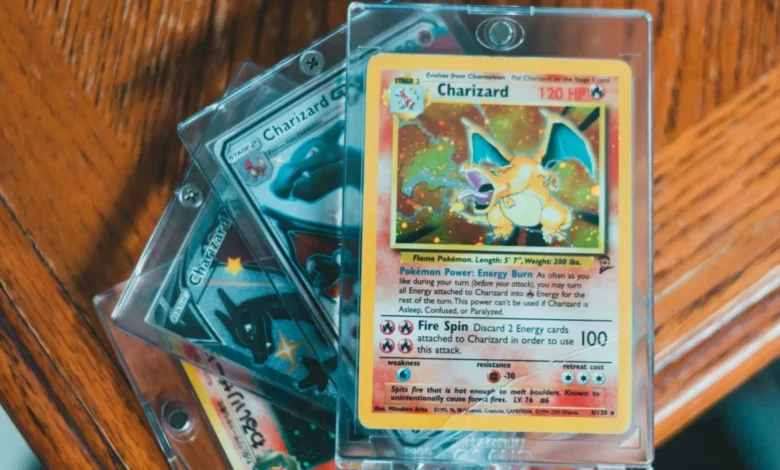
The sudden resurgence of interest in vintage Pokémon trading cards has transformed dusty childhood collections into high-value financial assets. For many, the discovery of a long-forgotten binder has sparked curiosity regarding the potential market value of these items. However, determining whether a specific card holds a value of twenty dollars or several thousand requires a rigorous, systematic approach to authentication, condition assessment, and market analysis. As the hobby has evolved into a legitimate alternative asset class, the methodology for identifying, valuing, and liquidating these cards has become increasingly sophisticated.

The Evolution of the Pokémon TCG Market
Since the debut of the Pokémon Trading Card Game (TCG) in Japan in 1996 and its subsequent international release in 1999, the franchise has undergone several distinct eras of collecting. The primary driver of value remains the "Base Set" era, which captures the nostalgia of the original 151 Pokémon. Over the past five years, the market has matured significantly. Auction data from major houses and platforms such as eBay and PWCC indicate that the market for high-grade vintage cards reached an all-time peak in 2021, followed by a period of stabilization. Unlike volatile cryptocurrencies or speculative meme stocks, the value of vintage Pokémon cards is underpinned by finite supply—particularly of high-grade, "gem mint" examples—and a robust, global community of dedicated collectors.
Systematic Identification: Defining the Card’s Fingerprint
To accurately value any card, one must first establish its exact identity. The Pokémon TCG features a vast array of sets, sub-sets, and regional variations. A card is not merely defined by its character name, such as Charizard; its value is dictated by a specific trio of identifiers: the set, the card number, and the edition.

The card number, typically found in the bottom-right or bottom-left corner of the card, provides the initial point of reference. This number corresponds to a specific checklist within a set. Collectors must then identify the set symbol—a small icon printed on the card—which confirms the release origin. Finally, the edition stamp, or the absence thereof, serves as the most critical factor in pricing. For instance, in the original English Base Set, the presence of a "1st Edition" stamp, or conversely, the "Shadowless" design (which lacks the drop shadow behind the character illustration box), creates a profound disparity in market valuation compared to the "Unlimited" print run that followed.
The Impact of Language and Regional Markets
A common misconception among novice collectors is the assumption that market value is uniform across all languages. In reality, the English and Japanese markets operate within distinct, parallel ecosystems. Japanese cards were released earlier and often feature different artwork, holographic patterns, and print quantities.

Data shows that while English cards often command higher prices due to the sheer size of the Western collector base, certain Japanese variants—particularly those from the "CoroCoro" promotional sets or early "Neo" releases—can fetch significant premiums. When assessing value, one must account for the specific demand in the target region. Furthermore, grading standards vary; while international firms like Professional Sports Authenticator (PSA), Beckett Grading Services (BGS), and Certified Guaranty Company (CGC) provide standardized evaluations, collectors should be aware that the liquidity of Japanese cards is often highest in the Japanese domestic market, frequently facilitated by specialized auction platforms.
Analytical Tools and Market Data
In the current digital landscape, guessing a card’s value is obsolete. Professional collectors utilize platforms like Hoshino or 130Point to track "realized prices." These tools pull data directly from completed auctions and private sales, providing a transparent view of what buyers are actually paying.

When evaluating a card, it is essential to ignore "asking prices" found in active listings, as these often reflect the optimism of sellers rather than the reality of the market. Instead, the focus must remain on the "Sold" or "Completed" listings. If a card consistently sells for $150, an active listing priced at $500 is likely to remain unsold. Furthermore, monitoring the spread between price points over a six-month period can reveal whether a specific card is currently trending upward or experiencing a correction.
The Crucial Role of Condition Assessment
The condition of a card is the single most important variable in its valuation. Grading companies utilize a 10-point scale to assess four primary criteria: centering, surface, corners, and edges.

- Centering: The alignment of the artwork relative to the card’s borders.
- Surface: The presence of scratches, creases, or print lines on the holographic or card face.
- Corners: The sharpness of the four corners; any whitening or "dinging" will drastically reduce the grade.
- Edges: The smoothness of the card’s perimeter.
A card that appears visually perfect to the naked eye may still harbor microscopic defects that prevent it from achieving a "Gem Mint" (PSA 10) grade. For high-value items, the difference between an 8 and a 10 is often measured in thousands of dollars. Collectors are encouraged to use a macro lens or a jeweler’s loupe to inspect their cards before submitting them for professional grading, as the cost of submission—often ranging from $25 to over $100 per card—should be weighed against the potential increase in market value.
The Raw Versus Graded Dichotomy
The decision to sell a card "raw" (ungraded) or "slabbed" (professionally graded) depends entirely on the card’s potential grade and market demand. Generally, cards that are heavily played or exhibit significant surface damage should remain raw, as the cost of grading will likely exceed the value added by the slab. Conversely, "blue-chip" cards—such as 1st Edition Holo Rares from the original Base, Jungle, or Fossil sets—often necessitate professional grading to maximize their liquidity and value. A slabbed card provides a guarantee of authenticity and condition, which is a prerequisite for high-end collectors and institutional investors.

Strategic Liquidation: Where to Sell
The choice of marketplace should align with the nature of the cards being sold.
- eBay: Remains the premier destination for individual, high-value, or rare cards. Utilizing the auction format for scarce, sought-after items can generate competitive bidding, often resulting in prices exceeding the expected market value.
- TCGPlayer: Highly effective for competitive players and modern sets, though less optimized for vintage rarities.
- Specialized Auction Houses: For collections valued in the tens of thousands, platforms like PWCC or Goldin offer a white-glove service that connects sellers with high-net-worth collectors.
- Local Card Shops: While convenient for rapid liquidation, sellers should anticipate receiving 30% to 50% of the market value, as shops must maintain margins to cover overhead and the risk of holding inventory.
Implications for the Future
The Pokémon TCG has successfully transitioned from a children’s pastime to a legitimate category of alternative investment. However, this transition brings responsibilities. Investors and collectors alike must practice due diligence, maintain proper storage conditions (using acid-free sleeves and rigid top-loaders), and stay informed about market trends.

As of late 2023 and early 2024, the market has shown a preference for quality over quantity. Collectors are increasingly focused on "Pop Reports"—documents published by grading companies detailing how many copies of a card have achieved a specific grade. A card with a low "population" in a high grade is significantly more desirable than a common card, regardless of its age. By adhering to these standardized evaluation processes and utilizing accurate market data, individuals can navigate the complexities of the Pokémon card market with confidence, ensuring that their collections are accurately valued and strategically managed. Whether one is looking to liquidate a collection or preserve it for future appreciation, the path forward is clear: research, authentication, and patience remain the cornerstones of success in this enduring global hobby.