Comprehensive Analysis of AI SEO Tools for Small Businesses in the Evolving Digital Economy

The global marketing landscape is currently undergoing a seismic shift as artificial intelligence (AI) transitions from a futuristic luxury to an operational necessity for small-to-medium enterprises (SMEs). For small businesses, the challenge is no longer whether to adopt AI, but rather identifying which specific tools offer genuine ROI amidst a marketplace saturated with "vaporware" and over-promised capabilities. As search engines evolve into "answer engines," the integration of AI into Search Engine Optimization (SEO) has become the primary battleground for digital visibility.
The State of AI Adoption in Modern Marketing
The push toward AI-driven SEO is backed by aggressive adoption statistics. According to recent industry reports, including HubSpot’s "AI Trends for Marketers," approximately two-thirds of marketers globally have integrated AI into their daily workflows. In the United States, this adoption rate is even more pronounced, with 74% of marketing professionals reporting the use of AI tools to enhance productivity and data analysis.
This rapid adoption is driven by the necessity of "doing more with less." Small businesses, often operating with lean teams and limited budgets, face the daunting task of competing against enterprise-level corporations that possess vast resources for content production and technical audits. AI levels the playing field by automating high-frequency, low-complexity tasks, allowing human creators to focus on high-level strategy and brand differentiation.
Strategic Framework for Tool Selection
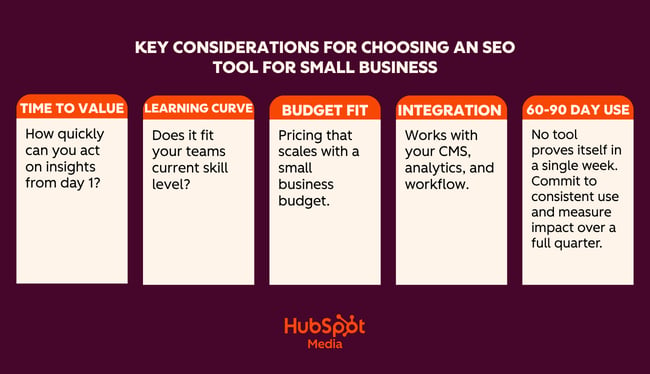
For an SME, the "cost" of a tool is not merely its monthly subscription fee but also the "time-to-value" and the internal learning curve required for implementation. Experts suggest a four-pillar framework for evaluating AI SEO software:
1. Time-to-Value (TTV)
TTV measures the duration between the initial setup and the delivery of actionable insights. For a small business, a tool that requires months of configuration or a dedicated data scientist is often a liability. High-value tools like Google Search Console (GSC) offer near-instant TTV, providing performance data within 24 hours of installation. Conversely, comprehensive platforms like HubSpot require more initial investment but offer long-term value by consolidating disparate workflows into a single ecosystem.

2. The Learning Curve
Sophisticated enterprise tools often overwhelm small users with "feature bloat." The most effective AI tools for SMEs prioritize "plain-language" recommendations over raw data dumps. The goal is to move from data interpretation to execution without needing an advanced degree in SEO.
3. Integration and Ecosystem Connectivity
Data silos are the enemy of efficiency. According to MuleSoft’s Connectivity Benchmark Report, 86% of IT leaders believe that AI agents can introduce unnecessary complexity if they are not properly integrated with existing systems. For a small business, an SEO tool must "talk" to the Content Management System (CMS) and the Customer Relationship Management (CRM) platform to ensure that traffic is actually translating into revenue.
4. Long-term Scalability
A tool that is affordable today but lacks the features to support a growing business can lead to a "migration headache" later. Decision-makers are encouraged to map out their SEO tasks for the next 12 to 24 months before committing to annual billing cycles.
Evolution of Search: From Keywords to Answer Engine Optimization (AEO)
The emergence of Large Language Models (LLMs) like ChatGPT, Claude, and Google’s Gemini has introduced a new discipline: Answer Engine Optimization (AEO). Traditional SEO focuses on ranking in the "Blue Links" of a Search Engine Results Page (SERP). In contrast, AEO focuses on ensuring a brand is cited as the definitive source within AI-generated summaries.
The Rise of HubSpot AEO and Grader
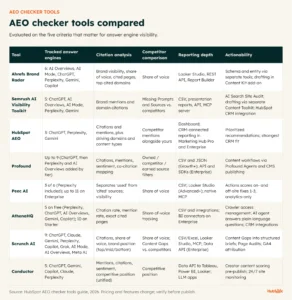
Tools like the HubSpot AEO Grader have emerged to provide businesses with a "visibility scorecard." By analyzing how ChatGPT, Perplexity, and Gemini describe a brand, businesses can identify gaps in their digital footprint. For example, if an AI engine fails to mention a company when asked for "the best local HVAC service," it indicates a lack of structured data or authoritative mentions in the training data of these models.
Technical Auditing and On-Page Optimization Tools
Technical SEO remains the foundation of digital health. Without a crawlable, fast-loading site, content efforts are largely wasted.
HubSpot SEO Recommendations
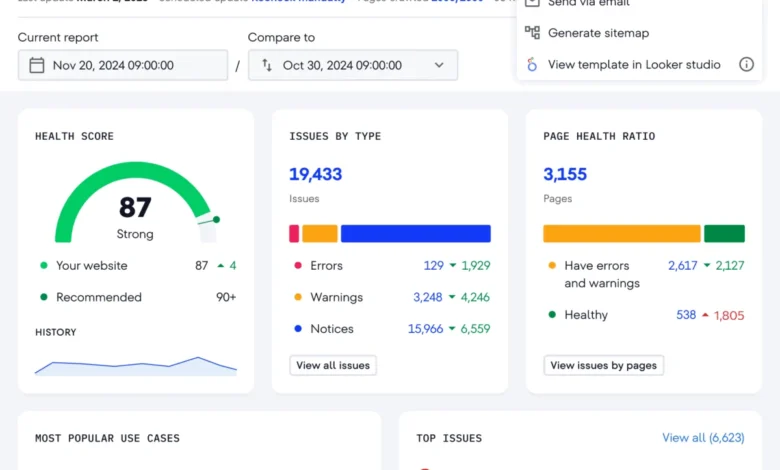
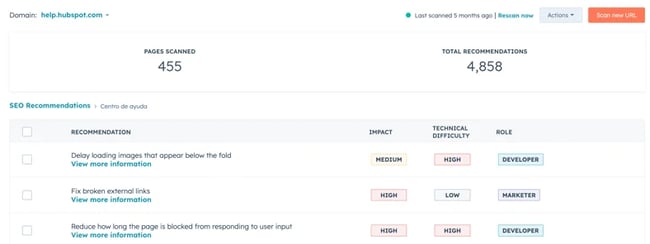
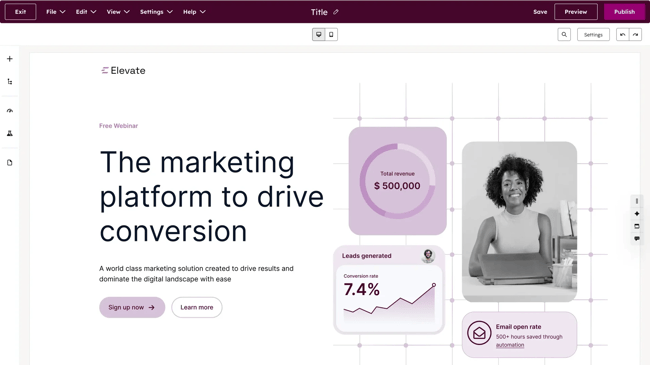
Integrated within the Marketing Hub, this tool prioritizes technical fixes based on their potential impact on rankings. By connecting recommendations directly to the content editor, it removes the friction between identifying a problem (e.g., a missing meta description) and fixing it.
SE Ranking
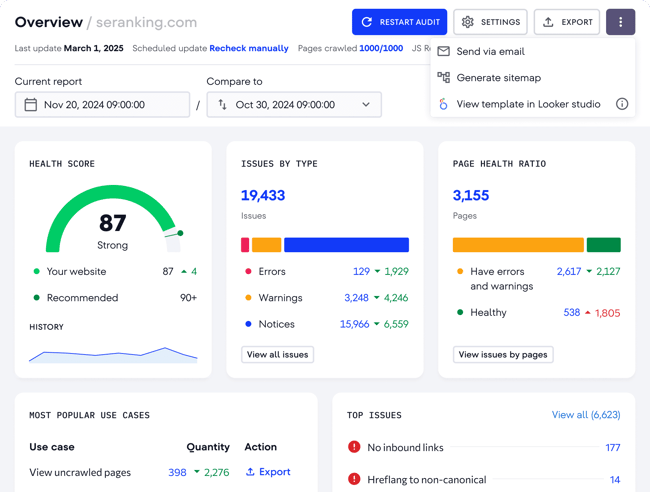
For businesses that require deep competitive intelligence without the enterprise price tag of Semrush or Ahrefs, SE Ranking has become a preferred alternative. It utilizes AI to track keyword fluctuations and monitor backlink health, providing a "prosumer" level of insight that is accessible to non-experts.
Yoast SEO
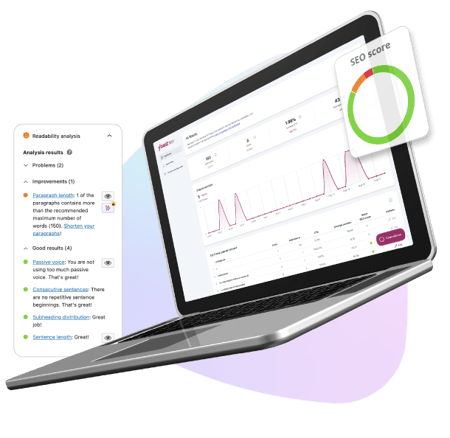
For the millions of businesses running on WordPress, Yoast remains the industry standard for on-page optimization. Its AI-assisted readability and schema markup features ensure that content is technically sound the moment it is published.
Content Creation and the "Human-in-the-Loop" Model
Perhaps the most controversial use of AI in SEO is content generation. While AI can draft 1,000 words in seconds, search engines have become increasingly sophisticated at identifying "unhelpful" content.
The E-E-A-T Requirement
Google’s search quality guidelines emphasize Experience, Expertise, Authoritativeness, and Trustworthiness (E-E-A-T). AI lacks "experience." It cannot provide a firsthand account of a product trial or a nuanced opinion on industry trends. Therefore, the most successful small businesses use AI as a "co-pilot" rather than an "auto-pilot."
HubSpot Content Hub and Breeze
HubSpot’s Breeze AI exemplifies the co-creation model. It allows teams to generate structured drafts based on "topic clusters"—a strategy where a central "pillar" page is supported by several related "sub-topic" posts. This architecture signals topical authority to search engines, a factor that AI tools can help organize but humans must still refine to ensure brand voice consistency.
AnswerThePublic
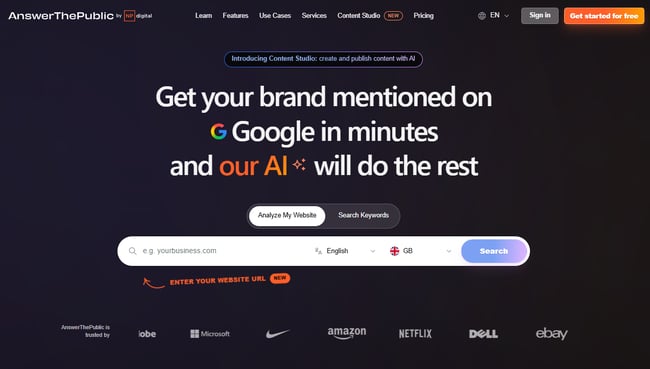
Before a single word is written, businesses must understand user intent. AnswerThePublic uses Google autocomplete data to visualize the exact questions consumers are asking. This allows lean teams to create "surgical" content that answers specific pain points, increasing the likelihood of capturing "featured snippets" or being cited in AI answers.
The Foundational Layer: Google’s Free Ecosystem
Regardless of which paid tools a business adopts, Google’s own suite remains non-negotiable.
- Google Search Console (GSC): This is the only tool that provides direct feedback from Google regarding indexing issues, manual penalties, and Core Web Vitals performance. It serves as the "diagnostic sensor" for a website’s health.
- Google Analytics (GA4): While GSC tracks what happens before a click, GA4 tracks what happens after. For the modern marketer, GA4 is essential for segmenting traffic coming from AI referral sources like ChatGPT, allowing businesses to see if AI-driven discovery is actually leading to conversions.
Analysis of Broader Impact and Future Implications
The democratization of AI SEO tools is a double-edged sword. While it allows small businesses to compete, it also lowers the barrier to entry for content production, leading to an "information explosion." As the web becomes flooded with AI-generated text, the value of human-verified, expert-led content will paradoxically increase.
Small businesses that rely solely on automated "one-click" SEO solutions risk being penalized by future algorithm updates aimed at reducing web spam. The long-term winners will be those who use AI to handle the "drudgery" of SEO—technical audits, meta-tag generation, and keyword clustering—while doubling down on human creativity for the final output.
Furthermore, the shift toward AEO suggests that "brand mentions" across the web are becoming as important as traditional backlinks. Small businesses must now focus on PR, social media, and community engagement to ensure their brand name is consistently associated with their industry in the data sets that train future AI models.
Conclusion: Integrating AI into a Holistic Strategy
The most effective AI SEO tool is not a single software package but a cohesive strategy that integrates technical health, content authority, and brand visibility. For SMEs, the goal is consolidation. Using a unified platform like HubSpot can reduce "tool sprawl" and ensure that SEO data is tied directly to the CRM, providing a clear line of sight from a search query to a closed deal.
As we move deeper into 2024 and beyond, the divide between "traditional search" and "AI discovery" will continue to blur. Small businesses that act now to optimize for both will be the ones that survive the transition from the era of the search engine to the era of the answer engine.