Scrunch vs Ahrefs Brand Radar A Comprehensive Comparison of AI Visibility and Answer Engine Optimization Platforms in 2026

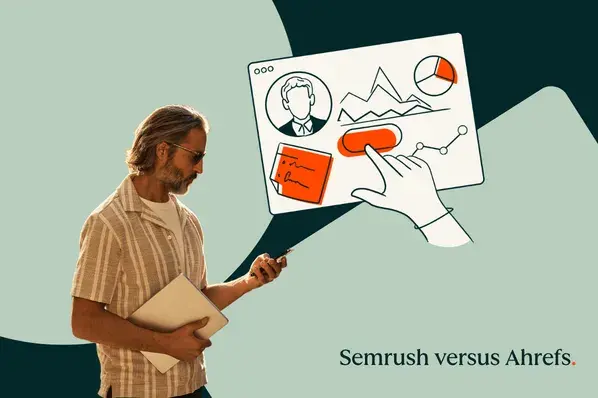
The shift from traditional Search Engine Optimization (SEO) to Answer Engine Optimization (AEO) has fundamentally altered the digital marketing landscape, forcing brands to move beyond ranking on page one of Google to securing citations within AI-generated responses. As of 2026, two primary contenders have emerged to help enterprises navigate this transition: Scrunch, a purpose-built AI visibility platform, and Ahrefs Brand Radar, an integrated module within the established Ahrefs SEO ecosystem. While both tools aim to solve the problem of brand invisibility in the age of Large Language Models (LLMs), they utilize vastly different methodologies, pricing structures, and technical architectures to achieve their goals.
The Rise of Answer Engine Optimization: Market Context and Chronology
The emergence of these tools follows a three-year period of rapid transformation in information retrieval. The timeline of this shift began in late 2022 with the public release of ChatGPT, which introduced the concept of conversational search to the mainstream. By 2023, the introduction of Perplexity AI and Google’s Search Generative Experience (now Google AI Overviews) created a "citation economy," where a brand’s value is determined by its presence in the footnotes of AI answers.
In 2024, the marketing industry saw a 433% surge in the importance of brand citations, according to data from HubSpot. This necessitated a new category of software capable of auditing how bots from OpenAI, Anthropic, and Google "read" and "perceive" web content. By 2025, the market bifurcated: specialist tools like Scrunch were developed to provide granular bot-level optimization, while legacy SEO platforms like Ahrefs and Semrush pivoted to include AI tracking as part of a broader "discovery" suite.
Core Capabilities and Tracking Focus
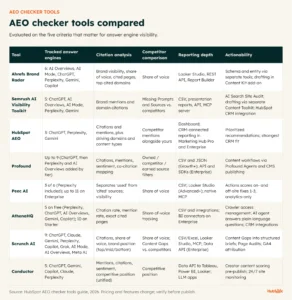
Scrunch and Ahrefs Brand Radar address different segments of the market based on their tracking focus. Scrunch is engineered as a dedicated AEO platform. Its primary objective is to monitor AI share of voice, analyze sentiment within AI-generated responses, and identify which specific domains or pages are being cited by LLMs. Beyond mere monitoring, Scrunch provides active optimization features, such as auditing AI crawlability and monitoring AI search trends for prompt volumes. This allows brands to understand not just where they are mentioned, but how they are being recommended in purchase-intent scenarios.
Conversely, Ahrefs Brand Radar is positioned as an add-on for teams that require a unified view of their digital footprint. It tracks brand presence in AI answers but contextualizes that data alongside traditional search demand, backlinks, web mentions, and social signals from platforms like Reddit and YouTube. For an SEO-led team, Brand Radar provides the convenience of a single dashboard, whereas Scrunch offers a deeper, more specialized toolkit for teams running dedicated AEO sprints.
Data Methodology: Synthetic Prompts vs. Real User Signals
The reliability of AI visibility data depends heavily on how it is collected. Scrunch utilizes a sophisticated blend of browser automation and official platform APIs, enhanced by machine learning and Natural Language Processing (NLP). This allows Scrunch to surface brand mentions and citation patterns with high precision. However, a notable aspect of Scrunch’s architecture is its reliance on "synthetic prompts"—converting specific keyword data into prompts rather than sampling live user traffic. This gives marketing teams precise control over the specific questions they want to track, though it may miss the nuances of organic, unpredictable user behavior.
Ahrefs Brand Radar takes a different approach by drawing from a massive pool of over 406 million monthly prompts derived from real user keywords. This provides a broader signal of how a brand is performing against actual search trends. However, third-party audits and user reviews in early 2026 have flagged occasional accuracy gaps in Ahrefs’ tracking of ChatGPT and Perplexity. Furthermore, Ahrefs currently lacks coverage for Anthropic’s Claude, a significant limitation for B2B brands whose target audiences use Claude for professional and technical research.
Technical Implementation and AI Experience Platforms (AXP)
One of the most significant technical differentiators in this comparison is Scrunch’s Enterprise-level "AI Experience Platform" (AXP). This feature addresses a growing problem in 2026: complex website markup often "traps" AI agents, leading to high token costs and incomplete crawling. Scrunch’s AXP is implemented at the "edge," meaning it serves an AI-optimized, token-light version of a website specifically to bots, while human visitors continue to see the traditional site.
Data indicates that this dual-delivery architecture can reduce token loads by up to 26%, making it significantly easier for LLMs to parse and cite content. This represents a proactive approach to AEO that goes beyond reporting and into the realm of technical infrastructure. Ahrefs, meanwhile, focuses on "Bot Analytics" and "IndexNow" integration. While effective for ensuring content is indexed, Ahrefs does not currently offer a parallel optimized site experience for AI bots, relying instead on the brand’s existing technical SEO foundation.
Pricing Structures and Value Propositions
The financial commitment for these platforms reflects their target audiences. Scrunch’s Brand Core plan begins at $250 per month, offering 125 unique tracked prompts and coverage across four major LLMs: ChatGPT, Perplexity, Google AIO, and Microsoft Copilot. Its Agency Core plan, priced at $500 per month, expands these limits and adds specialized workspaces for client pitching and management. The highest tier, Brand Enterprise, unlocks the AXP feature and expands coverage to nine LLMs, including Claude, Gemini, Meta AI, and Grok.
Ahrefs Brand Radar offers a lower barrier to entry for existing Ahrefs users. It is available as a standalone product starting at $199 per month for entry-level tracking. For teams requiring the full 406-million-prompt database and 2,500 custom checks, the cost rises to $699 per month. For many organizations, the decision rests on whether they need the specialized AEO optimization of Scrunch or the integrated convenience of Ahrefs, which bundles AI data with traditional SEO tools starting at $129 per month for its Lite plan.
Comparative Analysis: Choosing the Right Framework
Marketing leadership must evaluate these tools based on their specific organizational goals. Industry analysts suggest that Scrunch is the superior choice for enterprise brands with dedicated AI visibility programs and high-volume content operations. Its "Insights" feature provides a bridge between data and action, pairing every visibility diagnosis with a specific content recommendation. For example, if a competitor is winning a category in Perplexity, Scrunch identifies the cited sources and provides a content brief to help the brand become a "trusted source for the sources that AI trusts."
Ahrefs Brand Radar is better suited for SEO-led teams that view AI as one of many discovery channels. It is particularly effective for monitoring overall brand health across search engines, social media, and AI platforms simultaneously. The inclusion of Reddit and YouTube data makes it a powerful tool for brands focused on community-driven discovery and video search, areas where Scrunch is less focused.
Official Responses and Industry Sentiment
While neither company has released formal statements regarding the other, the product roadmaps of both suggest a competitive race to capture the AEO market. HubSpot, a major player in the marketing automation space, has entered the fray with its AEO Grader and AEO Sensor tools. HubSpot’s stance, as reflected in its "State of AEO" report, emphasizes that AEO should complement, not replace, SEO.
Semrush, another primary competitor in the space, has framed the current era as a "combined SEO + AI discovery problem." This sentiment is echoed by Scrunch, which maintains that traditional human-facing sites must remain intact for SEO while optimized experiences handle AEO. The consensus among digital strategy experts is that brands neglecting their SEO foundation while chasing AI visibility risk losing ground in both arenas.
Future Implications and Limitations
As we move further into 2026, both platforms face ongoing challenges. For Scrunch, the primary hurdle is its pricing and the technical complexity of maintaining a dual-site architecture (AXP). Brands must weigh the benefits of a 26% token reduction against the potential risks of serving different content to bots versus humans, a practice that requires careful management to avoid "cloaking" penalties in traditional search.
For Ahrefs, the challenge is keeping pace with the rapidly evolving LLM market. The current absence of Claude coverage and the reported accuracy issues with certain AI models suggest that the platform’s broad-scale methodology may occasionally sacrifice depth for breadth. Furthermore, Ahrefs users are tied to the platform’s overarching roadmap; if AI visibility becomes a brand’s top priority, the lack of specialized AEO optimization features may eventually necessitate a move to a specialist tool like Scrunch.
Strategic Recommendations for Marketing Teams
The most effective strategy for large-scale enterprises often involves a hybrid approach. Many teams utilize Ahrefs Brand Radar for high-level monitoring of brand share of voice and traditional search performance, while deploying Scrunch or HubSpot AEO for intensive content sprints. This redundancy provides a "checks and balances" system, as the different methodologies—synthetic prompts versus real user data—can offer a more holistic view of brand performance.
Ultimately, the goal of using these tools is to move from visibility to pipeline. Successful brands in 2026 are those that use AI visibility data to identify "citation gaps"—prompts where they are missing—and then create authoritative, data-backed content to fill those gaps. Whether through Scrunch’s bot-level optimization or Ahrefs’ cross-channel monitoring, the objective remains the same: ensuring that when a buyer asks an AI for a recommendation, your brand is the answer it provides.