Navigating the Digital Marketing Maze: A Strategic Framework for Driving Growth Through Traffic and Conversions


In the current digital marketing landscape, businesses are confronted with an overwhelming array of choices, boasting hundreds of channels and thousands of potential tactics. For many marketing professionals, the challenge lies in simultaneously managing a dozen or more of these channels and tactics, a situation that can quickly erode clarity and conviction, making it difficult to simplify, focus, and ultimately drive key results. At its core, however, marketing remains a straightforward endeavor: attracting individuals to a business and then encouraging them to make a purchase. In the online realm, this fundamental principle can be distilled into a critical formula: New Signups = Traffic x Conversion Rate.
This equation highlights the two pivotal variables that determine the success of online marketing efforts: the volume of visitors to a website and the rate at which those visitors convert into signups. These two metrics serve as the essential axes upon which every channel, tactic, and conversion opportunity should be evaluated. To address the complexities of optimizing these variables, a strategic framework, referred to as "The Conversion Map," offers a structured approach to identifying areas for improvement and prioritizing marketing initiatives for maximum impact.
The Conversion Map: A Framework for Strategic Marketing Optimization
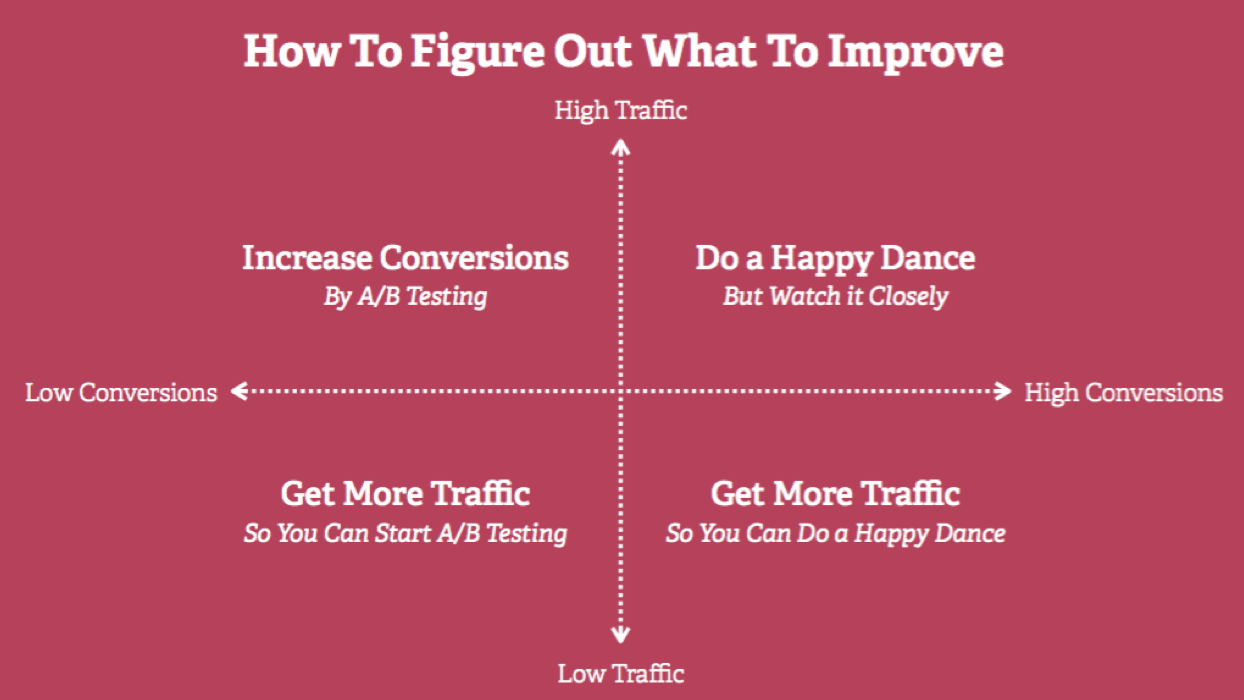
The Conversion Map provides a visual and conceptual tool for dissecting marketing performance. It involves breaking down all marketing channels, landing pages, and content assets along the two dimensions of traffic and conversion rate. This categorization then places each element into one of four distinct quadrants, offering a clear picture of performance and guiding strategic decisions. The fundamental principle behind this framework is a time-tested marketing adage: identify what is working and amplify those efforts. Instead of scattering resources across a multitude of untested approaches, marketers are encouraged to delve into existing data, pinpointing activities that are already generating high traffic, high conversions, or a combination of both. The Conversion Map then serves as a roadmap to strategically reinvest in these proven performers.
The framework’s utility lies in its ability to transform a complex marketing challenge into manageable components. By understanding the interplay between traffic and conversion rates, businesses can move beyond simply experimenting with new tactics and instead focus on optimizing their existing digital footprint. This data-driven approach ensures that marketing investments are directed towards areas with the greatest potential for immediate and sustainable growth.
Transforming the Framework into an Actionable Process
The most significant opportunities for improvement often reside in areas that attract high traffic but exhibit low conversion rates. These segments represent a "goldmine" of potential, where a substantial influx of interested individuals is not yet translating into desired outcomes. By focusing on these areas, businesses can achieve a rapid increase in signups with comparatively less effort. This strategic prioritization forms the basis of an effective conversion process.

The recommended order of execution prioritizes these quadrants based on their potential for impactful improvement:
1 High Traffic, Low Conversion: Unlocking Untapped Potential
The top-left quadrant of the Conversion Map is a critical area of focus. Here, businesses are already succeeding in drawing significant attention to their offerings, evidenced by high traffic volumes. However, this traffic is not yet being effectively converted into desired actions. The advantage of this quadrant lies in the substantial sample size provided by high traffic, which facilitates more robust A/B testing and accelerated learning. The primary objective in this quadrant is to understand what types of conversion strategies best align with the specific channel, landing page, or content asset.
For instance, a company might observe that its blog posts attract thousands of visitors per month but have a low signup rate for their newsletter. Through A/B testing, they could experiment with different calls-to-action (CTAs), headline variations, or form placements. Perhaps a more compelling offer, such as a free downloadable guide related to the blog post’s topic, could significantly boost conversion rates. Data from studies by Unbounce has shown that optimizing CTAs can lead to significant increases in conversions, with some businesses reporting improvements of over 100% by testing different button colors, text, and placements. Similarly, Optimizely’s research consistently demonstrates the power of iterative testing in improving conversion rates across various industries.

2 Low Traffic, High Conversion: Scaling Engaged Audiences
Content that generates low traffic but achieves high conversion rates often resides further down the sales funnel. This content typically offers detailed, tactical advice that is closely aligned with the product or service, resonating deeply with a specific, highly interested segment of the audience. While this indicates a strong understanding of a niche customer, it may suggest a lack of broader audience appeal or visibility.
The strategic goal for this quadrant is to increase traffic to these high-converting assets. The aim is to scale the reach of content that has already proven its ability to engage and convert. As traffic grows, conversion rates may naturally decline as a broader, less pre-qualified audience is exposed to the content. It’s crucial to understand that the objective here is not necessarily to maintain the initial high conversion rate at scale, but rather to leverage the established resonance of the content to attract a larger audience. For example, if a technical whitepaper on a specific industry challenge converts 10% of its visitors, but only attracts 100 visitors, the focus should be on promoting this whitepaper through channels that reach a wider audience interested in that challenge. This might involve social media promotion, partnerships with industry influencers, or targeted advertising campaigns. As traffic increases to tens of thousands, the conversion rate might drop to 2-3%, but the overall number of signups will likely increase significantly. This transition often necessitates a shift in focus from solely increasing traffic to implementing A/B testing to optimize conversion rates within the newly expanded audience.
3 Low Traffic, Low Conversion: Building a Foundation for Growth
When both traffic and conversion rates are low, the primary objective is clear: increase traffic through any viable means to move these assets into the higher-performing quadrants. This scenario is common for early-stage businesses or new initiatives that are still establishing their presence and audience. Content marketing, in particular, is often a strategic choice for SaaS startups in this position, as it offers a sustainable way to build both traffic and brand awareness over time.

For businesses in this quadrant, the focus should be on broad outreach and establishing a foundational presence. This could involve guest blogging on relevant industry websites, engaging in social media discussions, participating in online forums, and leveraging search engine optimization (SEO) to improve organic visibility. The initial goal is to get the content discovered. For instance, a new SaaS platform might have a blog that few people are reading. The strategy would be to actively share blog posts on relevant LinkedIn groups, participate in Twitter chats, and optimize articles for keywords that potential customers are searching for. While the immediate conversion rates may be negligible, the cumulative effect of consistent outreach and content creation can gradually build an audience and improve search engine rankings, paving the way for future growth.
4 High Traffic, High Conversion: Sustaining and Leveraging Success
Achieving high traffic alongside high conversion rates represents the pinnacle of marketing performance. These assets are the "cash cows" of a digital marketing strategy, consistently delivering strong results and serving as a reliable source of leads or customers. The immediate reaction should be one of celebration, acknowledging the success of these well-optimized efforts.
However, success in this quadrant demands vigilance. These high-performing channels and content pieces should be continuously monitored to ensure their effectiveness is maintained. They are the engine that can fund further growth experiments and initiatives. While over-optimization can be a risk, a strategic approach to ongoing maintenance and subtle improvements can help preserve and even enhance their performance. For example, if a particular landing page consistently converts 15% of its visitors, the focus should be on ensuring the user experience remains seamless, the offer remains relevant, and the page loads quickly. Minor tweaks, such as updating testimonials or refining the language of the CTA, can prevent stagnation. This quadrant provides the stability and resources to experiment with other areas of the marketing funnel.

Embracing the Long Game: Content Marketing as a Strategic Investment
The power of this strategic framework is amplified when viewed through the lens of long-term growth. At companies like KISSmetrics, for example, a deliberate focus on content marketing and conversion optimization enabled them to achieve a cost per acquisition for trial sign-ups around $3, a stark contrast to the hundreds of dollars per acquisition that can be incurred through platforms like Google AdWords. This illustrates how investing in building valuable content and optimizing conversion pathways can lead to significantly more cost-effective customer acquisition, even when overall traffic fluctuates.
Content marketing, in essence, is a long-term investment. In the initial stages, the focus is on establishing a foothold by creating "islands" of valuable content and cultivating an early audience. Over time, as more high-quality, audience-loved content is produced, these individual pieces begin to connect, forming larger, more cohesive online presences that attract and retain visitors. This sustained growth is not achieved through sporadic, one-off tactics or "Hail Mary" plays. Instead, it is the result of a deliberate, step-by-step process of identifying what works, doubling down on those successes, and systematically addressing areas for improvement. By applying the Conversion Map framework and committing to a consistent, data-driven approach, businesses can navigate the complexities of the digital marketing landscape and chart a clear path towards sustainable growth.