The New Manufacturing Reality Why Supply Chain Resilience and Operational Transparency are Redefining C-Suite Strategy

The traditional boundary between back-office operations and boardroom strategy has effectively dissolved within the American manufacturing sector. For decades, supply chain management was largely viewed as a cost-center function focused on incremental efficiency and logistics. However, five years of compounding global disruptions—ranging from a once-in-a-century pandemic and aggressive tariff regimes to escalating geopolitical tensions and soaring input costs—have elevated these operational challenges to the very top of the corporate agenda. At the Manufacturing Leaders Summit held in St. Louis this past May, a gathering of COOs, supply chain directors, and operations leaders from mid-sized manufacturers provided a stark assessment of the current landscape, revealing a disconnect between executive-level perceptions and the granular realities of the factory floor.
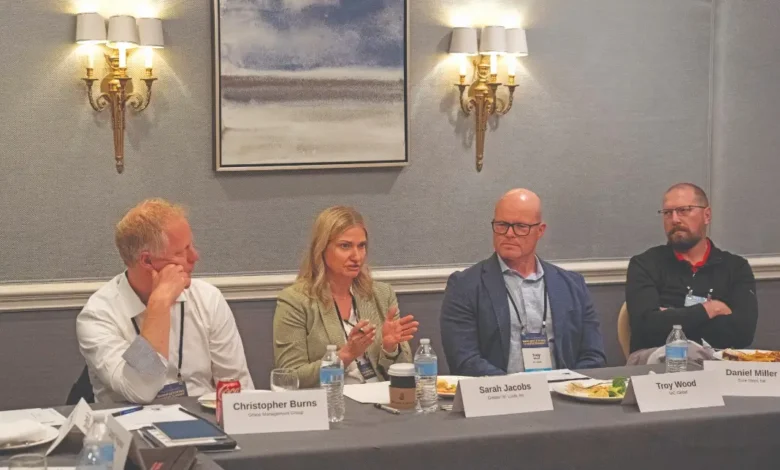
The event, hosted by Chief Executive in partnership with Greater St. Louis, served as a forum for candid, non-attribution discussions. The consensus among participants was clear: the post-COVID "return to normalcy" has proven to be a mirage. Instead, manufacturers are navigating a permanent state of volatility that requires a fundamental rethinking of vertical integration, automation, and internal communication. Sarah Jacobs, senior director of business growth at Greater St. Louis, noted during the summit that the conversation has moved beyond simple operational tweaks. According to Jacobs, the volatility of recent years has forced CEOs to make existential decisions regarding localization, the true ROI of automation, and whether to abandon certain product lines entirely in the face of insurmountable supply hurdles.
The Strategic Pivot Toward Vertical Integration
One of the most significant shifts identified by summit participants is the aggressive move toward insourcing. For the better part of thirty years, the prevailing manufacturing wisdom emphasized lean operations and the outsourcing of non-core components to specialized third parties, often located in low-cost overseas markets. That trend is now reversing.
Operations leaders reported that the primary driver for bringing production back in-house is not political ideology, but the pursuit of operational control. One manufacturer highlighted the opening of a new 140,000-square-foot fabrication facility designed specifically to eliminate an eight-to-ten-week lead time for critical components. By controlling the fabrication process, the company can now pivot in real-time to address "hot" orders, a level of agility that was impossible when relying on external vendors.
However, this shift toward vertical integration presents a double-edged sword for the industry. While it provides stability for the manufacturer, it poses a direct existential threat to the broader supply base. Participants representing suppliers to large Original Equipment Manufacturers (OEMs) noted that their clients are increasingly looking to absorb the work previously contracted out. This "erosion of work" is happening across multiple sectors, including aerospace, automotive, and industrial equipment. The takeaway for suppliers is a grim realization: historical loyalty counts for little in an environment where OEMs prioritize supply security above all else. To survive, suppliers must deliver specialized value that cannot be easily replicated by an in-house department.
The High Cost of Geopolitical De-risking
The move away from Chinese and Indian suppliers, often referred to as "de-risking" or "China Plus One" strategies, has proven far more difficult and expensive than many C-suite executives anticipated. The summit participants described a "hollowing out" of the domestic supply base that occurred during the offshoring boom of the 1990s and 2000s. Consequently, finding domestic partners capable of meeting specific technical requirements is often a multi-year struggle.
The financial toll of this transition was a recurring theme. One supply chain director recounted the period between 2019 and 2021 as a "storm" that nearly sank the company. As they moved away from lower-cost overseas vendors to more reliable but expensive domestic sources, their competitors accused them of losing their competitive edge. The transition period saw accounts payable stretch to breaking points, leading to skittishness among new vendors who feared they would not be paid. This creates a vicious cycle: without parts, nothing can be built; without sales, there is no cash to pay vendors. While those who survived the transition report significantly better performance today, the "weathering" process was a brutal lesson in the financial reserves required for structural supply chain shifts.
Automation and the Changing Labor Paradigm
The conversation surrounding automation has evolved from a focus on "cool technology" to a focus on labor risk mitigation. Participants observed that five years ago, automation projects often failed because the workforce was not equipped to manage the technology. Today, the focus has shifted toward "de-skilling" certain processes to make the company less vulnerable to the ongoing labor shortage and high turnover rates in entry-level positions.
A novel approach discussed at the summit involved linking automation directly to worker compensation. By framing the introduction of robots through profit-sharing programs, one manufacturer successfully gained employee buy-in. Workers began to see automation not as a threat to their jobs, but as a way to increase the company’s margin, which in turn increased their quarterly checks. This psychological shift—getting workers to "think like owners"—has been the "real unlock" for successfully integrating technology on the shop floor.
However, a new and unexpected hurdle has emerged in the form of the Artificial Intelligence (AI) boom. Manufacturers are now finding themselves in direct competition with the data center industry for critical infrastructure components. The massive expansion of AI-driven data centers has created a supply squeeze for equipment like industrial fans, cooling systems, and mechanical contractors. One COO noted that while their products do not go into data centers, they share the same supply chain for raw materials and components, leading to stretched lead times that threaten their own production schedules.
Financial Resilience and the "Cash is King" Mandate
In an environment of high interest rates and supply uncertainty, cash flow management has become the ultimate arbiter of success. A participant with experience in business turnaround consulting warned that many mid-sized manufacturers operate without a formal cash forecast, a mistake that can be fatal in a long-cycle industry.
For companies that take 15 to 18 months to build a single unit, the timing of milestone payments is critical. The summit participants were urged to maintain a rolling six-to-eight-week cash forecast to ensure they are not inadvertently "playing the bank" for their customers. The risk is particularly high when a company accepts a 20% upfront payment but finds that material costs for the project require 30% or 40% of the total budget immediately.
Furthermore, the group discussed a shift in budgeting philosophy: starting with a target profit margin and working backward into the operating budget. By treating profit as a fixed starting point rather than a leftover variable, manufacturers can force the internal discipline necessary to navigate rising input costs without eroding their bottom line.
Bridging the Information Chasm Between the Floor and the C-Suite
Perhaps the most troubling revelation from the summit was the persistent gap between the information reported to the CEO and the reality of the procurement process. Several participants described instances where they discovered that suppliers—and even their own internal teams—had been providing inaccurate data regarding lead times and material availability.
In one instance, a participant reached out directly to the president of a chronically late supplier via social media, only to discover that the supplier’s own leadership was unaware of the delays. This highlights a systemic issue within many manufacturing organizations: a culture that discourages the delivery of bad news. When problems are "smoothed over" as they travel up the corporate ladder, CEOs make strategic decisions based on flawed assumptions.
The proposed solutions were straightforward but require a cultural shift:
- Weekly reviews of long-lead items: Moving beyond monthly reports to real-time tracking.
- Active vendor communication: Senior leaders engaging directly with their counterparts at key suppliers rather than delegating all communication to junior procurement staff.
- Visible metrics: Ensuring that supply chain health is a primary KPI visible at the executive level.
- Psychological safety: Creating an environment where employees feel safe raising the alarm early, before a minor delay becomes a full-blown production crisis.
Analysis of Broader Implications
The insights gathered from the St. Louis summit suggest that the manufacturing sector is undergoing its most significant structural transformation since the dawn of globalization. The move toward vertical integration and domestic sourcing indicates a shift in priority from "lowest cost" to "highest reliability." This shift is likely to have long-term inflationary effects on consumer goods, as the costs of domestic labor and higher-priced components are passed through the supply chain.
Furthermore, the competition for components with the AI data center industry suggests that manufacturing is no longer an isolated sector. It is now deeply intertwined with the global tech infrastructure, meaning that a surge in Silicon Valley demand can disrupt a factory in the Midwest.
The most critical takeaway for CEOs is that the supply chain can no longer be managed by "exception." It requires constant, high-level strategic oversight. As Sarah Jacobs concluded, the hope that things would "settle down" after the pandemic has been replaced by the realization that volatility is the new baseline. For manufacturers to thrive in this environment, transparency must become a core value, and the "chasm" between the executive suite and the factory floor must be closed permanently. The companies that will lead the next decade are those that treat their supply chain not as a series of transactions, but as a strategic asset that requires constant investment, rigorous financial forecasting, and, above all, honest communication.