Facebook Ads Benchmarks 2026: Cheaper Clicks, Stronger Engagement, and Flat Lead Costs Revealed

Digital marketers navigating the paid social landscape are experiencing a welcome shift in platform efficiency, according to comprehensive new benchmark data released by WordStream by LocaliQ. The report, which analyzed nearly 1,800 distinct Facebook ad campaigns across a wide spectrum of industries, reveals that advertisers are enjoying significantly cheaper clicks and stronger audience engagement. Meanwhile, overall lead acquisition costs have remained remarkably stable, offering brands much-needed financial relief as they balance increasingly complex cross-channel marketing budgets.
The study provides a granular look at key performance indicators (KPIs), including click-through rates (CTRs), cost-per-click (CPC), conversion rates (CVR), and cost-per-lead (CPL) for both traffic-driven and lead-generation initiatives. As competition for consumer attention intensifies across the digital ecosystem, these 2026 metrics offer critical baseline standards for organizations evaluating their return on ad spend (ROAS) on Meta’s flagship platform.
The Evolution of Meta Advertising: Background and Context
To fully understand the significance of the 2026 benchmark figures, it is essential to examine the trajectory of Meta’s advertising infrastructure over the preceding years. Following a turbulent period marked by sweeping privacy updates, regulatory pressures, and shifting consumer browsing habits, Meta heavily invested in artificial intelligence and machine learning solutions—most notably its Advantage+ suite of automated campaign tools.
These technological overhauls were designed to help advertisers find high-value users despite signal loss resulting from tighter data-sharing restrictions. Over time, these algorithmic refinements have matured. The 2026 WordStream data suggests that Meta’s underlying optimization engines are now operating at peak efficiency, successfully matching ad creative with receptive audiences while driving down friction in the user journey. Consequently, brands are seeing tangible benefits in the form of reduced waste and maximized delivery efficiency.
Traffic Campaigns Surge With Cheaper Clicks and Higher Engagement
The standout performer in the 2026 dataset is the traffic campaign category. Historically, marketers have often wrestled with balancing the desire for high click-through rates against escalating click costs, particularly during peak retail seasons. However, the latest data paints a broadly positive picture of generalized traffic acquisition on Facebook.
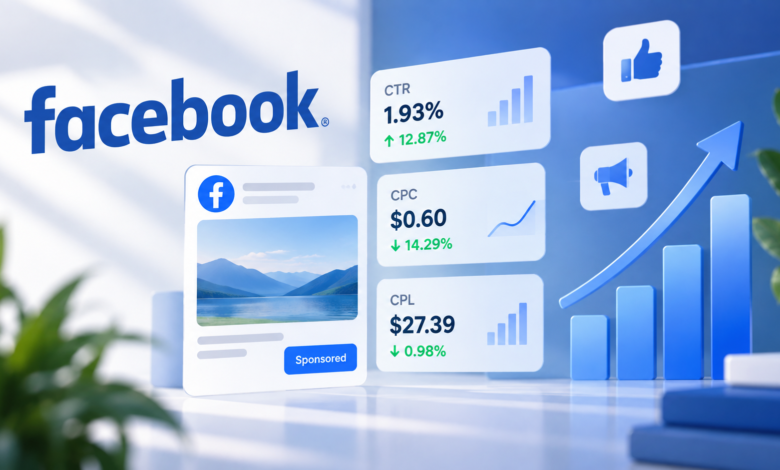
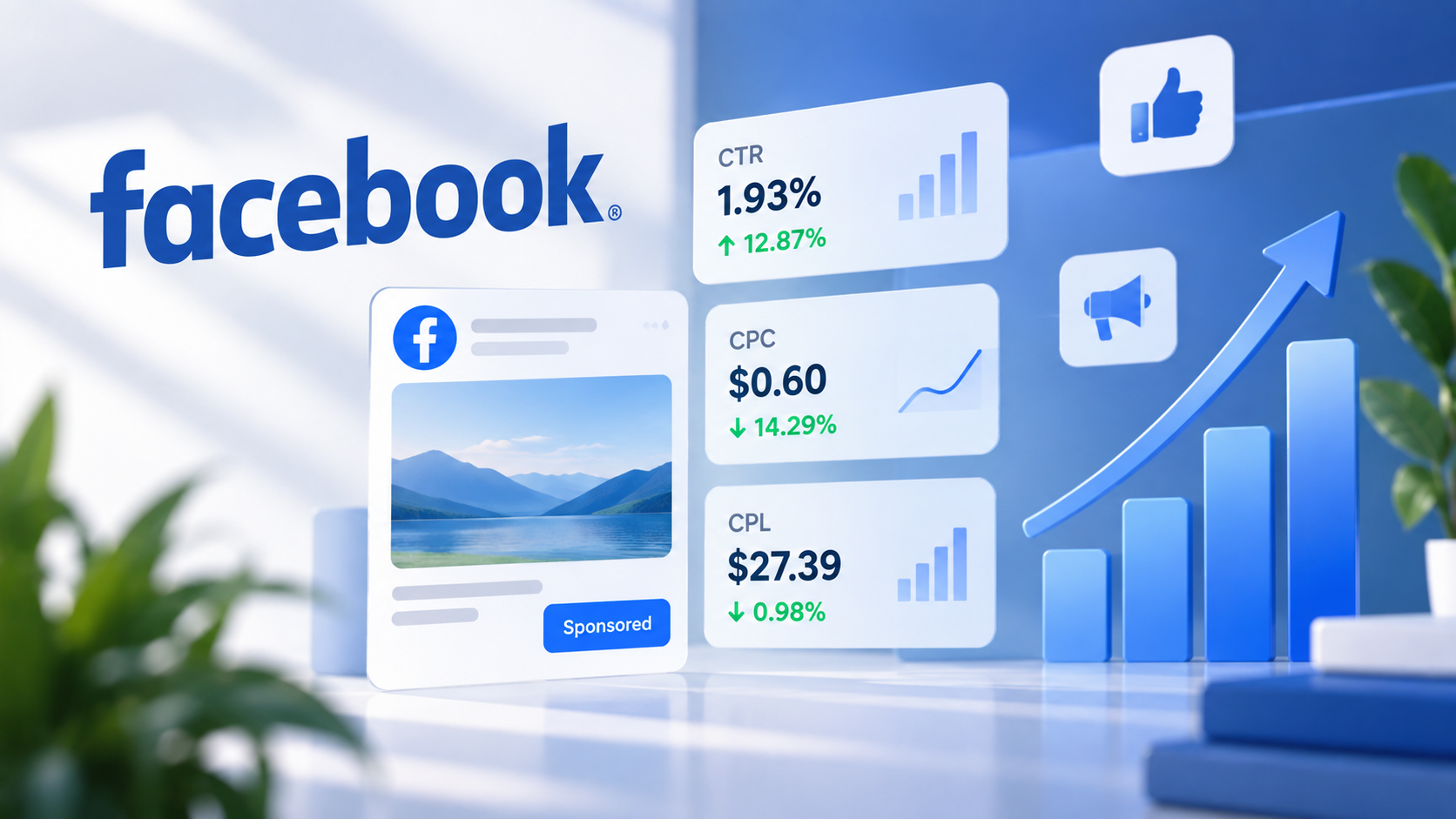
Overall, traffic campaigns delivered a stellar year-over-year performance, with engagement rising significantly while the average cost per click dropped by roughly 14%. At the same time, the average click-through rate improved by nearly 13%. This dual advantage—more users clicking on ads at a lower cost per interaction—highlights a profound improvement in creative resonance and audience targeting precision.
However, the macroeconomic and consumer trends driving these results varied substantially by sector. The report highlights stark contrasts across individual industries:
- The Outliers (Rising Costs): Only two monitored sectors experienced an increase in traffic CPCs year over year. The Shopping, Collectibles, and Gifts sector saw a sharp 73.53% increase in CPC, likely driven by fierce e-commerce competition and shifting consumer retail habits. Similarly, the Sports and Recreation industry recorded a 43.90% increase in traffic CPCs.
- The Efficiency Winners (Falling Costs): Conversely, several industries reaped massive savings. Real Estate led the pack with the single biggest CPC improvement, plummeting 39.56%. This was closely followed by Restaurants and Food, which saw CPCs drop by 37.50%, and the Industrial and Commercial sector, which enjoyed a 37.21% reduction in click costs.
Lead Campaigns Maintain Stable Acquisition Costs
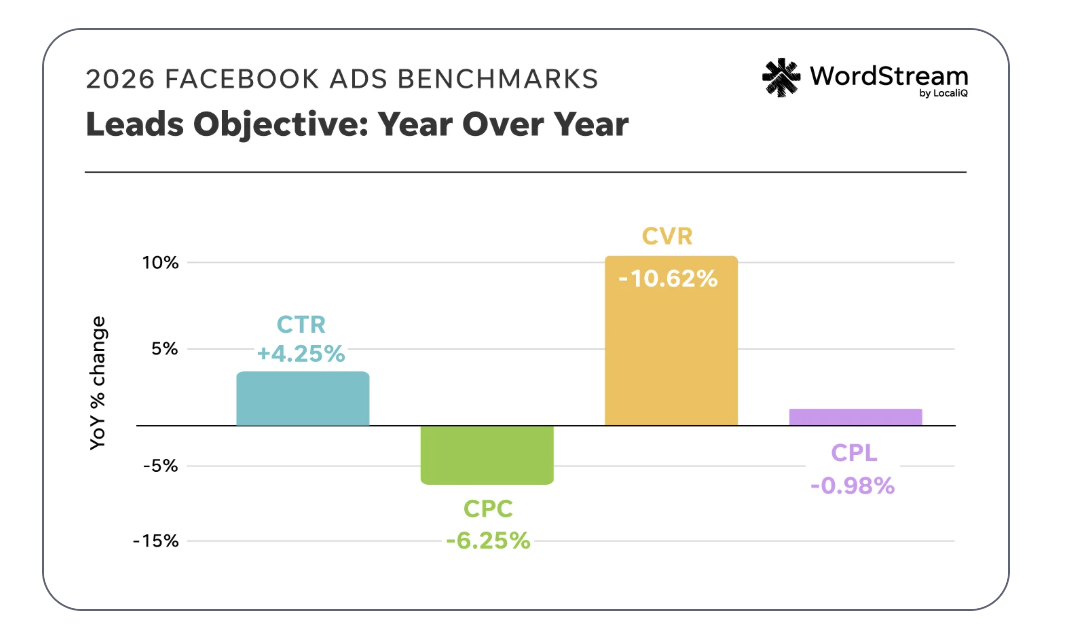
For businesses focused on direct response and customer acquisition, the 2026 benchmarks offer an equally encouraging narrative. While traffic campaigns focused heavily on engagement and lower-funnel click mechanics, lead-generation campaigns demonstrated remarkable stability in cost-per-lead metrics.
Average CPL figures remained largely flat across the board, meaning that despite inflationary pressures in other media channels, Facebook’s lead acquisition costs held firm. Furthermore, the underlying mechanics of these campaigns showed positive momentum.

Cost-per-click metrics for lead campaigns dropped across the vast majority of industries. Automotive (For Sale) campaigns experienced a dramatic 44.17% reduction in lead-campaign CPCs. Dentists and Dental Services followed closely with a 41.72% drop, while Health and Fitness advertisers saw their click costs decline by 30.30%.
Only two sectors bucked this downward trend in lead campaign click costs: Education and Instruction saw a modest 4.24% increase in CPC, while Sports and Recreation recorded a negligible 0.93% uptick.
Examining the Cost-Per-Lead Reality Check
While click costs generally trended downward, the actual cost-per-lead (CPL) varied considerably depending on the niche, underscoring the reality that audience scarcity and lifetime customer value heavily dictate advertising economics.
According to the WordStream report, the industries benefiting from the lowest CPL figures typically feature broad appeal or lower barriers to initial conversion. On the other end of the spectrum, high-consideration sectors or those requiring specialized consumer commitments faced significantly higher CPLs.
Marketers utilizing these benchmarks must weigh absolute CPL against lead quality. A lower CPL is only advantageous if the resulting leads convert into paying customers at a sustainable rate, a metric heavily tied to post-click landing page experiences and sales funnel follow-up.

Comparative Analysis: Meta Versus Paid Search
One of the most vital strategic takeaways for enterprise marketing teams is how Facebook’s economics compare against alternative channels, most notably Google Ads.
For years, digital strategists have wrestled with budget allocations between paid search and paid social. Paid search (such as Google Search) has traditionally captured high-intent users actively searching for specific products or services, naturally commanding a higher price tag. Paid social, conversely, has relied on interruption marketing to build demand, historically resulting in lower initial intent but broader top-of-funnel reach.
The 2026 data brings this dynamic into sharp relief. WordStream notes that Google Ads CPC is now more than double Meta’s average CPC. While Google Search continues to capture users at the exact moment of purchase intent, the widening cost gap makes Facebook an increasingly attractive avenue for brands seeking to scale efficiently.
Because Facebook advertisers are effectively extracting higher engagement for less capital expenditure—evidenced by 14% cheaper traffic clicks and steady lead costs—marketers can stretch their digital budgets further. This dynamic allows brands to maintain robust top-of-funnel awareness campaigns without sacrificing the capital needed for lower-funnel conversion tactics.
Industry Reactions and Strategic Implications
Independent digital marketing analysts and agency leaders have pointed to these benchmarks as validation of Meta’s long-term artificial intelligence strategy. By ceding more control to automated bidding models and machine-learning-driven creative delivery, brands are finding that the platform’s algorithm is doing a superior job of self-optimizing.
"Advertisers are no longer forced into a zero-sum game where cheaper traffic sacrifices quality," note industry observers reviewing the data. The convergence of lower click costs and stable lead acquisition expenses implies that creative fatigue is being mitigated by dynamic ad formats and automated placement testing.
However, industry experts caution against complacency. As platform efficiency improves, the barrier to entry for creative production rises. Because the algorithm rewards high-engagement content, brands that fail to continuously refresh their video assets, ad copy, and visual hooks risk missing out on these broader market efficiencies.
Looking Ahead: The Future of Paid Social Budgets
As marketing organizations finalize their quarterly and annual financial allocations, the 2026 WordStream data provides a compelling case for reevaluating the weight given to paid social initiatives.
The clear takeaway is that Facebook advertising has grown leaner and more efficient. With clicks becoming cheaper, user engagement climbing, and lead costs holding steady, brands have been handed a valuable opportunity to optimize their media mix. Whether operating in real estate, automotive, healthcare, or local services, advertisers who leverage these benchmark insights can better forecast performance, defend their ad spend efficiency, and drive sustainable growth in an increasingly competitive digital marketplace.
Related posts: