DHTMLX Gantt Review: A Professional Analysis of the Leading JavaScript Scheduling Component for Enterprise Applications

The demand for highly customized, data-dense project management software has surged as organizations move away from rigid, "one-size-fits-all" SaaS platforms in favor of bespoke internal tooling. At the center of this shift is DHTMLX Gantt, a sophisticated JavaScript-based library designed for developers, CTOs, and product owners tasked with embedding interactive, high-performance scheduling interfaces directly into proprietary web applications. Unlike traditional project management software—which is purchased as a finished product—DHTMLX Gantt functions as a foundational component, providing the engine for task visualization, dependency management, and resource allocation.
The Evolution of Developer-First Project Components
The history of project management software is marked by a clear dichotomy: organizations either pay premium subscription fees for rigid off-the-shelf tools or attempt to build custom solutions from the ground up, often underestimating the complexity of Gantt chart logic. DHTMLX, a company established in the early 2000s, positioned itself to bridge this gap. By offering a modular suite of UI components—including schedulers, Kanban boards, and Gantt charts—the vendor allows technical teams to bypass the "reinventing the wheel" phase of software development.
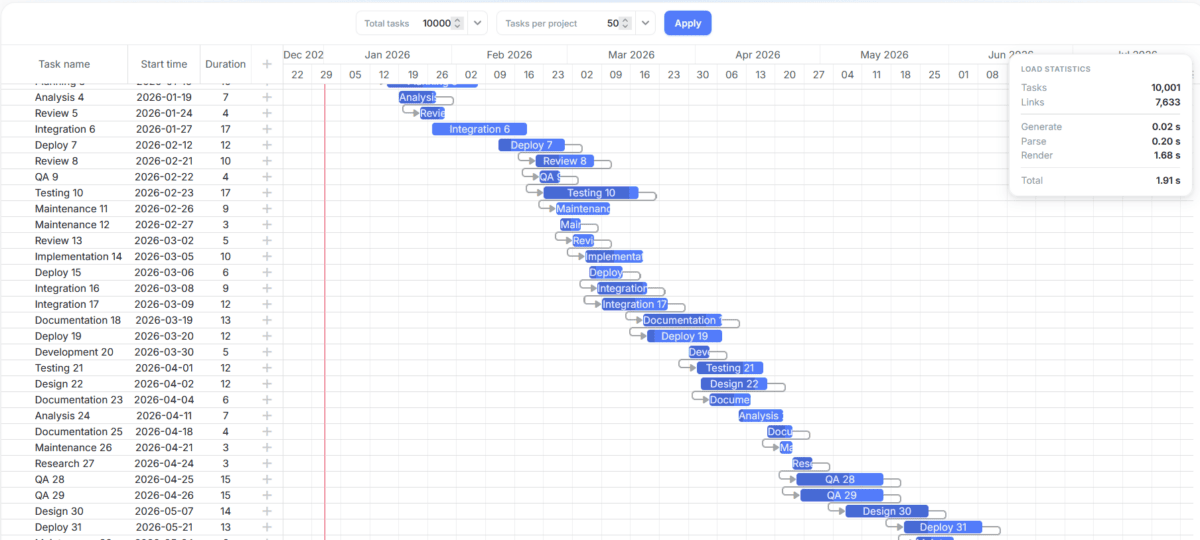
Historically, the technical overhead of rendering thousands of tasks while maintaining real-time interactivity was a significant barrier to entry. DHTMLX addressed this through the development of smart rendering and dynamic loading technologies, which allow the library to handle massive datasets without compromising browser performance. This capability has made it a preferred choice in industries such as construction, manufacturing, and large-scale logistics, where projects often involve thousands of dependencies and resource constraints that standard web-based tools struggle to render efficiently.
Technical Architecture and Integration Capabilities
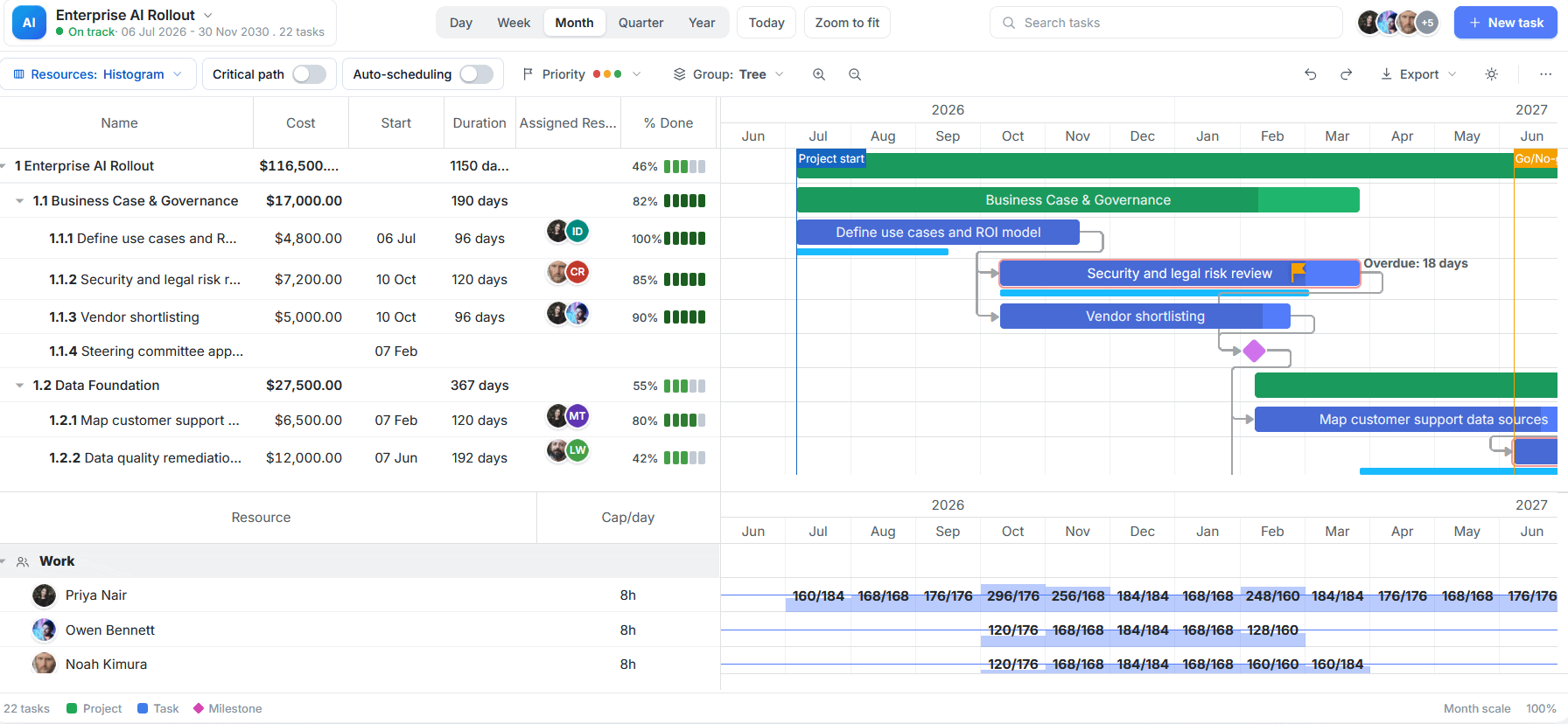
At its core, DHTMLX Gantt is built to integrate into the modern web stack. It provides native support for popular frontend frameworks, including React, Angular, Vue, and Svelte, ensuring that developers can maintain their existing application architecture rather than refactoring to accommodate the tool. The library is not merely a visualizer; it includes a robust backend-agnostic API, meaning it can be connected to any database—SQL, NoSQL, or cloud-based storage—to manage task data.
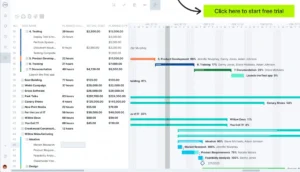
A critical aspect of its architecture is the support for complex project management logic. The component includes built-in modules for:
- Critical Path Method (CPM): Automatically identifying the sequence of tasks that determine the project’s duration.
- Auto-Scheduling: Adjusting task dates based on constraints, dependencies, and resource availability.
- Resource Management: Tracking human and material allocation across multiple, overlapping projects.
- Custom Constraints: Supporting "must start on," "as late as possible," and other industry-standard scheduling rules.
Strategic Implications for Organizations
For a Chief Technology Officer or a Head of Product, the decision to integrate DHTMLX Gantt is a strategic one involving "build versus buy" calculus. By utilizing a pre-built component, a development team can typically save several months of engineering time—the time otherwise spent writing complex algorithms for Gantt logic, handling drag-and-drop interactions, and ensuring cross-browser compatibility.
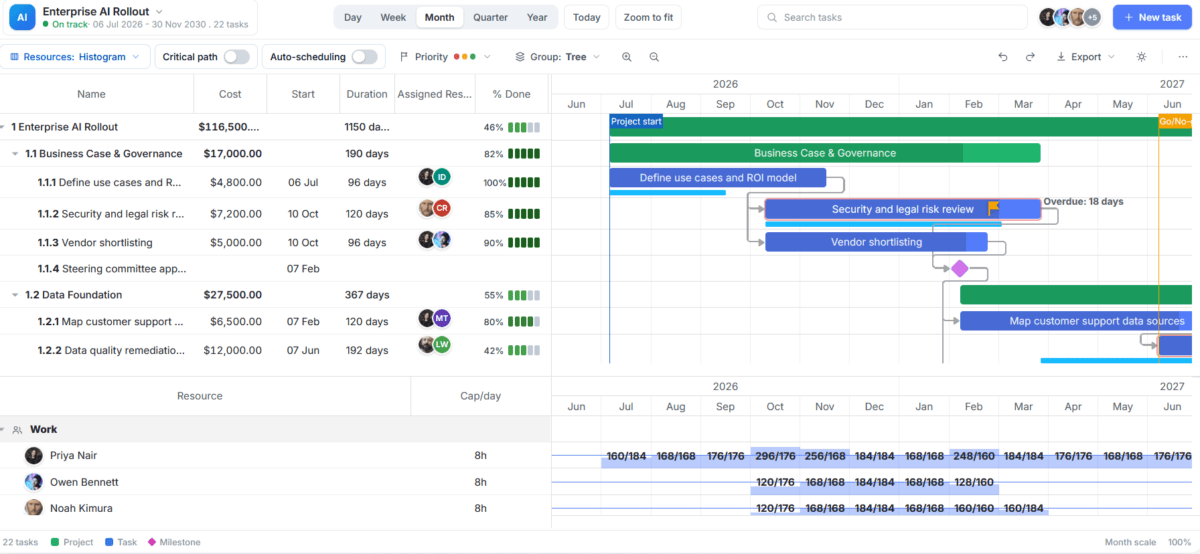
Furthermore, the licensing model offers a tiered approach. The vendor provides a free Community edition under an MIT license, which serves as a low-risk entry point for prototyping. For enterprise-grade requirements, the paid perpetual licenses (starting at $799 for individual use) grant access to advanced modules such as resource histograms, export functionality, and dedicated technical support. This pricing structure allows organizations to scale their investment as the project’s complexity grows.
Addressing Accessibility and Global User Bases
In an era where software accessibility is a regulatory and ethical imperative, DHTMLX Gantt distinguishes itself through comprehensive WAI-ARIA compliance. The library provides built-in support for screen readers and offers a sophisticated keyboard navigation system. This allows users with motor impairments to manage complex project timelines, expand or collapse task hierarchies, and edit dependencies without relying on a mouse.
The tool’s localization features are equally expansive. Supporting over 50 languages and offering a Right-to-Left (RTL) mode for languages such as Arabic or Hebrew, the library is engineered for global enterprises. The granular nature of these translations—distinguishing between regional variants like Portuguese (Portugal) versus Portuguese (Brazil)—demonstrates a level of detail that is often lacking in generic project management software.
The Role of AI in Modern Development Workflows
DHTMLX has recently pivoted toward AI-assisted development, acknowledging that the future of software creation lies in the integration of large language models (LLMs). Through the release of the DHTMLX Model Context Protocol (MCP) Server, the company allows AI coding assistants—such as Claude Code, Cursor, and GitHub Copilot—to interface directly with their documentation and API references.
This development significantly lowers the barrier to entry for developers who are new to the library. By providing AI agents with "skills" (framework-specific integration patterns), the vendor enables the rapid generation of boilerplate code, significantly accelerating the integration process. Furthermore, the availability of demo applications like the "AI Gantt Maker" serves as a sandbox for teams to test the limits of what can be automated in a project management interface.
Data Interoperability and Migration
One of the most significant challenges in project management is the "silo effect," where data is locked into proprietary formats. DHTMLX Gantt mitigates this by providing extensive import and export capabilities. The library natively supports the most common industry formats:
- MS Project (MPP/XML): Essential for enterprises transitioning from legacy Microsoft workflows.
- Primavera P6: The industry standard for large-scale engineering and construction projects.
- iCal, Excel, and PDF: Facilitating the distribution of reports to stakeholders who may not have access to the primary application.
This interoperability ensures that an application built on DHTMLX Gantt does not become a closed loop; rather, it can function as a bridge between various departments that may still be reliant on traditional desktop software.
Comparative Analysis: The "Developer Component" Advantage
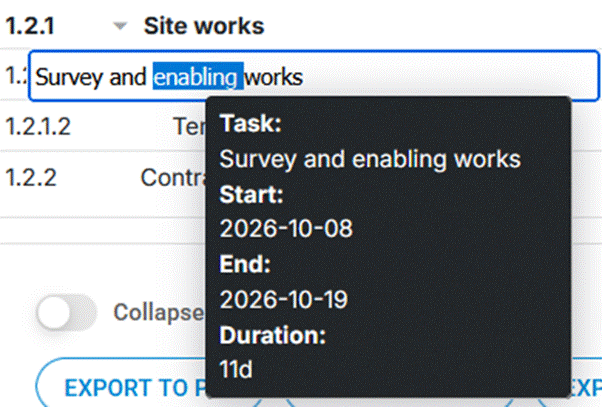
When comparing DHTMLX Gantt to standard SaaS solutions like Jira or Asana, the fundamental difference lies in the level of control. In SaaS, the user is restricted by the vendor’s UI/UX decisions. With DHTMLX, the "look and feel" is entirely in the hands of the internal development team. Companies can apply their brand colors, adjust the density of the task grid, and modify the tooltips to display only the data points relevant to their specific business vertical.
The "zoom-to-fit" feature, for example, is a direct response to a common frustration in project reporting: the inability to view a massive project timeline on a single slide. By enabling users to consolidate complex views into concise, report-ready visuals, the tool addresses the needs of stakeholders who require high-level visibility without the noise of granular data.
Conclusion and Practical Implementation Strategy
For organizations considering the adoption of DHTMLX Gantt, the recommended path forward is to begin with the Community edition to evaluate whether the core rendering performance meets the specific needs of the project. Once the viability is confirmed, stakeholders should perform a requirements audit—determining which of the advanced features, such as resource planning or specific import/export formats, are necessary for their operational success.
Ultimately, DHTMLX Gantt is not a "magic button" that solves project management challenges; it is a high-performance engine. It requires a competent development team to house, configure, and maintain the implementation. However, for those who choose to build their own tools, it provides the essential architecture to deliver a professional-grade experience that can compete with, or exceed, the capabilities of the most expensive commercial project management platforms on the market today. By focusing on modularity, performance, and developer-centric workflows, DHTMLX remains a vital component in the modern enterprise software ecosystem.