The Definitive Guide to Choosing the Best Smart Speaker for Your Ecosystem in 2026

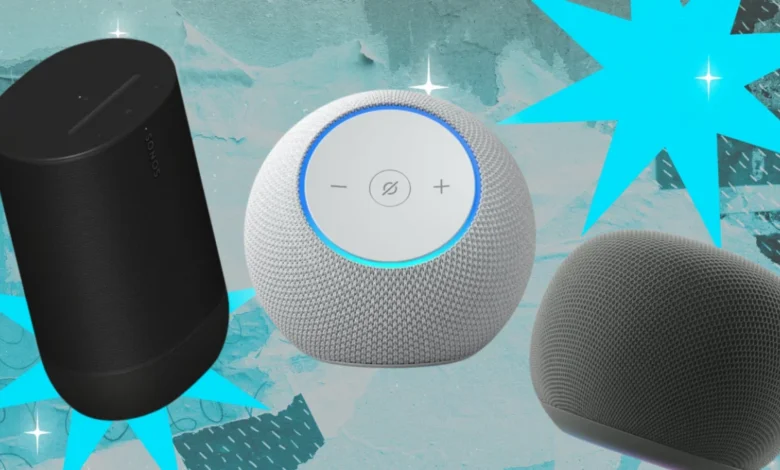
As smart home technology matures into an indispensable component of modern residential architecture, selecting the right central hub has evolved from a matter of mere convenience into a critical infrastructure decision for the household. Smart speakers now act as the nexus of domestic life: they orchestrate automated routines, manage digital security interfaces, deliver high-fidelity entertainment, and serve as the voice-activated interface for ambient computing. With major hardware updates rolled out across the industry through 2026, the marketplace offers specialized hardware tailored to distinct platform ecosystems and lifestyle demands. Understanding the nuanced capabilities of these devices is essential for consumers looking to optimize their home automation investments.
The Evolution of the Domestic Smart Hub
The smart speaker category has undergone a remarkable transformation since its inception over a decade ago. Initially popularized as novelty items capable of reciting weather forecasts and streaming basic audio, modern iterations are sophisticated edge-computing nodes equipped with advanced neural processors, multi-protocol radio support, and localized AI integration. The industry landscape in 2026 is defined by a shift toward ambient intelligence, where devices do not merely wait for commands, but actively anticipate household needs through sensor arrays that monitor occupancy, lighting, and ambient noise levels.
Consumers approaching the market today must evaluate hardware not just on acoustic performance, but on protocol compatibility—specifically support for the universal Matter standard, Thread mesh networking, and Zigbee—as well as the underlying artificial intelligence engine that powers the assistant.
Ecosystem Breakdown and Leading Hardware Options
To navigate the diverse offerings available to consumers, industry analysts categorize smart speakers by their primary platform integration and functional use cases.
The Best All-Around Choice: Amazon Echo Dot Max
For households that prioritize platform neutrality and hardware flexibility, Amazon’s Echo line remains the preeminent choice. Among the company’s extensive catalog, the Amazon Echo Dot Max has emerged as the definitive mid-tier option, striking a balance between accessible pricing and advanced acoustic and computational engineering.
Industry reviews highlight the Echo Dot Max for its ability to project balanced, room-filling sound across modestly sized living spaces without requiring a substantial financial investment. While it lacks the dedicated directional arrays found in larger, studio-grade hardware, its acoustic profile satisfies the demands of casual listening and spoken-word media.
Crucially, the Echo Dot Max excels in interoperability. Powered by Amazon’s advanced Alexa ecosystem—including integration with the newer Alexa+ AI tier—the device supports an expansive suite of connectivity protocols, including Wi-Fi 6E, Bluetooth 5.3, and LE Audio. Furthermore, native support for Matter, Thread, and Zigbee ensures that it can interface seamlessly with cross-platform devices, whether the user operates a Windows PC, an iPhone, or disparate smart lighting and security systems. Integrated sensors measuring temperature, ambient light, and ultrasonic proximity further elevate its utility as a localized automation controller.
The Premier Option for Google Ecosystem Users: Google Home (2026 Edition)
Google’s strategic refresh of its smart speaker lineup—marking the first major hardware revision since the debut of the Nest Mini in 2019—has repositioned the company as a formidable contender in high-end audio and conversational AI. The redesigned Google Home speaker amalgamates aesthetic cues from its predecessor and Apple’s HomePod architecture, resulting in a modern, understated aesthetic suitable for contemporary interiors.

The defining characteristic of the 2026 Google Home speaker is its deep integration with Google’s Gemini AI architecture. Unlike legacy voice assistants that rely on rigid syntax, Gemini enables complex, multi-layered conversational commands, contextual awareness, and the ability to process concatenated requests or mid-sentence corrections. For instance, users can issue intricate queries cross-referencing personal calendars, smart home telemetry, and external web data.
From an audio perspective, the device punches well above its weight class. Equipped with a compact 58mm internal driver, audio reviews have lauded its enhanced bass response and acoustic clarity, frequently citing it as the benchmark for audio fidelity in the $100 price tier. However, unlocking the full potential of its AI capabilities often requires a subscription to Google’s premium services, a factor consumers must weigh when calculating the total cost of ownership.
The Sanctuary of the Apple User: HomePod mini
For consumers fully invested in Apple’s walled garden—utilizing iPhones, Mac computers, Apple TV, and Apple Music—the HomePod mini remains the uncompromised choice. As one of the few third-party-compatible devices to natively leverage Siri, the HomePod mini acts as a seamless extension of the iOS and macOS operating environments.
Beyond basic media playback, the HomePod mini integrates deeply with native Apple utilities. Users can delegate tasks to the Reminders app, execute iMessages, utilize the Find My network to locate misplaced hardware, and manage HomeKit-enabled security devices through the Home app. Voice recognition technology allows the speaker to distinguish between up to six individual household members, ensuring personalized responses for calendar and messaging queries.
Acoustically, Apple employs advanced computational audio algorithms to simulate the dynamic range and output of a significantly larger speaker chassis. While physical laws limit the absolute depth of its bass compared to full-sized floor-standing units, the high-frequency and mid-range separation is exceptional. Multi-room deployment is further simplified via AirPlay 2 and the hardware intercom feature, cementing its status as the ideal audio node for Apple-centric households.
The Portable Paradigm: Sonos Move 2
While the vast majority of smart speakers are engineered for stationary domestic placement, the Sonos Move 2 addresses the demand for mobile, high-fidelity smart audio. Encased in a ruggedized chassis with an IP56 rating protecting against dust and moisture ingress, the battery-powered speaker is designed for transitional environments, ranging from backyard patios to remote outdoor excursions.
True to the Sonos engineering pedigree, the Move 2 delivers superior acoustic performance. It features dual left- and right-channel tweeters configured to project a genuine stereo soundstage, supported by a robust low-frequency driver that maintains depth even at moderate listening volumes.
Versatility is another core strength of the Move 2. It supports both Sonos Voice Control and Amazon Alexa, alongside Wi-Fi 6 and Apple AirPlay 2 connectivity. Although it utilizes an older Bluetooth 5.0 protocol for off-network pairing, its primary limitation is financial: commanding the highest price point among standard consumer smart speakers, it is best suited for audiophiles and dedicated smart home enthusiasts who specifically require portable flexibility paired with stationary ecosystem integration.
Market Implications and Future Outlook
The diversification of the smart speaker market reflects a broader maturation in consumer electronics. As proprietary ecosystems compete for dominance, hardware manufacturers are increasingly forced to adopt open standards like Matter to prevent consumer lock-in. At the same time, the integration of generative AI models into edge devices transforms these speakers from reactive tools into proactive domestic managers.
Industry analysts note that while premium portable units like the Sonos Move 2 cater to niche lifestyle segments, the core volume of the market continues to center on affordable, highly interoperable mid-tier devices such as the Echo Dot Max and the Google Home. As hardware manufacturers continue to refine sensor arrays and local processing power, the smart speaker will undoubtedly remain the indispensable acoustic and computational anchor of the modern connected home.