The High Cost of the Virtual Wall: How AI Surveillance Towers Fail Border Crossers and Conceal Fatalities

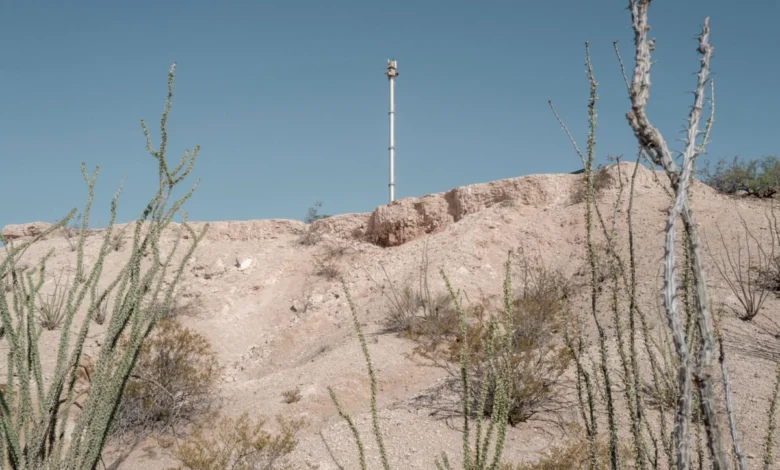
The United States southern border is increasingly monitored not just by physical barriers, but by an invisible, high-tech matrix known as the virtual wall. Spanning remote terrain from Texas to California, this network comprises thousands of remote video surveillance systems, integrated fixed towers, and cutting-edge artificial intelligence-powered autonomous surveillance towers built by defense contractors like Anduril and Elbit Systems. Promoted by successive presidential administrations and backed by billions in federal funding—including a projected $1 billion expansion for nearly 1,500 new towers by 2034—these technologies are officially marketed as tools to enhance national security and, crucially, save migrant lives by expediting emergency responses.

However, a comprehensive investigation reveals a deeply troubling reality: hundreds of migrant deaths have occurred in plain view of these multi-million-dollar surveillance arrays. Interviews with more than 45 individuals, including current and former White House advisors, presidential appointees, Border Patrol agents, medical examiners, local sheriffs, humanitarian volunteers, and technology employees, expose systemic failures. The technology frequently suffers from algorithmic blind spots and unclassified movements, while human operators face information overload, resource shortages, and competing tactical priorities. Furthermore, government agencies have conducted little to no formal assessment of how often these surveillance tools miss individuals in distress or fail to trigger life-saving interventions before tragedy strikes.
Evolution of the Virtual Wall: From Early Video Feeds to Autonomous AI
Securing nearly 2,000 miles of rugged and remote terrain has challenged the federal government for decades. Following historic shifts in enforcement strategies during the 1990s—such as Clinton-era operations in El Paso that pushed migration paths into dangerous, unpopulated desert corridors—the Border Patrol sought technological force multipliers. In 1998, the agency rolled out its first generation of remote-controlled pan-and-zoom cameras mounted on tall metal structures. While these systems allowed operators to survey large areas without deploying agents into the field, they immediately generated massive information overload. Agents were tasked with monitoring dozens of screens simultaneously, making real-time detection nearly impossible.

Recognizing these limitations, the Department of Homeland Security sought automated solutions. By 2015, the Israeli defense contractor Elbit Systems began installing Integrated Fixed Towers (IFTs) in Arizona, utilizing radar to automatically detect and track motion. By 2018, under a push from the CBP Innovation Team, startups like Anduril entered the market to provide solar-powered, artificial intelligence-enabled autonomous surveillance towers (ASTs). These systems rely on computer vision algorithms to automatically classify people, vehicles, and animals, promising to free agents from dark monitoring rooms and alert them to activity in monitored sectors. Despite successive generations of hardware upgrades, fundamental flaws persisted across every iteration of the virtual wall.
Chronology of Technological Shortcomings and Operational Bottlenecks
The operational history of border surveillance towers is marked by a persistent gap between technical promises and field realities.

- 1998–2005: The initial rollout of the Remote Video Surveillance System (RVSS) introduces basic video monitoring. By 2005, federal inspectors note that without automated alerts, illegal activity frequently goes unnoticed.
- 2015: Elbit Systems deploys Integrated Fixed Towers across thousands of square miles in Arizona, yet topographical obstructions and vegetation routinely create blind spots in coverage.
- 2018–2021: CBP establishes the Innovation Team, leading to the rapid procurement of Anduril’s Sentry towers. Autonomous software is designed to classify and flag human movement, yet field agents quickly report algorithmic false negatives.
- 2021–2025: Despite billions in continued federal investment and expanding inventories surpassing 800 towers, maintenance backlogs leave significant percentages of first-generation cameras broken or inoperable. Meanwhile, hundreds of human remains are documented within the functional range of these systems.
Supporting Data and Empirical Findings
Quantifying the exact correlation between surveillance infrastructure and fatalities presents significant methodological challenges due to incomplete public records, missing GPS data, and short data-retention policies that overwrite tower footage every 30 days. Nevertheless, geographic and topographical analyses reveal staggering numbers.
Researchers estimate that between 500 and 700 deaths occurred within range of RVSS towers between 2015 and late 2025. In Arizona, analyzing Elbit’s IFT network reveals that nearly 350 people died within range of these towers since 2015, with dozens of fatalities occurring in zones covered by multiple overlapping systems with clear lines of sight. Similarly, areas equipped with Anduril’s autonomous towers—such as parts of New Mexico and the Otay Mountain Wilderness in California—have recorded numerous deaths of individuals whose bodies were recovered yards or miles from fully operational units.

These findings directly challenge the public assurances provided by officials across four presidential administrations, who historically maintained that deaths near surveillance infrastructure were exceedingly rare or non-existent.
Official Responses and Agency Stance
In response to detailed inquiries regarding the operational efficacy of the surveillance networks and specific fatal incidents, federal and corporate entities consistently deflect direct accountability. Hilton Beckham, CBP’s assistant commissioner for public affairs, defended the agency’s asset deployment by stating: "Autonomous surveillance towers use artificial intelligence to detect and classify people, vehicles, and animals and alert Border Patrol agents to activity in monitored areas… CBP evaluates the technology based on its impact on detection, response coordination, agent safety, and mission outcomes." Beckham further emphasized that the technology does not make law enforcement decisions; rather, human agents review information and determine appropriate responses.

Representatives for major defense contractors offered similar positioning. General Dynamics directed all questions regarding RVSS towers back to CBP. An Anduril spokesperson asserted that surveillance ranges vary depending on terrain, physical obstructions, and virtual boundaries established by CBP for privacy reasons, while declining to comment on specific missing-detection incidents or follow-up accuracy inquiries.
Independent experts and legislative overseers, however, offer scathing critiques of these justifications. Geoff Boyce, an assistant professor of geography at University College Dublin, notes that while surveillance assets may provide useful intelligence under specific conditions, they consistently fail to deliver the operational support claimed by manufacturers and the Department of Homeland Security. Similarly, U.S. Representative Delia Ramirez of Illinois has publicly denounced the program, stating that AI-powered surveillance technologies fail to enhance public safety while consuming millions in taxpayer funds without adequate transparency or oversight.

Broader Impact and Policy Implications
The persistent divergence between high-tech border surveillance investments and humanitarian outcomes highlights the inherent limits of applying technological solutions to complex humanitarian and geopolitical crises. Even when autonomous systems successfully detect movement, multiple systemic bottlenecks impede rescue efforts. Field agents frequently face overwhelming operational demands during periods of high migration, forcing them to prioritize apprehensions, process asylum claims, or maintain tactical pacing over immediate search-and-rescue dispatches. Furthermore, tactical strategies—such as monitoring groups without immediate intervention or holding back resources to counter perceived smuggling diversions—mean that knowing a person’s location does not automatically guarantee timely assistance.
Crucially, neither local law enforcement nor federal agencies maintain a formal procedure to investigate whether surveillance technology should have detected a deceased individual or why agents failed to reach them in time. This institutional vacuum shields the program from rigorous accountability even as federal spending accelerates. With plans to spend $1 billion on nearly 1,500 additional towers by 2034, the expansion of the virtual wall continues unabated, operating with diminished oversight following the dissolution of key Department of Homeland Security evaluation offices.

Ultimately, as families mourn relatives discovered dead within sight of multi-million-dollar surveillance infrastructure, critics argue that the debate must pivot from the technical failures of algorithms to the profound human costs of an oversight model that measures success solely through enforcement metrics while leaving vulnerable crossers to perish in the shadow of the lens.