NVIDIA Unveils Isaac ROS 5.0 at ROSCon 2026 to Usher in the Era of Agentic Physical AI and Accelerated Robotics

The modern landscape of robotics engineering stands at a critical intersection where generative artificial intelligence converges with physical automation. To bridge the widening gap between software concepts and real-world deployment, NVIDIA officially launched Isaac ROS 5.0 at the annual ROSCon conference in Toronto, Canada. This major release represents a monumental shift for the nearly 1.3 million global users of the Robot Operating System (ROS), introducing native agentic workflows, advanced platform support, and deep GPU acceleration designed to radically simplify how developers build, customize, and deploy sophisticated physical AI applications.
As industrial demand for autonomous systems capable of dynamic reasoning accelerates, developers face unprecedented hurdles. Building machines that can seamlessly perceive unstructured environments, interpret complex sensor data, and execute real-time physical actions requires robust, interoperable frameworks. Isaac ROS 5.0 addresses these core bottlenecks by merging NVIDIA’s accelerated computing libraries with the open-source foundational standards established by the Open Robotics community. By empowering both human developers and autonomous AI agents to collaborate within a unified ecosystem, NVIDIA aims to slash development timelines from months to days, fundamentally altering the trajectory of industrial and commercial robotics.
Evolution of the Open Source Foundation and Platform Modernization
The genesis of modern robotics heavily relies on the Robot Operating System, an open-source framework that supplies developers with standard libraries, messaging systems, and developer tools. However, as deep learning models and computer vision algorithms have grown in complexity, traditional central processing units (CPUs) have struggled to handle the heavy computational loads required for real-time spatial awareness and motion planning.
To resolve this performance bottleneck, Isaac ROS 5.0 introduces comprehensive support for ROS Lyrical and Ubuntu 24.04. This update provides engineers with an immediate pathway to adopt the latest software platforms while leveraging NVIDIA’s parallel computing architecture. Notably, NVIDIA collaborated closely with the Open Source Robotics Alliance to contribute a vendor-neutral, standardized data-handling interface to ROS Lyrical. This standardized memory transport layer enables robotics software to route data efficiently across diverse computing hardware, utilizing CUDA as a benchmark for high-speed GPU acceleration.
The integration of these frameworks ensures that developers do not have to sacrifice community-driven open-source flexibility for proprietary performance. Instead, they gain access to production-ready perception pipelines and high-throughput data transport mechanisms that operate natively within familiar development environments.
The Rise of Agentic Workflows in Robotics Engineering
One of the most disruptive aspects of Isaac ROS 5.0 is the integration of agentic development capabilities. Artificial intelligence agents are rapidly transforming software engineering by automating repetitive tasks, analyzing sprawling codebases, and translating high-level natural language intent into functional code. Isaac ROS 5.0 extends these transformative capabilities directly into the domain of robotics.
The release introduces specialized NVIDIA Isaac skills for setup and manipulation, providing modular, reusable workflows that both human engineers and AI agents can execute to streamline development. Furthermore, the inclusion of agent-ready documentation allows large language models and autonomous coding assistants to comprehensively understand Isaac ROS toolchains, significantly reducing the friction involved in configuring complex hardware-software stacks.
Among these new agent-driven capabilities, the FoundationStereo fine-tuning skill stands out. This tool enables an AI agent to automatically calibrate and adapt stereo perception models to a developer’s specific camera configurations, physical environments, and intended applications. By automating sensor calibration, developers can achieve hyper-accurate depth perception without manual intervention.
Similarly, FoundationPose—NVIDIA’s premier foundation model for object pose estimation and tracking—has been upgraded with an agent-ready inference library. This library allows robots to perceive, register, and track the exact three-dimensional position and orientation of objects up to 5.5 times faster than previous iterations. Additionally, standard workflows such as pick-and-place operations are now packaged as standalone, agent-ready skills, decoupling detection, depth estimation, and pose output to grant engineers greater architectural flexibility.
Broad Industry Adoption Across the Global Robotics Ecosystem
The practical implications of Isaac ROS 5.0 extend far beyond software tooling, as evidenced by rapid adoption across a diverse array of global automation leaders, manufacturers, and technology providers. Across manufacturing floors, logistics hubs, and edge computing deployments, industry players are utilizing the new framework to compress deployment schedules and mitigate integration risks.
RealSense, a prominent developer of 3D perception technology, has launched AgenticROS, an open-source project sponsored to connect Isaac ROS directly with NVIDIA Nemotron open models and NemoClaw blueprints. This synergy allows AI agents to interact directly with ROS-based hardware. Furthermore, RealSense is actively optimizing its AI-native 3D stereo depth cameras, including the RealSense D585 Pro, alongside open-source SDKs tailored for Isaac ROS and the NVIDIA Jetson Thor edge platform.
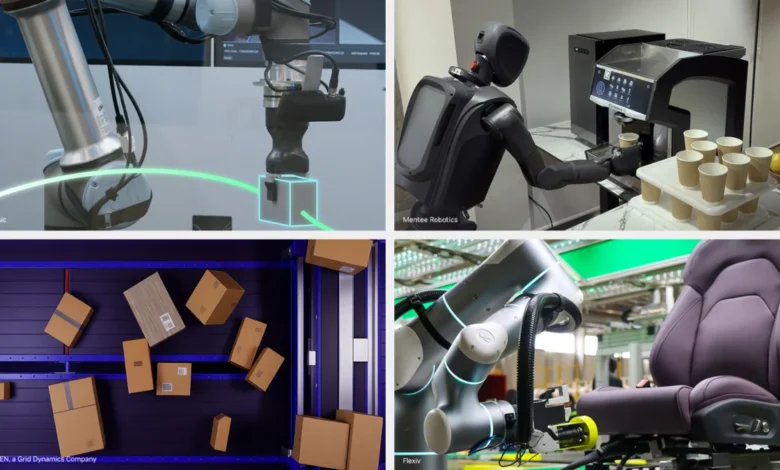
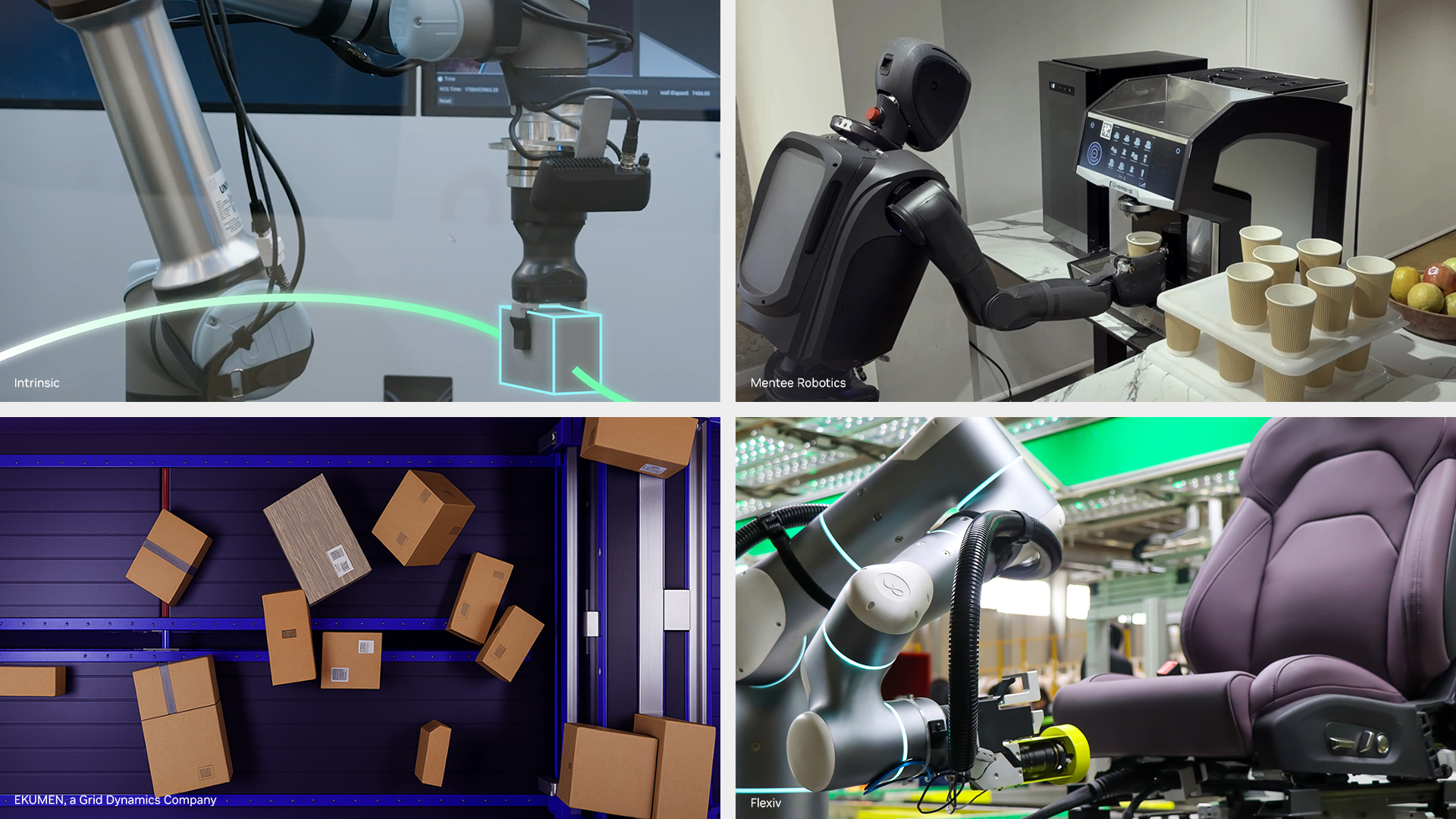
In the realm of industrial manufacturing, Intrinsic has incorporated NVIDIA FoundationPose into its Open Machine Tending Solution—a core component of Intrinsic Core designed to accelerate computer numerical control (CNC) machine tending. By leveraging the FoundationPose perception pipeline, industrial robots can dynamically detect, register, and handle irregular parts straight out of the box, eliminating the need for rigid, costly physical fixtures and bespoke systems integration.
Hardware manufacturers are similarly embedding Isaac ROS into their product portfolios. Seeed Studio has integrated the platform into its reBot Arm, combining accelerated perception and collision-aware motion planning on the Jetson Thor architecture. Magna, a global automotive supplier, is pairing Isaac ROS with NVIDIA Isaac Sim for rigorous hardware-in-the-loop testing. This combination allows Magna to validate robotic perception and synchronized data collection in virtual environments before deploying intelligent automation to physical manufacturing plants, drastically reducing project timelines and operational hazards.
Package management and visualization have also received substantial upgrades. Prefix.dev’s Pixi tool now brings together ROS and the CUDA platform to facilitate reproducible, containerized robot development environments. Meanwhile, Foxglove continues to serve as an essential Isaac ROS visualization partner, offering web and desktop tools that allow engineers to debug live ROS streams, inspect 3D topics, analyze nvblox meshes, and review rosbags seamlessly.
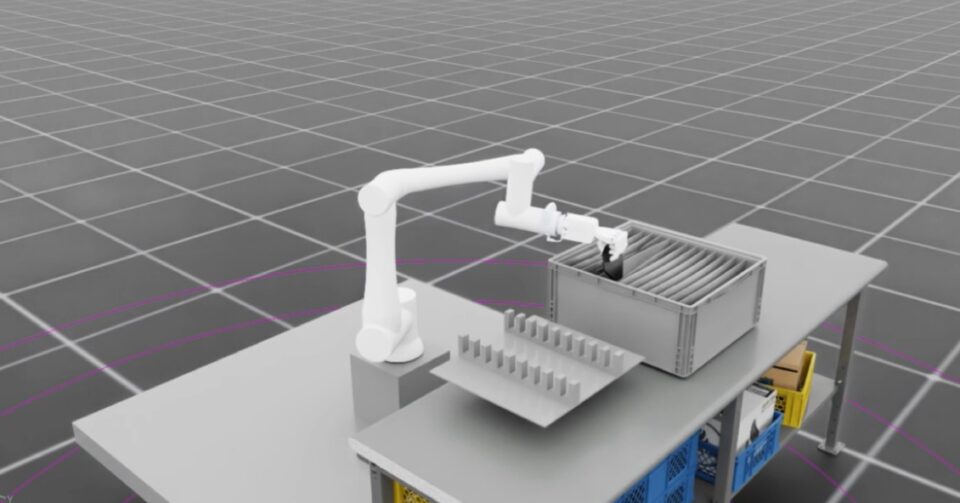
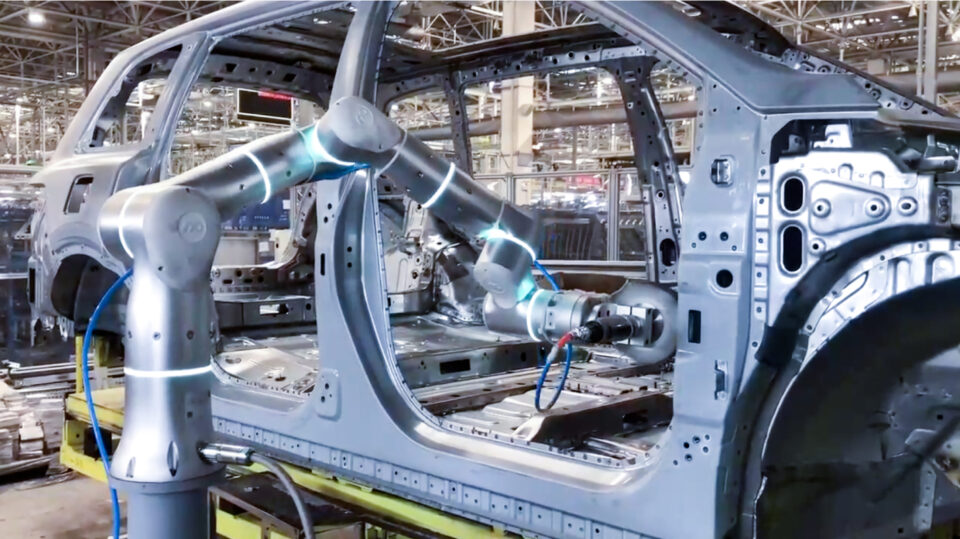
Flexiv is leveraging Isaac ROS within its Rizon 4 adaptive robots, streamlining the transition from virtual simulation in Isaac Sim to physical deployment in demanding industrial environments such as automotive welding lines. Similarly, Ekumen has integrated GPU-accelerated Isaac ROS packages into standard ROS and Nav2 navigation stacks. Utilizing the isaac_ros_cumotion package, Ekumen’s warehouse automation arms can calculate collision-free trajectories in roughly two to five milliseconds—a massive leap forward compared to traditional planning methods that require hundreds of milliseconds. Ouster has likewise integrated its Stereolabs ZED stereo cameras natively into Isaac ROS to deliver low-latency perception capabilities.
Scaling Physical AI from the Edge to Humanoid Platforms
Ultimately, advanced algorithms and agentic workflows must execute reliably at the network edge on the physical robot itself. The NVIDIA Jetson platform serves as the foundational compute engine for this requirement, scaling from entry-level embedded systems like the Jetson Orin Nano to ultra-high-performance architectures like Jetson Thor.
Humanoid robotics companies are capitalizing on this hardware-software synergy. Mentee Robotics utilizes Isaac ROS as the core perception and AI backbone for its MenteeBot humanoid, allowing the bipedal system to interpret complex visual data and execute learned behavioral patterns in real time. Because the Jetson Orin and Jetson Thor platforms share a unified software architecture, Mentee can effortlessly scale its technological advancements across multiple generations of robotic hardware.
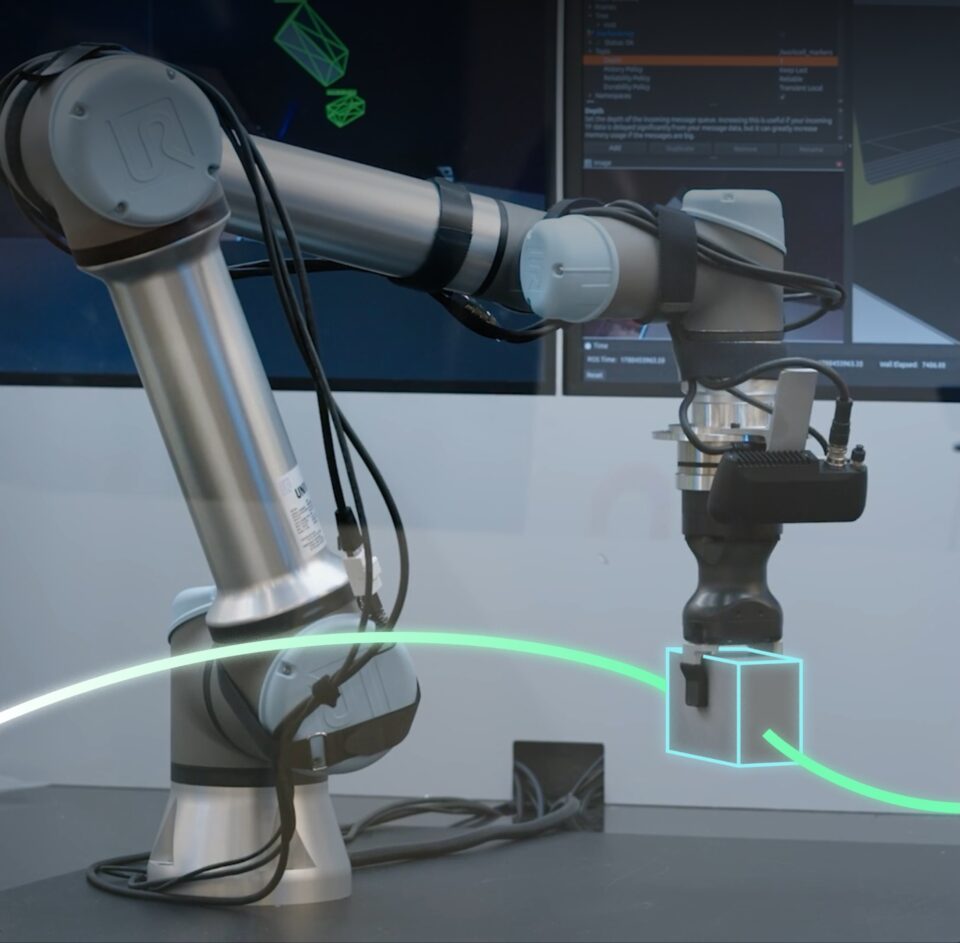
Universal Robots has embedded Isaac ROS into its AI Accelerator software development kit, giving system integrators the ability to deploy advanced vision-guided motion without authoring complex code from scratch. Powered by edge-based Jetson hardware, these manufacturing cells can dynamically adapt to misaligned components, injecting unprecedented flexibility into modern assembly lines.
Similarly, ROBOTIS has integrated Isaac ROS into its AI Worker robotic platform, employing GPU-enhanced perception for precision pick-and-place tasks. FieldAI is deploying its cloud-independent robot foundation models on Jetson devices utilizing Isaac ROS, ensuring that fully autonomous mobile robots can operate reliably in remote environments without persistent cloud connectivity. Noble Machines is leveraging the same ecosystem to accelerate the creation of general-purpose industrial machines, relying on pre-built AI pipelines rather than reinventing foundational perception software.
Analytical Implications and Future Outlook
The commercial rollout of Isaac ROS 5.0 marks a maturation point for the physical AI industry. For years, the robotics sector has suffered from a fragmentation of software tools, high custom-integration costs, and a steep technical barrier to entry that slowed the adoption of advanced artificial intelligence.
By standardizing accelerated memory transport through the Open Source Robotics Alliance and embedding autonomous AI agents directly into the developer workflow, NVIDIA has addressed both halves of the physical AI equation: accelerating how robotics applications are engineered and optimizing how they execute in the physical world.
As enterprises increasingly demand modular, adaptable automation to combat labor shortages and supply chain volatility, platforms that drastically reduce time-to-market will dictate industry standards. With Isaac ROS 5.0 available immediately as a free, open-source framework via GitHub, the global robotics community is now well-equipped to transition from experimental research to scalable, production-grade deployment faster than ever before.
Related posts: