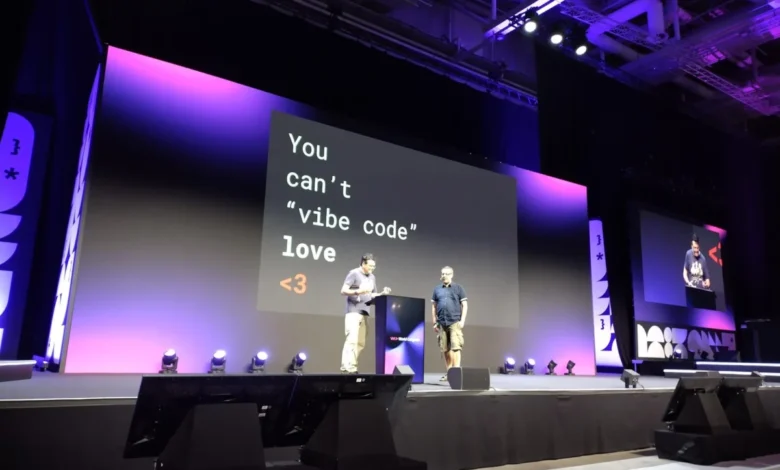
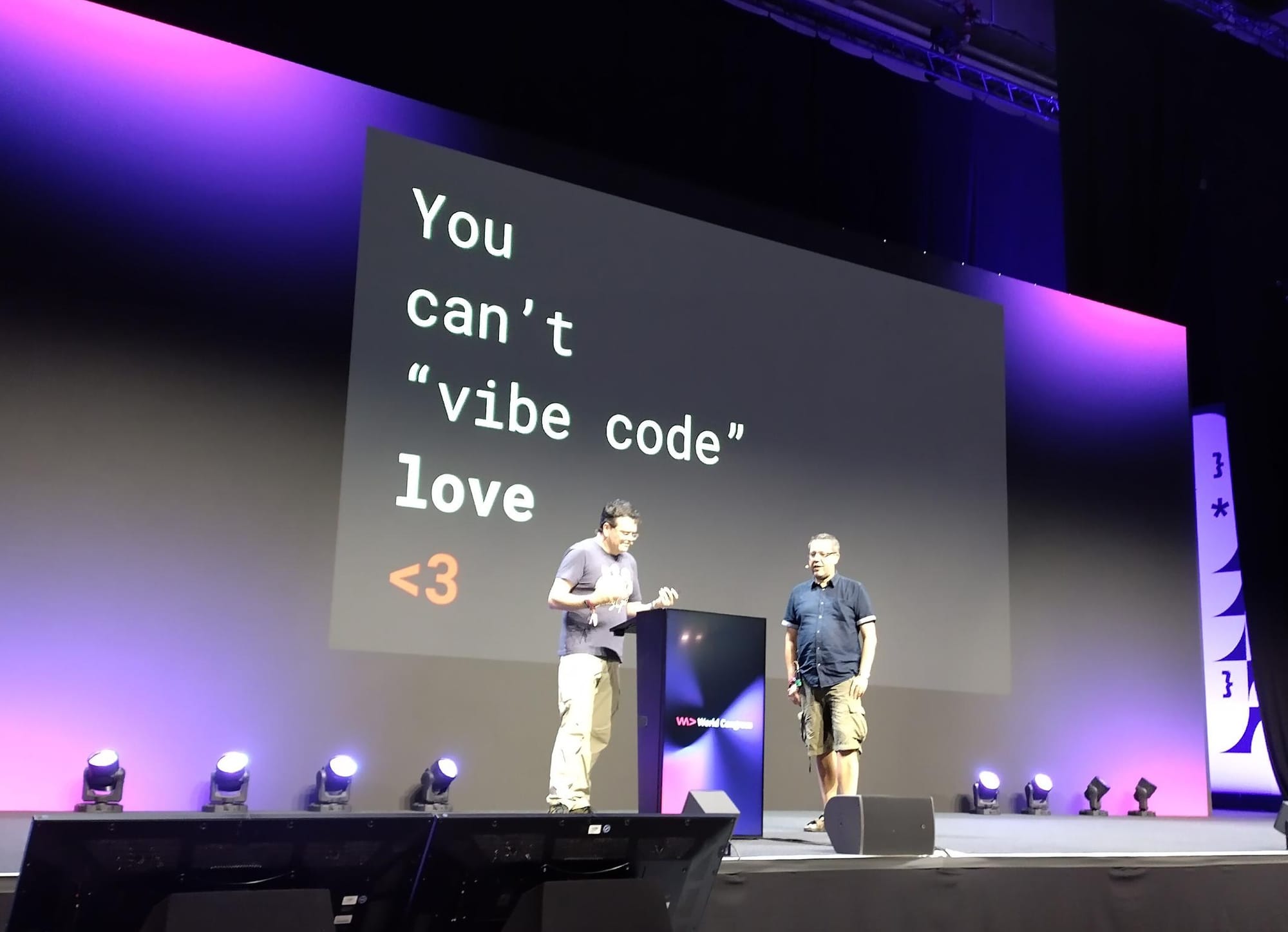
The evolution of software development has long relied on collaborative ecosystems, yet the rise of artificial intelligence and large language models (LLMs) has introduced unprecedented shifts in how programmers share and consume knowledge. This transformation took center stage at the WeAreDevelopers World Congress held at the CityCube in Berlin, where Stack Overflow co-founder Jeff Atwood and early community hire Ben Dumke-von der Ehe delivered a joint keynote presentation. Titled "None of Us Is As Dumb As All of Us: Community And Knowledge Go Hand In Hand," the July 10 presentation explored the intersection of human-driven developer communities, open-source principles, and the growing dominance of AI-generated answers in the coding landscape.
Main Facts of the Keynote and Event
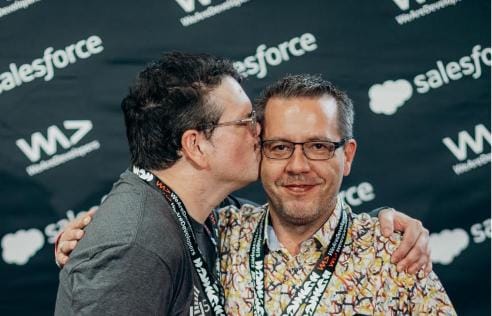
The keynote brought together two pivotal figures in the history of Stack Overflow to evaluate the health and future of online developer commons. Atwood, who rarely accepts international speaking engagements, agreed to participate in the Berlin congress under the explicit condition that Dumke-von der Ehe—a Berlin-based developer and one of Stack Overflow’s earliest foundational community members—would share the stage.
The core message of their address centered on the irreplaceable human element of technology. While acknowledging the technical utility of modern AI models in synthesizing programming knowledge, Atwood and Dumke-von der Ehe raised critical questions about sustainability. Specifically, they examined what happens to the collaborative public knowledge base when individual programmers shift away from public forums and rely exclusively on private AI interactions. The presentation combined personal anecdotes about their professional history with a broader sociological analysis of digital communities built upon Creative Commons licensing and mutual support.
Background Context of Stack Overflow and the Evolution of Search
Launched in 2008 by Jeff Atwood and Joel Spolsky, Stack Overflow rapidly became the definitive repository for software development questions and answers. Designed as an alternative to fragmented expert forums and outdated mailing lists, the platform relied heavily on user-generated content governed by open-source and Creative Commons frameworks.
From its inception, the platform’s architectural philosophy operated on the premise that passive consumption should be the primary use case. Atwood reiterated this foundational goal in Berlin, noting that if a platform functions optimally, the vast majority of developers should find pre-existing answers through standard web searches without ever needing to register, ask, or answer a question themselves.
However, the ecosystem faced persistent structural challenges over the years, most notably the friction caused by duplicate questions. As the database expanded from hundreds of thousands of threads to tens of millions, avoiding redundant inquiries became increasingly difficult for contributors. Moderation teams spent substantial resources closing duplicates and directing users to canonical threads, creating friction for newcomers and veterans alike.
Chronology of the AI Disruption in Software Development

The relationship between automated tools and developer forums has evolved through distinct phases over the past two decades:
- 2008–2015: Establishment and rapid scaling of human-moderated Q&A platforms like Stack Overflow, built on community governance and reputation systems.
- 2016–2020: Maturation of search engine indexing, allowing developers to routinely bypass direct forum interaction by landing immediately on accepted answers via Google and other search engines.
- 2022–2024: The mainstream emergence of large language models capable of generating contextual, customized code snippets and conversational troubleshooting. This period saw a marked decline in raw traffic and new question volume across traditional developer communities.
- July 2026: Atwood and Dumke-von der Ehe address these structural shifts directly at the WeAreDevelopers World Congress in Berlin, evaluating both the benefits and risks of AI-integrated programming workflows.
Supporting Data and Technical Implications of LLMs
The integration of generative AI into daily software development routines has yielded measurable operational shifts. Industry analyses indicate that developers utilizing AI assistants resolve syntax errors and boilerplate coding tasks significantly faster than those relying solely on manual searches.
From a technical perspective, LLMs have largely solved the historical dilemma of duplicate questions. Where human moderators previously had to manually flag and redirect inquiries that used alternative terminology to describe identical bugs, modern models map disparate linguistic inputs directly to correct technical solutions. Atwood acknowledged this as a transformative net positive, eliminating much of the administrative overhead that once burdened forum moderators.
Yet, this efficiency introduces a fundamental economic and ecological paradox for data supply chains. Large language models require vast corpuses of human-generated training data to maintain accuracy, particularly when encountering novel frameworks, deprecated libraries, or complex edge cases. Historically, this data has been harvested from public commons like Stack Overflow, GitHub repositories, and open technical documentation.
Official Responses and Industry Perspectives
While platform operators and AI developers have increasingly entered into commercial licensing agreements—allowing tech giants to train models on historical forum archives—community advocates argue that transactional data sales do not replace active ecosystem participation.
Representatives from developer advocacy groups note that while automated tools excel at deterministic coding tasks, they do not foster mentorship, peer recognition, or the social bonds that draw individuals into technology careers. Dumke-von der Ehe’s personal journey—moving from an active community contributor in Berlin to an internal staff member, and subsequently observing the shifting dynamics of online engagement—highlights the personal stakes involved in community stewardship. As speakers at the Berlin congress emphasized, professional software engineering is sustained not merely by code generation, but by a shared culture of learning and mutual investment.
Broader Impact and Long-Term Implications for the Tech Industry
The implications of the transition from public forums to private AI interactions extend far beyond individual websites. Analysts monitoring the developer ecosystem have identified several key areas of concern:
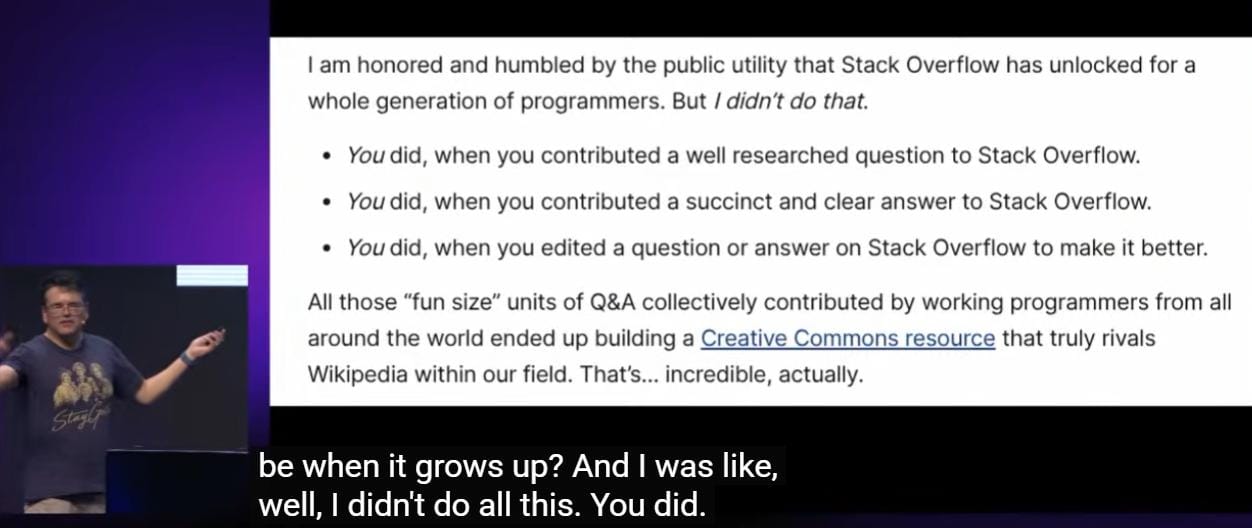
- The Cold-Start Problem for Future AI Training: If new generations of programmers cease publishing troubleshooting threads, blog posts, and forum discussions on the open web, future iterations of AI models may suffer from a lack of fresh, diverse, and human-verified training data. This phenomenon, often discussed in academic circles regarding synthetic data degradation, underscores the necessity of preserving active public forums.
- Mentorship and Career Pathways: Early community spaces provided junior developers with visibility, reputation metrics, and networking opportunities that frequently translated into employment. As interactions move behind closed AI chat interfaces, the traditional discovery pipeline for emerging technical talent risks disruption.
- Sustainability of the Open Web: The legal and financial frameworks supporting open-source software and open knowledge bases face mounting pressure. Ensuring that contributors are recognized and that platforms remain financially viable is critical to maintaining the foundational infrastructure upon which modern software relies.
Ultimately, the dialogue initiated in Berlin serves as a reminder that technological innovation does not exist in a vacuum. As Atwood famously remarked regarding the emotional and collaborative core of community building, human connection in engineering cannot be artificially synthesized. Protecting the digital commons remains an essential task for ensuring that the next generation of developers continues to learn, share, and innovate together.