AI-Powered Scientific Coalition Releases 3D Structures of Over 2,800 Viral Protein Complexes to Fortify Global Pandemic Preparedness

When SARS-CoV-2 emerged and catalyzed the global COVID-19 pandemic, the scientific community possessed a critical tactical advantage. Decades of foundational research into coronaviruses had already mapped out key viral proteins in meticulous detail, enabling researchers to design and authorize life-saving vaccines in record-breaking time. However, infectious disease experts and virologists have long warned that the next global health crisis may not grant humanity a similar head start. Uncharted pathogens lurking in animal reservoirs or evolving in regional ecosystems could suddenly leap to humans, catching the global scientific infrastructure completely unprepared.
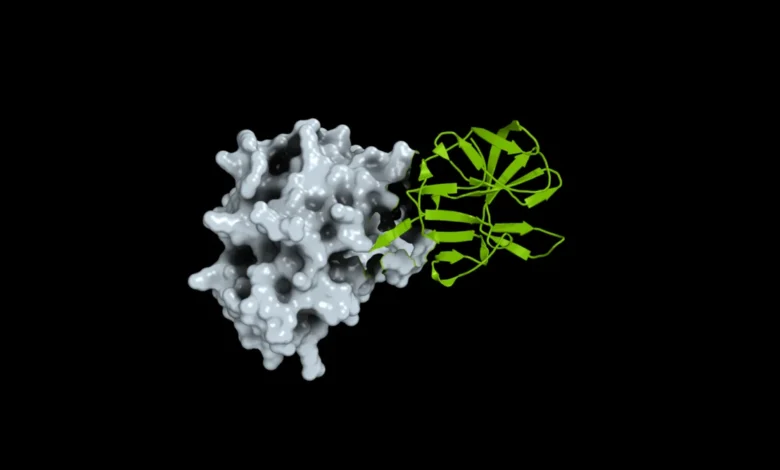
In a landmark preemptive strike against future biological threats, an international coalition featuring technology leaders NVIDIA and Google DeepMind, alongside the European Molecular Biology Laboratory’s European Bioinformatics Institute (EMBL-EBI), has released high-accuracy, predicted three-dimensional structures for the protein complexes of more than 2,800 viruses. This monumental dataset is now fully accessible to researchers, academics, and pharmaceutical developers worldwide through the open-access AlphaFold Database. By stockpiling structural blueprints before an outbreak strikes, the collaborative initiative aims to fundamentally alter how humanity defends itself against emerging infectious diseases.
Scaling AI to Map the Unseen Proteome
The generation of this vast biological dataset relies on the convergence of advanced artificial intelligence and high-performance computing. The underlying structural predictions were inferred using AlphaFold2, Google DeepMind’s revolutionary AI model capable of predicting how amino acid sequences fold into intricate three-dimensional protein shapes. To scale this capability across thousands of viral proteomes—mapping the complex webs of interacting proteins encoded within each virus—the team integrated Google’s models with the NVIDIA BioNeMo Inference Runtime.
Most proteins do not operate in isolation; they assemble into complex molecular machines made of multiple interacting molecules to execute sophisticated biological functions. It is typically these multi-protein complexes that drugs and vaccines must target to successfully disrupt viral replication and infection mechanisms. Understanding the exact 3D architecture of the COVID-19 spike protein, for instance, was the linchpin of modern vaccine engineering. Yet, for thousands of other known viruses capable of infecting humans, structural knowledge has historically been virtually nonexistent.
Traditionally, mapping protein structures required painstaking experimental methods such as X-ray crystallography and cryo-electron microscopy. These processes often take years of exhaustive laboratory work and cost thousands of dollars per individual structure. By leveraging AlphaFold2 optimized on NVIDIA GPUs through BioNeMo, researchers can now predict complex structures in mere minutes and process entire viral families in bulk. Once high-confidence predictions are generated, scientists can validate them through targeted experimental workflows.
The newly released dataset systematically covers viral families known to infect human populations, ranging from familiar pathogens responsible for the common cold to high-consequence emerging threats like the Mpox virus. Crucially, approximately 30 percent of the protein interactions included in the database are entirely new to science, exhibiting structural interaction shapes that have never before been documented in the Protein Data Bank, the primary global repository for experimentally determined protein structures.
The Race Against Time and the Threat of Disease X
The urgency driving this collaborative release is underscored by sobering epidemiological forecasts. An extensive analysis published by the Center for Global Development estimates a roughly 50 percent probability that the world will face another catastrophic pandemic as severe as COVID-19 by the year 2050. This statistical reality has amplified calls from public health authorities for proactive defense strategies rather than reactive crisis management.
This week, coinciding with a high-level United Nations General Assembly meeting convened by the World Economic Forum in New York City focused on pandemic prevention, preparedness, and response, the timing of the data release highlights a pivotal shift in global health policy. Governments and international bodies are increasingly recognizing that mitigating future biological shocks requires robust digital infrastructure and open data sharing.
"When the next pandemic happens, there may be something that comes out of the blue, and we’ll be lacking the knowledge we had for COVID," said Dr. Joe Grove, a professor of molecular virology at the Medical Research Council-University of Glasgow Centre for Virus Research and a key collaborator on the project. Reflecting on his own academic career, Dr. Grove noted the stark contrast between past methodologies and contemporary capabilities. "When I did my Ph.D., there were no structures for any of the proteins we were investigating. It was like working in the dark—we had to guess what was going on. This dataset is a powerful tool for all the researchers doing their Ph.D.s now, giving them high-quality structural data that’s going to accelerate fundamental science."
Democratizing Discovery Through Open-Access Infrastructure
A core tenet of the coalition’s mission is the democratization of foundational biology. By ensuring that cutting-edge structural data is freely available on a global scale, the initiative seeks to lower barriers for researchers operating in low-resource settings who are often on the front lines of regional disease outbreaks.
"Our ambition with the AlphaFold Database has always been to democratize access to foundational biology at scale," explained Risha Patel, life sciences partnerships manager at Google DeepMind. "This collaboration to bring thousands of viral complexes into the database will equip scientists around the world with insights they need to help prepare for future outbreaks."
Echoing this sentiment, Jo McEntyre, interim director of EMBL-EBI, emphasized the equity and public health dimensions of the release. "Making this data open is critical for understanding viral diagnostics and developing treatments and vaccines. The dataset also covers lesser-studied viruses and lowers the barriers for scientists in low-resource settings who are confronting outbreaks firsthand."
To maximize the utility of these computational breakthroughs, NVIDIA is also openly releasing the BioNeMo Structure Prediction Pipeline. This GPU-accelerated software workflow allows external research teams to take raw protein sequences and efficiently generate predicted 3D structures for their own specific targets, extending the reach of the technology far beyond the initial dataset.
Implications for Digital Biology and Therapeutics
The integration of advanced AI models into structural biology is transitioning the field from a descriptive science to a predictive discipline. By providing structural models labeled with clear confidence metrics, the AlphaFold Database empowers scientists to formulate hypotheses with unprecedented speed.
"This database is an engine for hypothesis generation," noted Chris Dallago, applied research science team lead in digital biology at NVIDIA. "We’re enabling biologists and the AI community to investigate protein interactions, not just as single molecules but as complexes, so the whole field can move forward."
With the AlphaFold Database now housing more than 260 million protein and protein complex predictions—covering virtually every cataloged protein known to science—the addition of these 2,800 viral proteomes represents a quantum leap forward for pandemic preparedness. While computational predictions do not entirely replace physical experimentation, they drastically narrow down the search space, allowing scientists to focus laboratory resources on the most promising diagnostic, therapeutic, and vaccine candidates.
As the global scientific community digests this unprecedented influx of structural data, the collaborative effort between tech titans, academic institutions, and intergovernmental agencies serves as a blueprint for modern crisis mitigation. By systematically mapping the invisible architecture of the microbial world today, researchers are laying the groundwork to ensure humanity is never again caught entirely off guard by the next viral emergence.