Vivo X500 Pro Max Hands-On: A Paradigm Shift in Flagship Mobile Technology and Camera Engineering

The global smartphone market has long settled into a predictable rhythm of annual iterations, where incremental processor bumps and superficial design tweaks often pass for major innovations. However, Vivo’s latest product cycle disrupts this industry complacency. Rather than relying on safe, iterative updates and marketing buzzwords, the Chinese technology titan has fundamentally overhauled its premier mobile lineup with the introduction of the X500 series. Comprising three distinct devices—the standard X500, the compact X500 Pro, and the top-tier X500 Pro Max—this new generation establishes clear architectural and functional boundaries rather than merely offering scaled-down versions of a single design.
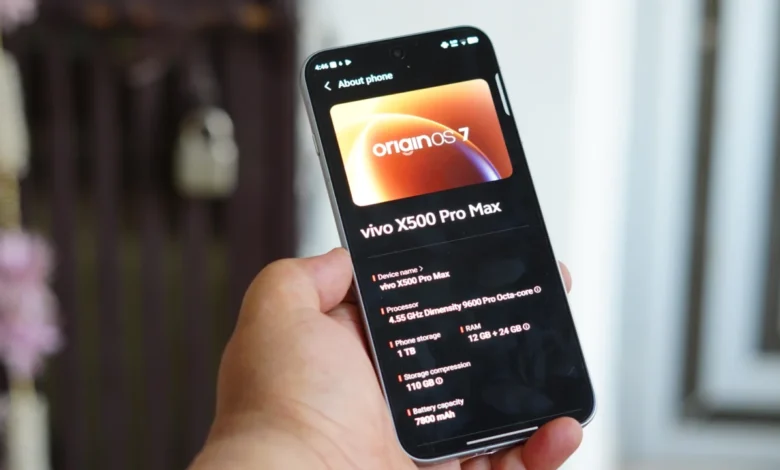
Examining the global version of the Vivo X500 Pro Max reveals an ambitious engineering philosophy. While regional disparities mean that certain hardware features, such as the secondary rear-display case available exclusively to Chinese consumers, remain absent from the international variant, the core specifications of the global flagship point toward a major competitive challenge to established giants like Apple, Samsung, and Google. By pairing cutting-edge semiconductor architecture with revolutionary sensor technology and unprecedented battery capacities, Vivo is signaling a concerted push to redefine what consumers should expect from a premium mobile device.
Architectural Stratification: Understanding the X500 Lineup
The differentiation within the X500 family is both deliberate and comprehensive. Vivo has structured the lineup to cater to varying consumer preferences without compromising performance within specific form factors. The base Vivo X500 features a 6.59-inch display driven by MediaTek’s Dimensity 9600M processor, striking a balance between expansive screen real estate and everyday efficiency. Meanwhile, the X500 Pro targets users seeking a more manageable footprint, housing a 6.36-inch screen paired with the flagship Dimensity 9600 Pro silicon.

At the pinnacle of the series sits the X500 Pro Max. Designed as the ultimate expression of Vivo’s technological capabilities, it integrates an enlarged display, a vastly upgraded camera array, and the same premier processing hardware found in the Pro model. This clear tiering ensures that each device maintains a distinct identity, avoiding the common industry trap where lower-tier models feel like compromised afterthoughts.
Refined Industrial Design and Ergonomic Precision
The design philosophy of the Vivo X500 Pro Max achieves a delicate balance between understated elegance and tactile sophistication. The gray variant, in particular, demonstrates a nuanced approach to exterior styling. The lower portion of the rear glass panel features a subtle matte finish embedded with microscopic, star-like details that catch ambient light dynamically. In contrast, the upper half transitions into a slightly raised section with a distinct texture, while maintaining a seamlessly smooth overall tactile experience.
This restrained aesthetic is anchored by a substantial camera island, a design reality of modern high-end photography flagships. Vivo has managed the visual weight of the protrusion by incorporating a color-matched ring and shifting from a traditional linear flash to a clean, circular configuration. Structurally, the device adheres to contemporary ergonomic standards, utilizing flat glass on the rear, precision-machined flat aluminum rails, and a completely flat display panel.
Durability remains a core tenet of the build, with the X500 Pro Max retaining an IP69 dust and water-resistance rating, ensuring robust protection against extreme environmental conditions. Out of the box, the retail packaging includes a protective case, a USB-C data cable, and a high-output 90W charging adapter. Additionally, Vivo continues to support mobile imaging enthusiasts through an optional Photographer Kit, which features an ergonomic camera control grip, a shoulder strap, and an extra quick-release hook. However, the omission of the Chinese market’s specialized dual-display selfie case from the global package represents a notable missed opportunity for international content creators.

Advanced Display Engineering and Visual Performance
The visual centerpiece of the X500 Pro Max is its expansive 6.85-inch AMOLED panel, marking a measurable increase from the 6.78-inch screen found on its predecessor and even surpassing the display dimensions of the specialized X300 Ultra. This panel delivers a resolution upgrade that enhances pixel density and visual clarity across all applications.
Engineered for optimal performance under varied lighting conditions, the display maintains a peak brightness rating of 4,500 nits. Integration of Low-Temperature Polycrystalline Oxide (LTPO) backplane technology enables a dynamic, adaptive refresh rate scaling up to 144Hz. This high refresh rate capability ensures exceptionally fluid UI animations, seamless scrolling, and responsive gaming interactions.
Beyond raw visual metrics, the display hardware is complemented by an advanced ultrasonic fingerprint sensor for secure authentication, USB 3.2 data transfer protocols, dual stereo speakers, and a four-microphone array designed for enhanced spatial audio capture during video recording. Eschewing a dedicated physical camera shutter button—a feature omitted in favor of a highly configurable, multi-function shortcut key—Vivo prioritizes user customization, allowing operators to map frequently used applications directly to dedicated hardware inputs.
Semiconductor Breakthrough: The Arrival of 2nm Processing
Under the hood, the Vivo X500 Pro Max achieves a significant milestone as one of the first commercial smartphones to harness MediaTek’s groundbreaking 2nm Dimensity 9600 Pro chipset. Representing a major leap in semiconductor fabrication, the transition to a 2-nanometer process node brings desktop-class efficiency and computational power into a mobile form factor.

The processor architecture utilizes ARM’s latest CPU and GPU topologies, featuring a tri-cluster arrangement comprising two ultra-prime cores clocked at 4.55GHz, three high-performance cores running at 4.35GHz, and three efficiency cores operating at 3.1GHz. MediaTek’s internal metrics indicate a substantial 27% increase in peak graphics processing unit (GPU) performance compared to previous generations. This immense graphical and computational headroom is specifically tailored to handle resource-intensive mobile gaming, complex multitasking workloads, and increasingly sophisticated on-device artificial intelligence operations.
While early specifications suggest potential support for next-generation LPDDR6 RAM and UFS 5 storage standards, final hardware verification awaits exhaustive benchmark testing. On the software front, the device runs OriginOS 7 atop Android 17. Rather than implementing a jarring visual overhaul, Vivo has focused its software development on architectural refinement, introducing advanced AI integrations, fluid motion algorithms, seamless device interaction protocols, and the proprietary Snap Up Engine for systemic resource optimization.
Revolutionary Imaging: Sony LOFIC Sensors and Periscope Telephoto Mastery
Mobile photography serves as the primary differentiator for the X500 Pro Max, with Vivo incorporating hardware derived directly from its ultra-premium imaging flagships. The standout inclusion is the sophisticated periscope telephoto camera system inherited from the X300 Ultra, engineered to preserve extreme detail across extended focal ranges without digital degradation.
The primary imaging sensor is equally formidable: a custom 50-megapixel, 1/1.28-inch Sony CMOS sensor utilizing Lateral Overflow Integration Capacitor (LOFIC) technology. Unlike traditional image sensors that require multi-frame exposure bracketing and complex computational stitching to capture high dynamic range (HDR) scenes, LOFIC technology addresses dynamic range limitations at the hardware level. By utilizing a lateral overflow capacitor in each pixel, the sensor effectively manages high-contrast lighting in a single exposure.

For professional content creators and mobile videographers, the implications of LOFIC technology are profound. The reduction in processing overhead minimizes motion blur and eliminates the ghosting artifacts frequently caused by moving subjects in high-contrast environments. Furthermore, the sensor enables native, highly efficient HDR 4K video recording at 60 frames per second while simultaneously lowering overall power consumption.
Complementing the primary sensor are a 200-megapixel telephoto lens and a 50-megapixel ultrawide camera, supported by advanced shooting modes such as 4K Cinematic Colour Video, Auto-framing, and Stage Mode 3.0. For users requiring extreme long-range capabilities, Vivo offers optional 200mm and 400mm telephoto extender lenses—sold separately—expanding the creative utility of the device into traditional DSLR territory.
Battery Capacity, Power Management, and Global Disparities
Energy endurance represents another area where Vivo has challenged conventional flagship constraints. The regional version deployed to international markets houses a remarkable 7,800mAh battery, while the domestic Chinese variant pushes boundaries further with an 8,000mAh capacity cell.
This unprecedented energy density in a modern smartphone is paired with highly efficient 2nm silicon and optimized power management software. Charging speeds remain robust, supporting 90W wired fast charging alongside 40W wireless power delivery. This combination addresses the historic trade-off between slim physical profiles and multi-day battery autonomy, providing users with reliable performance under heavy usage conditions.

Broader Market Implications and Strategic Outlook
The launch of the Vivo X500 Pro Max underscores a shifting paradigm within the global smartphone sector. By refusing to rely solely on minor evolutionary adjustments, Vivo has demonstrated that substantial hardware innovations—such as 2nm chipsets, single-exposure LOFIC HDR sensors, and near-8,000mAh battery configurations—are achievable within contemporary manufacturing tolerances.
As the global release approaches, market analysts will closely monitor pricing strategies and regional distribution channels to determine how effectively Vivo can challenge dominant Western market share. If comprehensive benchmark evaluations and sustained real-world performance validate these initial impressions, the X500 Pro Max may well establish a new benchmark for flagship mobile engineering, compelling competitors to accelerate their own development cycles and reconsider the true definition of an annual generational upgrade.