US Space Force Triples Budget Ceiling for National Security Space Launch Phase 3 Lane 1 to 17 Billion Dollars

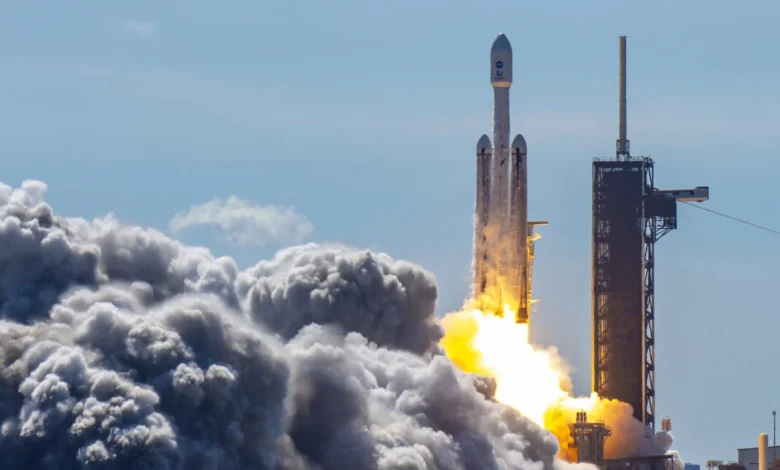
In a move that underscores the rapidly accelerating tempo of American military operations in orbit, the United States Space Force has announced a massive expansion of its primary launch procurement vehicle. On Friday, military officials confirmed that the maximum value of the National Security Space Launch (NSSL) Phase 3 Lane 1 contract has been increased from an initial $5.6 billion to a staggering $17 billion. This tripling of the budget ceiling signals a profound shift in how the Pentagon views the accessibility and necessity of space-based assets, reflecting an era of unprecedented demand for satellite deployment and orbital infrastructure.
The expansion of the NSSL program, managed by the Space Systems Command (SSC), is a direct response to the evolving threat landscape and the military’s transition toward "proliferated" satellite architectures. By dramatically raising the spending limit, the Space Force is positioning itself to procure a significantly higher volume of launches over the next five years, ensuring that the United States maintains its technological and strategic edge in what is increasingly defined as a contested warfighting domain.
Understanding the Dual-Lane Strategy of NSSL Phase 3
The National Security Space Launch program is the cornerstone of the Department of Defense’s (DoD) strategy to ensure reliable access to space. Phase 3 of this program, which covers the period from fiscal year 2025 through 2029, was designed with a bifurcated structure to balance the need for innovation with the requirement for absolute mission success.
Lane 1: The Commercial Innovation On-Ramp
Lane 1, the specific focus of the recent $17 billion ceiling increase, is designed for missions that are more risk-tolerant. These typically involve medium-lift launches carrying experimental payloads, technology demonstrators, or components of the Space Development Agency’s (SDA) massive new constellations. Unlike the more rigid requirements of the past, Lane 1 utilizes a "commercial-like" procurement approach. This allows the Space Force to tap into the rapid innovation of the private sector, utilizing launch vehicles that may not yet have the decades of heritage required for the military’s most sensitive payloads.
The Lane 1 structure is unique because it allows for an annual "on-ramp" process. This means that new companies can join the pool of eligible providers as their rockets become flight-ready, fostering a competitive environment that drives down costs and encourages technological breakthroughs.
Lane 2: The Strategic Heavy-Lifters
In contrast, Lane 2 is reserved for the military’s most critical and expensive assets. These include heavy-lift missions carrying multi-billion-dollar spy satellites for the National Reconnaissance Office (NRO) or radiation-hardened communication satellites designed to remain functional during a nuclear conflict. Because the stakes for these missions are so high, the Space Force requires extensive certification, rigorous oversight, and a proven track record of reliability. Currently, only SpaceX’s Falcon 9 and Falcon Heavy, and United Launch Alliance’s (ULA) Vulcan Centaur, are certified to compete for Lane 2 missions.
The Drivers Behind the $17 Billion Ceiling
The decision to triple the Lane 1 budget ceiling is not merely a bureaucratic adjustment; it is a reflection of a fundamental change in military satellite philosophy. For decades, the DoD relied on a small number of massive, highly expensive satellites. Today, the strategy has shifted toward the Proliferated Warfighter Space Architecture (PWSA)—a "mesh network" of hundreds of smaller, interconnected satellites in Low Earth Orbit (LEO).
This shift requires a much higher frequency of launches. If one satellite in a constellation of 500 fails or is disabled by an adversary, the network remains functional. However, maintaining such a constellation requires a constant drumbeat of launches to replace aging units or to rapidly expand the network’s capabilities. The Space Development Agency, a branch of the Space Force, has been the primary driver of this demand, seeking to launch dozens of satellites every few months.
Furthermore, the Space Force is preparing for "Tactically Responsive Space" (TacRS) capabilities. This involves the ability to launch a satellite on extremely short notice—potentially within 24 hours—to replace a capability lost in combat or to provide temporary surveillance over a specific global hotspot. The increased funding ceiling provides the financial "headroom" to execute these rapid-response missions without having to seek emergency appropriations from Congress.
A Growing Roster of Launch Providers
The NSSL Phase 3 Lane 1 contract has successfully attracted a diverse array of aerospace companies, ranging from established giants to ambitious startups. The current pool of providers demonstrates the health and competitiveness of the American launch industry.
- SpaceX: The industry leader continues to dominate the Lane 1 task orders. With its highly reliable Falcon 9 fleet and the burgeoning capabilities of Starship on the horizon, SpaceX provides the high-cadence foundation for the Space Force’s orbital ambitions.
- United Launch Alliance (ULA): A long-standing partner of the DoD, ULA is transitioning from its legacy Atlas and Delta fleets to the Vulcan Centaur. While ULA is a primary player in Lane 2, its participation in Lane 1 ensures it remains a versatile option for various mission profiles.
- Blue Origin: Jeff Bezos’s aerospace firm secured its spot in Lane 1 earlier this year. With the upcoming debut of the New Glenn rocket, Blue Origin represents a significant heavy-lift alternative that the Space Force is eager to integrate into its mission manifest.
- Rocket Lab: Known for its Electron small-lift rocket, Rocket Lab is currently developing the Neutron, a medium-lift, reusable rocket specifically designed to compete for NSSL-class missions. Its inclusion in Lane 1 highlights the Space Force’s interest in diversified launch platforms.
- New Entrants (Relativity Space, Stoke Space, Impulse Space): The most recent additions to the Lane 1 pool reflect the cutting edge of the industry. Relativity Space is pioneering 3D-printed rockets, while Stoke Space is focused on 100% reusability. Impulse Space, founded by former SpaceX engineers, focuses on in-space mobility, providing the "last mile" delivery for satellites once they reach orbit.
Chronology of the NSSL Program Evolution
The path to the $17 billion ceiling began years ago as the Pentagon realized that the traditional monopoly held by a single provider was no longer sustainable or secure.
- 2014–2019: The transition from the Evolved Expendable Launch Vehicle (EELV) program to NSSL. This era saw the introduction of competition as SpaceX successfully sued to enter the military launch market, breaking the ULA monopoly.
- 2020: NSSL Phase 2 contracts were awarded to SpaceX and ULA, covering launches through 2024. This phase solidified the dual-provider model but lacked the flexibility for smaller, rapid-response missions.
- 2023: The Space Force announced the framework for Phase 3, introducing the "Lane" system to better accommodate the burgeoning commercial space sector and the SDA’s constellation needs.
- June 2024: The first round of Lane 1 providers—SpaceX, ULA, and Blue Origin—were officially selected, with an initial program ceiling of $5.6 billion.
- July–October 2024: The Space Force added additional companies, including Rocket Lab and Relativity Space, to the Lane 1 pool, signaling an "open-door" policy for qualified providers.
- October 2024: The formal announcement of the ceiling increase to $17 billion, effectively tripling the potential procurement power of the Space Systems Command for Lane 1 missions.
Implications for the Private Sector and Global Competition
The tripling of the budget ceiling has profound implications for the commercial space industry. By guaranteeing a potential $17 billion market over five years, the U.S. government is providing a massive incentive for private investment. For startups like Stoke Space or Relativity Space, the prospect of winning NSSL task orders is a powerful validator that helps secure venture capital and fuels further research and development.
This move also serves a broader geopolitical purpose. As China rapidly expands its Long March rocket family and develops its own satellite constellations, the U.S. must ensure its launch industry remains the most capable and cost-effective in the world. The NSSL Phase 3 structure ensures that the military is not tied to a single technology or company, creating a "resilient industrial base" that can survive the failure of any one provider.
Brigadier General Kristin Panzenhagen, program executive officer for Assured Access to Space, has previously emphasized that the goal is to "increase competition and provide more opportunities for launch providers to participate in national security missions." The budget increase is the financial muscle behind that sentiment.
Potential Challenges and Risks
While the increase in funding is a boon for the industry, it is not without challenges. The Space Force must manage a complex "task order" system where companies bid on individual missions. This requires a high degree of administrative overhead to ensure that taxpayer money is being spent efficiently and that missions are assigned to the providers best suited for the specific orbital requirements.
There is also the risk of "launch congestion." With the Space Force, NASA, and private companies like Amazon (Project Kuiper) all vying for launch slots at the Eastern and Western Ranges (Cape Canaveral and Vandenberg), the physical infrastructure of the launch sites is under strain. The Space Force is concurrently investing in range upgrades to support a future where multiple launches per day become the norm.
A New Era of Orbital Dominance
The decision to authorize $17 billion for Lane 1 procurement marks the beginning of a new era for the US Space Force. It signals a move away from the "exquisite and expensive" model of the past toward a "resilient and rapid" future. By fostering a competitive ecosystem of launch providers, the Pentagon is ensuring that it can put assets into orbit faster, cheaper, and more reliably than ever before.
As the first task orders under this new ceiling are doted out, the industry will be watching closely to see how the balance of power shifts between the established titans and the innovative newcomers. For the American warfighter, the result will be a more robust and responsive set of tools in the sky, provided by a commercial space sector that is now more closely integrated with national security than at any point in history. The $17 billion ceiling is more than just a number; it is a declaration that for the U.S. military, space is no longer a distant frontier, but a bustling and vital theater of operations that requires constant, high-volume access.