The Paradox of Deferred Prosperity: Why Lifelong Savers Struggle to Spend in Their Golden Years

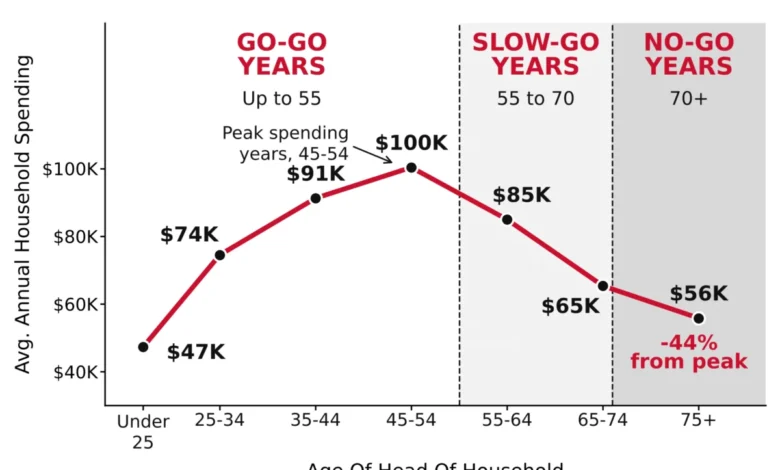
The conventional wisdom of personal finance often centers on the accumulation phase—the decades-long endeavor of building a nest egg to ensure security in retirement. However, a growing body of evidence suggests that for many retirees, the challenge is not a lack of funds, but an inability to deploy them. As the demographic shift toward an aging population continues, financial experts are observing a phenomenon where individuals who spent a lifetime exercising extreme fiscal discipline find themselves psychologically unable to shift into a "decumulation" phase, even when their health and financial resources would permit a higher standard of living.
The Psychology of Persistent Frugality
Financial behavioralists argue that frugality often becomes ingrained as a personality trait rather than a temporary survival strategy. Data indicates that individuals who maintained high savings rates throughout their thirties, forties, and fifties often struggle to recalibrate their spending habits once they reach the traditional retirement age of 65. This phenomenon is frequently referred to as "the saver’s trap."
The behavior is reinforced by decades of neurological conditioning. When an individual spends forty years prioritizing long-term security over immediate gratification, they develop a mental heuristic that labels non-essential spending as "waste." By the time these individuals reach their seventies, this internal governor is difficult to deactivate. Even when presented with clear financial modeling showing that their portfolio can support increased spending without the risk of depletion, many retirees remain tethered to their past habits.
A Chronology of Financial Behavior
The trajectory of a typical saver often follows a predictable arc. In the initial "go-go" years (ages 25–45), the focus is on debt management and asset growth. During the "slow-go" years (ages 55–70), many begin to see their physical mobility decline, even as their net worth peaks. Finally, the "no-go" years (71+) are characterized by a significant drop in discretionary spending, regardless of the individual’s account balances.
Case studies involving elderly parents illustrate this progression clearly. Frequently, families note that parents who once enjoyed global travel, dining, and social excursions begin to prefer domestic environments, often citing a lack of desire for novelty or a heightened anxiety regarding health risks. For these individuals, the "barrier to entry" for leisure activities—the cost—has been removed, yet the participation rate remains low. The desire for experiences, which requires both physical capacity and mental initiative, often wanes before the financial capital is exhausted.
Supporting Data and Financial Realities
The "4% rule," a staple of retirement planning that suggests a safe withdrawal rate for a diversified portfolio, is increasingly being challenged by contemporary data. Since 2012, market performance has often outpaced the conservative estimates used in traditional retirement models. Many retirees now find themselves in a position where their assets have grown significantly, yet their lifestyle costs remain static or are decreasing.

Research from firms like Empower and various financial planning institutions suggests that many retirees are "over-saving"—maintaining a lifestyle that is far more austere than their balance sheets justify. This results in significant capital being passed down to heirs, often at a point in the heirs’ lives when they have already established their own financial independence, rather than at a time when the capital could have facilitated shared family experiences.
The Role of Risk and Uncertainty
One of the primary drivers of this persistent frugality is the fear of long-term care costs. As healthcare expenses for the elderly continue to climb, many retirees hoard cash as a hedge against catastrophic medical bills. This behavior is rational in the face of uncertainty, but it often leads to a diminished quality of life during the years when an individual is still healthy enough to enjoy their wealth.
Industry experts recommend that individuals address these concerns through specific financial instruments. For example, long-term care insurance or comprehensive life insurance policies can act as a financial safety net, potentially providing the psychological "permission" a saver needs to spend down their liquid assets. By transferring the risk of extreme medical costs to an insurer, retirees may find the confidence to reallocate funds toward travel, leisure, or family support.
Implications for Future Generations
The intergenerational transmission of these financial habits is significant. Research suggests that children of lifelong savers are highly susceptible to adopting the same behavioral patterns, creating a cycle of deferred enjoyment that persists across generations. Observers note that the "FIRE" movement (Financial Independence, Retire Early) has brought much-needed attention to the math of saving, but has perhaps failed to provide adequate guidance on the philosophy of spending.
The broader implication is a societal shift where substantial portions of wealth remain locked in stagnant accounts rather than circulating in the economy through consumption. For the individual, the result is a life defined by missed opportunities for shared memories and personal growth, replaced by a portfolio that, while robust, may never be utilized for its intended purpose: to enhance the quality of the owner’s life.
Strategic Adjustments for Retirement
To combat the paralysis of over-saving, financial planners suggest a more intentional approach to the decumulation phase:
- Modeling the Ceiling: Using digital financial tools to stress-test portfolios can help retirees visualize their "real" ceiling. Seeing the data often provides the necessary validation that spending is safe.
- The "YOLO" Fund: Earmarking specific capital for discretionary experiences can help separate "survival" money from "enjoyment" money, making it psychologically easier to spend.
- Front-loading Joy: Given the documented decline in physical capability after age 70, there is a strong case for "front-loading" major expenditures, such as travel and family experiences, into the 45–65 age window.
- Professional Review: Periodic consultations with financial advisors, specifically those focusing on retirement income strategies, can help identify blind spots in one’s spending plan.
Ultimately, the challenge for the modern retiree is to distinguish between necessary caution and an obsolete behavioral pattern. As the data shows, time is the only non-renewable resource in the financial equation. While capital can be replenished through market growth or labor, the years of physical and mental vitality required to enjoy that capital are finite. For those approaching the retirement transition, the goal should be to ensure that the final balance sheet is not a monument to unspent potential, but a testament to a life fully lived.