Tech Innovator Jeff Atwood and Retired Colonel Alexander Vindman Unite at Cooper Union to Reexamine the American Dream in the 21st Century

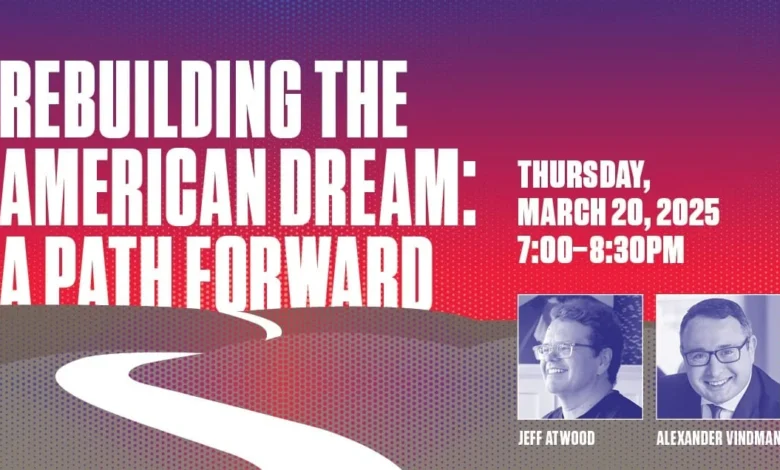
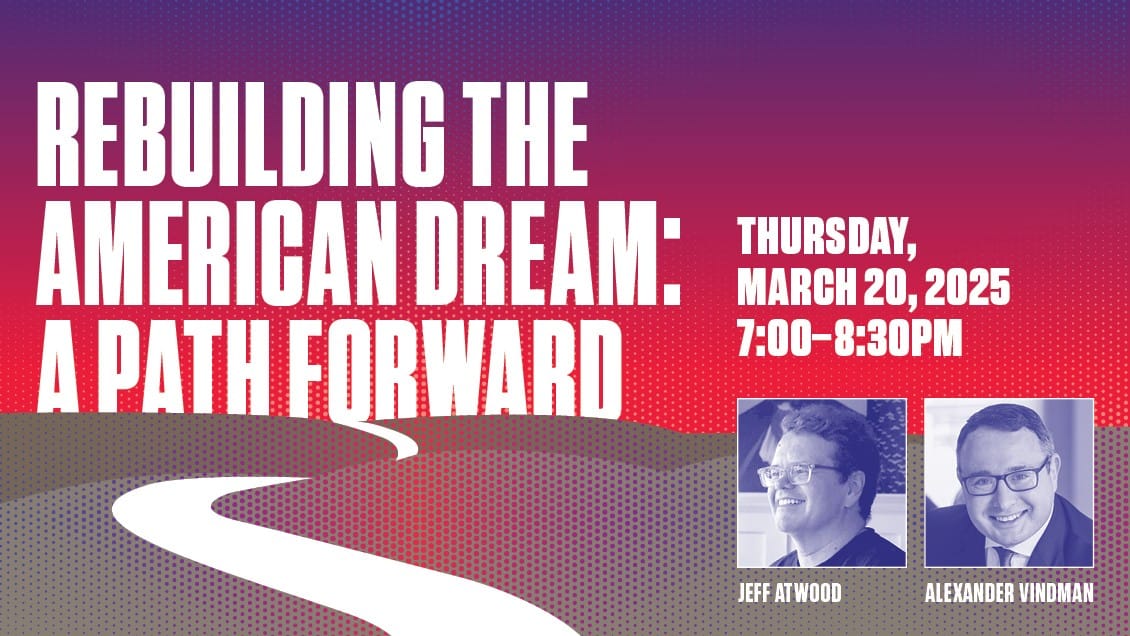
The intersection of civic duty, digital governance, and national identity took center stage as software engineer and Stack Overflow co-founder Jeff Atwood joined retired U.S. Army Lieutenant Colonel Alexander Vindman for a high-profile public discussion at the historic Cooper Union Great Hall in New York City. The event, which convened a diverse audience of technologists, political scientists, and civic leaders, sought to address a pressing contemporary question: how to restructure foundational American systems to ensure economic mobility, security, and civic participation remain viable for all citizens in an increasingly polarized era.
The dialogue brought together two figures from markedly different professional backgrounds who share a singular commitment to preserving and updating democratic institutions. While Colonel Vindman’s career was defined by high-stakes geopolitical diplomacy and national security compliance, Atwood’s legacy is rooted in the architecture of online communities, large-scale collaboration, and digital infrastructure. Despite their distinct paths, both speakers converged on a central thesis—that the American Dream is not a static historical artifact, but an active, ongoing project requiring rigorous institutional maintenance and structural reform.
Background and Context of the Cooper Union Assembly
The venue itself carried symbolic weight for the gathering. The Cooper Union Great Hall has long served as a historic crucible for American political discourse, famously hosting Abraham Lincoln’s Cooper Union speech in February 1860, an address that helped propel him to the presidency. By staging the conversation on this historic grounds, the organizers aimed to contextualize contemporary anxieties surrounding democratic erosion and economic stagnation within a broader historical continuum of national renewal.
The event arrived at a critical juncture in American public life, characterized by widespread public skepticism regarding institutional integrity, economic fairness, and the efficacy of governance. Recent polling data from major research institutions indicate that a growing majority of Americans question whether future generations will achieve a higher standard of living than their parents, highlighting a widespread erosion of confidence in the traditional mechanics of social mobility. Against this backdrop, Atwood and Vindman’s collaboration offered a deliberate departure from partisan vitriol, focusing instead on structural mechanics, civic accountability, and the design principles necessary for a resilient society.
Chronology of the Collaboration
The partnership between Atwood and Vindman developed organically out of shared reflections on civic responsibility published earlier in the year. Atwood, best known for establishing digital platforms that govern massive decentralized populations—such as Stack Overflow and Discourse—had begun articulating a broader philosophical framework regarding the preservation of democratic norms, a concept he termed "staying gold."
Colonel Vindman, whose public profile surged following his 2019 congressional testimony regarding national security protocols, brought a lifetime of frontline experience in defending democratic institutions. Born in the Soviet Union and raised in Brooklyn before embarking on a 21-year military career, Vindman became a prominent voice on civil-military relations, authoritarian threats, and the defense of constitutional oaths following his departure from active government service.
Recognizing the conceptual parallels between maintaining order in self-governing digital spaces and safeguarding the health of a constitutional republic, the two public figures coordinated a joint appearance to bridge the gap between physical civic duty and modern systemic design. The two-week countdown leading up to the Cooper Union event saw extensive public engagement across both speakers’ platforms, drawing significant attention from civic tech communities, veterans’ organizations, and political analysts alike.
Key Themes: From Individual Generosity to Structural Security
A primary focus of the discussion centered on shifting the paradigm of civic contribution from isolated acts of charity to robust, systemic support frameworks. Atwood argued that while individual generosity remains a vital component of civil society, it is fundamentally inadequate for addressing systemic inequities. Instead, he emphasized the necessity of engineering social systems that inherently generate security, dignity, and opportunity.
Drawing on decades of experience building internet platforms, Atwood asserted that the core challenges of community management remain remarkably consistent, regardless of whether one is governing a nation-state or moderating a global technical forum. Successful systems, he noted, require transparent rules, equitable enforcement mechanisms, clear boundaries, and a shared sense of collective purpose. Without these foundational elements, communities inevitably fracture under the weight of misaligned incentives.
Colonel Vindman reinforced this perspective by examining civic duty through the lens of personal sacrifice and institutional loyalty. Recounting his tenure as the Director of European Affairs for the National Security Council and his subsequent exit from the defense apparatus, Vindman underscored that the preservation of democratic norms often demands high personal costs. He emphasized that the strength of a republic relies ultimately on individuals within public service who are willing to prioritize constitutional obligations over institutional self-preservation.
Broader Impact and Implications for the Future of Governance
The implications of the Atwood-Vindman dialogue extend beyond the confines of a single public lecture, offering valuable insights for the future of digital and civic infrastructure. As modern democracies grapple with the disruptive effects of misinformation, declining social trust, and economic polarization, policymakers and technologists alike are increasingly looking toward interdisciplinary solutions.
Analysts have noted several key takeaways from the event:
- The Convergence of Tech and Civics: The discussion highlighted an emerging recognition that software architects and civic leaders share common challenges in managing human behavior at scale. Designing equitable digital forums mirrors the complexities of legislating fair public policy.
- Institutional Resilience: Both speakers underscored the necessity of fortifying institutional guardrails against political polarization and bad-faith actors, arguing that democratic systems must be proactively engineered for durability rather than passively maintained.
- Redefining the American Dream: By reframing the American Dream as an actionable engineering problem rather than a passive promise, the event encouraged a pragmatic approach to economic mobility and educational access.
The conversation concluded with a call to collective action, urging citizens to move past passive observation and engage directly in the hard, unglamorous work of institutional reform. By synthesizing the hard-earned lessons of military service with the scalable logic of digital community building, the Cooper Union assembly provided a blueprint for how cross-sector collaboration might help navigate the complex socio-political challenges of the 21st century.
For those unable to attend the live assembly, the complete proceedings have been made publicly accessible via the Cooper Union Great Hall’s official media archives, ensuring that the dialogue continues to inform broader public deliberations on the future of American democracy.