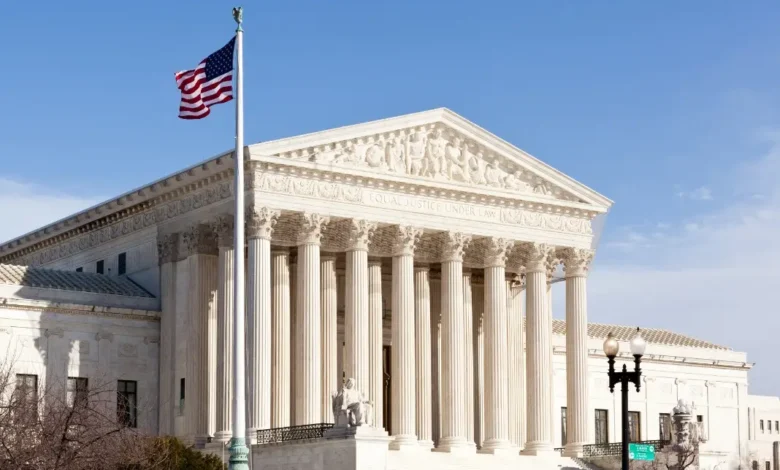
The Constitutional Tension Over Excessive Fines
The concept of proportionality in punishment has its roots in the Magna Carta of 1215, which mandated that a "free man shall be fined for a small fault only according to the degree of the fault." In the American context, this principle is enshrined in the Eighth Amendment’s Excessive Fines Clause. Yet, defining what constitutes "excessive" has historically vexed the judiciary.
The Court’s hesitation to draw bright lines is well-documented. In the 1996 case BMW of North America, Inc. v. Gore, the justices intervened when an Alabama jury awarded a plaintiff $4 million in punitive damages for a $4,000 paint job—a 1,000-to-1 ratio. While the Court invalidated the award, it famously declined to establish a precise mathematical formula for permissible punitive damages. Later, in the 2003 ruling State Farm Mutual Automobile Insurance Co. v. Campbell, the Court suggested that "few awards exceeding a single-digit ratio between punitive and compensatory damages" would satisfy due process. Despite these precedents, the judiciary has struggled to apply these standards to government-led civil penalties, which are often structured as regulatory enforcement rather than traditional punitive damages.
The Case of the Six-Pack: Jouppi v. Alaska
The urgency of this debate is underscored by Jouppi v. Alaska, a case that brings the constitutional doctrine of proportionality to a seemingly mundane—yet legally profound—set of facts. Ken Jouppi, a pilot, faces the seizure of his $95,000 aircraft by the state of Alaska following the discovery of a six-pack of beer in his cargo. The state’s position is rooted in its authority to regulate alcohol in "dry" villages, where bootlegging is linked to severe social issues, including fetal alcohol syndrome and chronic substance abuse.
The state’s argument is steeped in historical precedent, drawing parallels to 19th-century rulings such as those upholding fines for the illegal harvest of undersized lobsters in Maine, where penalties far exceeded the market value of the catch to deter ecological collapse. For the state of Alaska, the airplane seizure is not merely about beer; it is an enforcement tool intended to protect vulnerable communities from the "grave societal harm" of illicit alcohol distribution.
Conversely, Jouppi’s defense hinges on the disparity between the offense and the forfeiture. Supporters of the pilot argue that the seizure represents a gross violation of the Eighth Amendment. They contend that if the Court fails to rein in such disproportionate penalties, the door remains open for local and state governments to use the power of forfeiture as a windfall, essentially turning regulatory enforcement into a revenue-generating mechanism that bears no relation to the actual harm caused by the individual’s conduct.
Climate Change Litigation and the Suncor Conflict
While Jouppi tests the Eighth Amendment, Suncor v. Boulder County challenges the limits of state authority regarding global environmental policy. This case represents the next frontier in the massive, ongoing litigation campaign against the fossil fuel industry. Colorado municipalities are seeking to hold oil companies accountable for the costs of climate change-related infrastructure damages and adaptation strategies, alleging that these companies knew of the risks of fossil fuel consumption while actively downplaying them.
The stakes are immense. If the Supreme Court allows these state and local lawsuits to proceed, the oil and gas industry could face a wave of litigation mirroring the multi-billion-dollar settlements extracted from the pharmaceutical industry during the opioid crisis. The Trump administration, joined by various industry trade groups, has consistently argued that such litigation is preempted by federal law, specifically the Clean Air Act. The core argument is that global climate change is a national and international issue that cannot be managed through a "patchwork" of state-level tort claims, which could theoretically allow every local jurisdiction to sue energy providers for their cumulative carbon footprint.
Analytical Perspective: The Conservative Dilemma
The current composition of the Supreme Court, characterized by a strong conservative majority, faces a strategic paradox. Traditionally, these justices have championed the doctrine of state sovereignty, viewing local control as a bulwark against federal overreach. However, the prospect of state and local governments dismantling the stability of the global energy market via tort litigation presents a conflict between judicial federalism and the desire for national regulatory uniformity.
The Court’s path in Suncor is complicated. While there is pressure to intervene and set a national standard, the procedural posture of the case provides an "off-ramp." Because the Colorado Supreme Court allowed the lawsuit to proceed, the U.S. Supreme Court could technically decline to exercise jurisdiction, citing a lack of a "final judgment." This would allow the justices to avoid a definitive ruling on the merits of climate litigation for the time being, effectively kicking the issue down the road while they focus on clearer constitutional questions.
Broader Implications for the American Legal System
The convergence of these cases suggests that the Supreme Court is entering a period of heightened scrutiny regarding how governments exercise their punitive powers. Whether the context is the protection of remote villages from alcohol-related harm or the mitigation of global climate change, the fundamental question remains: what are the constitutional constraints on state action when that action fundamentally alters the economic rights of individuals or corporations?
Key Themes and Future Trends:
- Predictability in Damages: If the Court rules in favor of the challengers in Jouppi, it could set a new precedent that forces states to justify the "magnitude" of their penalties more rigorously, potentially curbing the practice of civil forfeiture.
- Federal Preemption vs. State Tort Law: A ruling in Suncor could fundamentally redefine the ability of states to utilize the court system to address global environmental challenges, potentially shifting the debate entirely to Congress or federal regulatory agencies like the EPA.
- Erosion of Deference: The Court appears increasingly willing to weigh in on how states wield their police powers. This signals a departure from the historical trend of broad deference, suggesting that the "50 laboratories" may soon find their results subject to more intense federal quality control.
Conclusion
As the Court prepares to hear these cases, the legal community is watching closely to see if the justices will prioritize the preservation of local regulatory autonomy or assert a more robust federal framework for constitutional protection. The outcomes will not only impact the specific litigants involved—Ken Jouppi and the energy giants—but will also set the tone for civil litigation in the United States for the next decade. Whether through the lens of a six-pack of beer or the vast complexities of global carbon emissions, the Court’s decisions will likely reinforce the idea that even in a system of decentralized government, the reach of the state is not absolute.
Related posts: