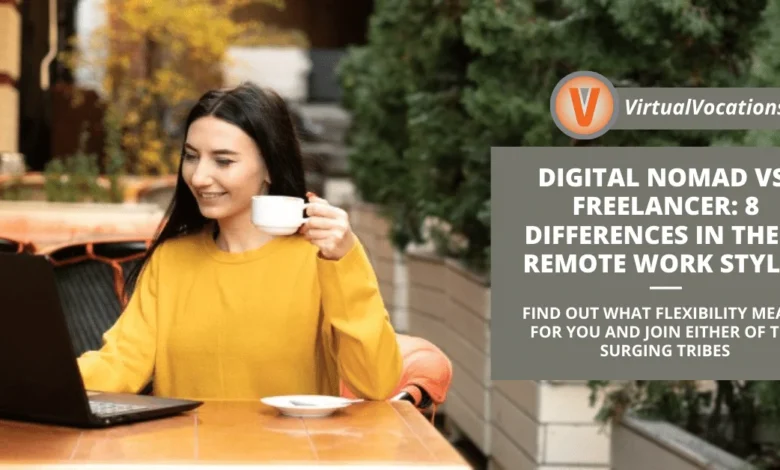
Digital Nomad vs. Freelancer: Understanding the Core Differences in Modern Location-Independent Work

The modern professional landscape has undergone a profound transformation over the past decade, heavily accelerated by advancements in cloud computing, widespread broadband infrastructure, and global shifts toward remote operations. Today, earning a living no longer requires a physical commute to a centralized office. Instead, millions of workers operate from home offices, local coffee shops, international co-working spaces, or while transiting between global destinations. Within this burgeoning ecosystem of location-independent careers, two terms frequently surface: digital nomads and freelancers. While these concepts are often used interchangeably in casual discourse, they represent distinct professional pathways, lifestyle choices, and operational structures.
Understanding the distinctions between a digital nomad and a freelancer is essential for professionals navigating modern career pivots, companies managing decentralized workforces, and policymakers addressing the legal frameworks of cross-border employment. Both career models offer unprecedented autonomy, but they are defined by fundamentally different criteria regarding mobility, employment status, client acquisition, and operational stability.
Defining the Paradigms: Digital Nomads Versus Freelancers
To accurately analyze the digital nomad versus freelancer dynamic, it is necessary to establish precise operational definitions. A freelancer is fundamentally defined by their business model and employment structure. Freelancers are self-employed individuals who provide specialized services to multiple clients on a project-by-project or contract basis, rather than being bound to a single employer as a traditional W-2 employee or permanent staff member. They operate as independent micro-enterprises, assuming total responsibility for marketing, contract negotiation, tax compliance, and client management.
Conversely, a digital nomad is defined primarily by geography and lifestyle rather than business structure. A digital nomad leverages information and communication technologies to work remotely while maintaining a transient or nomadic lifestyle. This population segment may move frequently between international cities, spend extended periods practicing "slow travel" in foreign countries, or maintain a permanent residence while frequently working from abroad. Crucially, a digital nomad’s professional status can vary widely: they might be self-employed freelancers, independent contractors, remote corporate employees, or founders of location-independent businesses.
Thus, the two categories are not mutually exclusive. A freelancer can choose to settle permanently in a suburban home, never traveling beyond their local municipality. Simultaneously, a software engineer employed full-time by a multinational technology corporation can pack their bags and code from Bali, qualifying as a digital nomad without ever engaging in freelance work.
The Evolution and Historical Context of Location-Independent Labor
The conceptual foundations of freelancing date back centuries, historically describing independent craftsmen, tradespeople, and writers who offered services without long-term corporate allegiance. However, modern knowledge-work freelancing expanded rapidly with the advent of the internet in the late 1990s and early 2000s, followed by the proliferation of online talent marketplaces in the 2010s that connected global buyers with specialized independent contractors.
The digital nomad movement shares a parallel timeline, finding its theoretical roots in the 1997 publication of "Digital Nomad" by Tsugio Makimoto and David Manners. The authors accurately predicted that technological mobility would allow humans to decouple labor from physical geography. However, the lifestyle remained a niche pursuit until the widespread availability of high-speed global Wi-Fi, affordable international air travel, and the proliferation of collaborative co-working spaces in cultural hubs like Chiang Mai, Lisbon, and Bali during the 2010s.
The COVID-19 pandemic served as a massive macroeconomic catalyst for both models. Corporate acceptance of remote work shattered historic operational taboos, proving that knowledge workers could maintain high productivity away from corporate headquarters. According to industry data from organizations like MBO Partners, the global digital nomad population surged dramatically following 2020. By 2025, data compiled in the MBO Partners Digital Nomads Trends Report indicated that millions of American professionals alone identify as digital nomads, with an overwhelming majority—approximately 81%—reporting satisfaction with their income and overall lifestyle trajectory.
Key Operational Differences: A Comparative Analysis
While both work styles champion autonomy and flexibility, evaluating them side-by-side reveals eight critical divergences that impact daily operations, financial security, and lifestyle design.
- Client Acquisition and Income Sources
The fundamental mechanism of revenue generation highlights a core divergence. Freelancers operate as independent business entities. Their primary daily responsibility, outside of executing client work, involves proactive business development. This entails cold outreach, networking, maintaining profiles on freelance talent platforms, managing referrals, and marketing specialized skills.
Digital nomads, however, exhibit vastly diverse income sources. While many are freelancers, a significant portion comprises remote corporate employees, agency contractors, e-commerce entrepreneurs, digital consultants, and content creators. Their income does not inherently stem from a freelance portfolio; it can be derived from a singular salary paid by a traditional corporate employer who permits international remote work.

- Location Independence and Mobility
While location independence forms the ideological bridge between the two groups, its application differs. For a digital nomad, constant or semi-regular geographic displacement is the defining characteristic of the routine. Whether practicing slow travel by spending three months in a European capital before moving to South America, or adopting a hyper-nomadic schedule of changing cities every fortnight, travel is woven into the lifestyle.
For freelancers, location independence is a discretionary perk rather than a mandatory condition. A freelancer may choose to work from a dedicated home office in their hometown for decades, enjoying the independence of client selection and schedule management without ever boarding an international flight.
-
Asynchronous Communication Demands
Both remote career models rely heavily on asynchronous communication tools—such as project management suites, cloud-based document sharing, and messaging platforms—to bridge gaps in schedules. However, digital nomads face exponential complexities regarding time zones. Operating across multiple global time zones requires rigorous asynchronous discipline. A nomad collaborating with clients in New York while residing in Southeast Asia must master asynchronous workflows to prevent operational bottlenecks, whereas a home-based freelancer may operate within a single, predictable geographic time zone. -
Personality Traits and Psychological Resilience
Both career paths demand high levels of self-motivation, discipline, and emotional resilience, but the nature of the stress differs. Digital nomads must possess high adaptability to uncertainty regarding infrastructure, language barriers, healthcare access, and shifting legal frameworks. They must thrive in environments where daily routines are constantly disrupted.
Freelancers face psychological strain rooted in financial volatility and workload management. The feast-or-famine cycle inherent in contract work requires acute risk management, emergency fund allocation, and administrative fortitude to navigate periods of low client demand.
- Employment Classification and Legal Compliance
The regulatory frameworks governing these workers vary significantly. Freelancers operate strictly as independent contractors or sole proprietors. Digital nomads, conversely, navigate a complex matrix of legal classifications. Those who are traditional corporate employees working from foreign jurisdictions face strict regulatory hurdles.
Labor attorneys and immigration experts frequently caution that fully remote jobs do not automatically translate to "work from anywhere" privileges. Corporations often restrict international or out-of-state remote work due to strict compliance mandates surrounding corporate tax nexus, foreign payroll withholding, local labor laws, immigration visa infractions, and cross-border cybersecurity vulnerabilities. Consequently, digital nomads who are corporate employees must secure explicit, formal clearance from their employers before relocating across state or international borders.
- Infrastructure and Connectivity Challenges
Reliable internet access represents the lifeblood of both work styles, yet digital nomads encounter severe logistical hurdles in maintaining connectivity. Wi-Fi bandwidth, signal stability, and hardware security vary drastically across global accommodations. Nomads frequently invest in redundancy tools, such as international eSIMs, mobile hotspots, portable power banks, and verified co-working spaces.
In contrast, home-based freelancers possess absolute control over their local physical infrastructure. They can install enterprise-grade fiber-optic internet lines, ergonomic workstations, and redundant power supplies, insulating themselves from the connectivity vulnerabilities faced by those working on the move.
- Stability and Support Systems
Stability manifests differently across both paradigms. Digital nomads often experience systemic instability regarding physical logistics, fluctuating local living costs, and the absence of a localized support network of family and friends. Navigating medical emergencies or bureaucratic hurdles in a foreign language introduces acute stress factors.
For freelancers, instability is primarily financial. Without employer-sponsored healthcare, paid time off, or guaranteed hourly retainers, freelancers absorb all economic downturns directly. Sustaining a freelance career requires diligent financial planning, business insurance acquisition, and proactive pipeline management to survive market contractions.
- Workspaces and Ergonomics
Portability dictates the digital nomad’s workspace. Constantly operating from cafes, shared desks, or rental apartments often forces compromises on ergonomic setups, dual-monitor configurations, and physical comfort. Freelancers with permanent home offices, however, can custom-build optimized professional environments designed for long-term physical health, data security, and operational efficiency.
Evaluating the Options: Which Path Suits Your Goals?
Deciding between a freelance career and a digital nomad lifestyle requires deep introspection regarding personal priorities, financial risk tolerance, and long-term career objectives.
Individuals driven by a desire for global exploration, cultural immersion, and adventurous problem-solving often find the digital nomad lifestyle deeply rewarding, provided they possess the financial runway and psychological adaptability required to manage constant logistical friction. Conversely, professionals who value autonomy over their client roster and schedule, but prefer the comfort, community stability, and infrastructural control of a permanent home base, are typically better suited to traditional freelancing.
Crucially, aspiring professionals must remember that these paths are not mutually exclusive. Many individuals successfully transition from home-based freelancing to nomadic freelancing once they build stable client relationships and master asynchronous operations. Others maintain a secure corporate remote job while periodically testing the nomadic waters through short-term international work stints, often referred to as "workations."
Industry Support and Resources for Modern Professionals
As the infrastructure supporting decentralized labor matures, an entire ecosystem of resources has emerged to assist professionals entering either field. Platforms dedicated to screening remote employment opportunities, such as Virtual Vocations, provide curated databases of fully vetted remote jobs, specialized contract assignments, and freelance leads. These platforms bridge the gap between employers and talent, offering resources like remote career counseling, resume optimization, and compliance guidance for workers seeking location independence.
Ultimately, whether a professional chooses to anchor their freelance enterprise in a suburban home office or code from a beachfront co-working space on the other side of the planet, the modern economy offers unprecedented avenues for self-determination. The decision rests not merely on where one wishes to work, but on how one chooses to balance the pursuit of professional independence with the realities of global mobility.
Related posts: