Tech Icons John Carmack and Jeff Atwood Wager $10,000 on the Arrival of True Self-Driving Cars by 2030

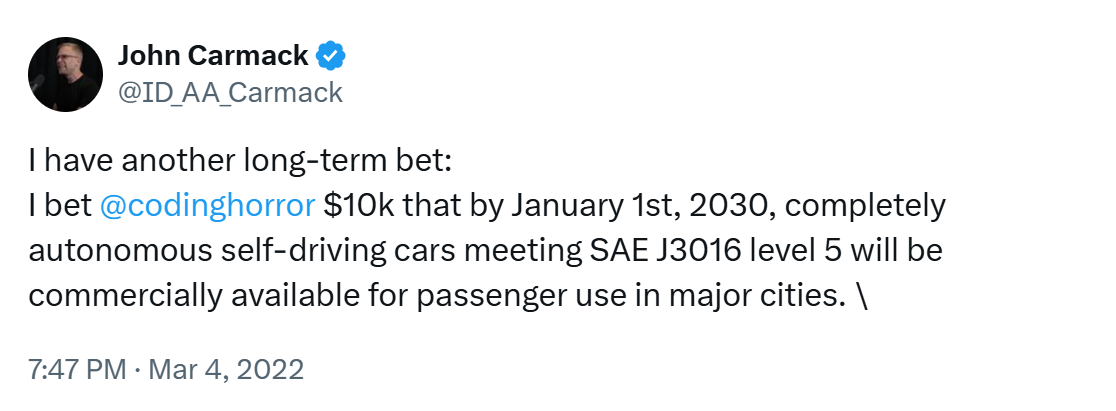
The landscape of modern transportation and artificial intelligence has drawn a high-stakes, philanthropic wager from two of the software industry’s most prominent figures. John Carmack, legendary programmer and pioneer of 3D graphics, has placed a $10,000 bet against Jeff Atwood, co-founder of Stack Overflow and author of the influential Coding Horror blog. At the center of their friendly yet fiercely contested bet is a single, defining milestone of modern engineering: whether fully autonomous, Level 5 self-driving cars will be commercially available for passenger use in major United States cities by January 1, 2030.
The wager, announced publicly by Atwood, brings a spotlight back to the grueling, decades-long engineering marathon that is autonomous vehicle development. While Carmack has taken the optimistic stance that the technological hurdles will be cleared within the decade, Atwood is betting against the timeline, arguing that the public and industry stakeholders consistently underestimate the sheer complexity of autonomous driving in unstructured real-world environments. Regardless of who ultimately pays out, the loser has agreed to donate the $10,000 sum to a 501(c)(3) charitable organization of the winner’s choosing, with provisions made to adjust the final figure for inflation.
Defining the Finish Line: SAE Level 5 Autonomy
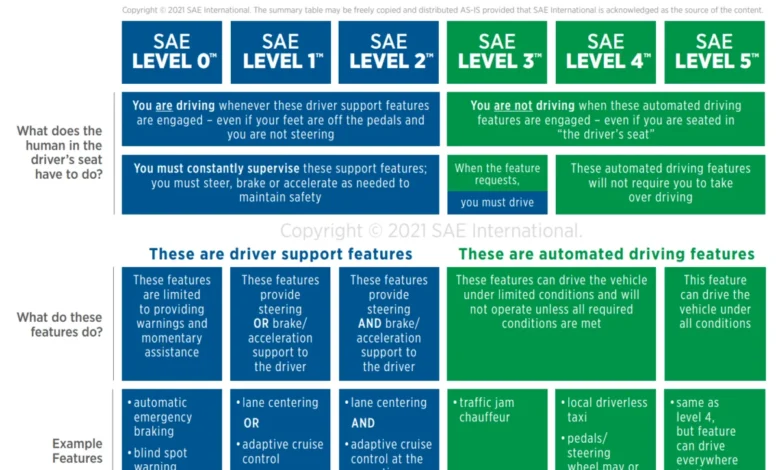
To eliminate any ambiguity regarding what constitutes victory, both technologists anchored their bet to the Society of Automotive Engineers (SAE) J3016 standard, specifically demanding Level 5 autonomy. Within the framework of automotive engineering, Level 5 represents the absolute pinnacle of vehicle automation.
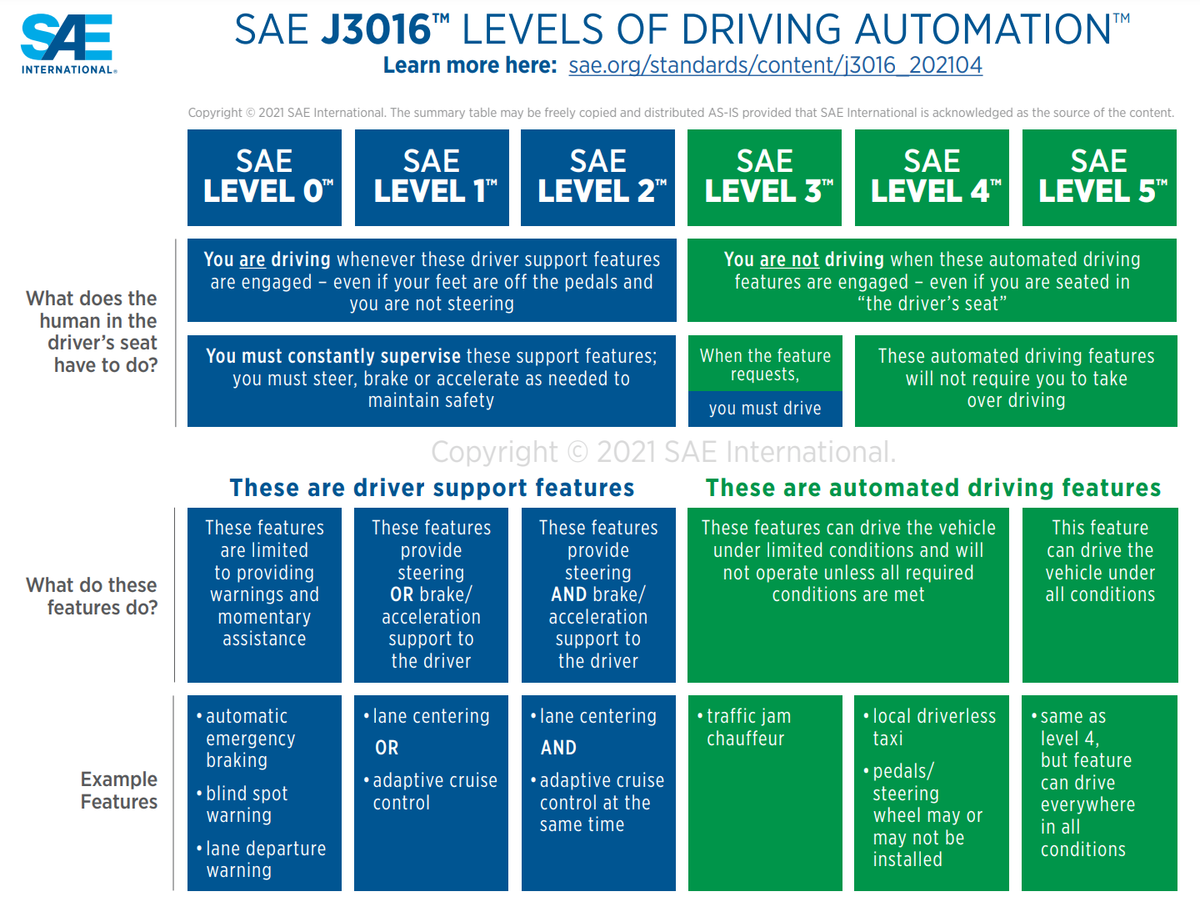
Unlike Level 2 or Level 3 systems—such as Tesla’s Autopilot/Full Self-Driving suite or Mercedes-Benz’s Drive Pilot, which require varying degrees of human driver supervision or are restricted to specific geographical geofences and weather conditions—Level 5 requires zero human intervention. According to the SAE definition, a Level 5 vehicle must be capable of performing all dynamic driving tasks under all conceivable road, traffic, and environmental conditions, save for extraordinary circumstances such as natural disasters.
Under the terms of the Carmack-Atwood bet, a passenger must be able to enter a vehicle in any of the top ten most populous cities in the United States, input a destination, and complete the journey without ever touching a steering wheel, pedals, or monitoring the road. The vehicle must navigate bustling metropolitan centers, unpredictable pedestrian traffic, construction zones, and adverse weather conditions entirely on its own.
The Technical and Regulatory Reality of 2025
The timing of the bet reflects a broader industry crossroads. Over the past decade, autonomous vehicle development has transitioned from unbridled optimism and inflated corporate promises to a grueling test of endurance, regulatory scrutiny, and economic viability.
Companies like Alphabet’s Waymo have made significant strides, operating commercial robotaxi services in metropolitan areas such as Phoenix, San Francisco, Los Angeles, and Austin. These vehicles frequently operate without human safety drivers behind the wheel, transporting everyday passengers daily. However, critics and safety researchers are quick to point out that these existing successes rely heavily on high-definition mapping, geofencing, remote assistance centers, and favorable weather conditions. They fall short of generalized Level 5 autonomy, which must function reliably anywhere without prior mapping or infrastructure upgrades.

Conversely, companies pursuing vision-only or scaled neural network approaches argue that deep learning will eventually crack the generalized driving problem, allowing vehicles to generalize human-like driving intuition across any terrain. John Carmack, known for his relentless pursuit of solving seemingly impossible computational challenges—such as ray casting and rendering engine design in classic titles like Doom and Quake—clearly believes that machine learning breakthroughs will bridge the remaining gap before the decade closes.
Atwood’s Skepticism and the Challenge to Innovators
Jeff Atwood’s decision to bet against the 2030 deadline is not rooted in an ideological opposition to autonomous vehicles. On the contrary, Atwood has expressed enthusiasm for the societal benefits of self-driving cars, noting that he would gladly trade the cognitive load of driving for time spent reading, working, or conversing with family.
Instead, Atwood’s skepticism stems from a realistic appraisal of edge cases in software engineering and artificial intelligence. The transition from 99% reliability to 99.99999% reliability—the threshold required for human safety at scale—represents an exponential increase in difficulty. Unforeseen anomalies, erratic human behavior, and the infinite variability of the physical world continue to plague autonomous software stacks.
By framing his skepticism as a public challenge, Atwood has invited the broader engineering community to prove him wrong. In his announcement, he noted that if the industry achieves Level 5 autonomy by 2030, he will gladly celebrate alongside the victors.
Broader Implications for Technology and Philanthropy
Beyond the technological forecasting, the Carmack-Atwood wager serves a secondary purpose: generating constructive publicity for science, technology, engineering, and mathematics (STEM) fields and charitable causes. Both men have deep roots in software culture. Carmack, immortalized in David Kushner’s bestselling book Masters of Doom, remains a towering figure in computer science history. Atwood, through his work on Stack Overflow and Coding Horror, has spent decades analyzing software development methodologies and mentoring developers.
The bet also highlights a growing trend among tech industry veterans of using friendly wagers to focus public attention on significant technological milestones. As the 2030 deadline approaches, observers will closely track the regulatory approvals, hardware advancements, and algorithmic breakthroughs of companies vying to claim the ultimate proof of concept.
Whether Carmack’s relentless optimism or Atwood’s pragmatic caution proves accurate, the wager ensures that the pursuit of autonomous mobility will remain one of the defining engineering narratives of the late 2020s. With $10,000 earmarked for charity and the pride of two legendary software architects on the line, the countdown to 2030 has added high-stakes drama to the future of transportation.