Google Ads Launches Video Campaign Groups for YouTube Reach and Frequency Optimization.

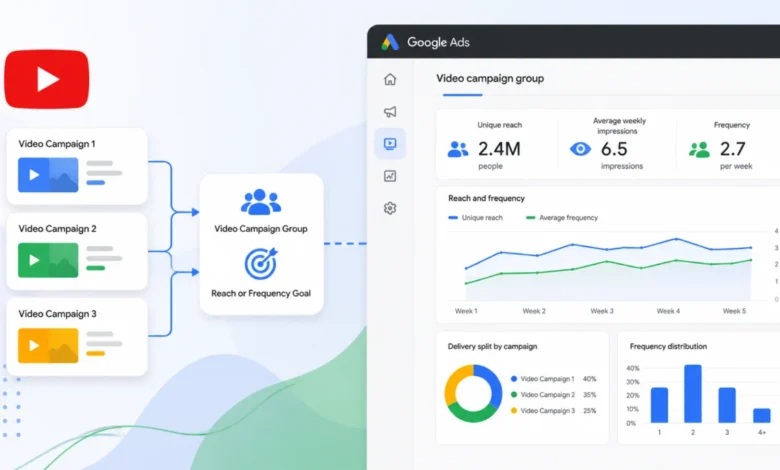
Google has officially announced the global rollout of video campaign groups for YouTube reach and frequency campaigns, a strategic update designed to streamline how advertisers manage and optimize their video content delivery. This new feature allows marketers to bundle multiple video campaigns under a unified reach or frequency objective, facilitating a more coordinated approach to audience engagement. By centralizing these efforts, Google aims to provide advertisers with the tools necessary to maximize unique reach while simultaneously preventing the common pitfall of ad fatigue through excessive frequency.
The introduction of video campaign groups represents a significant shift in the Google Ads ecosystem, moving away from a siloed campaign management model toward a more holistic, objective-driven architecture. Traditionally, advertisers running multiple YouTube campaigns—such as combining non-skippable ads with skippable in-stream formats—had to monitor and adjust each campaign independently to ensure they were hitting their target audience without over-saturating individual viewers. With this update, the platform automates much of this balancing act, allowing for cross-campaign optimization that prioritizes the advertiser’s overarching brand goals.
Technical Mechanics of Video Campaign Groups
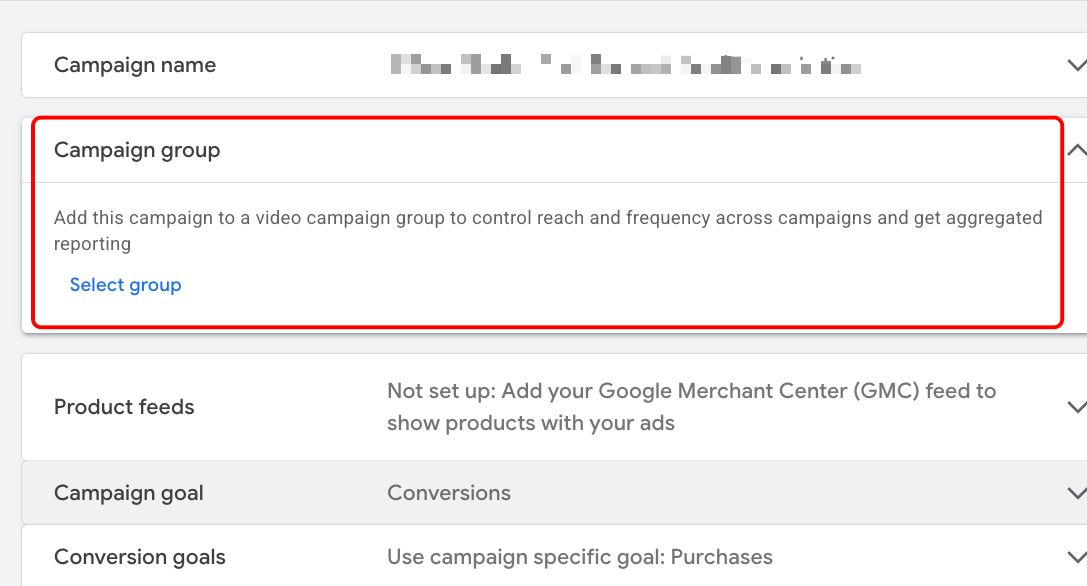
Under the new system, advertisers can select a set of video campaigns and assign them to a single group. This group is then governed by a shared reach or frequency goal. Despite this centralization, Google has maintained a level of granular control that is essential for sophisticated media planning. Advertisers retain the ability to set individual budgets, select specific creative assets, and manage unique targeting settings for each campaign within the group.
The primary benefit of this structure is the "shared intelligence" of the group. When multiple campaigns are grouped, Google’s algorithms can see the total number of times a specific user has been exposed to any ad within that group. If a user has already reached the optimal frequency cap through one campaign, the system can automatically shift impressions to other users who have not yet been reached, or move the budget toward a different campaign within the group that is performing more efficiently.
This coordination is particularly valuable for brands running complex, multi-asset stories. For example, a brand might use a 30-second "hero" video to build awareness and a 6-second "bumper" ad for reinforcement. By grouping these together, the advertiser can ensure that the audience sees the hero video first and the bumper ad at a specific frequency, all while optimizing for the lowest possible cost per thousand impressions (CPM).
Unified Reporting and Performance Metrics
A critical component of this rollout is the introduction of unified reporting. One of the historical challenges of managing fragmented video campaigns was the difficulty of deduplicating reach. If Campaign A reached 1 million people and Campaign B reached 1 million people, it was often unclear how many of those individuals were the same people.
The new reporting dashboard for video campaign groups provides a consolidated view of performance, offering metrics that were previously difficult to synthesize. Key data points now available at the group level include:
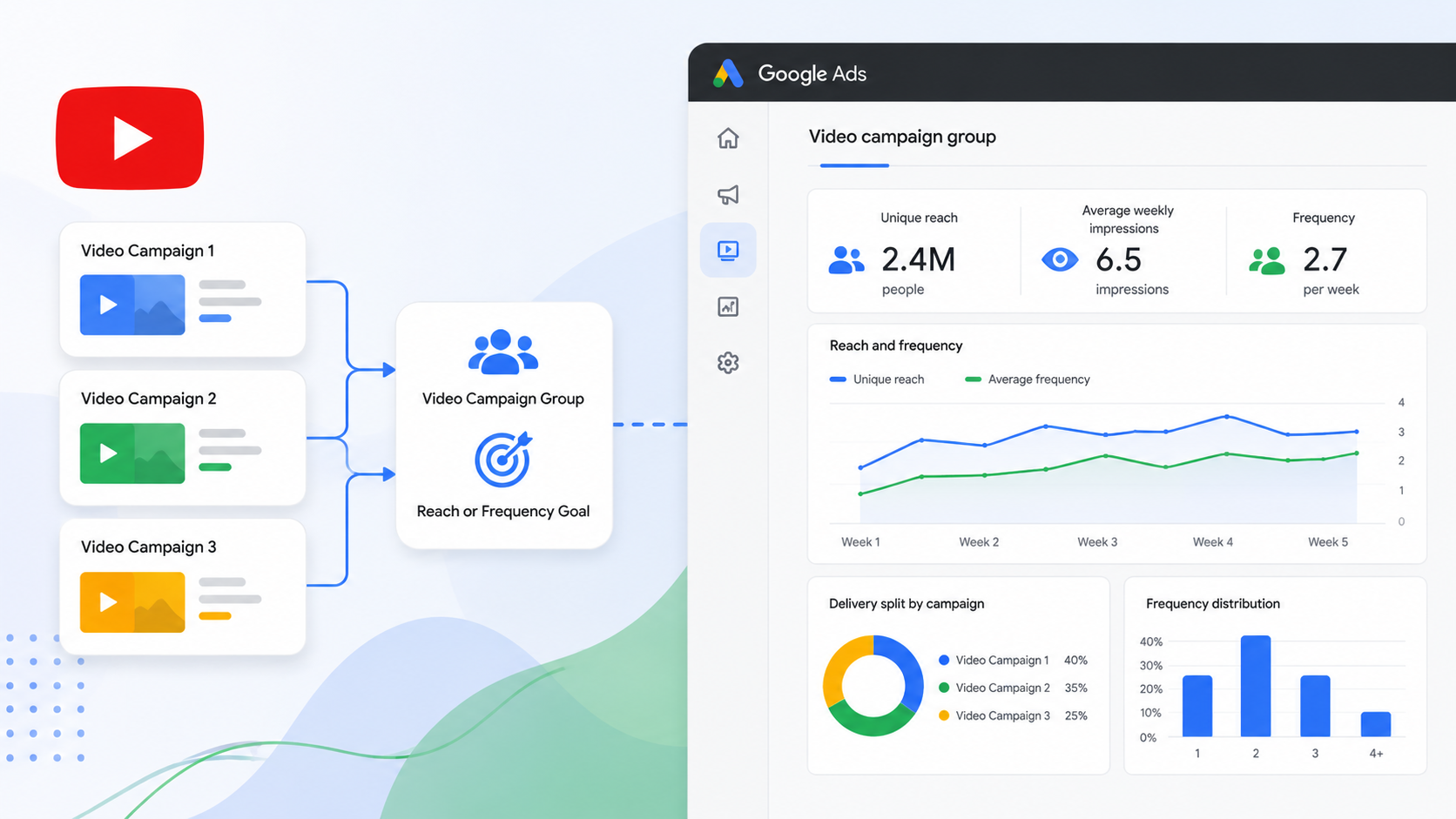
- Unique Reach: A deduplicated count of the total number of individual users who saw at least one ad from any campaign within the group.
- Average Frequency: The average number of times a unique user was exposed to ads across the entire group, providing a clearer picture of brand saturation.
- Group-Level CPM: An aggregated cost-per-thousand-impressions metric that helps advertisers understand the overall efficiency of their combined video spend.
- Frequency Distribution: A breakdown of how many users saw the ads once, twice, or more, allowing for precise adjustments to frequency caps.
The Science of Frequency: Data from the Meridian Study
Google’s decision to prioritize frequency optimization is backed by significant internal research. Along with the feature announcement, Google highlighted findings from a Meridian marketing mix modeling (MMM) study. The research focused on identifying the "sweet spot" for ad exposure—the point at which a brand remains top-of-mind without becoming a nuisance or wasting spend.
According to the Meridian study, an optimal frequency of 2.7 impressions per week was found to be a key driver of performance, resulting in an average 19% increase in Return on Investment (ROI) compared to campaigns with less controlled frequency. This data underscores a fundamental truth in digital advertising: more is not always better. By helping advertisers hit that "2.7" mark more consistently across multiple campaigns, Google is positioning this tool as a direct lever for improving media efficiency and financial outcomes.
Chronology of Development and Discovery
The rollout of video campaign groups is the latest step in a multi-year evolution of YouTube’s advertising capabilities. In recent years, Google has transitioned from simple "view-based" metrics toward more complex "reach-based" buying.
The feature was first brought to public attention by Arpan Banerjee, a recognized Paid Search Expert, who identified the interface changes within the Google Ads dashboard and shared documentation of the update. Shortly thereafter, Google confirmed the global availability of the tool.
Historically, YouTube advertising relied heavily on individual campaign settings. In 2019, Google introduced "Video Reach Campaigns," which allowed advertisers to upload multiple assets into a single campaign to optimize for reach. However, the new "Video Campaign Groups" take this a step further by allowing separate, fully-featured campaigns to work in tandem. This evolution reflects a growing demand from enterprise-level advertisers for more sophisticated cross-campaign orchestration tools that mirror the capabilities found in traditional television buying.
Strategic Implications for Media Planners and Agencies
For media planners and digital marketing agencies, the introduction of video campaign groups simplifies the labor-intensive process of manual optimization. Previously, planners had to export data from multiple campaigns, manually deduplicate reach using third-party tools or complex spreadsheets, and then adjust budgets to balance the load. This "manual balancing" often led to delayed reactions to performance trends.
With the new centralized system, agencies can focus more on the creative and strategic aspects of a campaign—such as audience segmentation and messaging—rather than the technical minutiae of frequency management. Furthermore, the ability to maintain campaign-level budgets while optimizing for a group goal provides a safety net for financial management. It ensures that while the delivery is coordinated, the spending remains within the specific buckets allocated for different product lines or regional initiatives.
Future Expansion: Display & Video 360 (DV360)
Google has also confirmed that the functionality of video campaign groups will not be limited to the standard Google Ads interface. In the near future, the feature is set to expand to Display & Video 360 (DV360), Google’s enterprise-level demand-side platform (DSP).
The expansion to DV360 is particularly significant for large-scale programmatic advertisers who manage YouTube "line items" alongside other programmatic video and Connected TV (CTV) buys. By allowing reach and frequency coordination across multiple YouTube line items in DV360, Google is providing a bridge between standard search-engine marketing and high-end programmatic brand building. This move is seen as a direct response to the increasing competition in the CTV space, where platforms like Amazon, Hulu, and Netflix are vying for the same brand-awareness budgets.
Analysis of Market Impact and Competition
The launch of video campaign groups places Google in a stronger position against competitors like Meta and TikTok, both of which have invested heavily in reach and frequency buying tools. Meta, in particular, has long offered "Reach and Frequency" buying as a core part of its ad suite, allowing for predictable delivery and controlled exposure.
By enhancing its own frequency management tools, Google is addressing a common criticism from brand advertisers who felt that YouTube’s delivery could be too unpredictable when managing multiple concurrent campaigns. In the current economic climate, where marketing budgets are under increased scrutiny, the ability to prove a 19% increase in ROI through better frequency control is a powerful incentive for brands to consolidate their video spend within the Google ecosystem.
Furthermore, this update aligns with the broader industry trend toward "automation with guardrails." While Google’s AI handles the complex calculations of who to show an ad to and when, the advertiser still sets the "guardrails" by defining the campaign group and the target frequency. This balance of automation and control is increasingly becoming the standard for modern digital advertising platforms.
Conclusion and Practical Application
The bottom line for advertisers is that video campaign groups provide a more efficient path to brand awareness on YouTube. By moving the focus from individual campaign performance to collective audience impact, Google is helping brands reduce "ad waste"—the cost associated with showing the same ad to the same person too many times.
As the feature continues to roll out, advertisers are encouraged to review their current YouTube structures. Brands running separate campaigns for different ad lengths or those targeting the same audience across multiple initiatives should consider grouping these campaigns to take advantage of the unified reach metrics. As digital video consumption continues to grow, particularly on living room screens via the YouTube app on CTV, tools that provide centralized control and clear ROI data will be essential for any competitive marketing strategy.