How ElevenLabs Scaled to $600M in 41 Months Through Aggressive Go-to-Market Engineering and AI Automation


The artificial intelligence sector has redefined the velocity of enterprise growth, establishing operational benchmarks that routinely shatter historical Silicon Valley paradigms. Among the most striking examples of this hyper-growth phenomenon is ElevenLabs, the voice-generation and audio AI platform that surged from inception to an annualized revenue run rate exceeding $600 million in just 41 months. This unprecedented trajectory was dissected in a comprehensive retrospective by Carles Reina, ElevenLabs’ fourth employee, first go-to-market hire, and initial angel investor. Reina, who transitioned full-time to managing his $15 million solo venture capital fund, Baobab Ventures, appeared on the SaaStrAI podcast hosted by Sam Blond, founder and CEO of Monaco and former Chief Revenue Officer at Brex and Zenefits. Their dialogue offers an exhaustive masterclass in modern commercial scaling, contrasting traditional B2B sales playbooks with the realities of artificial intelligence adoption.
Background and Context of the ElevenLabs Phenomenon
Founded amid the generative AI boom, ElevenLabs quickly distinguished itself through hyper-realistic voice cloning and text-to-speech technologies that captured the attention of creators, enterprises, and media conglomerates alike. However, superior technology alone rarely guarantees commercial dominance without an equally disruptive distribution model. When Reina joined the nascent startup as employee number four, he spent the initial nine months operating as a solo sales force, securing enterprise contracts manually before building out a global commercial organization.
The strategy deployed by Reina and the founding team challenged foundational SaaS conventions, particularly regarding compensation structures, product-led growth initiatives, and the integration of autonomous software agents into human-driven workflows. By examining the mechanics of their rise from zero to over $600 million in ARR, industry analysts gain a rare window into the operational DNA of a generational AI enterprise.
Chronology and Strategic Milestones
The timeline of ElevenLabs’ commercial expansion is characterized by rapid geographic deployment, iterative experimental marketing, and early implementation of AI-driven sales enablement. During the first nine months, Reina operated as the exclusive sales representative, competing against well-funded model developers targeting developer ecosystems.
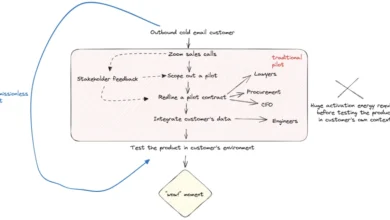
Recognizing the need to permanently capture market share from similarly capitalized competitors, Reina engineered a high-stakes grants program: providing three months of free platform access to any startup with fewer than 25 employees. This initiative created immediate market saturation among early-stage developers, effectively locking competitors out of the startup ecosystem.
Subsequently, ElevenLabs executed a synchronized international expansion across the United States, Europe, Japan, India, Korea, Brazil, Mexico, Colombia, and the Middle East. Rather than applying a uniform direct-sales model globally, the company utilized localized tax laws and withholding requirements to determine optimal channel mixes, transitioning to reseller-first models where local invoicing dynamics dictated better economic outcomes. Simultaneously, Reina pushed for the internal development of proprietary AI go-to-market agents—spanning SDR (Sales Development Representative), Account Executive, and Customer Success functions—long before mainstream software stacks incorporated such automation natively.
Data and Supporting Metrics
The scale of ElevenLabs’ financial performance underscores the efficacy of Reina’s commercial blueprint. Achieving a $600 million annual recurring revenue run rate within 41 months of zero represents an acceleration curve that significantly outpaces historical SaaS leaders such as Snowflake or ServiceNow during their comparable growth phases.
Key structural metrics implemented within the organization included:
- A quota-to-base salary ratio set at 20x, departing radically from the traditional 5x B2B benchmark. Under this framework, a $100,000 base salary carried an associated target of $2 million in new ARR.
- Despite the aggressive quota, total cash compensation (OTE) was designed so that representatives hitting 100% of their target effectively doubled their base salary, supported by uncapped commissions.
- Across the commercial organization, average quarterly quota attainment reached 167%, with top-performing account executives operating at 300% to 600% of quota.
- Over 10% of total enterprise revenue traced its origin directly back to the startup grants program, proving the long-term enterprise value of early-stage developer acquisition.
- Zero commission paid on professional services or short-term proofs of concept (POCs), regardless of deal size, reserving incentive structures exclusively for recurring revenue contracts that directly impacted enterprise valuation.
Official Responses and Internal Resistance
The integration of artificial intelligence agents into ElevenLabs’ sales pipeline was not met with immediate enthusiasm by internal teams. When Reina initially pitched the concept of deploying AI SDRs and customer success agents during a 2022 company offsite in Switzerland—attended by fewer than 30 employees—the founding team initially resisted, arguing that the underlying technology was immature and that human hiring should take precedence.
Internal sales representatives voiced predictable concerns regarding job security and potential displacement. Reina countered these fears through empirical demonstration and structural alignment. First, empirical data proved that an AI SDR responding to inbound leads instantly converted at higher rates than human counterparts burdened by response-time latency, while simultaneously relieving human representatives from the monotony of inbox management. Second, and crucially, management established a policy guaranteeing that human representatives still received their full commission when AI agents successfully unlocked revenue on accounts within their territory.
This policy eliminated internal friction, preventing sales staff from sabotaging automation tools out of self-preservation. Reina noted that organizations attempting to deploy AI sales agents without commission-sharing structures inevitably encounter passive resistance from human employees working against the system.
Broader Impact and Market Implications
The philosophies articulated by Reina and Blond carry profound implications for the broader B2B technology landscape. As generative AI transforms enterprise workflows, the traditional linear relationship between headcount expansion and revenue growth is permanently fracturing.
Several key takeaways define the forward-looking playbook for modern commercial organizations:
-
Experimentation as a Portfolio Strategy
Reina operated under the guiding principle that teams must test 100 distinct go-to-market hypotheses, knowing that only a fraction need succeed to drive monumental financial outcomes. The startup grants program began as an unproven gamble; its ultimate yield of over 10% of enterprise revenue validates the necessity of calculated, asymmetric risk-taking in hyper-competitive markets. -
Operationalizing AI Without Alienating Talent
The mandate to pay human representatives when software agents close transactions establishes a scalable template for organizational change management. By treating AI as a productivity multiplier rather than a human replacement, companies can accelerate technology adoption without incurring internal cultural backlash. -
The Danger of Delayed RevOps and Enablement
Reflecting on strategic missteps, Reina and Blond both identified the delayed hiring of sales enablement and revenue operations (RevOps) professionals as a primary barrier to even faster scale. Founders frequently prioritize execution-oriented sales hires while neglecting operational infrastructure, forcing organizations to retroactively impose processes onto entrenched behaviors. -
Redefining Seniority and Efficiency
While startups historically favor young, cost-effective sales talent, the ElevenLabs trajectory suggests that blending experienced enterprise sellers—who possess pre-existing relationships with institutional procurement departments—significantly compresses the sales cycle. Combined with high-quota, high-compensation models, this approach fosters lean, highly motivated commercial units rather than bloated sales floors characterized by low morale and widespread quota misses.
Conclusion
The rise of ElevenLabs serves as an instructive case study for the next generation of artificial intelligence enterprises. By wedding aggressive experimentation with disciplined financial governance, structural empathy for human sales teams, and an uncompromising focus on recurring revenue metrics, the company established a new gold standard for B2B commercial velocity. As the software industry continues its rapid evolution toward intelligent automation, the principles forged during ElevenLabs’ explosive 41-month ascent will undoubtedly influence corporate strategy across the global technology ecosystem for years to come.