How Heimkapital Transformed German Property Finance by Replacing Fragile Spreadsheets with Automated Workflow Orchestration

The German real estate market is characterized by its rigorous regulatory environment and an uncompromising demand for documentation. For Heimkapital, a pioneer in the partial property sales sector—a model where homeowners can sell up to 50% of their equity while retaining the right to reside in their homes—navigating these complexities is not merely a legal obligation; it is a fundamental business requirement. As the company scaled, its reliance on decentralized, manual tracking systems threatened to undermine its primary competitive advantage: the ability to close property transactions with unmatched speed and precision.
In the early stages of the company’s lifecycle, the operational backbone of Heimkapital consisted of an intricate web of interconnected Google Sheets. While this approach provided a low-barrier, flexible solution during the firm’s infancy, it became an existential liability as customer volume grew. The company’s leadership identified that the inherent fragility of spreadsheet-based management—prone to human error, accidental data loss, and version control conflicts—posed a significant risk to its growth trajectory. By migrating its operations to Process Street, Heimkapital successfully transitioned from a reactive, manual environment to a scalable, automated, and compliant workflow engine.
The Anatomy of the Spreadsheet Crisis
In the fast-paced world of property finance, time is the ultimate currency. Heimkapital’s business model requires the synthesis of property appraisals, legal document verification, and bank financing coordination. When these processes were housed within Google Sheets, the team encountered a "scaling wall."
According to internal reports from the company, the spreadsheets eventually became so voluminous that retrieving specific data points felt like searching for a needle in a haystack. More critically, the lack of centralized access controls meant that a single accidental deletion could compromise the integrity of an entire transaction lifecycle. In the German property market, where a missing signature or a misplaced valuation report can delay a closing by weeks, these operational frictions were unacceptable.
"Initially, we managed everything through a system built on Google Sheets," noted Bhargav, a key leader at Heimkapital. "It worked at first, but as we scaled and customer volume increased, the sheets became longer and harder to manage. Finding specific data was difficult, and accidental deletions could break entire processes. The risk of human error was much higher."
The implication of these technical hurdles extended directly to the bottom line. Any lag in the transaction cycle increased the risk of customer churn, as clients seeking liquidity expected a seamless, high-velocity experience. The operational overhead required to manually audit these sheets consumed hours of labor that could have been better directed toward deal sourcing and client relations.
The Chronology of Digital Transformation
The transition to a formal operations platform did not happen overnight; it was a deliberate, phased evolution. Heimkapital began by replicating its existing spreadsheet logic within Process Street. This initial "lift and shift" approach allowed the team to maintain continuity while introducing standardized, repeatable steps for each deal.
- Phase 1: Standardization. The team identified the most repetitive, document-heavy tasks—such as initial deal creation and property appraisal intake—and moved them from spreadsheets into structured, checklist-based workflows. This established a baseline for consistency.
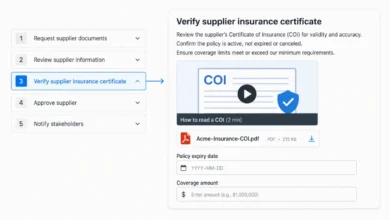
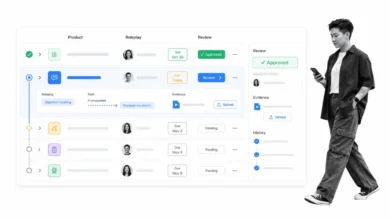
- Phase 2: Integration and Complexity. As the team grew more comfortable with the platform, they began to layer in advanced features. This included multi-stage approval workflows, where document checklists were automatically routed to team leaders for verification before a file could move to the next stage of the transaction.
- Phase 3: Ecosystem Expansion. Having mastered the core deal lifecycle, the firm expanded the use of the platform to non-core operations, including human resources, employee onboarding, and internal departmental task management. This turned the platform into a centralized hub for all internal business functions.
The Role of Technology in Modern Property Finance
The modern financial services sector is increasingly reliant on "intelligent orchestration." Heimkapital’s infrastructure is underpinned by a robust cloud architecture, utilizing Amazon Web Services (AWS) to ensure high availability and data integrity. By leveraging tools such as Amazon Bedrock and various Lambda-based automations, the company has begun to integrate GenAI capabilities into its workflow governance.
This technological backbone ensures that when a property policy changes—such as a shift in municipal valuation requirements or new banking regulations—the change is propagated across all relevant workflows. This "closed-loop" system ensures that compliance is not a manual check performed after the fact, but an automated guardrail integrated into the very fabric of every transaction.
Operational Impact and Quantitative Gains
The shift from manual tracking to an automated engine has yielded measurable improvements in Heimkapital’s operational metrics. By automating the intake of complex, 50-to-60-page property evaluation reports, the team has significantly reduced the time spent on data entry and manual verification.
The reduction in error rates is perhaps the most significant outcome. In a spreadsheet-based system, a data entry error in a valuation field could cascade through the entire deal structure. In the new environment, validation rules ensure that data is formatted correctly before a task can be marked as complete. This level of rigor has allowed Heimkapital to maintain its reputation for speed while simultaneously increasing its capacity to handle a higher volume of transactions.

Julian, another representative from the Heimkapital team, highlighted the ease of adoption: "What stood out to me was how simple and intuitive the interface is. It’s easy to understand, even for new team members. When used properly, it makes our work much easier, not just for managing documents, but for tracking information and checks as well."
Implications for the German Real Estate Market
The broader implication of this transition is that the German property finance market is ripe for a digital-first approach. For decades, the sector has been hampered by a reputation for bureaucratic inertia. By proving that high-touch financial products—such as partial equity sales—can be managed with modern, automated software, Heimkapital has set a new benchmark for operational efficiency.
The firm’s success serves as a case study for other European fintechs struggling with the "Excel Trap." As companies grow, the manual processes that once provided agility eventually become anchors. Breaking free from these constraints requires more than just new software; it requires a commitment to process engineering—the act of documenting, refining, and automating business logic until it is no longer a burden, but a competitive moat.
Looking Ahead: Data-Driven Scaling
As Heimkapital continues to expand, its focus is shifting toward deeper data warehouse integration. The goal is to move beyond simple workflow management and toward predictive analytics. By capturing structured data at every stage of the deal lifecycle, the firm is building a proprietary dataset that can inform future property valuations, risk assessments, and market expansion strategies.
The journey from a small team managing deals in spreadsheets to a sophisticated, data-driven organization underscores a critical lesson for the industry: digital transformation is not a single project, but a continuous cycle of optimization. For Heimkapital, the combination of a well-defined process, robust cloud infrastructure, and a culture of continuous improvement has positioned it to capitalize on the increasing demand for flexible home equity solutions in Germany.
In an environment where regulatory pressure continues to mount, the ability to turn compliance into a predictable, automated process is no longer just an operational preference—it is a requirement for survival. Heimkapital has successfully navigated this shift, transforming its operations into a scalable engine that supports, rather than hinders, its long-term growth ambitions.