Product-Led Growth Lab Series Delves into the Evolving Complexities of SaaS Expansion and AI Integration

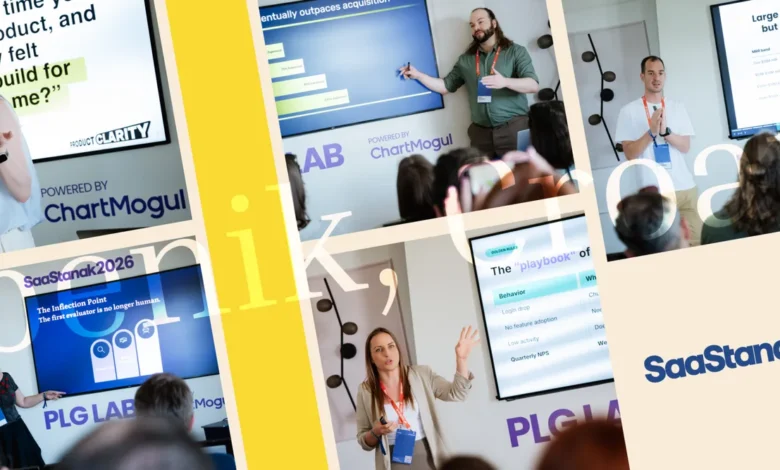
The rapid evolution of the SaaS landscape is pushing Product-Led Growth (PLG) beyond its initial premise of simply removing sales from the customer journey. ChartMogul’s recent "Product-Led Growth Lab" series, a collection of intimate, city-based meetups, has underscored this shift, highlighting the intricate technical, operational, and human elements now central to successful PLG strategies. The series, which began in San Francisco and culminated with sessions overlooking the Mediterranean Sea in Croatia, aimed to tackle the "messy, important stuff" that founders and operators grapple with daily, from broken automation workflows to the strategic integration of AI.
The initiative, spearheaded by Sara Archer, Chief Revenue Officer at ChartMogul, was born from a recognition that many ambitious SaaS businesses, often lacking massive capital or large sales teams, are navigating increasingly complex PLG challenges. "The vast majority of our customers are building ambitious SaaS businesses by way of smart, opinionated products," Archer stated in her introductory remarks. "They don’t have massive amounts of capital, rooms full of Enterprise AEs, or six-figure contracts. In the many years I’ve been at ChartMogul, my conversations with founders and operators often revolve around the same thing: the weeds of PLG complexity." This sentiment fueled the creation of an event designed to foster candid discussions and practical problem-solving.
The series kicked off in San Francisco during the week of Stripe Sessions, a prime time for SaaS professionals to convene. A notable session featured Brenna Loury, CRO of Doist, who shared candid insights into the difficulties of "moving upmarket" within a PLG framework. The engagement level was so high that the discussions continued informally on the rooftop, even as attendees mingled with other conference-goers, a clear indicator of the value derived from the shared experiences.
Following San Francisco, the Product-Led Growth Lab series journeyed to the Croatian coast. In collaboration with SaaStanak, ChartMogul organized two afternoons of PLG-focused content, attracting standing-room-only crowds despite sweltering heat waves. The active participation, characterized by sharp questions and the sharing of real-world company insights, demonstrated the strong demand for such operator-level knowledge exchange. "I’m really proud of how it turned out," Archer commented on the success of the Croatian meetups.
Recognizing that not all industry professionals could attend in person, ChartMogul committed to making the valuable insights accessible. The company has begun releasing recaps of each session, emphasizing practical takeaways and providing presentation decks for future reference, a move consistent with their data-driven approach to SaaS analytics.
Deconstructing the Expansion Engine: Architecting for Scalable Upsells
One of the pivotal sessions, "The Expansion Engine: Architecting a Scalable PLG Stack for Automated Upsells," presented by Tom, underscored a critical shift in how SaaS businesses should approach revenue growth. The traditional view often frames expansion as a sales execution challenge, relying on precise timing, tailored messaging, and opportune offers. However, Tom’s presentation revealed that for many SaaS companies, expansion is fundamentally an infrastructure problem. When data flows seamlessly into well-designed workflows, expansion opportunities become more relevant, timely, and significantly easier to scale. This perspective challenges conventional wisdom, suggesting that robust data architecture and automated workflows are the bedrock of successful expansion strategies, rather than solely relying on sales acumen.
Navigating Automation’s Pitfalls: Behavior and User Feedback as Guides
Aleksandra’s session, "When Automations Guess Wrong: Behavior Shows What Happened. Users Tell You Why," addressed a common pain point: lifecycle automations that function technically but feel too generic in practice. This presentation served as a crucial reminder that while user behavior data reveals what is happening, it is direct user feedback that illuminates the underlying reasons and informs subsequent actions. This duality is essential for creating automations that are not only functional but also resonate with user needs and effectively drive engagement and retention. The implications are significant for companies investing heavily in automation, suggesting a need for a balanced approach that integrates behavioral analytics with qualitative user insights.
The AI Imperative: From Traditional SaaS to AI-Native Transformation
The rapid ascent of artificial intelligence in the business world was a central theme, notably in the session titled "From Traditional SaaS to AI-Native in 5 Days: 3 Companies That Did It." This presentation demystified the concept of "AI-native" by translating it into a tangible product exercise. The framework presented involves identifying the first valuable outcome, eliminating surrounding complexities, preserving trust-building moments, and designing the user experience backward from that point. The session provided practical prompts and strategic questions for teams, such as "What could the product do before the user has to learn the product?" and "Which decisions should AI make by default?" This approach is crucial for businesses looking to remain competitive in an era where AI is becoming an expectation, not just an advantage. The ability to rapidly integrate AI capabilities can significantly impact a product’s perceived value and user adoption rates.
Uncovering LTV’s Blind Spots: New Data on SaaS Performance
A significant contribution to the series was the presentation of new data from ChartMogul’s insights team in "LTV Has a Blind Spot: Findings from 3,700 SaaS Businesses Over 6 Years." This research highlighted that while Lifetime Value (LTV) remains a valuable metric for informing decisions about Customer Acquisition Cost (CAC), payback periods, and investment segmentation, its effectiveness is contingent on understanding its limitations. The data suggests that teams must actively check LTV calculations against actual customer behavior to avoid strategic missteps. This data-driven insight is vital for SaaS companies seeking to optimize their financial planning and resource allocation.
The Human Element: Fixing First Impressions and Activation Paths
"People-Led Growth: Fixing Your Product’s First Impression and Path to Activation" offered a valuable reset for teams that might view onboarding as a "set and forget" process. Paulina’s framework provides a simple yet effective monthly review process: examine the onboarding experience from the user’s perspective, identify points where trust erodes or momentum dissipates, and implement targeted fixes to guide users toward their first success. This emphasizes that effective onboarding is an ongoing, iterative process deeply rooted in understanding user psychology and experience, a critical component of sustainable PLG.
The Rise of Invisible PLG and Agent-Readable Infrastructure
The concept of "Invisible PLG" was explored, posing a critical diagnostic question for the future of SaaS: could an AI agent independently discover, evaluate, test, price, and integrate with a product? If the answer is no, the product, while visible to humans, may be increasingly invisible to the automated systems that are beginning to shape software discovery and evaluation. This points towards a future where "agent-readable infrastructure" becomes paramount, allowing AI systems to interact with and understand products programmatically. This has profound implications for product design, API strategy, and overall market visibility in an AI-driven ecosystem.
Scaling from $1M to $20M ARR: Growth Levers and Evolving Signals
A workshop titled "[Workshop] From $1M–$20M ARR: Growth Levers and New Signals for Success" reframed the common question of scaling into a more actionable operational inquiry: "What has to get better as we scale?" The consensus emerged that achieving this growth is rarely a result of a single solution but rather a combination of compounding improvements across Average Revenue Per Account (ARPA), retention, expansion, strategic focus, and execution. Crucially, the workshop also emphasized the importance of leadership standards in solidifying these improvements and fostering a culture of continuous growth.
Bridging the Gap: Where PLG Meets Sales in a Hybrid Model
The complexities of integrating Product-Led Growth with traditional sales motions were addressed in "Where PLG Meets Sales: Building a Hybrid Growth Engine in Practice." This session clarified that hybrid go-to-market (GTM) strategies are not simply about attaching a self-serve funnel to a sales team. Instead, they are designed to solve systemic and process challenges that arise when different buyer personas require distinct engagement pathways. Key considerations include account routing, ownership definition, incentive design, product boundary setting, and ultimately, meeting customers where they are in their buying journey. This nuanced approach is becoming increasingly vital as businesses seek to capture a wider range of customers with diverse needs and preferences.
Overcoming the Launch to Adoption Chasm
Finally, "The Launch to Adoption Gap: Why Fast Shipping Doesn’t Equal Product Growth" offered a fresh perspective on SaaS product marketing. Natalija’s framework reframes product marketing from mere announcement of new features to a strategic imperative of "designing for adoption." In an environment of rapid product iteration, companies that can effectively identify what deserves attention, target the right users at the opportune moment, and translate product releases into tangible behavior change will gain a significant competitive advantage. This approach is crucial for ensuring that product development efforts translate into meaningful user engagement and sustained product growth.
The Evolving Nature of Product-Led Growth
Taken together, the sessions from the Product-Led Growth Lab series paint a clear picture: PLG has transcended its foundational principle of sales disintermediation. It now encompasses sophisticated data architecture, robust feedback loops, a deep understanding of onboarding psychology, strategic hybrid GTM design, effective launch systems, and the development of agent-readable infrastructure. While the human element of conveying product value remains critical, PLG is simultaneously becoming more technical, more operational, and more human. This multifaceted evolution signifies a maturation of the PLG model, demanding a holistic and integrated approach from SaaS businesses aiming for sustained success in an increasingly competitive market. The insights shared at these meetups provide a vital roadmap for navigating these complexities, empowering founders and operators to build more resilient and scalable businesses.