Qt Group Unveils Clate to Bridge the Gap Between Embedded UI Design and Hardware Constraints

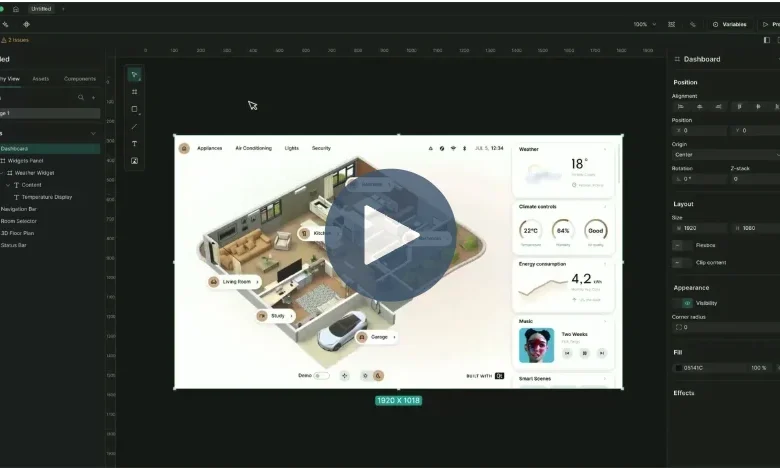
The embedded systems industry has long faced a persistent friction point: the divide between the sophisticated creative visions of user experience (UX) designers and the rigid, often unforgiving technical realities of resource-constrained hardware. Qt Group, a global leader in software development frameworks, is moving to dissolve this barrier with the announcement of Clate, a no-code, AI-native environment specifically engineered for the creation of embedded user interfaces. By automating the transition from design to production-ready QML (Qt Modeling Language) code, the company aims to empower designers to bypass the technical bottlenecks that have historically forced them to compromise on aesthetic and functional quality.
The unveiling of Clate arrives at a pivotal moment in the evolution of the Internet of Things (IoT) and automotive interface design. As consumer expectations for high-fidelity, smartphone-like experiences migrate into appliances, medical devices, and vehicle cockpits, the demand for high-performance UIs has skyrocketed. However, the underlying hardware—often limited by low-power processors, restricted memory, and tight thermal envelopes—remains a significant challenge.
The Embedded Design Dilemma: A Historical Context
For decades, the workflow for creating embedded UIs has been bifurcated. Designers typically utilize high-level tools like Figma or Adobe XD to create visual concepts. These tools offer immense creative freedom but are inherently decoupled from the physical hardware. Once a design is approved, it must be handed off to software engineers who attempt to translate those designs into code—often a process fraught with miscommunication, manual errors, and "design drift," where the final product fails to match the original prototype.
Conversely, when designers attempt to use embedded-specific tools, they are frequently confronted with complex code-editing requirements. These environments prioritize technical implementation over visual intuition, effectively shutting out designers who lack deep programming expertise. This structural inefficiency has led to a stagnant design process where creative iteration is stifled by the fear of breaking the build or violating memory constraints.
According to internal research conducted by Qt Group, this friction is not merely an occasional inconvenience but a systemic industry issue. Their study found that 59% of embedded UX designers acknowledge they would significantly benefit from a specialized tool designed for their workflow, yet most remain unable to articulate a solution because they have become conditioned to the limitations of current, web-centric or code-heavy toolsets.
Bridging the Gap: How Clate Functions
Clate is designed to function as an AI-native workspace that integrates directly into the Qt ecosystem. Its core value proposition is the elimination of the "hand-off" phase. By generating production-ready QML code in the background, Clate ensures that the designer’s output is directly compatible with the Qt framework, which powers millions of devices worldwide.
The "AI-native" aspect of the platform is perhaps its most transformative feature. By utilizing standard Model Context Protocol (MCP) protocols, Clate allows designers to connect their workflow across a diverse software ecosystem. This connectivity enables natural language processing, where designers can prompt the system to make complex UI changes—such as adjusting layouts, modifying color palettes, or implementing animations—without needing to touch the underlying codebase.
Antti Kujala, vice president of design products at Qt Group, emphasizes that the platform is intended to restore autonomy to the design team. "For too long, embedded UI/UX designers have had to compromise their work, using web-centric tools that simply don’t account for real-world hardware constraints," Kujala stated. "We created Clate to end that compromise, and to give designers back full control and ownership of the user experience."
By keeping the designer within a no-code environment that understands the constraints of the target device, Qt Group hopes to reduce the cycle time of product development by weeks or even months.

Strategic Implications for the Embedded Market
The launch of Clate reflects a broader trend in the software industry: the democratization of development through AI-assisted, low-code/no-code platforms. In the embedded sector, this shift is particularly significant because it addresses the growing talent gap. As the complexity of embedded systems increases, there is a shortage of engineers who are simultaneously experts in UI/UX and low-level hardware optimization.
By automating the translation of design to code, Clate allows companies to allocate their specialized software engineers to high-value tasks, such as system architecture and performance optimization, rather than menial UI implementation.
Furthermore, the integration of hardware-awareness into the design phase represents a proactive approach to quality assurance. Although features such as frame rate and memory consumption checking are slated for post-launch updates, their inclusion signals a fundamental change in how UIs will be validated. Instead of discovering that a UI is too "heavy" for a processor at the end of the development cycle, designers will receive real-time feedback, allowing them to adjust assets to fit the hardware’s capabilities before the code is ever compiled.
Chronology and Roadmap
Qt Group has outlined a phased rollout for the technology to ensure stability and feature density:
- Beta Phase: Clate is currently entering its beta testing phase, allowing select partners and enterprise users to integrate the environment into their current workflows.
- Initial Launch (Early 2025): The full release is expected to feature the core no-code workspace, comprehensive AI-assisted design capabilities, and seamless integration with existing project management and design tools via MCP.
- Hardware Optimization Integration: Shortly after the initial launch, Qt Group plans to roll out the "Embedded Hardware Optimization" suite. This will include diagnostic tools that monitor resource usage in real-time, providing a "health score" for the interface based on the target hardware’s memory and GPU limitations.
Analytical Perspective on Industry Adoption
The success of Clate will likely hinge on two factors: the accuracy of its code generation and the flexibility of its integration. In the embedded world, "production-ready" is a high bar. Developers are often skeptical of automated code generation, fearing that it will create "spaghetti code" that is difficult to maintain or debug. Qt Group’s decision to base Clate on QML—a declarative language already optimized for the Qt framework—is a strategic move that mitigates this concern. Because the generated code will adhere to the standard Qt architecture, it should be familiar to existing Qt developers, making it easier to integrate into existing production pipelines.
From a competitive standpoint, Qt Group is positioning itself to capture the "design-to-hardware" vertical. While general-purpose tools like Figma continue to dominate the prototyping space, they lack the "physical intelligence" that Clate promises. If Clate succeeds in providing a high-fidelity design environment that is simultaneously hardware-aware, it could set a new standard for how industrial, automotive, and medical UIs are developed.
The Role of AI in Transforming Workflow
The use of AI in this context extends beyond simple code generation. By utilizing LLMs (Large Language Models) trained on UI patterns and hardware constraints, Clate can serve as a "design partner." For instance, an AI assistant could suggest optimizations for low-memory environments, such as replacing a high-resolution, multi-layered background with a more efficient vector-based graphic that achieves the same aesthetic effect.
This represents a move toward "Design-for-Constraint" (DfC), a philosophy that encourages designers to view hardware limits not as obstacles, but as design parameters. As embedded devices become more ubiquitous, this philosophy will be essential for creating sustainable, high-performance interfaces that do not drain battery life or exceed the processing power of the target hardware.
Conclusion
The announcement of Clate marks a strategic inflection point for Qt Group and the broader embedded software industry. By acknowledging the frustration of designers who have been forced to choose between creative vision and technical feasibility, the company is attempting to solve a fundamental human-machine interface problem.
If the promise of an AI-native, no-code environment holds, the result will be a significantly more efficient development cycle. For the end-user, this could mean more responsive, visually sophisticated, and reliable interfaces in everything from the infotainment screen in their vehicle to the interface on their home smart thermostat. As Clate moves toward its full launch in 2025, the industry will be watching closely to see if it can truly deliver on the promise of making the embedded development process as intuitive as modern application design, without sacrificing the rigors of engineering excellence.
Related posts: