The Amazon Working Backwards Methodology and the Evolution of Modern Product Development

In 2006, Amazon Web Services (AWS) fundamentally altered the trajectory of the global technology sector by democratizing access to high-end infrastructure. What was once a capital-intensive endeavor requiring millions of dollars in hardware investment and a vast team of systems engineers was suddenly accessible to a lone developer with little more than an internet connection. Today, this platform has grown into a dominant force in the digital economy, with approximately one-third of all daily internet users navigating websites hosted on AWS infrastructure. As of recent fiscal reports, AWS operates at an $11.5 billion run rate, accounting for 67% of Amazon’s total operating revenue. This cloud unit has been the primary driver behind the company’s surge into record-breaking profitability, fundamentally changing how corporations, startups, and governments view computational scalability.
The architectural success of AWS is not merely a result of technical prowess but is deeply rooted in a proprietary product development framework known as "working backwards." This methodology, which has become a cornerstone of Amazon’s internal culture, forces teams to prioritize the end-user experience before a single line of code is written. By shifting the focus from technical capability to customer benefit, Amazon has managed to insulate itself from the common pitfall of building products in search of a problem.
The Origins of the Working Backwards Framework
The philosophy of working backwards is designed to circumvent the traditional "roadmap-first" development cycle, which often leads to the creation of bloated, unusable software. Instead of beginning with an engineering assessment of what is possible, product managers are mandated to begin with an internal press release. This document is written as if the product is already finished, detailing exactly how the offering solves a specific customer pain point and why it is superior to existing alternatives.
Ian McAllister, a former General Manager at Amazon and current executive at Airbnb, has highlighted the rigor of this process. According to McAllister, the goal is to articulate a clear value proposition for the customer—whether they are retail shoppers or technical users—by contrasting the proposed solution against the failures of current market offerings. If a team cannot articulate the value of a product in a clear, concise press release, they are not yet ready to commit development resources to the initiative.
This process is characterized by an intense iterative cycle. Andy Jassy, the current CEO of Amazon and former head of AWS, reportedly went through 31 distinct drafts of the original S3 (Simple Storage Service) press release before presenting the concept to Jeff Bezos. This level of scrutiny ensures that by the time a product reaches the design phase, its core value proposition is hardened against criticism.
Chronology of a Paradigm Shift
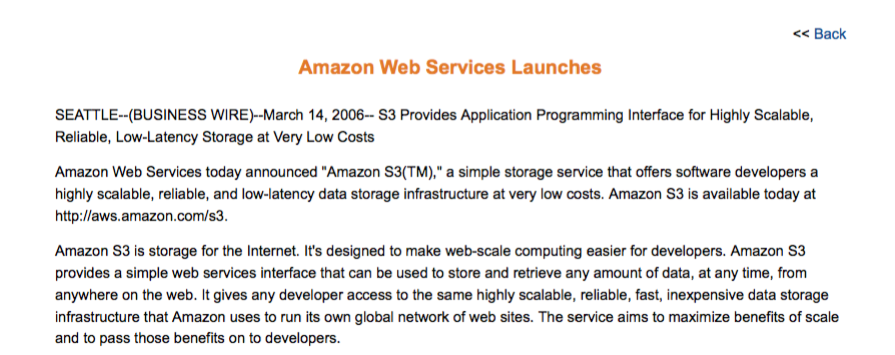
The launch of Amazon S3 in 2006 serves as a primary case study for this approach. At the time, the concept of "cloud storage" was in its infancy. The original press release for S3 promised a "simple web service interface to store and retrieve any amount of data from anywhere on the web."
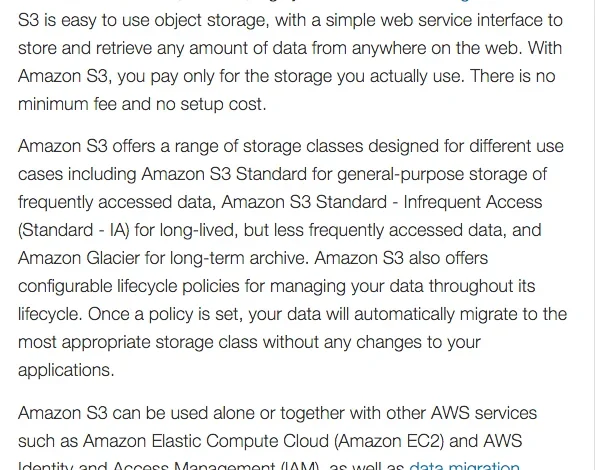
A retrospective analysis of the S3 landing page reveals that the product’s core mission has remained remarkably stable for over a decade. While the technical infrastructure has evolved from a nascent experimental service into a global backbone for companies like Netflix, Slack, and Yelp, the original vision statement has seen almost no deviation. Amazon essentially "worked backwards" from a mental model of a student in a dorm room needing the same access to high-performance infrastructure as a Fortune 500 corporation. By successfully enabling this, AWS effectively lowered the barrier to entry for the entire software industry, leading to a massive increase in the velocity of startup creation over the following decade.
Data-Driven Development and Long-Term Value
The implications of this strategy extend far beyond simple efficiency. By forcing teams to draft public-facing communications before development, Amazon avoids the "sunk cost fallacy" where companies continue to pour resources into failing projects simply because development has already begun. In the modern tech landscape, where the cost of rewriting code is significantly higher than the cost of revising a text document, this strategy serves as a critical financial safeguard.
The economic impact of this methodology is visible in Amazon’s quarterly filings. The cloud division’s contribution to operating income has allowed the parent company to subsidize its retail operations and experimental ventures, such as the Alexa ecosystem and Prime logistics. By focusing on "things that don’t change"—such as the customer’s desire for lower prices, faster delivery, and reliable service—Amazon has ensured that its development teams remain tethered to fundamental human needs rather than fleeting market trends.
Internalization and Cultural Integration
For many organizations, the challenge lies in scaling this mindset beyond a few isolated teams. At Amazon, customer-centricity is not an abstract concept; it is an operational requirement. The process is supported by specific rituals and mechanisms that normalize the act of questioning every product feature from the perspective of the end-user.
To replicate these habits, organizations must move away from top-down directives and toward a culture where the press release acts as a "guiding light" throughout the entire product lifecycle. If a team finds that their product features sound uninteresting or overly complex when described in a simple press release, the methodology mandates that they reconsider the feature entirely. If the customer does not care, the product should not exist.

This ethos creates a competitive advantage that is difficult for incumbents to replicate. While traditional enterprises often struggle with internal silos and misaligned incentives, the working backwards approach creates a shared language and a shared goal. Every engineer, designer, and marketer understands exactly what they are building and why, because they have already read the "news" about the product they are about to construct.
Broader Implications for the Tech Industry
The success of AWS and the adoption of the working backwards framework have led to a broader shift in the technology sector. Many Silicon Valley firms have begun to adopt similar "press release" methodologies to streamline their own product launches. This trend signals a movement away from the "move fast and break things" era toward a more disciplined, customer-obsessed approach to innovation.
However, the framework is not a panacea. It requires a significant shift in leadership style, demanding that executives act as editors and critics of internal pitches rather than merely approving roadmaps. It also requires a level of patience that is often at odds with the quarterly pressures of public market performance. Despite these challenges, the empirical evidence provided by Amazon’s financial dominance suggests that when companies prioritize the customer’s perspective at the inception of an idea, the result is more than just a successful product—it is a sustainable, scalable business model.
In conclusion, the "working backwards" methodology is more than a documentation trick; it is a strategic discipline. By anchoring development in the customer experience, Amazon has created a buffer against the volatile nature of the technology market. As other firms attempt to modernize their product development cycles, the lessons learned from the early days of AWS—specifically the importance of clarity, iteration, and unwavering customer focus—will likely remain the gold standard for long-term corporate success. The ability to distinguish between ephemeral features and fundamental value remains the hallmark of companies that define their industries rather than those that are simply consumed by them.