Tech Icons Jeff Atwood and John Carmack Wager $10,000 on the Arrival of Level 5 Autonomous Vehicles by 2030

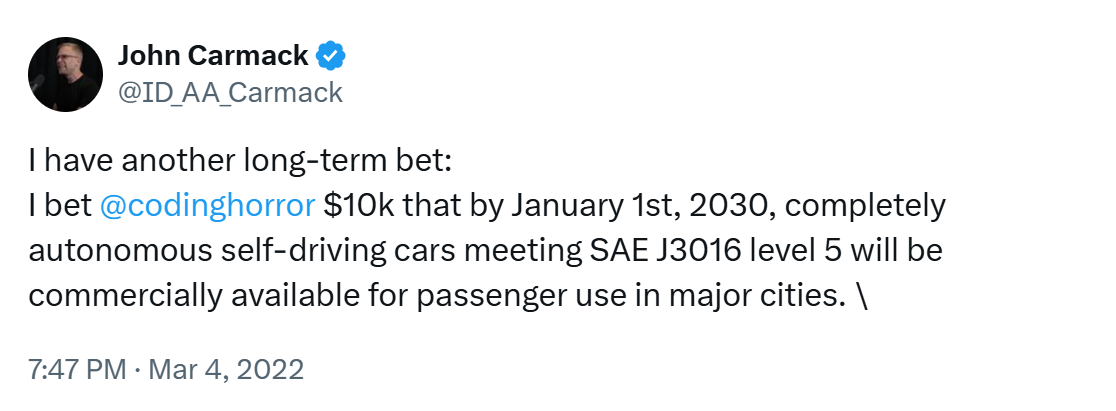
The landscape of modern technology has long been shaped by high-profile wagers between visionary engineers and computer scientists who enjoy pushing the boundaries of what society deems possible. In the latest installment of Silicon Valley-style prognosticating, software developer and Stack Overflow co-founder Jeff Atwood and legendary programmer John Carmack have entered into a high-stakes, friendly $10,000 wager centered on the future of transportation. The bet, which benefits a 501(c)(3) charity of the winner’s choice, establishes a clear line in the sand regarding the commercial viability of fully autonomous vehicles.
According to the terms of the agreement publicized by Atwood, the two tech industry veterans have staked their positions on a specific milestone: whether completely autonomous, self-driving cars meeting the Society of Automotive Engineers (SAE) J3016 Level 5 classification will be commercially available for passenger use in major United States cities by January 1, 2030. Carmack, renowned for his pioneering work in 3D graphics and video game development engines such as Doom and Quake, has taken the bullish stance, betting that the technology will arrive on schedule. Atwood, author of the influential Coding Horror development blog, has taken the bear position, wagering against the widespread deployment of Level 5 autonomy within the decade.
Defining the Finish Line: SAE Level 5 Autonomy
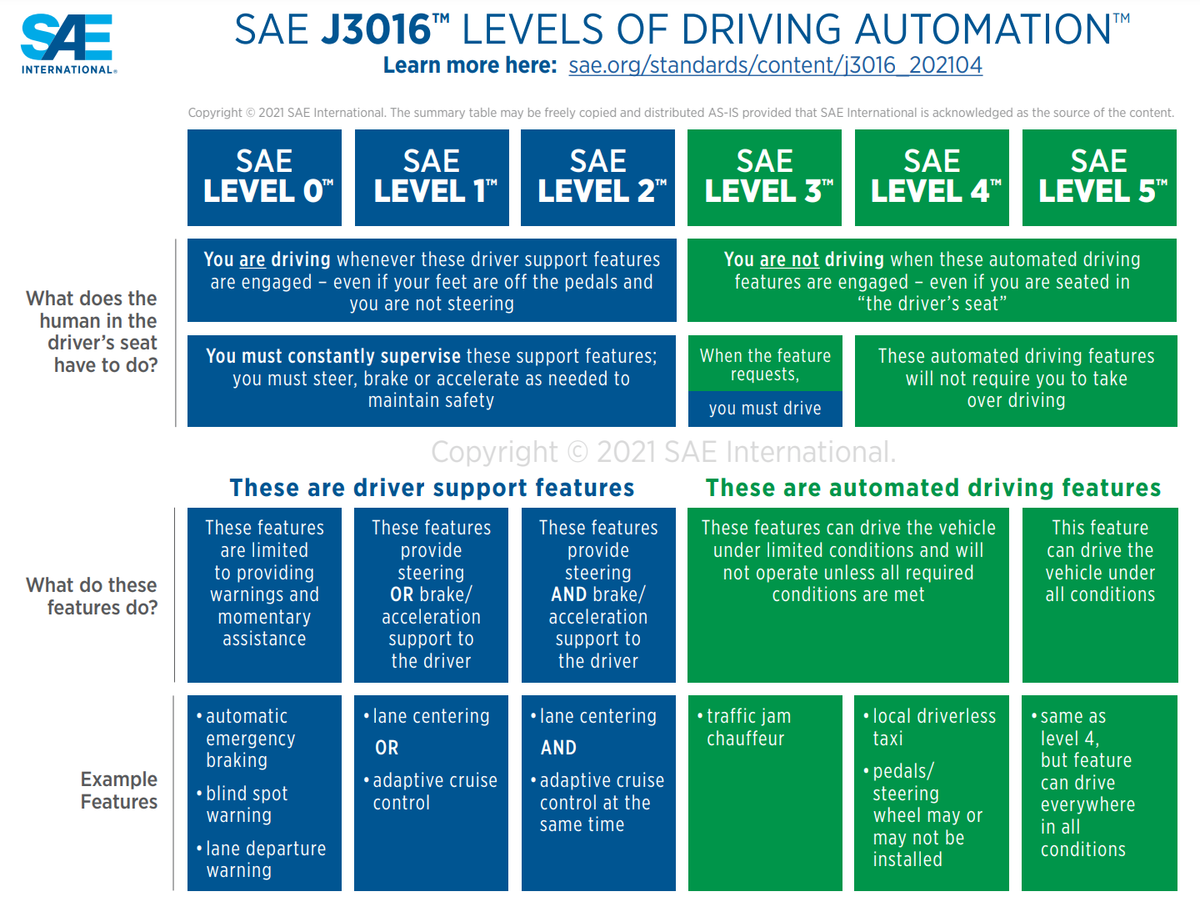
At the heart of the Carmack-Atwood wager is a rigorous definition of what constitutes true self-driving capability. The automotive and technology industries frequently blur the lines of automation, often marketing driver-assist features as "full self-driving" despite requiring constant human supervision. To eliminate ambiguity, the bet relies strictly on the SAE J3016 standard.
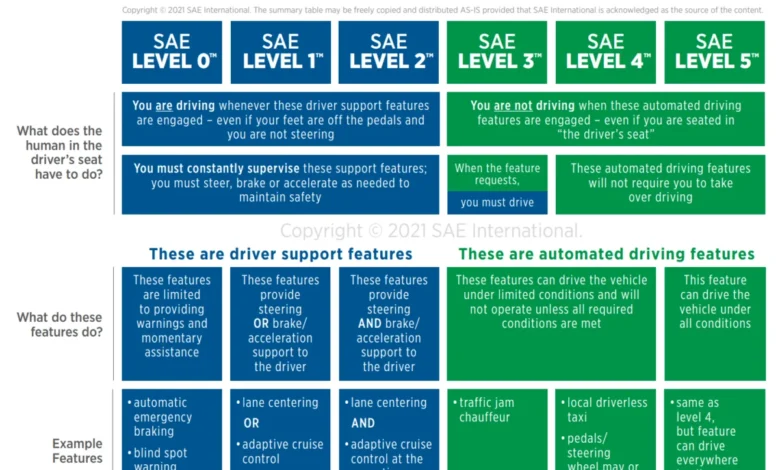
Under SAE Level 5, a vehicle must be capable of performing all dynamic driving tasks under all roadway and environmental conditions that can be managed by a human driver. This means the system must operate independently without any geographic limitations, driving mode restrictions, or the need for human intervention. In a true Level 5 scenario, a passenger enters the vehicle, inputs a destination, and requires zero attention or interaction with the driving controls throughout the entire journey. The only exceptions outlined in the parameters are natural disasters or extreme, unforeseeable emergencies that would similarly impede a human driver.
Furthermore, the bet establishes a geographic benchmark. For the wager to be won, these Level 5 vehicles must be commercially available for passenger use in at least one of the top ten most populous cities in the United States.
The Rationale: Why Atwood is Betting Against the Timeline
While public enthusiasm for autonomous transit has surged over the last decade, supported by ongoing pilot programs and commercial robotaxi deployments in cities like San Francisco, Phoenix, and Austin, Atwood remains skeptical. However, his skepticism is rooted in engineering realism rather than a philosophical opposition to automated transit.
In outlining his position, Atwood clarified that he is not anti-self-driving. On the contrary, he views autonomous vehicles as an ideal solution that would free commuters from the tedium of driving, allowing them to read, work, or socialize during transit. Moreover, he acknowledges that full autonomy represents one of the most intellectually fascinating and complex computer science challenges of the modern era.
Atwood’s hesitation stems from the immense difficulty of bridging the gap between current driverless technology—which typically operates at SAE Level 4 within highly mapped, geofenced urban boundaries—and true Level 5 generalization. Level 4 systems rely heavily on ultra-precise high-definition mapping, ideal weather conditions, and predefined routes. Transitioning to Level 5 requires vehicles to handle unmapped rural roads, severe weather phenomena, unexpected infrastructure anomalies, and erratic human behaviors anywhere on earth without human remote-assist backups. By betting against the 2030 deadline, Atwood is challenging the tech community to prove that the remaining engineering hurdles can be surmounted within the next five years.
Broader Industry Context and the Current State of Autonomous Driving

The timing of the Carmack-Atwood wager coincides with a period of intense recalibration and maturity within the autonomous vehicle industry. Over the past decade, billions of venture capital and corporate dollars have poured into autonomous driving research and development. Companies such as Alphabet’s Waymo, Cruise, and various international automotive giants have logged millions of autonomous miles on public roads.
Waymo, currently operating commercial robotaxi services in several major U.S. metropolitan areas, represents the cutting edge of current commercial autonomy. These vehicles function at SAE Level 4, operating safely without a human safety driver behind the wheel, but strictly within carefully curated geographic perimeters. Expanding these services to handle every road condition, construction zone, and weather event nationwide—thereby achieving Level 5—remains a monumental engineering summit.
Industry analysts and robotics experts have long debated the timeline for true Level 5 deployment. While optimistic leaders in artificial intelligence and autonomous hardware frequently predict breakthroughs just around the corner, cautious engineers point out the "long tail" problem of edge cases. Edge cases are rare, highly unpredictable road scenarios—such as a person dressed in a costume directing traffic during a power outage or debris flying off a truck in a blizzard—that occur infrequently but require sophisticated cognitive reasoning to navigate safely.
John Carmack’s Viewpoint and the History of Technological Ambition
John Carmack is no stranger to betting on long-term technological transformations. Throughout his legendary career in software engineering, Carmack has repeatedly defied conventional wisdom by visualizing complex systems and executing them long before the broader industry believed them possible. From revolutionizing first-person shooters with 3D raycasting and binary space partitioning algorithms to his later work in virtual reality and aerospace engineering with Armadillo Aerospace, Carmack has consistently championed aggressive technological timelines.
By taking the affirmative side of the bet, Carmack is signaling his confidence in the rapid acceleration of artificial intelligence, machine learning models, and sensor hardware over the remaining years of the decade. With recent paradigm shifts in generative AI, neural networks, and computer vision, proponents of rapid autonomy argue that autonomous systems are beginning to learn and adapt more like human drivers, moving away from rigid, rule-based programming toward flexible, generalized intelligence.
Implications and the Road to 2030
The $10,000 charitable wager between Atwood and Carmack serves as more than just a lighthearted rivalry between two influential figures in the software community; it acts as a cultural touchstone for an industry racing against its own ambitious projections.
As January 1, 2030, approaches, the eyes of the tech world will be watching to see whether autonomous vehicle developers can successfully cross the chasm from geofenced Level 4 deployment to ubiquitous Level 5 freedom. Regardless of who ultimately writes the check to their chosen 501(c)(3) charity, the friendly wager has successfully refocused attention on the core computer science challenges of our era, reminding engineers worldwide that the future of transportation is still waiting to be built.
Related posts: