The Human-Centric Turnaround: How Paul Centenari Transformed Atlas Container Through Radical Transparency and Employee Investment

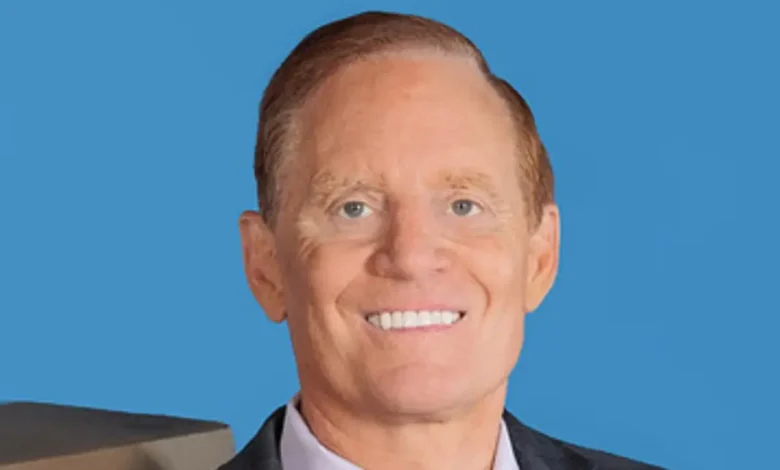
In the high-stakes, physically demanding world of industrial manufacturing, employee retention is frequently cited as the primary obstacle to sustained growth. For Atlas Container, a corrugated packaging firm that has scaled from a modest $5.5 million operation to a $100 million industry player, the solution to the "revolving door" of labor has not been found in traditional command-and-control hierarchies. Instead, CEO Paul Centenari has pioneered a philosophy rooted in extreme empathy and open-book management, proving that when a company invests deeply in the personal and professional growth of its workforce, the dividends are reflected in both the bottom line and the stability of the plant floor.
A Three-Decade Evolution of Leadership
When Paul Centenari acquired Atlas Container over thirty years ago, the manufacturing sector was defined by a rigid, top-down management style. Efficiency was prioritized through oversight and strict compliance. However, Centenari eventually realized that this model fostered a culture of alienation rather than ownership. By 1996, a pivotal encounter with management consultant Bob Argabright introduced Centenari to the principles of open-book management.
This transition represented a fundamental shift in the company’s internal social contract. The strategy was simple but radical: if employees are treated as stakeholders, they will act as stewards of the company’s success. Over the subsequent decades, this philosophy evolved from a mere management technique into a comprehensive cultural ecosystem, encompassing everything from GED sponsorship for staff to supporting educational tutoring for their children.
The Mechanics of Open-Book Management
At the core of Atlas Container’s success is the democratization of financial data. Most manufacturers keep income statements and profit margins confined to the executive suite. At Atlas, these figures are transparently shared with the workforce on a monthly or bi-monthly basis. By teaching employees how to read the financials, Centenari creates a direct line of sight between individual tasks and organizational health.
This process is operationalized through daily scorecards that track metrics such as machine speed, waste reduction, quality control, and safety. In this system, an operator is no longer just a cog in a machine; they are a data-driven participant in the firm’s profitability. This alignment transforms the work environment from one of labor-for-wages to one of collective competition. When the team meets its targets, the reward—often tied to bonuses—is seen as a victory rather than just a paycheck.
This "gamification" of manufacturing has led to tangible process improvements. Employees, armed with a clear understanding of costs and output, frequently identify mechanical bottlenecks themselves, requesting specific maintenance interventions that allow them to push production higher. By treating workers as experts in their own stations, Centenari has fostered an environment where the "quid pro quo" of management is mutually beneficial.
Addressing the Labor Crisis: Inclusivity and Rehabilitation
The manufacturing sector in the United States has faced severe labor shortages, particularly in the post-COVID era, as the demand for physical labor outstrips the supply of qualified, reliable candidates. The nature of plant work—often involving high temperatures and repetitive, strenuous labor—makes retention a persistent challenge. While roughly 85 to 90 percent of the Atlas workforce consists of long-term, stable employees, the remaining 10 to 15 percent often represent a high-turnover pool.
To address this, Centenari has implemented a work-release program in partnership with the local correctional facility in Jessup. By hiring non-violent offenders, Atlas provides a pathway for re-entry into the workforce. The program is rigorous: participants are under constant scrutiny, and the transition back into society is often fraught with logistical hurdles, such as a lack of transportation or a long absence from the modern economy.
Centenari’s commitment goes beyond simply providing a job. He has observed that for individuals who have been incarcerated for decades, the challenge is "reinculcation." This has led to innovative solutions, such as the company facilitating vehicle access to ensure employees can reach the plant consistently. This proactive approach to labor sourcing not only fills vacancies but serves a significant social function, reducing recidivism by providing stable, meaningful employment to individuals who are often overlooked by the broader labor market.
The Math of Employee Investment
The "more you give, the more you get" mantra extends into the private lives of the workforce. By funding GED programs and academic tutoring for employees’ children, Atlas Container is essentially investing in the long-term well-being of its human capital. Centenari views these expenditures not as altruistic losses, but as strategic investments in the "cerebellum" of his organization.
There is a clear, fact-based logic to this: an employee whose child is performing well in school is a more focused, stable, and appreciative employee. By removing barriers to personal advancement—whether it is the lack of a high school diploma or the struggle to provide academic support for the next generation—the company builds deep-seated loyalty that creates a buffer against the volatility of the labor market.
Disciplined Growth and Cost Management
Despite the focus on employee welfare, Centenari maintains a disciplined approach to the bottom line. He acknowledges that the temptation to over-hire is a "natural fantasy" for many CEOs. A significant lesson in the company’s timeline occurred two years ago when management realized the plant had become overstaffed. Despite a strong desire to protect jobs, Centenari performed a critical analysis of headcount versus output and found that 171 employees could perform the work that 217 were currently doing.
The subsequent reduction in force was a painful but necessary correction. Centenari reflects on this not as a failure of his empathy-first policy, but as a failure of initial hiring discipline. Today, he monitors headcount "hawkishly," ensuring that the organization does not drift into inefficiency. This demonstrates a key facet of modern manufacturing leadership: the ability to balance intense employee care with a cold, analytical eye on operational costs.
Implications for the Manufacturing Sector
The trajectory of Atlas Container provides a blueprint for small-to-mid-sized manufacturers struggling to remain competitive in a changing economy. The core takeaway is that the traditional "command-and-control" model is no longer sufficient to secure a high-performance workforce. In an era where skilled labor is scarce, the company that treats its employees as business partners—sharing the risks, the rewards, and the financial reality of the operation—will inevitably outperform its peers.
Furthermore, the integration of non-traditional labor sources, such as work-release programs, highlights an untapped potential in the labor market. By mitigating the logistical barriers to work, firms can build a loyal, reliable workforce that may be overlooked by competitors.
Ultimately, the Atlas model suggests that the future of industrial success is not purely technological. While automation and robotics are vital, the "human factor"—the ability to create a culture of transparency, mutual respect, and continuous personal development—remains the most powerful driver of long-term, sustainable revenue growth. As Paul Centenari’s tenure continues, the results speak for themselves: a company that has successfully navigated the transition from a $5 million startup to a $100 million titan, all while keeping the shop floor at the center of the strategy.