The Paradox of Progress: Why AI Coding Assistants Have Won Adoption but Failed to Earn Developer Trust

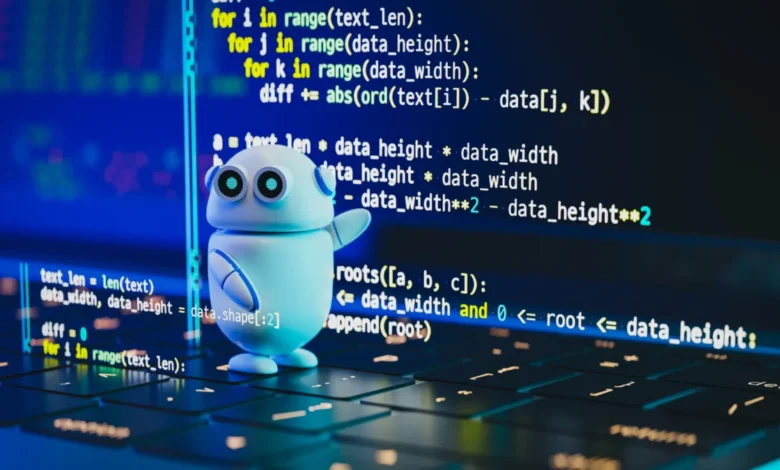
Artificial intelligence has become deeply embedded in the modern software development workflow, fundamentally altering how applications are built, debugged, and maintained. From generating boilerplate code to navigating complex legacy architectures, AI-powered coding assistants have graduated from experimental novelties to essential utilities for millions of engineers globally. However, as these tools saturate the industry, a glaring disconnect has emerged between usage statistics and professional confidence. A recent survey of 103 software developers reveals a stark reality: while AI is now a staple of the professional toolkit, it has yet to be accepted as a truly reliable teammate.
The Chasm Between Adoption and Reliance
The current landscape of software engineering is defined by a paradoxical relationship with automation. Data from the survey highlights that 87% of developers are either current users of AI coding assistants or are actively planning to integrate them into their workflow within the next year. This high rate of adoption suggests that AI has effectively crossed the chasm from early-adopter niche to industry-standard mainstream technology.
Despite this ubiquity, the trust metrics tell a more cautionary tale. Only 31% of surveyed developers express confidence in the technical accuracy of AI-generated output. Perhaps more revealing is the fact that a mere 4% report having "high trust" in the code produced by these models. This indicates that developers are treating AI not as an autonomous architect or a senior-level partner, but rather as an untrusted intern—useful for accelerating mundane tasks but requiring constant, rigorous oversight.
A Chronology of the AI Coding Revolution
The trajectory of AI in software development has unfolded with unprecedented speed over the past 36 months.
- 2022: The Emergence of Generative Coding. Following the public release of foundational large language models (LLMs), the industry saw the first major wave of integrated development environment (IDE) extensions. These tools were initially met with skepticism, viewed as "glorified autocomplete" systems that struggled with context-heavy tasks.
- 2023: The Productivity Boom. As models became more adept at handling syntax and boilerplate, productivity gains became the primary metric for success. Engineering managers began reporting shortened cycle times for feature development, and tools like GitHub Copilot became household names in the developer community.
- 2024: The Maturity Phase. Enthusiasm began to shift from blind optimism toward a more nuanced, critical evaluation. Developers moved past the "magic" phase and began cataloging the specific failure modes of AI, such as hallucinated libraries and subtle security vulnerabilities.
- 2025: The Current State of Skepticism. The present moment is characterized by a "correction" in sentiment. As the novelty wears off, the focus has moved to reliability, reasoning, and the long-term impact on code maintainability.
Productivity Gains vs. The Collaboration Deficit
The primary driver for AI adoption remains the tangible increase in individual developer velocity. Approximately 56% of developers report that AI agents have had a positive impact on their daily productivity. This efficiency is most visible in time-consuming, repetitive tasks, such as writing unit tests, generating documentation, and scaffolding new project structures. By automating these "low-level" chores, developers claim they are better able to dedicate their mental bandwidth to higher-order concerns like system architecture, design patterns, and complex problem-solving.
However, this individual productivity boost has not translated into improved team cohesion. Only 13% of respondents believe that AI tools have meaningfully enhanced team collaboration. This statistic underscores a fundamental truth about software engineering: it is a deeply human, communicative process. AI excels at executing discrete tasks, but it lacks the capacity for nuanced architectural debate, consensus-building, or the understanding of business context that defines high-performing engineering teams. Code review, which is often a social and educational process between peers, remains a domain where human judgment is irreplaceable.
The Sentiment Shift: From Hype to Realism
There has been a measurable cooling of enthusiasm regarding AI coding tools. While 58% of developers maintain a favorable opinion of these technologies, this is a significant decline from the 70% favorability rating recorded in previous years.
Industry analysts suggest this is not an indictment of AI’s potential, but rather a sign of a maturing industry. The early, hyperbolic claims that AI would "replace programmers" have been replaced by a more practical understanding of the technology’s capabilities and limitations.
Where AI Excels:
- Synthesizing boilerplate code and standard project skeletons.
- Providing instant documentation for unfamiliar APIs or libraries.
- Rapid prototyping and debugging of localized, logic-based issues.
Where AI Struggles:
- Understanding the holistic intent behind a massive, multi-module codebase.
- Identifying subtle, systemic security vulnerabilities that span multiple layers of an application.
- Navigating legacy code that relies on tribal knowledge or undocumented business logic.
Market Leaders and the Pursuit of Reasoning
Among the current generation of AI tools, developers are demonstrating a clear preference for platforms that prioritize "reasoning" over simple code completion. The survey indicates that Claude Code has emerged as a top contender, with 41% of developers identifying it as their favorite tool, significantly outpacing Cursor (21%) and GitHub Copilot (10%).
This preference suggests that developers are becoming more sophisticated in their requirements. They are no longer satisfied with tools that simply predict the next token; they are seeking assistants that demonstrate context awareness and can engage in long-form, logic-driven conversations about the codebase. The success of Claude Code reflects a move away from "speed-first" coding toward "quality-first" reasoning, where the developer values an assistant that can explain why it made a suggestion, rather than just providing the code itself.
The Final Frontier: Trust and Verification
The most significant obstacle facing the widespread, uncritical integration of AI in production environments is the risk of technical debt and security flaws. A single incorrect suggestion from an AI agent can introduce bugs that remain dormant for months, creating significant remediation costs. Because the cost of failure in software is high, developers apply the same level of scrutiny to AI-generated code as they would to an entry-level employee’s work.
For AI to evolve from a "productivity booster" to a "trusted teammate," the industry must address the black-box nature of current models. Developers require greater transparency and more robust methods for verifying the logic behind AI suggestions. Without the ability to trace the reasoning process or guarantee the security of generated outputs, human oversight will remain the mandatory final gatekeeper in the software development lifecycle.
Implications for the Future of Engineering
The story of AI in software development has effectively moved past the "if" phase and into the "how" phase. The technology has secured a permanent, foundational role in the modern stack, but its ultimate impact will be dictated by how effectively it can bridge the gap between efficiency and reliability.
Looking forward, the industry is likely to see a bifurcation in tool development. On one hand, mass-market tools will continue to optimize for speed and ease of use. On the other, enterprise-grade AI will focus on "verifiable intelligence"—tools that can prove their logic, cite their sources, and integrate seamlessly with a team’s specific coding standards.
As the engineering profession continues to adapt, the most successful developers will be those who view AI not as a replacement for expertise, but as a lever for it. The future of software is not being built by AI alone, but by a hybrid model where human judgment, ethical oversight, and technical intuition guide the automated processes. Trust, in this context, is the final frontier; until AI can demonstrate consistent, explainable accuracy, the developer’s role as the architect and guardian of code quality remains more critical than ever. The transition from AI-assisted coding to AI-augmented engineering will be defined not by the volume of code produced, but by the rigor with which that code is understood, verified, and maintained.