The Unseen Architects of AI: Advanced Materials Powering the Next Generation of Intelligence

The relentless march of artificial intelligence (AI) often conjures images of sprawling server farms, sophisticated algorithms, and monumental investments in cutting-edge semiconductor fabrication plants. However, beneath this visible edifice of computational power lies a less heralded, yet equally critical, layer of innovation: the realm of advanced materials. These specialized substances are the unsung heroes, quietly enabling the very advancements that propel AI forward, from increased processing speeds to enhanced energy efficiency and unwavering reliability. As AI technologies mature and demand more from their physical underpinnings, the role of advanced materials is transitioning from a supporting function to a defining determinant of what is technologically achievable.
The exponential growth in AI capabilities necessitates a corresponding leap in the performance of the hardware that underpins it. Each new generation of AI models and applications demands more from semiconductors, requiring them to process vast datasets with unprecedented speed and accuracy. This, in turn, places immense pressure on the entire technological ecosystem, from the microscopic transistors within chips to the macroscopic infrastructure of data centers. Delivering these incremental yet crucial performance gains is not solely a matter of refining chip designs or optimizing system architectures. It is intrinsically linked to the development and application of advanced materials that can withstand and facilitate operations under increasingly extreme conditions. These materials are no longer passive components; they are actively shaping the boundaries of AI innovation.
The Performance Imperative: Pushing Material Limits
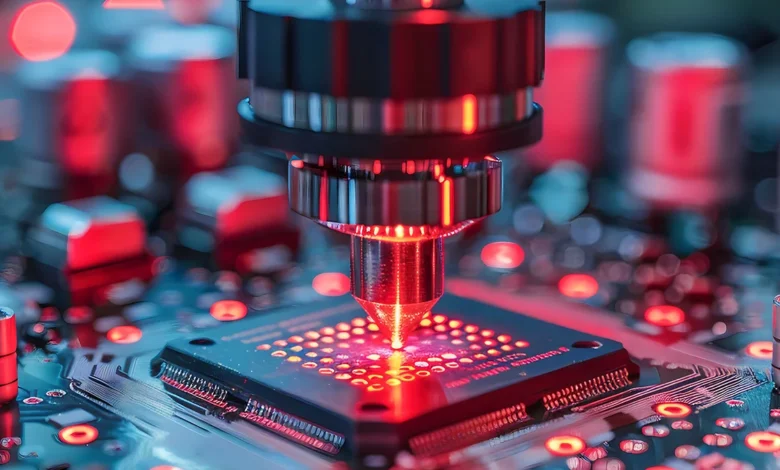
At their core, advanced materials are engineered to solve specific performance challenges. In the context of AI, these challenges are escalating rapidly. The manufacturing of modern semiconductor chips is a testament to this, involving thousands of meticulously controlled process steps where even minuscule deviations in temperature or chemical stability can lead to defects, diminishing yield and inflating production costs. As semiconductor manufacturers strive to shrink transistors and increase chip density, they rely on advanced materials that offer enhanced purity, superior resistance to aggressive chemicals and plasma environments, and unwavering stability under harsh operating conditions.
These are not entirely new engineering hurdles, but rather existing challenges amplified to new extremes. It is precisely at this intersection of amplified demand and material science ingenuity that significant breakthroughs occur. Continuous advancements in polymers, elastomers, specialty fluids, and other bespoke materials are the bedrock upon which each successive generation of AI technology is built. For companies specializing in these materials, the objective is not to reinvent the intricate processes of semiconductor manufacturing itself. Instead, their focus is on ensuring that the materials supporting this industry evolve in lockstep with its relentless progress.
This principle extends far beyond the cleanroom environments of semiconductor fabrication. As AI workloads become more computationally intensive, the physical infrastructure powering them is undergoing a rapid transformation. The drive for increased computing density within data centers necessitates sophisticated thermal management solutions, higher-voltage power architectures, expanded data storage capacities, and faster, more robust data transmission systems. Every element of this infrastructure, from cooling systems and power distribution units to critical electronic components like connectors, capacitors, and hard disk drives, faces intensified demands.
Companies like Syensqo, drawing upon their deep expertise in electronic and electrical components and leveraging insights from diverse market sectors, are at the forefront of addressing these emerging material needs. For instance, the transition of data centers towards higher-voltage architectures and greater power density presents material challenges remarkably similar to those encountered in the electric vehicle (EV) industry. The fluid circulation technologies honed in semiconductor and automotive coolant systems, for example, are being adapted to inform direct liquid-cooling designs for AI servers. This cross-pollination of knowledge across different markets allows for accelerated development of novel power and thermal management solutions, while crucially maintaining the high levels of reliability demanded by next-generation AI infrastructure. Ultimately, whether within the delicate confines of a semiconductor fabrication facility or the vast expanse of hyperscale server farms, the fundamental challenge for materials science innovators remains consistent: enabling enhanced performance without compromising reliability.
Redefining Performance: Sustainability Meets Superiority
While performance remains the paramount consideration, the very definition of what constitutes "performance" is undergoing a significant evolution. Beyond meeting increasingly stringent technical specifications for next-generation semiconductors and data centers, there is a growing expectation that these advanced materials are developed and manufactured with a greater emphasis on environmental responsibility.
Consider perfluoroelastomers (FFKM), a class of high-performance materials critical for sealing semiconductor manufacturing equipment. These materials are indispensable due to their ability to withstand extreme temperatures, aggressive plasma environments, and highly reactive chemicals essential for chip fabrication. Recognizing the environmental footprint associated with traditional manufacturing processes, Syensqo has pioneered a new generation of FFKMs that utilize a fluorosurfactant-free manufacturing process. The dual objective was clear: to create a material that not only offered superior performance but was also produced in a more sustainable manner. This initiative exemplifies the industry’s broader shift, aiming to eliminate the perceived trade-off between high performance and environmentally responsible production.
This approach reflects a significant trend across the advanced materials sector. New materials are not adopted simply for novelty’s sake. The qualification process for materials used in critical applications like semiconductor manufacturing can be protracted, often spanning several years. Manufacturers typically only consider material changes when a new substance demonstrably solves a pressing engineering challenge or unlocks entirely new technological capabilities. Performance, therefore, remains the essential prerequisite for market entry. However, the contemporary definition of performance has expanded to encompass the entire lifecycle and manufacturing footprint of a material. Success in this evolving landscape increasingly hinges on delivering technical excellence through processes that are inherently more responsible from their inception.
Accelerating Discovery: The AI-Material Synergy
As the performance bar for AI hardware continues to ascend, the methods employed in materials innovation must adapt accordingly. The traditional trajectory of advanced materials development has long been characterized by a sequential process of hypothesis generation, synthesis, rigorous testing, and iterative refinement. While this fundamental scientific methodology remains intact, the advent of sophisticated digital tools, particularly artificial intelligence (AI), is significantly accelerating the pace at which researchers navigate these cycles. By enabling scientists to identify the most promising material candidates earlier in the process, AI can substantially reduce the number of physical experiments required, thereby expediting the nascent stages of materials discovery.
It is crucial to emphasize that AI is not supplanting scientific expertise; rather, it is augmenting it. AI empowers scientists to apply their knowledge more effectively, freeing them from the time-consuming task of sifting through vast quantities of data to find answers, and allowing them to concentrate on solving the industry’s most complex challenges.
At Syensqo, this AI-driven approach is actively being implemented. The company is leveraging several AI tools, including Microsoft’s Discovery platform, to aid researchers in identifying and evaluating promising molecular candidates for next-generation heat transfer fluids. These fluids are vital for thermal management in both semiconductor manufacturing and the burgeoning AI data center infrastructure. AI assists Syensqo’s researchers by rapidly pinpointing and assessing potential molecular compounds based on their predicted properties, allowing laboratory efforts to be focused where they are most likely to yield impactful results. This streamlined process accelerates discovery and significantly shortens the timeline required to transform promising materials into solutions that customers can effectively qualify and deploy.
The journey from initial laboratory discovery to a fully qualified and commercially viable material will always necessitate deep scientific expertise, meticulous testing, and close collaboration with end-users. However, by accelerating the initial phases of discovery, AI holds the potential to ensure that materials innovation can keep pace with the rapidly evolving demands of industries such as semiconductors, electronics, and data centers.
Progress is Earned: The Material Foundation of Future Intelligence
The future trajectory of artificial intelligence is undeniably tied to advancements in algorithms, the sheer power of computational hardware, and the expansion of our computing infrastructure. Yet, sustaining and indeed accelerating this progress is critically dependent on parallel advancements in the very materials that form the physical substrate of these technologies.
Whether within the highly controlled environments of semiconductor manufacturing or the expansive landscapes of AI infrastructure, progress is not an inevitability; it is an achievement. Each new generation of technology raises the performance bar, and consequently, every new material must rigorously prove its mettle. It must demonstrate its capacity to deliver the requisite performance, unwavering reliability, and optimal efficiency before it can earn its place in the next wave of innovation.
For materials companies, this dynamic represents both the enduring challenge and the profound opportunity. The relentless pursuit of enhanced performance, coupled with an increasing imperative for sustainable manufacturing practices, is reshaping the landscape of materials science. The future of AI, therefore, is not just being built in the digital realm, but is being forged, molecule by molecule, by the unseen architects of advanced materials.