Why Fitness Enthusiasts Are Taping Their Fitbit Devices to Their Arms Instead of Wearing Them on Their Wrists

The modern landscape of fitness tracking technology is defined by a paradox: while consumers demand smaller, lighter, and more powerful sensors, the primary delivery mechanism—the traditional wrist-worn watch strap—has remained largely unchanged for decades. For strength athletes, cross-training enthusiasts, and martial artists, wearing a rigid plastic or metal puck on the wrist presents persistent physical hurdles. Wrist wraps, lifting straps, kettlebells, and gymnastics rings frequently clash with standard fitness trackers, causing discomfort, inaccurate readings, or potential damage to the device.
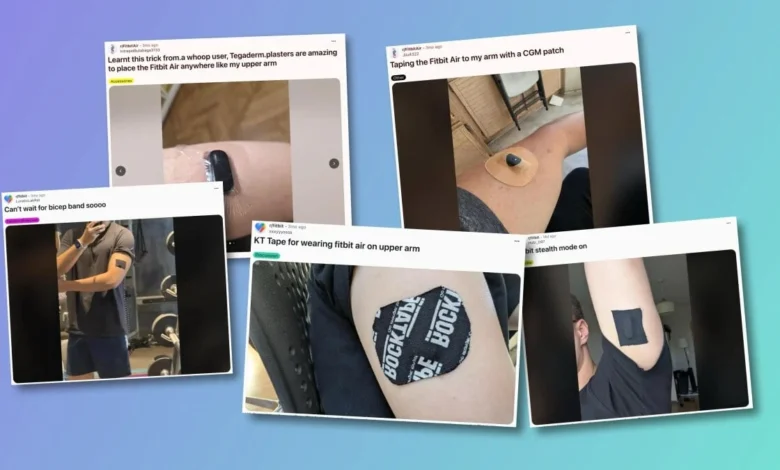
In response to these ergonomic limitations, a growing online community of fitness tech users has turned to a makeshift modification: removing the straps entirely and adhering the tracking units directly to their upper arms using medical-grade tape. This emerging trend, heavily documented across enthusiast forums such as the Fitbit Air subreddit, highlights a broader desire for alternative placement options similar to the specialized bicep bands popularized by premium ecosystems like Whoop. As Google and other major manufacturers lag in providing native non-wrist accessories for popular consumer devices, users are pioneering their own wearable configurations out of sheer necessity.
The Evolution of Alternative Wearable Placement
The concept of moving biometric sensors away from the wrist is not entirely new. Over the years, the fitness technology sector has gradually recognized that different biometric metrics and training modalities benefit from alternative anatomical placement. High-end athletic monitors, particularly those designed for professional sports and intensive physiological tracking, have long utilized chest straps, upper-arm bands, and specialized compression garments to optimize signal acquisition.
Whoop, a pioneer in the subscription-based fitness tracking model, intentionally designed its hardware ecosystem to decouple the sensor module from a mandatory watch face. By offering specialized bicep bands, sliding apparel pockets, and multi-limb configurations, the brand validated the principle that a fitness band does not need to resemble a traditional timepiece. However, mainstream consumer smartwatches and fitness bands—such as Google’s Fitbit line—are engineered primarily for the mass market, which heavily favors wrist-based deployment for notifications, step counting, and casual heart-rate monitoring.
As more users attempt to adapt consumer-grade hardware for specialized athletic environments, online DIY culture has stepped in. Users began sharing anecdotes of affixing small tracking pucks to their inner forearms, calves, and upper arms. While seemingly unconventional, these experiments underscore a fundamental friction point between mass-market product design and the rigorous demands of specialized athletic training.
Evaluating Adhesives: From Athletic Tape to CGM Overpatches
Adhesive selection has become a central topic of discussion among users experimenting with arm-taping techniques. The physical demands of a high-intensity workout—characterized by heavy perspiration, friction against equipment, and subsequent exposure to locker room showers—require robust holding power.
Initially, many fitness enthusiasts tested standard athletic tape, medical paper tape, or Kinesiology Tape (KT tape), a popular woven elastic cotton strip utilized by physical therapists to support muscles and joints. While readily available in sporting goods stores and pharmacies, standard athletic tapes often fail under rigorous conditions. Feedback from early adopters indicates that sweat accumulation rapidly degrades standard acrylic or rubber-based adhesives, leading to premature peeling within twenty-four to forty-eight hours, especially when scaled down to the small surface areas required to anchor a compact fitness tracker.
To overcome these durability hurdles, tech-tinkering athletes have increasingly turned to continuous glucose monitor (CGM) overpatches. CGMs, widely used by individuals managing diabetes, are small medical devices applied to the back of the upper arm, anchored securely by specialized hypoallergenic adhesive layers designed to withstand daily wear, heavy exercise, and bathing for up to fourteen consecutive days.
Applying a CGM overpatch—a large, clear, or skin-toned waterproof sticker—over a strap-free Fitbit effectively replicates the medical-grade security required for long-term wear. Because typical consumer fitness trackers feature battery life spans ranging from five to ten days, a durable overpatch matches the operational cadence of the device, allowing it to remain securely fastened through multiple sweat sessions before requiring removal for recharging.
Performance Analysis: Accuracy, Heart Rate, and Motion Detection
While securing a fitness tracker to the upper arm via medical adhesive successfully removes the device from the wrist, it introduces a complex set of operational trade-offs concerning data collection accuracy and device functionality.
Heart Rate Monitoring Precision
Optical heart rate sensors rely on photoplethysmography (PPG), using light-emitting diodes (LEDs) to measure blood volume changes beneath the skin. Moving a tracker from the wrist to the upper arm can yield mixed results depending on individual vascular anatomy. While some users report highly consistent heart rate graphs that align closely with control chest straps, others experience intermittent signal dropouts due to lower superficial blood flow in certain areas of the arm.
Conversely, upper arm placement offers distinct advantages. The skin on the back of the upper arm is typically less prone to the rapid shifts and sliding associated with wrist bones, and the opaque barrier of an overpatch effectively blocks ambient light interference—a known enemy of optical heart rate sensors.
Limitations in Automatic Activity Detection
A significant drawback of decoupling a fitness tracker from its wristband lies in the realm of machine learning-driven activity recognition. Modern fitness bands are programmed to identify specific exercise routines based on algorithms trained primarily on wrist trajectories and accelerometer signatures.
When the sensor is mounted statically on the upper arm, the device no longer registers the expected oscillation and velocity patterns of the hand and wrist. Consequently, automated workout detection features often fail to trigger. Users engaging in running, cycling, or weightlifting must manually initiate their workout tracking sessions through companion smartphone applications to ensure accurate caloric expenditure and session logging.
Practical Challenges and Dermatological Considerations
Beyond data tracking nuances, the practice of taping consumer electronics to the human body presents logistical and dermatological hurdles that everyday users must carefully weigh.
The skin on the upper arm, while less sensitive than facial or neck tissue, can easily become irritated by aggressive medical adhesives when subjected to occlusion and moisture for days at a time. Dermatologists frequently warn that occlusive medical tapes can trap sweat and bacteria, leading to contact dermatitis, folliculitis, or localized skin maceration, particularly if overpatches are removed improperly or left on beyond their recommended duration.
Furthermore, removing a high-strength CGM overpatch that has been reinforced to hold a heavier consumer electronics device can be an uncomfortable experience. The strong medical-grade glue often requires specialized adhesive removers or prolonged exposure to warm water in the shower to break down the bond safely without pulling or tearing the epidermis.
From an economic perspective, continuously purchasing specialized overpatches on a weekly basis adds a recurring operational cost to a device that was originally designed to be a one-time purchase with a reusable silicone or leather strap. Over the course of a year, the consumable cost of medical-grade adhesives could rival the price of purchasing a dedicated secondary bicep band—provided third-party manufacturers eventually expand their accessory ecosystems to officially support consumer fitness lines.
Industry Implications and the Future of Modular Fitness Hardware
The emergence of the Fitbit-taping trend serves as a clear market indicator for wearable technology manufacturers. Consumer patience with one-size-fits-all form factors is wearing thin among dedicated athletes who require versatility without sacrificing biometric data collection.
As health and fitness tracking becomes more deeply integrated into daily wellness routines, device architecture is expected to evolve toward greater modularity. Consumers increasingly expect their hardware to adapt to diverse lifestyles, whether that means sliding into a compression sleeve for martial arts, attaching to a lifting harness during powerlifting, or wearing a traditional watch face to a formal event.
Whether major technology companies will respond to this grassroots consumer modification by officially releasing modular mounting hardware, proprietary bicep straps, or adhesive accessory kits remains to be seen. Until then, the sight of fitness enthusiasts utilizing medical overpatches to anchor their wearable tech to their upper arms stands as a testament to the ingenuity of consumers determined to optimize their training data by any means necessary.