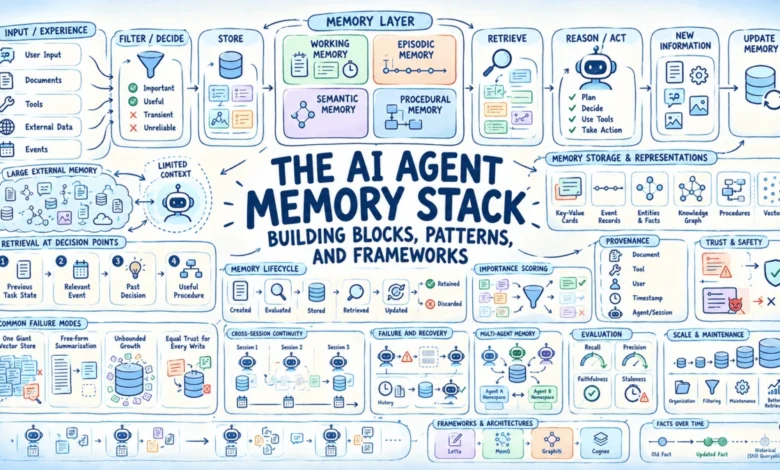
The modern architecture of artificial intelligence has shifted from stateless, single-turn interactions to autonomous agentic workflows capable of multi-step reasoning. At the core of this evolution lies the concept of agent memory—a critical infrastructure layer that bridges the gap between the ephemeral nature of Large Language Models (LLMs) and the persistent, context-heavy requirements of complex real-world tasks. As AI agents move from simple chatbots to sophisticated research assistants and decision-making engines, the ability to store, manage, and retrieve information over long durations has become the primary constraint on their operational efficiency.
The Problem of Statelessness in LLMs
By design, base language models are stateless. When an application sends a prompt to an LLM, the model processes the input, generates a response, and then effectively resets. It does not possess an internal "memory" of past conversations or actions taken five minutes or five days prior. While this architecture is ideal for high-throughput, low-latency tasks like document translation or basic categorization, it proves inadequate for agents tasked with long-horizon goals.
In a multi-step research scenario, an agent must remember previously verified facts, failed search strategies, and user-specific constraints. Without a dedicated memory layer, these agents are forced to re-read entire histories or risk "hallucinating" facts that contradict earlier findings. This limitation necessitates an external storage mechanism that functions as the agent’s "long-term memory," allowing the system to operate effectively across extended sessions.
Taxonomy of Agent Memory
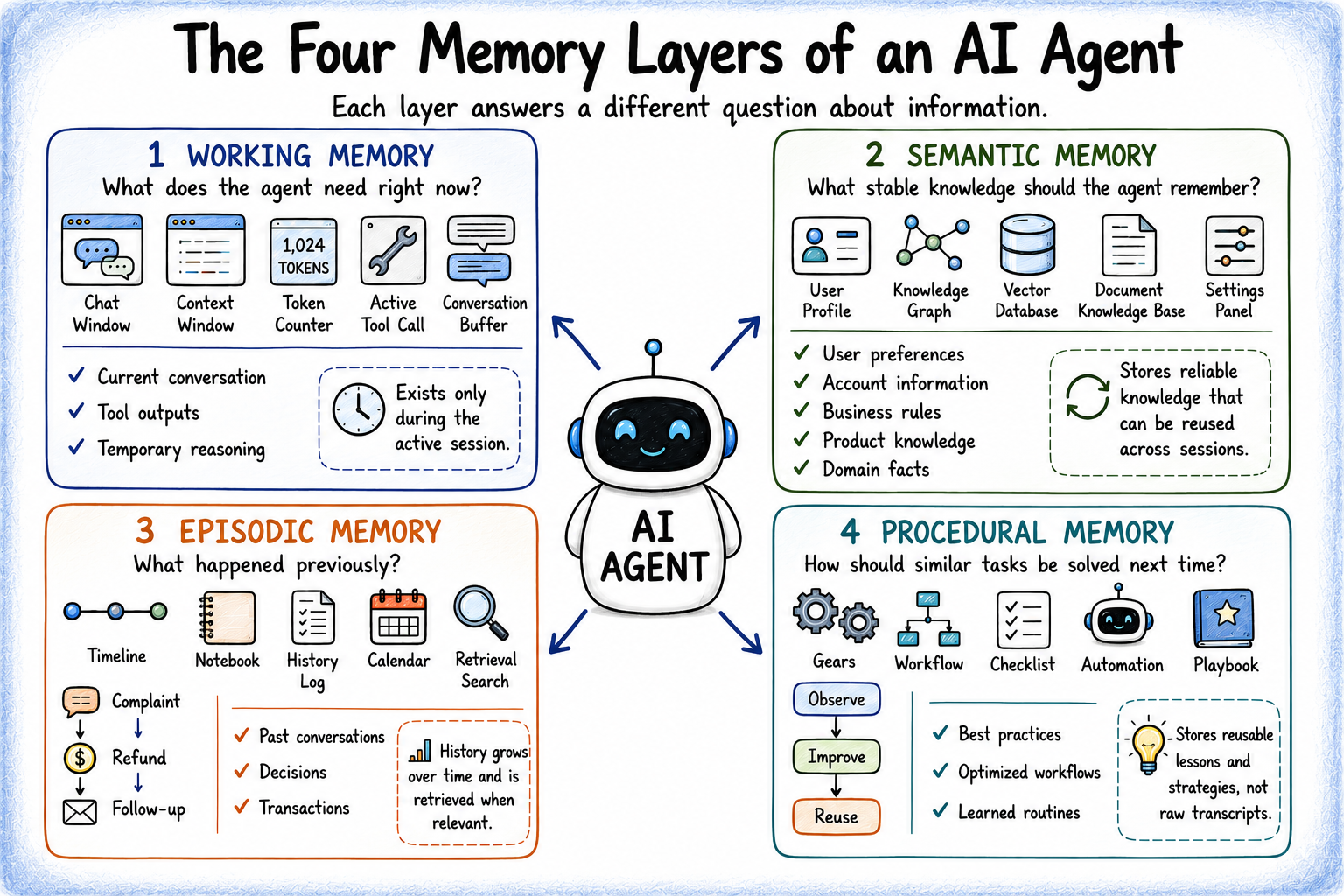
The industry has largely converged on a four-pillar taxonomy for agent memory, each addressing a distinct cognitive need. This classification ensures that agents can differentiate between fleeting task data and permanent knowledge.
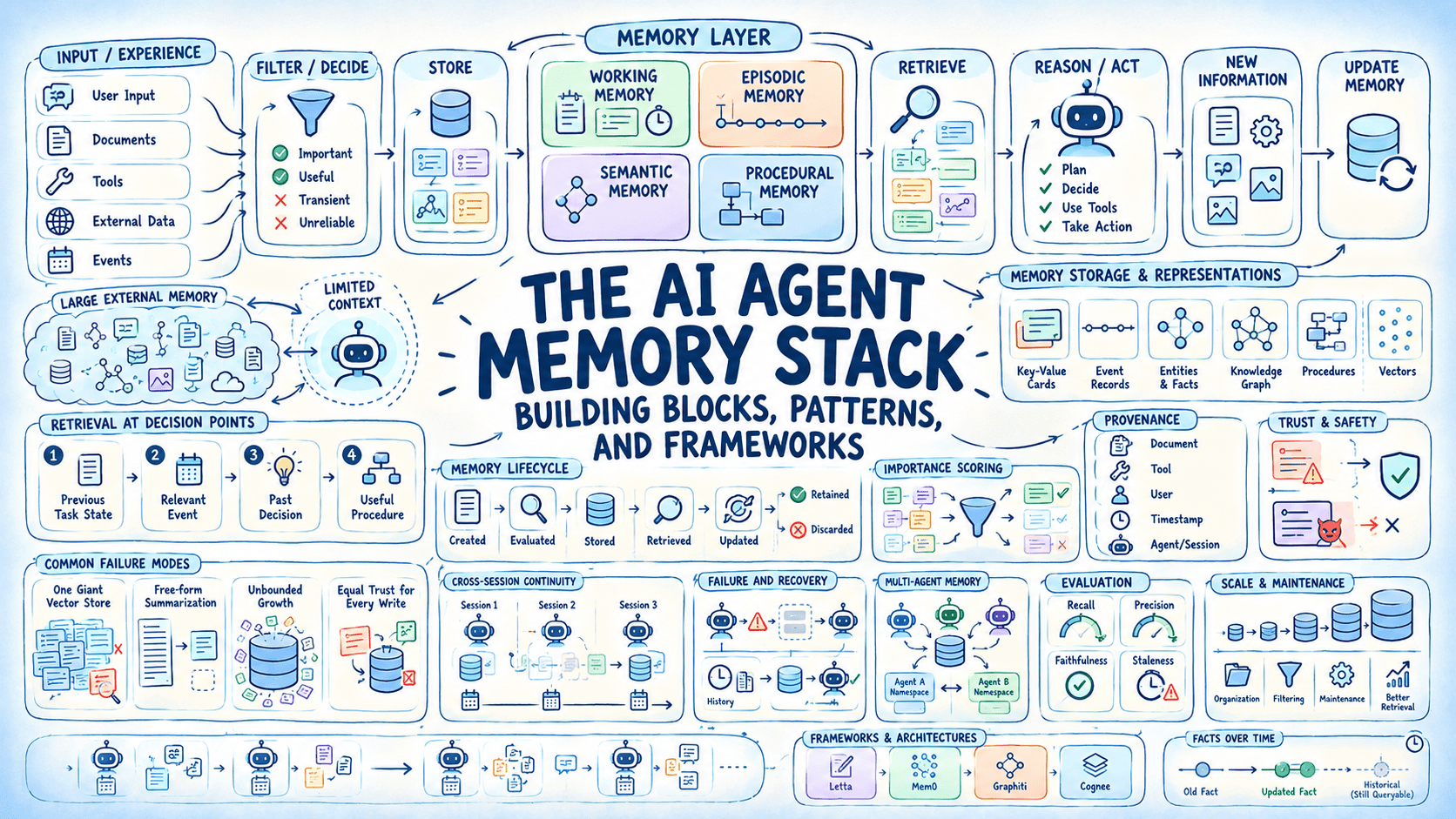
- Working Memory: This is the most immediate layer, functioning similarly to human short-term memory. It holds the active state of a task, including intermediate scratchpad calculations and temporary variables. It is typically implemented via in-memory key-value stores to ensure near-instant access.
- Episodic Memory: This layer serves as the historical record. It logs what has happened, including past interactions, tool executions, and the chronological sequence of decisions. By utilizing time-ordered logs or vector databases, agents can perform semantic similarity searches to reflect on how a previous, similar task was handled.
- Semantic Memory: Unlike episodic memory, which focuses on events, semantic memory stores facts, entity relationships, and user preferences. This is the "knowledge base" of the agent, allowing it to maintain a consistent understanding of facts that remain true regardless of the passage of time.
- Procedural Memory: This represents the "how-to" layer. It captures successful action patterns and common failure modes. By analyzing procedural memory, agents can effectively "learn" from their mistakes, refining their future behavior by injecting successful prompts or fine-tuned instruction sets.
Designing for Scale: The Lifecycle of Information
As an agent operates over weeks or months, the sheer volume of stored data can become a liability. A central challenge in memory engineering is the "forgetting" problem—the necessity of discarding irrelevant information to maintain high retrieval precision.
Engineering teams now employ a "promotion and expiration" lifecycle for data. In a typical research agent, for instance, raw observations are initially written to a short-lived working memory cache. Only information that proves instrumental to the final output is promoted to the episodic memory store, often accompanied by an "importance score." This prevents the retrieval systems from becoming bloated with redundant or noise-heavy data, a phenomenon that frequently degrades the performance of naive RAG (Retrieval-Augmented Generation) implementations.
Analytical Comparison of Memory Frameworks
The current ecosystem of memory frameworks reflects a divergence in how developers handle the relationship between data and intelligence.
- Letta (formerly MemGPT): This framework treats memory as a self-editing text block. The agent is empowered to rewrite its own memory, allowing it to adapt its state dynamically. This is particularly effective for agents that require constant self-correction.
- Mem0: Focusing on the "entity-aware" aspect, Mem0 utilizes vector-based memory to keep track of user-specific traits. It is highly optimized for personalized experiences where the agent must remember nuances about the user over long periods.
- Graphiti: This approach shifts the focus toward knowledge graphs. By utilizing a bi-temporal structure, Graphiti maps relationships between entities, making it the preferred choice for complex reasoning tasks where understanding the "web" of facts is more critical than a linear search.
- Cognee: Cognee provides a comprehensive pipeline that transforms raw data into multiple layers—graph, vector, and relational. This multi-layered approach allows developers to query memory from multiple perspectives, significantly increasing the robustness of the agent’s reasoning.
Common Pitfalls and Failure Modes
The industry has identified several "anti-patterns" that developers must avoid when building memory systems. The most frequent error is "semantic overload," where a developer attempts to cram all historical data into a single vector database. This leads to retrieval failure, as the system may return information that is semantically related to the query but entirely irrelevant to the current task.
Furthermore, "memory poisoning"—where an agent inadvertently stores adversarial or incorrect information as a reliable fact—poses a significant security risk. To mitigate this, robust systems are now implementing validation layers, treating memory writes as a transactional process that requires verification before being committed to the long-term store.
The Future of Multi-Agent Memory
As organizations move toward multi-agent systems, the complexity of memory management increases exponentially. When five agents share a single memory store, the system must account for concurrency, consistency, and access control. Evaluating the effectiveness of these systems is no longer a matter of simple accuracy metrics; it requires measuring "memory utility"—the extent to which the retrieval of a specific memory improves the final agentic outcome.
Industry experts from organizations like MongoDB and platforms such as DeepLearning.AI emphasize that "memory engineering" is becoming as critical as model training. The future of AI agent autonomy rests on the ability to treat memory not as a static database, but as a dynamic, intelligent system that evolves alongside the agent’s experience.
Broader Implications
The shift toward persistent agent memory marks the transition of AI from a tool into a collaborator. By retaining institutional knowledge, preferences, and procedural success, agents are becoming capable of handling complex, high-stakes tasks in medicine, law, and engineering that were previously impossible for stateless models. However, this progress brings with it the responsibility of governance. As agents become more capable of remembering user data, the requirements for data privacy, expiration policies, and auditability will become central to the development cycle.
For engineers and product designers, the path forward is clear: success in the agentic era will not be defined by which model is the most "intelligent" in isolation, but by which agent has the most effective, scalable, and reliable memory architecture. The ability to "remember" is, ultimately, the prerequisite for true machine autonomy.
Related posts: