Decoding Remote Hiring: VA Masters Analysis of 102,677 Applications Reveals Five Critical Success Factors

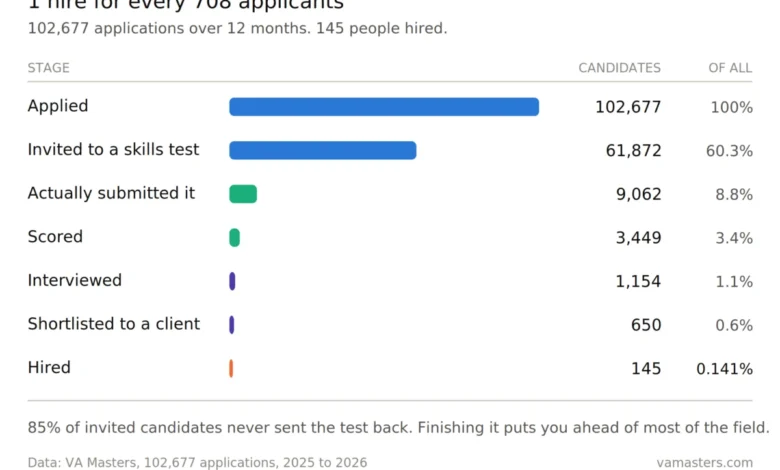
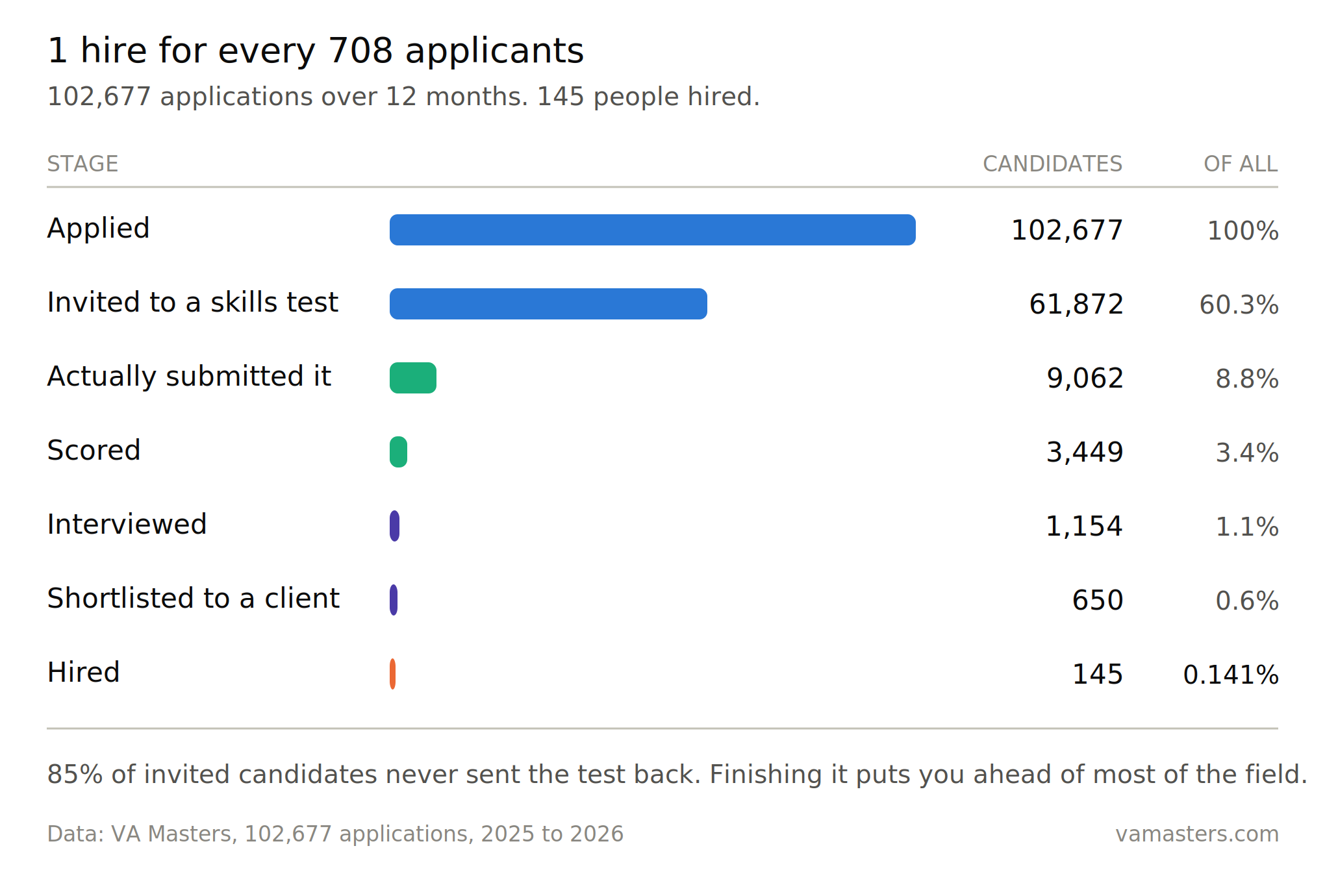
In a highly competitive global remote job market, a groundbreaking analysis of over 100,000 virtual assistant applications by VA Masters, a leading recruitment agency, has unveiled the critical patterns that differentiate successful candidates from the vast majority. Alon Pearl, Founder and CEO of VA Masters, presented these data-driven insights, challenging conventional wisdom and offering a clear roadmap for individuals aspiring to secure remote employment. The sheer volume of applications – 102,677 processed over the past year, translating to roughly one every five minutes – underscores the fierce competition, with only 145 individuals ultimately hired, resulting in an astounding 1 in 708 success rate. However, Pearl emphasizes that the true value lies not in the daunting odds, but in understanding why the successful few stood out, a perspective rarely offered from the recruiter’s side of the hiring desk.
The past few years have witnessed an unprecedented surge in demand for remote work, accelerated by global events that normalized distributed teams. This shift has democratized access to talent pools worldwide but has also intensified competition, particularly for entry-level and administrative roles. Companies like VA Masters have emerged as crucial intermediaries, connecting businesses with a global workforce, often in regions like the Philippines, known for highly skilled and adaptable virtual assistants. It is within this dynamic ecosystem that VA Masters conducted its extensive analysis, providing a unique, quantitative look at the remote hiring funnel. The study spans a period marked by both the maturation of remote work practices and continued high interest from job seekers globally.

The Velocity Advantage: Speed as a Core Competency
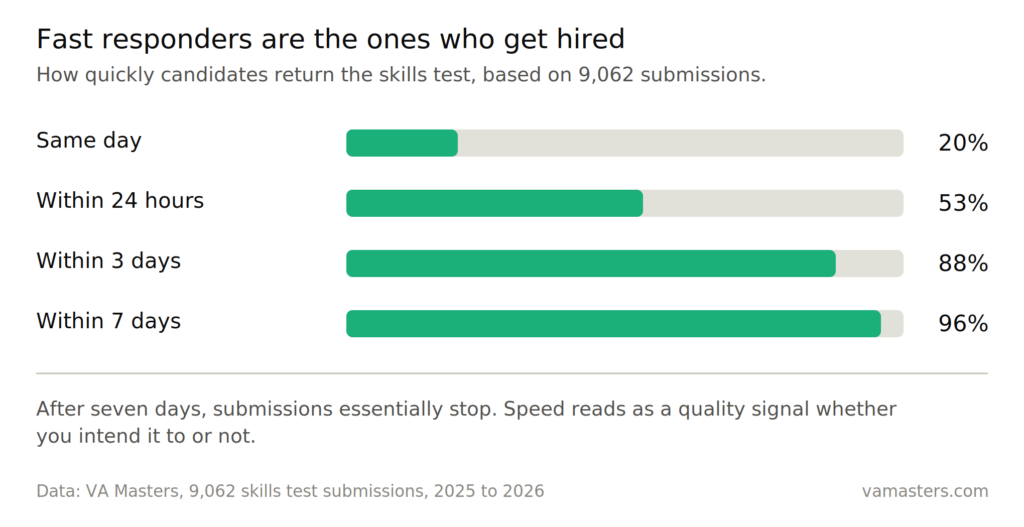
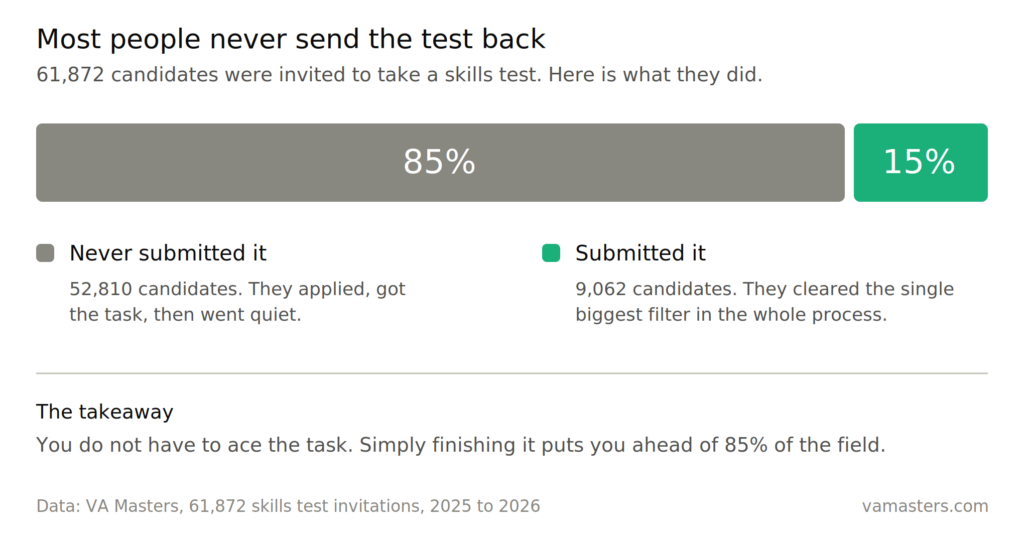
One of the most striking findings from the VA Masters analysis is the undeniable correlation between response speed and candidate success. When candidates were invited to take a skills test, a critical step in the hiring process, a significant majority — 85% — simply disappeared, failing to submit the requested assessment. Of the remaining 15% who did engage, their timing revealed a powerful signal: 53% completed and returned the test within 24 hours, and nearly 96% did so within a week. After seven days, submissions effectively flatlined, indicating a clear cutoff point for active engagement.
This isn’t merely about eagerness; Pearl argues that speed serves as a vital quality indicator. "Responding fast isn’t about looking eager or desperate. It reads as a quality signal whether you intend it to or not," Pearl states. Candidates who demonstrate promptness in their responses and task submissions are statistically more likely to progress through the entire hiring process. This responsiveness suggests a proactive mindset, strong time management skills, and a genuine interest in the opportunity – attributes highly valued in a remote work environment where self-motivation and initiative are paramount. Industry analysts often highlight that in a remote setting, where face-to-face interactions are limited, a candidate’s digital footprint and responsiveness become crucial proxies for their overall professionalism and reliability. For many job seekers, this insight challenges the common belief that meticulous perfection, even if delayed, is always preferable to timely completion.
The Power of Completion: Follow-Through Outweighs Initial Impressions
Building on the observation of candidate drop-off, Pearl underscores the profound importance of follow-through. The 85% of applicants who never submitted the skills test, despite having applied and received an invitation to proceed, represent a significant self-elimination. This phenomenon means that merely completing the requested task, regardless of its initial perceived difficulty or the time investment, automatically places a candidate ahead of the vast majority of their competition.
"Just finishing the thing puts you in front of most of your competition. Not finishing it brilliantly. Finishing it at all," Pearl asserts. This insight is particularly potent because it suggests that consistency and commitment to the process are more valuable than an impeccably crafted resume or a flawless initial application. A visually impressive CV, if not backed by consistent follow-through on subsequent steps, ultimately loses out to a more modest application from a candidate who diligently completes every required stage. This emphasis on completion acts as a powerful predictor of future job performance, indicating a candidate’s reliability and their ability to see tasks through to fruition—qualities essential for independent remote work. Career coaches frequently advise candidates to view every step of the application process as a test of their commitment, and VA Masters’ data strongly validates this perspective.
Demonstrated Ability Trumps Historical Experience
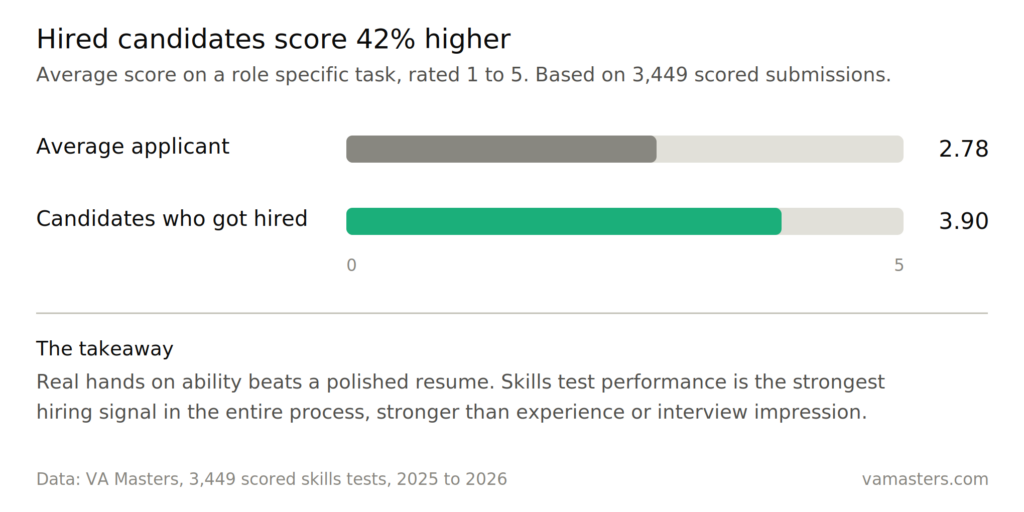
Perhaps one of the most encouraging findings for job seekers, particularly those early in their careers or transitioning fields, is that what a candidate can do demonstrably outweighs what they have done. VA Masters scores every skills test on a 1 to 5 scale, ensuring these assessments mirror the actual responsibilities of the role. For instance, a bookkeeping candidate might reconcile a messy account, a designer might build something to a brief, or an automation specialist might construct a working automation.
The data revealed a substantial performance gap: the average applicant scored 2.78, while the individuals ultimately hired averaged 3.90—a 42% higher score. This significant difference makes the skills test the single strongest predictor in VA Masters’ entire hiring process. It proved more influential than years of experience, a meticulously polished resume, or even a smooth interview performance. Pearl notes, "I’ve watched candidates with thin resumes score a 4.5 and turn into some of our best placements. I’ve also watched impressive CVs collapse the moment there was an actual task on the table."
This finding democratizes the remote job market, shifting the focus from credentials and past roles to demonstrable competence. It offers a clear pathway for individuals to prove their capabilities regardless of their academic background or traditional career trajectory. For businesses, it means a more accurate assessment of a candidate’s potential and a reduction in hiring biases often associated with traditional CV screening. This trend aligns with broader industry movements towards skills-based hiring, where practical assessments are increasingly seen as superior indicators of job readiness.
The Specialist’s Edge: Why Niche Expertise Dominates Generalism
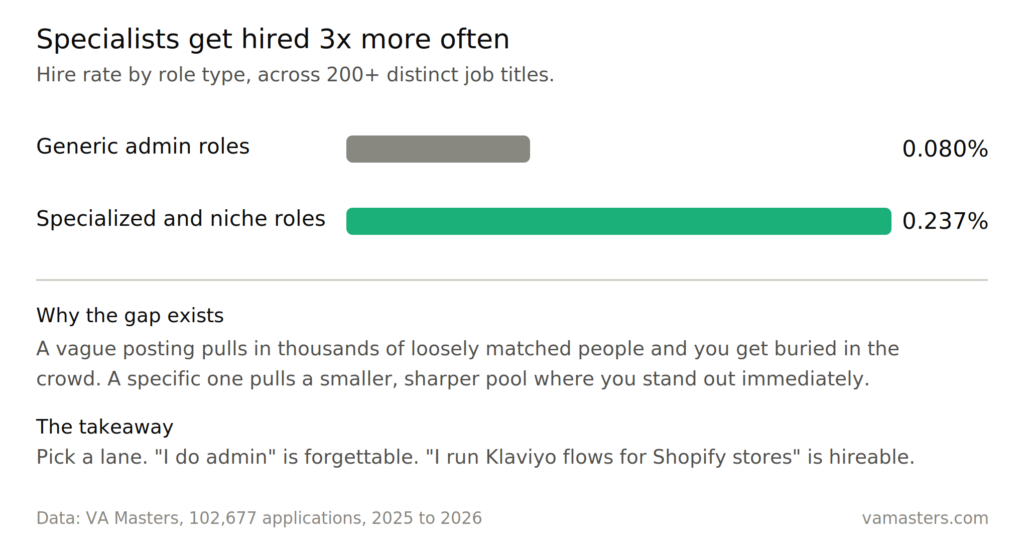
Counterintuitively, the analysis revealed that being a generalist is a disadvantage in the remote job market. Many might assume that a "general admin" role would be easier to secure due to its broad applicability. However, VA Masters’ data indicates the opposite. When roles were categorized, generic administrative postings had the lowest hire rate at approximately 0.08%. In stark contrast, specialized roles—those requiring proficiency in a specific tool or catering to a particular niche—saw a hire rate of around 0.24%, three times higher than generalist positions.
The reason is pragmatic: a vague "virtual assistant" posting attracts thousands of loosely qualified individuals, leading to a crowded application pool where individual candidates struggle to stand out. A posting for a specialized skill, however, draws a smaller, sharper pool of applicants. If a candidate possesses that specific skill, they become immediately distinguishable. Pearl illustrates this with a compelling example: "’I do admin’ is forgettable. ‘I run Klaviyo email flows for Shopify stores’ is a person a client can actually picture hiring tomorrow."
This insight strongly advocates for strategic skill development and niche specialization. In a global talent market, depth of expertise in a particular software, industry, or function creates a unique value proposition. It allows candidates to target specific opportunities and positions them as problem-solvers for clearly defined business needs. This trend suggests that remote workers should invest in acquiring highly sought-after skills and clearly articulate their specialized capabilities to potential employers.
Unconventional Factors: Age and Application Timing
Rounding out the five key takeaways are two less conventional but equally important factors: age and application timing.
Age: The myth that remote work is exclusively a young person’s domain is firmly debunked by VA Masters’ data. The analysis found virtually no difference in hiring rates across age groups. The median age of successful hires was 29, identical to the median age of all applicants. Candidates in their forties and fifties progressed through the hiring funnel at the same rate as those in their twenties. Pearl emphasizes, "The filter is skill and follow-through, not the year you were born. If you’ve got real experience behind you, that’s an asset, especially for the specialized roles." This is significant news for experienced professionals considering a transition to remote work, reassuring them that their years of experience are indeed valued, particularly when coupled with demonstrable skills and a commitment to the application process. This finding challenges ageist stereotypes and highlights remote work as an inclusive pathway for career longevity.
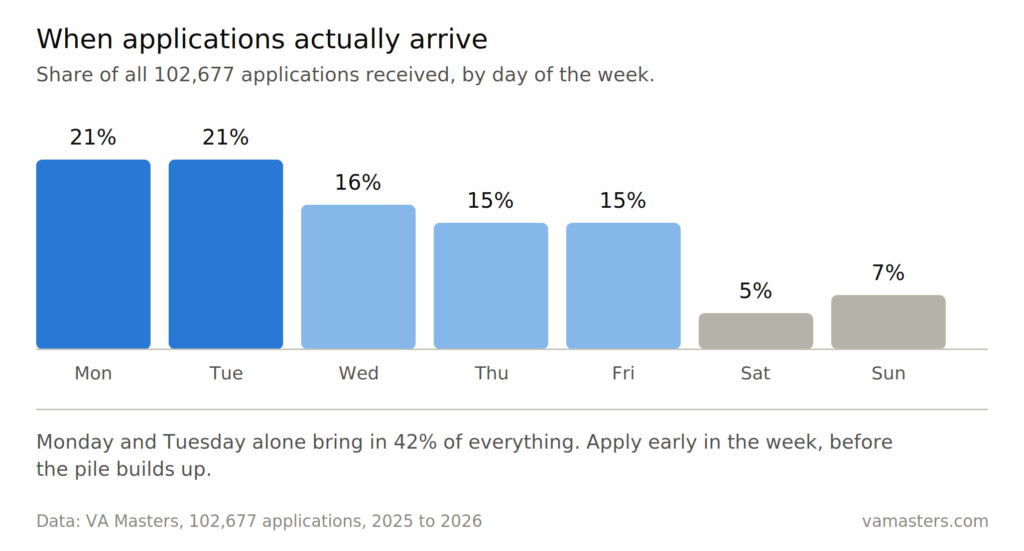
Timing: A subtle but impactful tactical insight relates to when applications are submitted. The data shows that applications are not evenly distributed throughout the week. Monday and Tuesday alone account for approximately 42% of all applications received, while weekends register barely any activity. This creates a "giant Monday pile" for recruiters to sift through. By submitting an application later in the week, perhaps on a Wednesday or Thursday, candidates can potentially land in a shorter queue when recruiters are less overwhelmed and potentially more receptive. "Applying early in the week, when a recruiter is fresh and the queue is short, is a tiny edge. And tiny edges add up when the odds are 1 in 708," Pearl advises. This minor adjustment in strategy could offer a marginal but meaningful advantage in a highly competitive environment.
Broader Impact and Implications for the Future of Remote Hiring
The findings from VA Masters present a compelling argument for a paradigm shift in how remote jobs are sought and filled. They underscore a move away from purely credential-based hiring towards a more meritocratic, performance-driven model. For job seekers, the message is clear: prioritize responsiveness, diligently complete all tasks, focus on developing demonstrable, specialized skills, and be mindful of strategic application timing. These actions, often overlooked in favor of perfecting a resume, are the true differentiators.
For employers and recruitment agencies, this data validates the effectiveness of skills-based assessments and highlights the pitfalls of relying solely on traditional hiring metrics. It suggests that streamlining application processes to emphasize practical tests and prompt engagement can lead to more effective talent acquisition. The high drop-off rates at the skills test stage also indicate a need for clearer communication regarding expectations and the value of these assessments to candidates.

The ongoing debate about whether to pursue independent client work or join an agency also finds context in these insights. Pearl acknowledges that both paths have merits: independent work offers autonomy but demands extensive self-marketing and administrative effort, while agency work provides stability and support but requires passing a rigorous initial filter. Crucially, he notes that "whichever path you pick, the five things above still decide whether you get hired. Speed, follow-through, real skill, a specific niche, and not tripping over your own timing. The filter stays the same. Only the person running it changes." This reinforces the universal applicability of these success factors across the remote work landscape.
In conclusion, Alon Pearl’s analysis from VA Masters provides invaluable, data-backed guidance for navigating the challenging remote job market. While the 1 in 708 hiring odds may seem daunting, the study reveals that success is not a lottery. Instead, it is a direct outcome of strategic engagement, demonstrable competence, and a keen understanding of what recruiters truly prioritize. By focusing on these five critical areas, remote job seekers can significantly enhance their chances of securing a coveted position in the ever-expanding global workforce. The future of remote hiring, it appears, is less about who you know or what’s on paper, and more about what you can do, how quickly you respond, and your unwavering commitment to the process.