Beyond the Dunder Mifflin Parking Lot: Essential Film Recommendations for Fans of The Office

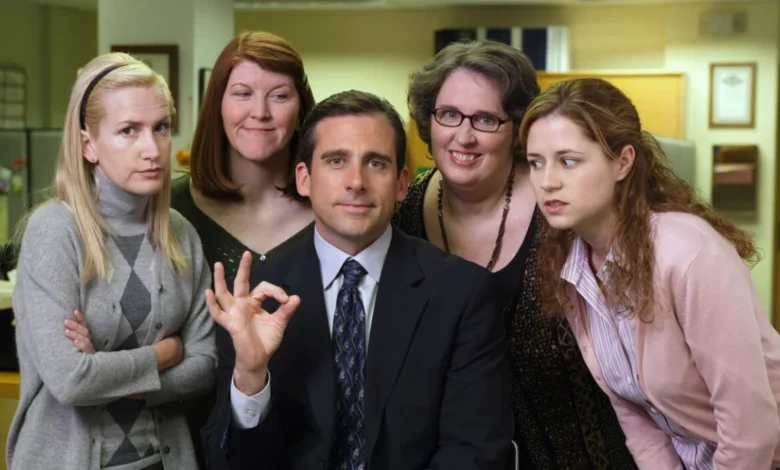
More than a decade after its landmark nine-season run concluded in May 2013, NBC’s mockumentary sitcom The Office remains an unmatched cultural touchstone. Originally adapted by Greg Daniels from the British series created by Ricky Gervais and Stephen Merchant, the American iteration has evolved far beyond its initial network television footprint. Through perpetual syndication and prominent placement on major subscription video-on-demand services, the series serves as a comforting fixture of modern digital culture. With the notable exception of the universally dreaded season-six episode "Scott’s Tots"—widely recognized by fan communities as the pinnacle of television discomfort—millions of viewers cycle through endless re-watch loops.
However, even the most devoted admirers of Dunder Mifflin Paper Company eventually exhaust the standard episode rotation, alongside the standard slate of television spin-offs and spiritual successors. For viewers searching for cinematic experiences that capture the distinct blend of workplace mundanity, cringe-induced comedy, and mockumentary framing popularized by the franchise, a select group of feature films offers the ideal alternative. Headlining this curated viewing list is a direct continuation of the original British mythos, alongside a selection of cinematic explorations into corporate absurdity, dead-end employment, and systemic workplace dysfunction.
Expanding the Universe: David Brent: Life on the Road
For viewers whose affection for The Office extends to its foundational source material, the 2016 mockumentary film David Brent: Life on the Road functions as an essential viewing experience. Written, directed, and starring Ricky Gervais, the film revisits the quintessential cringe-comedy protagonist long after the documentary cameras of the original 2001–2003 BBC series stopped rolling.
In Life on the Road, David Brent has transitioned away from his glory days as the regional manager of the Slough branch of Wernham Hogg. Instead, he is employed as a travelling regional sales representative for a cleaning products company, where he faces the same indignities, subtle mockery, and generational alienation from younger colleagues that his own subordinates once endured. Rather than confronting the realities of middle age, Brent liquidates his pension and retirement funds to finance a misguided rock-and-roll tour across the United Kingdom with a revolving cast of session musicians who tolerate him solely for financial compensation.
While the film largely abandons the traditional office environment, it retains the precise comedic DNA that defined the mockumentary format. Brent remains spectacularly un-self-aware, grandiose, and culturally tone-deaf, yet the narrative gradually introduces moments of genuine pathos. Much like the later seasons of the American adaptation with Michael Scott, Brent is ultimately humanized, forced to reckon with the profound loneliness beneath his desperate need for approval. The film is currently available for streaming on Netflix, bridging the gap between serialized television and feature-length character studies.
The Cinematic Blueprint of Corporate Satire: Office Space (1999)
Long before Dunder Mifflin popularized the modern aesthetics of cubicle warfare, writer-director Mike Judge captured the soul-crushing monotony of late-20th-century white-collar employment in Office Space. Set within the fictional software company Initech, the film follows Peter Gibbons (Ron Livingston), a disillusioned programmer whose debilitating apathy toward his job triggers an unexpected psychological liberation.

The film resonates deeply with fans of The Office due to its pitch-perfect skewering of petty workplace politics, architectural indignities such as the cubicle farm, and the soul-crushing nature of middle management personified by Gary Cole’s iconic corporate consultant, Bill Lumbergh. The narrative takes a satirical turn when Peter, following a botched hypnotherapy session, simply stops coming to work, ignores corporate mandates, and eventually gets swept up in a petty financial embezzlement scheme inspired loosely by Superman III.
From the universal catharsis of the printer-destruction sequence to the agonizingly specific frustrations of mandatory corporate restructuring and consultant evaluations, Office Space laid the foundational framework for modern workplace satire. The film is available for digital rental across major platforms, including Prime Video.
The Mid-Century Corporate Machine: The Apartment (1960)
While contemporary comedies frequently emphasize the absurdity of modern technology and open-plan offices, Billy Wilder’s 1960 masterpiece The Apartment proves that corporate exploitation and moral compromise are timeless concepts. Starring Jack Lemmon as C.C. "Bud" Baxter and Shirley MacLaine as elevator operator Fran Kubelik, the film explores the ruthless climbing mechanics of a massive New York City insurance conglomerate.
Bud Baxter is an ambitious, low-level clerk who attempts to fast-track his corporate advancement by lending his Upper West Side apartment to company executives for their clandestine marital affairs. The arrangement yields temporary promotions, but places Bud in deep moral conflict when he discovers that the corporate hierarchy is exploiting the woman he loves.
Blending biting cynical satire with poignant romantic drama, The Apartment earned five Academy Awards, including Best Picture and Best Director. For modern viewers accustomed to the desperate careerism of characters like Dwight Schrute or Ryan Howard, Wilder’s film offers a historical reminder of how corporate culture warps individual integrity long before the advent of the personal computer. The film is available to stream on Kanopy and Tubi, with digital rental options on Prime Video.
The Vanishing Era of the Long-Term Temp: Clockwatchers (1997)
Directed by Jill Sprecher, Clockwatchers investigates a specific echelon of corporate labor that has largely vanished from the contemporary economy: the long-term temporary employee. Toni Collette stars as Iris, a quiet young woman who secures a temporary clerical assignment at a mid-sized financial conglomerate, where she bonds with three fellow temps played by Parker Posey, Lisa Kudrow, and Alanna Ubach.
The film explores the marginalization experienced by workers who perform essential administrative functions while being treated as invisible, disposable non-entities by permanent staff and management. As corporate tension mounts following a series of mysterious office thefts, the temporary workers rely on dark humor, shared rituals, and quiet rebellion to survive the psychological toll of their precarious employment status.

While Clockwatchers adopts a more melancholic and observant tone than the broad slapstick of The Office, its examination of micro-aggressions, office caste systems, and the peculiar madness born of repetitive administrative tasks will strike a chord with anyone who has ever stared blankly at a corporate spreadsheet. The film is currently available for streaming via Hoopla and Tubi, and for digital rental on Prime Video.
Controlled Chaos and Bureaucratic Breakdown: Office Christmas Party (2016)
For viewers whose favorite episodes of The Office involve the complete collapse of professional decorum—such as chaotic holiday celebrations, disastrous fire drills, and ill-fated corporate retreats—Office Christmas Party delivers that exact brand of escalation on a cinematic scale.
Directed by Josh Gordon and Will Speck, the film centers on a struggling branch of a technology company run by a stressed branch manager (Jason Bateman) and his chaotic, trust-fund-baby CEO sister (Jennifer Aniston). When corporate headquarters threatens to cancel employee bonuses and downsize the branch, the staff decides to throw an epic, uninhibited holiday celebration in a desperate bid to land a high-value corporate client and save their jobs.
What begins as an ordinary office party rapidly spirals into a multi-story catastrophe involving extensive property damage, municipal chaos, and emergency services intervention. While lacking the subtle character-driven realism of television mockumentaries, the film capitalizes on the chaotic energy found in the most outrageous episodes of workplace comedies. Office Christmas Party is available to stream on Paramount+ and for rental on Prime Video.
The Masterclass in Mockumentary Improvisation: Waiting for Guffman (1997)
Before the single-camera mockumentary format became a television staple, Christopher Guest and his ensemble cast perfected the genre on the big screen. Waiting for Guffman serves as an essential companion piece for fans of the aesthetic framework that defined The Office.
The film follows Corky St. Clair (Christopher Guest), an eccentric, intensely dramatic community theater director in the small town of Blaine, Missouri, as he leads a group of local amateurs in preparing an original musical pageant celebrating the town’s sesquicentennial anniversary. The townspeople-turned-thespians harbor outsized ambitions, convinced that a legendary Broadway theater critic named Mr. Guffman will scout their production for transfer to New York.
Corky St. Clair shares a direct spiritual lineage with Michael Scott: both are deeply deluded creative directors trapped in provincial environments, possessing absolute unearned confidence, poor improvisational boundaries, and an unshakeable belief in their own artistic genius. Featuring standout performances by Catherine O’Hara, Eugene Levy, Parker Posey, and Fred Willard, Waiting for Guffman remains a masterclass in deadpan satire and improvisational comedy. The film is available for digital rental on Prime Video.
Related posts: