How ChartMogul Overcame Architectural Debt to Reignite Its Decade-Long Innovation Engine

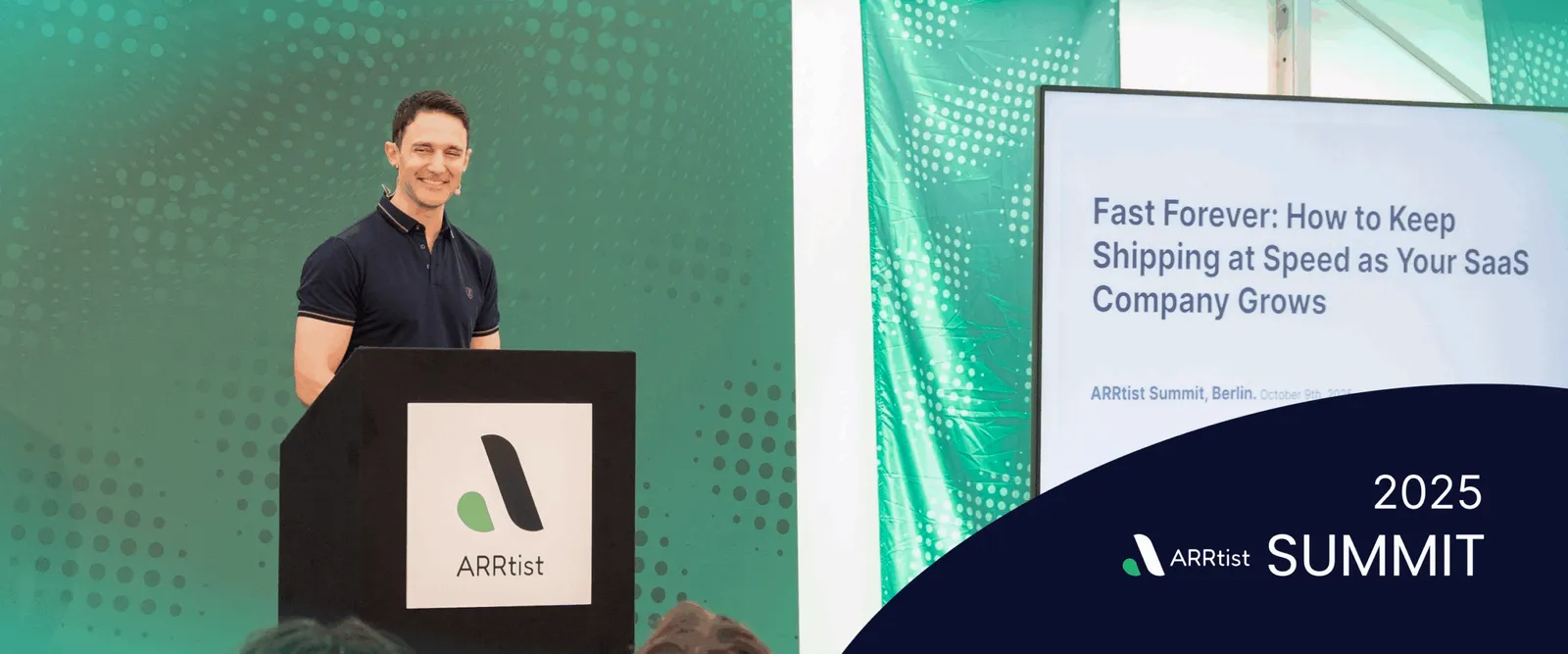
For over a decade, subscription analytics and revenue management platform ChartMogul has navigated the competitive landscape of the global B2B Software-as-a-Service (SaaS) market. Founded by Nick Franklin as a solo, product-focused enterprise, the company has grown from a fledgling startup into an industry pillar. However, maintaining a high rate of innovation without the backing of aggressive venture capital funding rounds or the high-burn-rate work cultures typical of Silicon Valley has required deliberate operational strategies. Recently, at the ARRtist Summit in Berlin, Franklin detailed the trajectory of ChartMogul’s engineering culture, highlighting how the company confronted architectural stagnation, restructured its operational frameworks, and successfully restored its initial development momentum.
The journey of ChartMogul offers a transparent case study for medium-sized tech companies grappling with the friction of scale. In the fast-paced software industry, a company’s rate of innovation serves not only as a primary motivator for internal engineering teams but also as a sustainable competitive moat. While venture-backed enterprises often leverage capital injections to hire larger teams and brute-force their way through technical bottlenecks, bootstrapped or efficiently scaled European firms must rely on architectural discipline and organizational agility to sustain long-term growth.
Early Momentum and the Initial Growth Phase
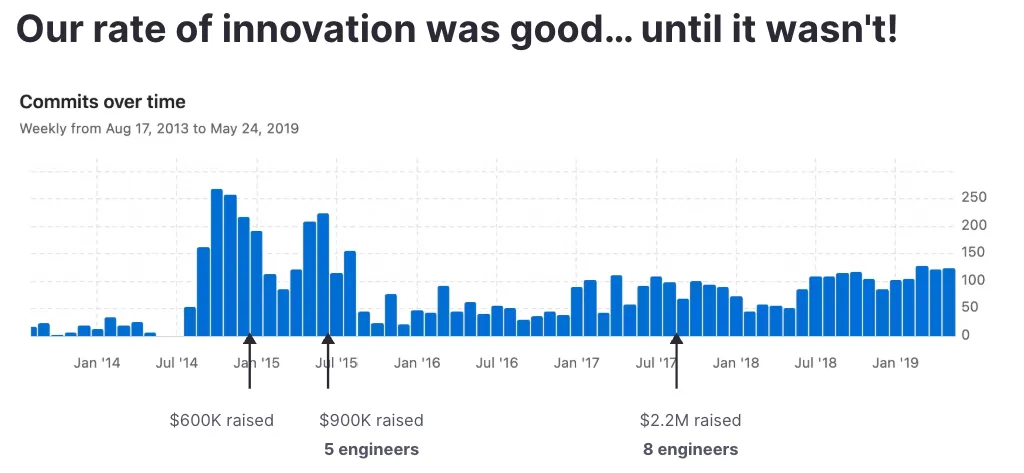
During its formative years in 2014 and 2015, ChartMogul operated with structural simplicity. Backed by modest initial funding, the lean team shipped features rapidly, achieving immediate product-market fit with early adopters. Comprising only a handful of engineers, the organization enjoyed a transparent workflow where progress was palpable on a weekly basis. Code commits were frequent, and every software release served as a psychological win for the team, establishing a high-tempo baseline that defined the company’s early identity.
This initial velocity, however, proved difficult to maintain as the software expanded in scope and complexity. By 2016, the cumulative weight of rapid feature deployment began to manifest as severe technical debt. Fixing one component of the application frequently disrupted adjacent functionalities, creating a fragile operational environment. In an attempt to solve scalability challenges, the company experimented with a microservices architecture in 2016, a decision that inadvertently compounded the problem by fragmenting the backend infrastructure.
The Crisis of Complexity and Loss of Velocity
As the backend infrastructure grew increasingly tangled, development bottlenecks multiplied. While the frontend team managed to sustain a relatively steady pace of delivery, backend engineers faced mounting frustration due to integration friction and cascading system failures. This disparity in progress led to internal friction, a drop in team morale, and subsequent engineering turnover. In an environment where meaningful progress becomes invisible to the team, employee engagement naturally declines.
During this transitional period, Franklin engaged in industry peer discussions regarding engineering management models, specifically learning about the concept of "swimlanes"—an organizational structure where cross-functional teams own specific product areas end-to-end, enabling them to ship updates independently without creating dependencies or blocking other squads. Recognizing that ChartMogul’s existing organizational structure was antithetical to this model represented a difficult realization for leadership, as it necessitated dismantling and rebuilding foundational components of the platform that had taken years to construct.
Despite these internal technical hurdles, the core product retained strong customer loyalty, and annual recurring revenue continued to climb. This commercial stability provided the financial runway and time required to address the underlying architectural flaws before they critically impacted the business.
Architectural Overhaul and the Rebuilding Phase
The strategic turning point arrived in 2018. During a long-haul flight to Seoul, South Korea, Franklin drafted the initial blueprints for a redesigned, highly scalable ChartMogul architecture. The new vision established rigorous boundaries between disparate system layers, cleanly separating integrations, data processing pipelines, analytics engines, and frontend interfaces—effectively implementing the swimlane methodology tailored to the company’s specific needs.
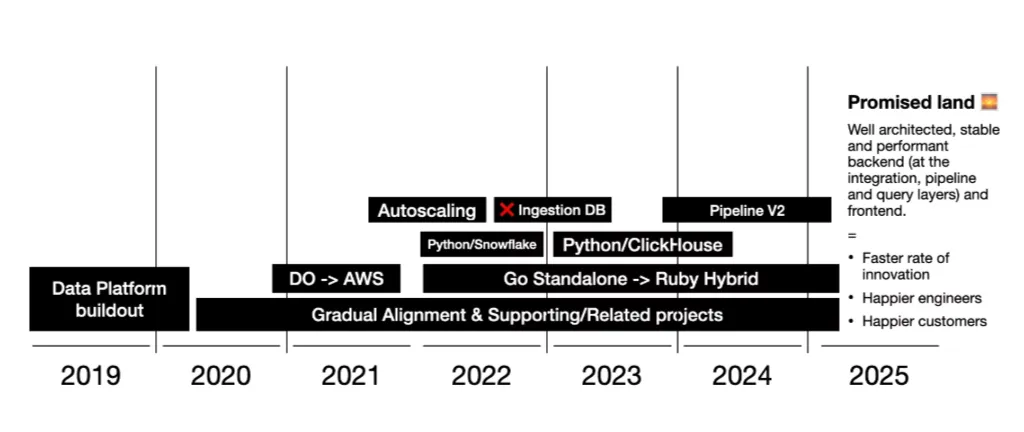
Beginning in 2019, the engineering organization initiated a comprehensive, multi-year system rewrite. The overhaul required methodical restructuring across core modules, demanding patience and disciplined execution from the remaining technical staff. Although the transition was resource-intensive and spanned multiple years, the long-term dividends proved substantial. Today, ChartMogul operates with a modernized codebase, significantly reduced developer friction, and accelerated release cycles that surpass the company’s early-stage velocity.
Core Principles of High-Velocity Software Engineering
Reflecting on the decade-long transformation, ChartMogul’s leadership has codified several operational tenets designed to prevent recurring architectural stagnation and maintain team motivation.
Architecture Over Headcount
A central lesson derived from the company’s scaling challenges is that architectural integrity supersedes team size. Expanding headcount within a messy, undisciplined codebase typically exacerbates inefficiency rather than resolving it. Establishing clean foundational boundaries allows smaller engineering units to execute tasks with significantly higher efficiency than larger teams encumbered by technical debt.
Treating Engineering Teams Like High-Performance Sports Teams
Workplace burnout in the technology sector is frequently misattributed to long working hours, when it is more commonly driven by a lack of tangible progress. Software engineers are inherently motivated by building and shipping functional products. By providing autonomous workflows, clear lines of responsibility, and minimal bureaucratic interference, organizations can maintain high levels of intrinsic motivation. Drawing inspiration from industry figures like Steve Jobs, who famously advocated for expert leadership where managers remain deeply engaged in tactical work, ChartMogul maintains a culture where leadership across the engineering hierarchy—from vice presidents downward—remains actively involved in writing code.
Active Founder and Leadership Participation
In the early stages of enterprise growth, founders often adopt a hands-off approach to allow specialists autonomy. However, long-term technical leadership requires continuous engagement with the core product. Personnel will inevitably transition in and out of an organization, but founders and executive leaders remain the institutional constants. Maintaining a direct understanding of technical operations ensures that product vision remains aligned with engineering realities.
Streamlined and Disciplined Product Processes
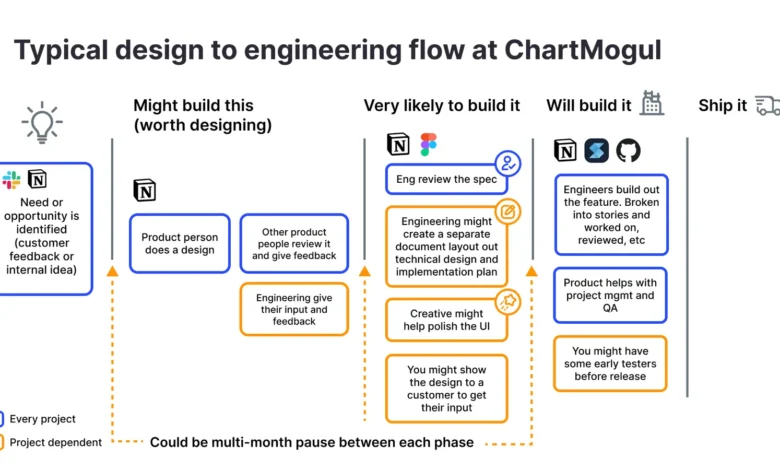
While procedural frameworks are necessary for scaling, excessive bureaucracy can severely impede innovation. ChartMogul’s internal workflows emphasize steady, predictable flow over constant frantic motion. By designing and vetting product features months in advance of active implementation, the design and engineering teams create necessary space for iterative feedback, stakeholder review, and rigorous decision-making. The typical product lifecycle moves through distinct phases—from initial conceptualization to asynchronous review and final build—allowing for pauses when necessary to ensure quality output.
Broader Industry Implications and Market Context
ChartMogul’s experience mirrors a broader structural evolution within the European B2B SaaS ecosystem. While venture capital infusion often encourages rapid expansion at all costs, sustainable software enterprises are increasingly recognizing the value of capital efficiency, architectural longevity, and organic revenue growth. By prioritizing foundational code health and organizational alignment, companies can achieve hypergrowth-level output without relying on unsustainable operational models.
Ten years after its inception, ChartMogul’s operational pivot demonstrates that technical debt, while inevitable in rapidly growing software companies, can be successfully remediated through decisive architectural planning and cultural alignment. By treating velocity as a function of clean design rather than sheer workforce volume, the company has established a durable blueprint for long-term technical and commercial resilience.
Related posts: