Building an Intelligent Claims Assistant Using Amazon Bedrock Knowledge Bases and Agentic Retrieval

The modern insurance industry faces a persistent information fragmentation challenge. Critical claim data is frequently siloed across disparate formats, including adjuster diary entries, handwritten repair estimates, police accident reports, payment ledgers, and various scanned attachments. For policyholders, the inability to quickly determine the status of a claim leads to frustration, while for adjusters, the manual synthesis of information from multiple sources creates significant operational bottlenecks. Recent advancements in generative artificial intelligence (AI) and Retrieval Augmented Generation (RAG) are now offering a pathway to bridge this gap, enabling organizations to build conversational assistants capable of retrieving and citing information from complex document repositories with high precision.
The fundamental issue in claims processing is the lack of a unified, searchable data structure. Unlike traditional databases where information is stored in clean, relational fields, insurance claims are often "messy." A single claim file might contain multiple, sometimes conflicting versions of a repair estimate, or a payment that was provisionally issued and subsequently reversed. An automated assistant must be capable of identifying which document represents the current, authoritative record. Because insurance is a heavily regulated sector, the stakes for accuracy are high; every answer provided by an AI must be grounded in source documents and accompanied by clear, verifiable citations to ensure auditability and compliance.
The Evolution of Retrieval: Moving Beyond Keyword Search
The traditional approach to document retrieval relied on keyword-based indexing, which often failed to capture the semantic intent behind a query. If a policyholder asked about the "status" of a claim, a simple keyword search might miss documents that describe a "settlement" or "pending payment" because those specific words were not used. Retrieval Augmented Generation (RAG) shifts this paradigm by using retrieved documents to ground the responses of large language models (LLMs). By leveraging Amazon Bedrock Knowledge Bases, developers can implement a fully managed RAG capability that handles the heavy lifting of parsing, chunking, and embedding documents.
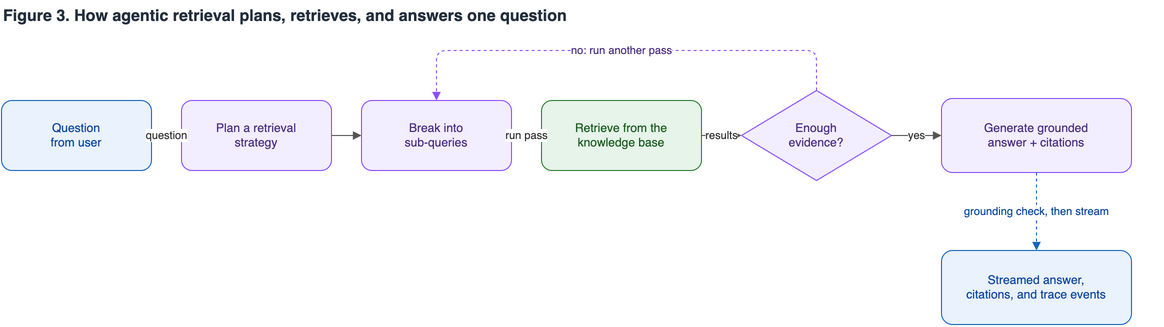
The recent introduction of the AgenticRetrieveStream API represents a significant leap forward in this space. Unlike static retrieval, agentic retrieval allows an application to act as an autonomous agent. It can plan an answer, break down multi-part user questions into logical sub-queries, and perform iterative retrieval passes. If the initial evidence is deemed insufficient, the agent can refine its strategy before generating a final response. This capability is critical for insurance workflows, where a simple inquiry—such as "Summarize all open auto claims over $10,000 from last month"—requires the system to navigate multiple metadata dimensions simultaneously.
Architecting a Scalable Claims Assistant
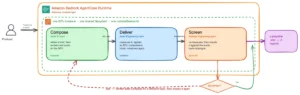
The technical architecture for an intelligent claims assistant relies on two distinct lanes: an ingestion lane and a retrieval lane. In the ingestion lane, claim documents stored in Amazon S3 are processed and loaded into a knowledge base. This includes the creation of metadata sidecar files, which allow for granular filtering based on attributes such as claim_id, claim_type, amount, and date_filed. By storing dates as YYYYMMDD integers, systems can efficiently execute complex range queries, such as identifying claims filed within a specific fiscal quarter.
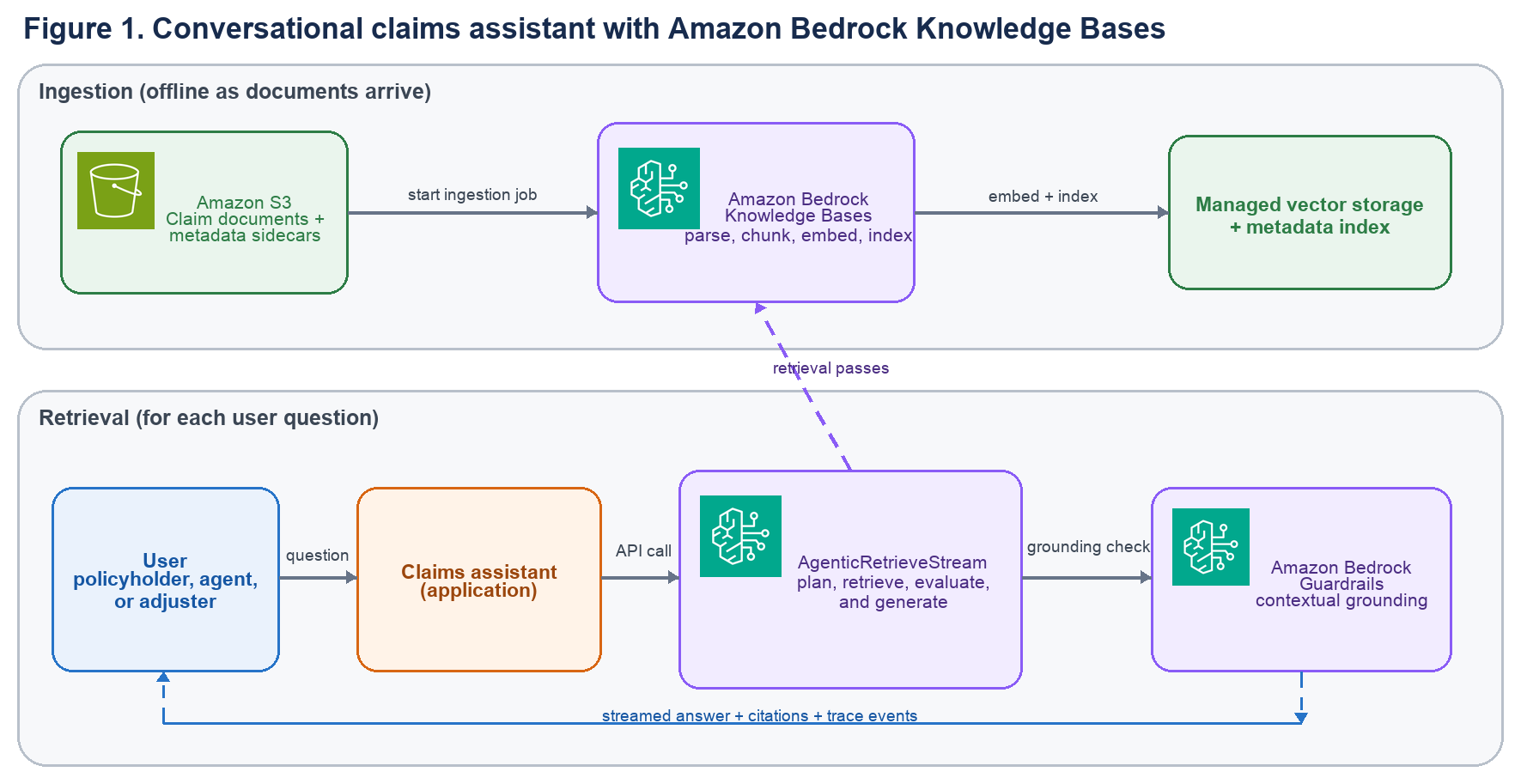
The retrieval lane is where the intelligence is applied. When a user submits a query, the AgenticRetrieveStream API processes the input, potentially interacting with multiple data sources. The integration of Amazon Bedrock Guardrails acts as a critical safety layer. By applying contextual grounding checks, the guardrails can block responses that fail to meet predefined relevance thresholds. For instance, if the model cannot find sufficient evidence in the source documents to support an answer, the guardrail can prevent the AI from hallucinating, instead triggering a fallback message such as "I can only answer questions using the provided claim records."
Empirical Performance and Data Validation
Testing on a synthetic corpus of 30 documents has demonstrated the efficacy of this approach. In an evaluation suite comprising 40 distinct questions—ranging from routine status lookups to complex scenarios involving superseded records and reversed payments—the system successfully answered every query. Notably, the model achieved a 90.5% retrieval recall and an 81.2% citation recall.
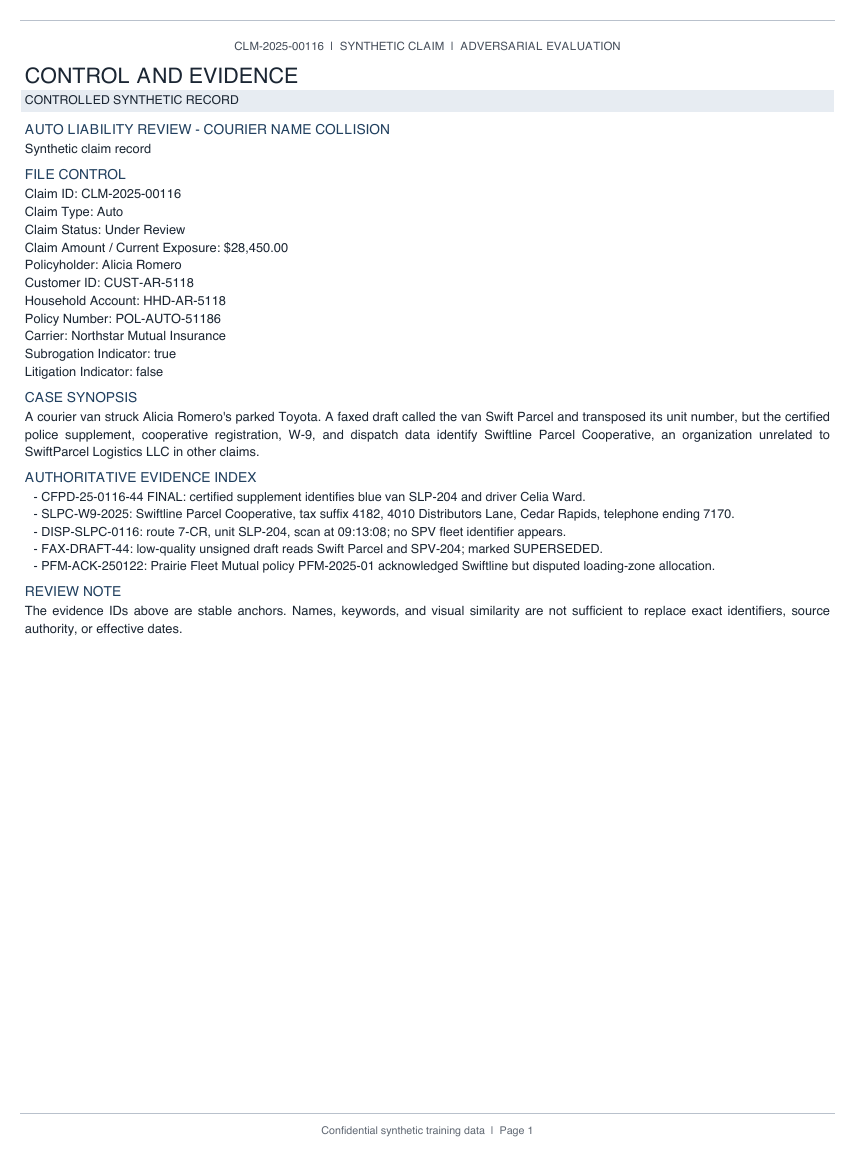
Perhaps more significantly, the system performed well under adversarial testing conditions. When subjected to 20 questions designed to trip up the model—such as inquiries involving similarly named companies or attempts to treat internal notes as official policy—the system maintained a 96.7% retrieval recall. This high level of accuracy is essential for building trust among contact center agents, who rely on these tools to provide real-time information to policyholders. The ability to distinguish between an "allegation" and a "proven fact" within a document is a testament to the sophistication of modern LLMs when provided with high-quality, grounded context.
Regulatory Compliance and Governance
In the insurance sector, data privacy and governance are not merely operational requirements but legal imperatives. The implementation of a claims assistant must account for strict IAM (Identity and Access Management) permissions. Organizations should limit access to the AgenticRetrieveStream API and knowledge-base resources using the principle of least privilege. Furthermore, metadata filters should be used as an access boundary; by deriving security constraints from the user’s authenticated session—rather than allowing the user to specify parameters—the system prevents unauthorized access to sensitive claim data.
Encryption is another cornerstone of this framework. With Amazon S3 providing default encryption at rest and the option to use customer-managed AWS KMS keys for both the storage bucket and the vector index, firms can maintain end-to-end control over their data. Furthermore, the use of AWS CloudTrail ensures that every interaction with the AI assistant is logged, providing a clear audit trail for compliance officers to review if a dispute arises regarding how a specific conclusion was reached.
Future Implications for the Insurance Industry
The deployment of agentic AI in claims processing signals a broader shift toward "intelligent automation" in the financial services sector. By reducing the time adjusters spend searching for information, companies can significantly improve their claims cycle time, which is a key metric for customer satisfaction and operational efficiency.
However, the success of these systems hinges on the quality of the underlying data. As insurance firms look to scale these solutions, they must focus on data hygiene—ensuring that metadata is accurately maintained and that documents are consistently labeled. The shift from manual document review to AI-assisted retrieval also necessitates a change in workforce training. Rather than focusing on rote data entry, the role of the adjuster is evolving into that of a "human-in-the-loop" supervisor, responsible for reviewing the AI’s cited evidence and making the final, high-level decisions.
As generative AI technology continues to mature, the integration of multi-modal data—such as photos of vehicle damage or video footage from incident scenes—will likely become the next frontier for these assistants. For now, the combination of Amazon Bedrock Knowledge Bases and AgenticRetrieveStream provides a robust, scalable, and secure foundation for modernizing one of the most critical functions in the insurance industry. By grounding AI in verifiable documents, organizations can provide their agents and policyholders with the speed they demand and the accuracy that the law requires.