Reflecting on the Evolution of Online Knowledge Communities: Jeff Atwood and Ben Dumke-von der Ehe Take the Stage at WeAreDevelopers World Congress

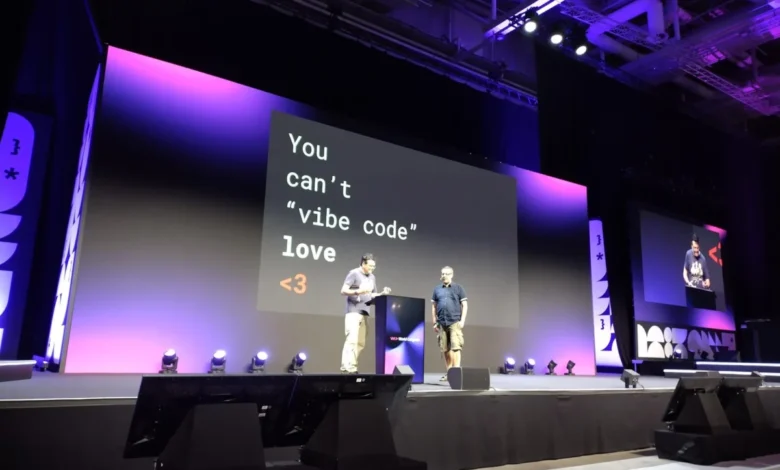
The future of collaborative developer communities, the transformative impact of large language models (LLMs) on technical troubleshooting, and the human stories foundational to the modern internet took center stage at the CityCube in Berlin during the WeAreDevelopers World Congress. Jeff Atwood, co-founder of the globally renowned programming platform Stack Overflow, delivered a joint keynote presentation alongside Ben Dumke-von der Ehe, one of the platform’s earliest community hires. Their address, titled "None of Us Is As Dumb As All of Us: Community And Knowledge Go Hand In Hand," explored the delicate balance between automated coding assistants and the irreplaceable value of human-centric technical ecosystems.
The invitation for Atwood to speak at the prestigious European developer conference arrived roughly a year prior to the event. Known for selectively choosing his public engagements—particularly international ones—Atwood agreed to participate under a specific condition: that Dumke-von der Ehe share the stage with him. Given Dumke-von der Ehe’s deep roots in the Berlin tech community and his historic journey with Stack Overflow, the pairing offered a unique dual perspective on how digital knowledge hubs are built, sustained, and challenged in the era of generative artificial intelligence.
Chronology and Background of a Shared Digital Legacy
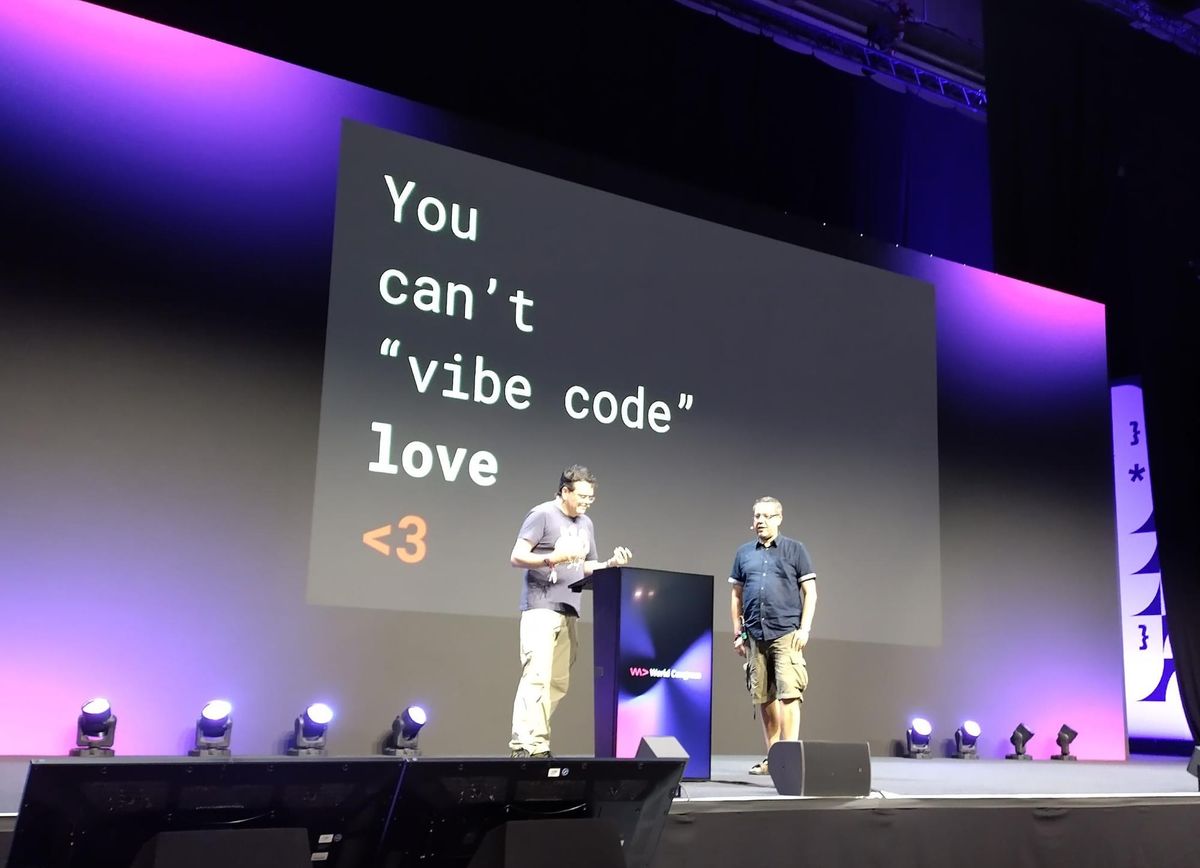
The collaboration between Atwood and Dumke-von der Ehe dates back to the formative years of Stack Overflow, launched in 2008 by Atwood and Joel Spolsky as an open, community-driven alternative to fragmented expert forums. Dumke-von der Ehe emerged from that very community, transitioning from an active contributor to one of the platform’s foundational team members—a trajectory that saw him join the corporate ranks as employee number six, leave, return, and eventually embark on other ventures.
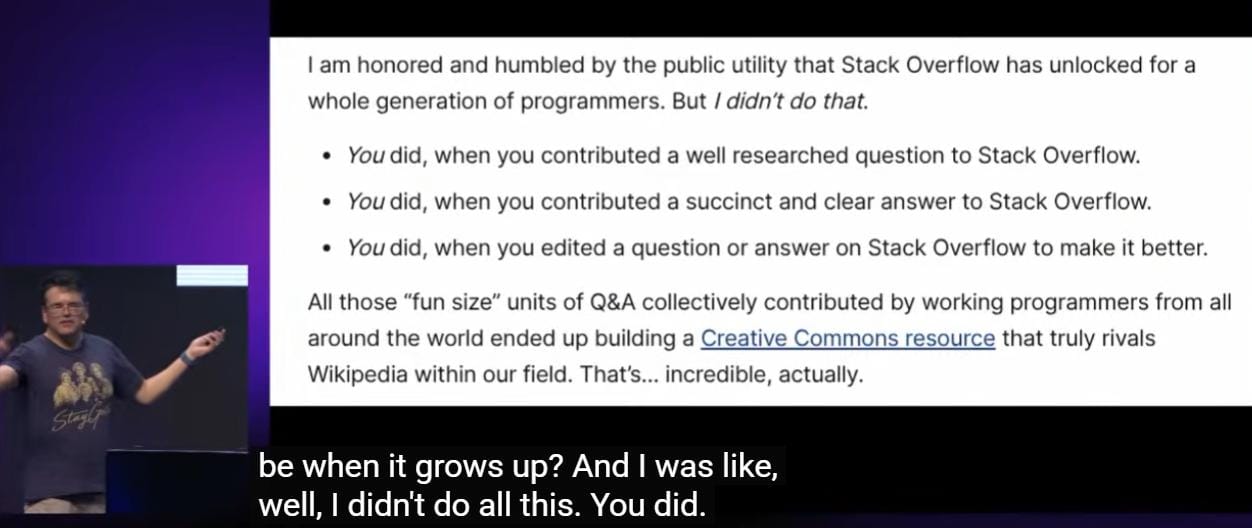
During their Berlin keynote, Atwood emphasized the personal and professional indebtedness he felt toward Dumke-von der Ehe and the broader collective of contributors. The platform was built upon a bedrock Creative Commons license, ensuring that the intellectual property generated by millions of developers remained part of a shared public commons rather than locked behind proprietary walls. This collaborative spirit enabled the creation of one of the most influential technical datasets in software engineering history, laying the groundwork for the modern developer ecosystem.
The Intersection of Stack Overflow and Generative AI
The rapid advancement of large language models has fundamentally altered how developers seek and consume technical information. Rather than browsing traditional Q&A forums or parsing search engine results pages, a growing segment of the programming workforce relies on conversational AI tools to generate code snippets, debug errors, and explain complex algorithms.

Atwood addressed this paradigm shift directly, framing the rise of AI not as an existential threat to Stack Overflow’s original mission, but as an evolution of it. He noted that the ultimate design philosophy of Stack Overflow was never to force users to endlessly ask and answer questions, but rather to curate high-ranking, easily discoverable solutions. Ideally, according to Atwood’s long-standing philosophy, the vast majority of programmers should find what they need passively through search engines, minimizing the burden of repetitive inquiry.
Furthermore, LLMs have achieved what was once considered nearly impossible in online community management: solving the duplicate question problem. As technical forums scale from one million to tens or hundreds of millions of posts, avoiding duplicate entries becomes an exercise in threading a needle through a minefield. Generative AI models possess the contextual intelligence to map differently worded queries directly to existing, accurate solutions, thereby reducing clutter and accelerating information retrieval.
Broader Impact and Implications for the Knowledge Commons
Despite the operational efficiencies introduced by automated coding assistants, Atwood’s keynote raised critical questions regarding the long-term sustainability of the digital knowledge commons. As developers increasingly shift their queries to private LLM interfaces rather than public forums, the pipeline for generating fresh, peer-reviewed human knowledge faces unprecedented disruption.
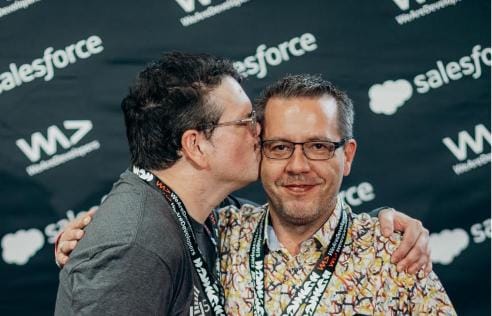
Industry analysts and community leaders have begun to question where future iterations of AI models will source their training data if public, community-driven platforms experience a decline in active human participation. While LLMs excel at synthesizing existing data, the initial creation of novel technical solutions, edge-case troubleshooting, and paradigm-shifting frameworks traditionally originate from human collaboration, debate, and consensus.
Moreover, the psychological and social dimensions of technical communities—the mentorship, camaraderie, and shared passion that helped professionals like Dumke-von der Ehe launch their careers—cannot be replicated by synthetic models. As Atwood succinctly noted during the presentation, one cannot algorithmically simulate human connection and community love.
Official Responses and Industry Reception
The WeAreDevelopers World Congress session drew significant attention from attendees, industry veterans, and online observer communities alike. Feedback from the live audience at the CityCube underscored a collective anxiety among software engineers regarding the preservation of open platforms where junior developers can learn the craft not just through code generation, but through mentorship and direct human interaction.
While major technology companies continue to invest heavily in autonomous coding agents—often referred colloquially in developer circles as "vibe coding"—the discourse in Berlin served as a timely reminder that technology infrastructure relies entirely on human input. The sustainability of the global software engineering industry depends on finding a harmonious equilibrium: leveraging AI to streamline repetitive tasks while actively protecting, funding, and valuing the human communities that generate the foundational knowledge of the digital age.