The modern smartphone industry has spent the better part of the last decade racing toward larger displays and expansive form factors. For most consumers, devices with screens stretching well beyond six inches have become the standard, serving as portable media centers, mobile workstations, and handheld gaming consoles. Tech giants like Apple, Google, and Samsung have progressively phased out compact hardware options, largely driven by consumer demand for massive screen real estate, multi-lens camera modules, and sprawling batteries.
Yet, a dedicated segment of the mobile phone market has consistently lamented the extinction of the truly compact smartphone. While Apple previously attempted to cater to this demographic with the introduction of the 5.4-inch iPhone mini—first with the iPhone 12 mini in 2020 and subsequently with the iPhone 13 mini in 2021—the tech titan ultimately abandoned the experiment. Sluggish global sales figures compared to their larger flagship counterparts prompted Apple to pivot its smaller-device strategy toward slim, mid-tier alternatives like the iPhone SE line and rumored slim models, none of which match the pocket-friendly, one-handed usability of the discontinued mini design.
Recognizing a persistent market void, a new hardware initiative named "Enough" is stepping in to challenge the industry’s macro-trend toward oversized devices. The company has officially launched a crowdfunding campaign for the "Enough Phone," an upcoming mobile device engineered specifically to satisfy users who prioritize ergonomic, single-handed operation without completely sacrificing modern performance metrics.
Main Facts and Hardware Specifications of the Enough Phone
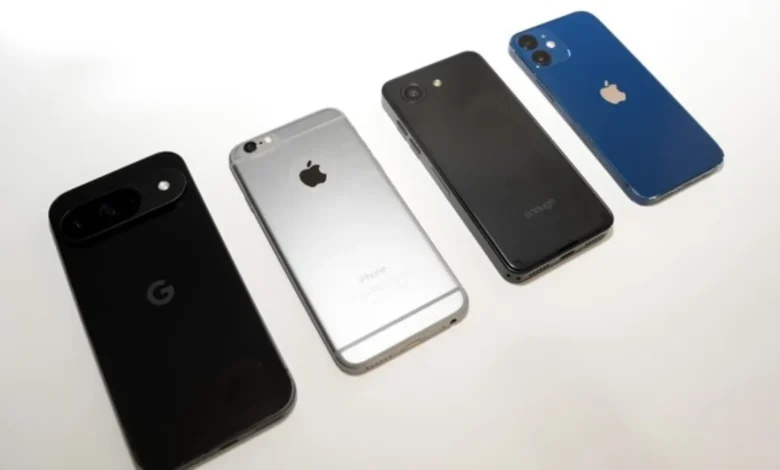
The Enough Phone is designed from the ground up to occupy a footprint that has become nearly extinct in the contemporary mobile landscape. According to the company’s preliminary engineering specifications, the device measures 133 millimeters by 64 millimeters, with a thickness of under 12 millimeters. Translated into imperial units, this equates to approximately 5.24 inches by 2.52 inches, and a depth under 0.47 inches.
To put these dimensions into perspective, the physical footprint is remarkably close to that of the discontinued iPhone 13 mini, which measures 5.18 by 2.53 inches with a 0.3-inch profile. While the Enough Phone is marginally thicker to accommodate internal components and a user-replaceable power source, it successfully captures the elusive "mini" form factor that many consumers have sought to retain.
The display panel, however, reflects a compromise in pixel density compared to ultra-premium flagships. The Enough Phone features a 5.3-inch screen operating at a resolution of 1520 by 720 pixels. While this falls short of the sharp 2340 by 1080 resolution found on devices like the iPhone 13 mini or modern high-end Android alternatives, it is a deliberate engineering choice tailored to the target audience—users who generally prefer utility, battery conservation, and compact ergonomics over high-refresh-rate, high-resolution media consumption.
Under the hood, the Enough Phone relies on a mid-range processing architecture. The company has outlined plans to integrate a 2.4GHz MediaTek Dimensity 7500 chipset, paired with 8GB of random-access memory (RAM). Internal storage is slated at 128GB out of the box, with a notable inclusion rarely seen in modern smartphones: a dedicated microSD card slot enabling straightforward storage expansion.

Imaging capabilities are spearheaded by a single 50-megapixel Sony IMX766 sensor on the rear panel, accompanied by a high-resolution 32-megapixel front-facing selfie camera. Connectivity standards include full support for 5G cellular networks, Wi-Fi 6, and modern eSIM capabilities alongside a traditional physical SIM card slot.
A Focus on Repairability and Longevity
Beyond its compact size, one of the most distinguishing features of the Enough Phone is its emphasis on hardware repairability and extended lifecycle support—areas where major smartphone manufacturers have historically faced criticism.
While top-tier original equipment manufacturers (OEMs) have made incremental improvements regarding sustainability and parts availability in response to global "right-to-repair" legislation, most modern smartphones remain heavily sealed with industrial adhesives, requiring specialized thermal equipment and professional technical service to open. The Enough Phone takes a distinctly different architectural approach. The device is assembled using standardized, visible screws that allow users to easily access the internal components.
Crucially, the phone features a fully replaceable 3,500 mAh battery. As lithium-ion batteries degrade over years of daily charging cycles, the ability to effortlessly swap out the power cell addresses a primary catalyst for premature smartphone obsolescence. Coupled with software support commitments extending through 2032, the development team intends for the hardware to remain functional and secure well into the next decade.
Software Versatility: Android and "De-Googled" Operating Systems
Another unique facet of the Enough Phone project is its software flexibility. Rather than locking users into a proprietary ecosystem, the manufacturer plans to offer consumers a choice of operating systems at setup.
Buyers can opt to run the device on standard Android 17, ensuring immediate compatibility with the vast ecosystem of modern mobile applications, banking software, and productivity tools. Alternatively, users can choose to install OdysseyOS, a minimalist, "de-Googled" operating system developed by SLEKE. OdysseyOS is marketed toward individuals seeking to reduce digital distraction and engage in what the developers term "intentional phone use." This dual-software approach broadens the device’s appeal, bridging the gap between modern smartphone utility and the minimalist ethos of the digital detox movement.
Chronology and Development Timeline

The Enough Phone project is currently progressing through the prototype stage, with the development team noting that minor hardware adjustments may occur as testing continues ahead of mass production.
The initiative officially entered the public eye with the launch of its crowdfunding campaign, providing early backers with discounted access to the hardware. The pricing structure scales according to participation tiers:
- Early Bird Reward: Priced at $449, this tier includes the smartphone, a pre-installed glass screen protector, a protective case, a USB-C cable, a USB-C to 3.5mm headphone adapter, a hex screwdriver for maintenance, and custom green "Founders’ Edition" backplate screws.
- Standard Retail Price: Following the conclusion of the crowdfunding phase, the retail price is projected to settle at $599.
Manufacturing and logistical timelines place the official product launch and subsequent consumer fulfillment window in May 2027. Because the device is currently in development, industry analysts note that meeting these projected delivery dates will depend heavily on component supply chain stability and the successful transition from prototype manufacturing to factory-scale assembly.
Broader Industry Implications and Consumer Impact
The emergence of the Enough Phone highlights a persistent tension between market-driven mass manufacturing and niche consumer demand. Major technology corporations optimize their product lines for maximum profitability and broad global appeal, a reality that naturally favors large-format devices capable of consuming media, rendering complex augmented reality applications, and housing expansive multi-lens camera arrays.
When companies like Apple discontinued the "mini" form factor, it demonstrated that aggregate global sales volume did not justify the research, development, and manufacturing overhead required to maintain a separate compact product tier. However, projects backed by crowdfunding platforms—such as the Enough Phone—serve as an alternative testing ground for underserved market segments.
The success or failure of the Enough Phone will not likely force mainstream giants to reverse their design philosophies overnight. Nevertheless, it offers a valuable economic barometer. If a specialized device can successfully fund, manufacture, and deliver a compact smartphone with modular repair features and extended software lifecycles, it may validate a sustainable business model for independent hardware developers operating outside the traditional tech conglomerate ecosystem. For consumers who have grown weary of pocket-straining displays and planned obsolescence, the Enough Phone represents a rare alternative in an increasingly homogenized market.