Crafting a Powerful PMO Mission Statement: A Strategic Imperative for Project Success and Organizational Alignment


The development of a clear and compelling Project Management Office (PMO) mission statement is not merely a bureaucratic exercise; it is a fundamental strategic imperative that underpins the success of an organization’s project portfolio and its broader strategic objectives. In an era where organizations increasingly rely on projects and programs to drive change, innovation, and growth, the PMO serves as a critical engine, and its mission statement acts as the guiding principle for its operations, decision-making, and interactions with stakeholders. Without a well-defined mission, a PMO risks becoming a fragmented entity, lacking direction, perceived value, and the ability to effectively contribute to organizational goals.
The Pivotal Role of the PMO in Modern Enterprises
At its core, a PMO is responsible for standardizing project management processes, methodologies, and governance across an organization. It provides the framework within which projects are initiated, planned, executed, monitored, and closed, ensuring consistency, efficiency, and adherence to best practices. Depending on its maturity and strategic mandate, a PMO can adopt various forms: a supportive PMO offering templates and training; a controlling PMO enforcing compliance; or a directive PMO managing projects directly. Increasingly, PMOs are evolving into strategic entities, aligning projects with organizational strategy, optimizing resource allocation, and providing crucial portfolio-level insights to senior leadership.
The complexity of modern projects, often spanning multiple departments, geographies, and technologies, demands robust oversight. A recent study by the Project Management Institute (PMI) indicated that organizations with a mature PMO structure have a significantly higher project success rate – up to 38% more projects meeting original goals and business intent. This success is not accidental; it stems from a clear purpose and direction, which is crystallized in a well-articulated mission statement. The mission statement for a PMO elucidates its fundamental purpose, explains its existence, and sets forth an aspirational vision for its future contributions to the enterprise. It serves as an internal compass for the PMO team and an external declaration of value to the wider organization and its leadership.

Why a Definitive PMO Mission Statement is Indispensable
The impact of a PMO mission statement extends far beyond internal team motivation. It is a powerful communication tool, a strategic anchor, and a catalyst for organizational alignment.
- Clarity and Purpose: It provides a clear understanding of the PMO’s role, preventing ambiguity and ensuring that all team members are working towards a common goal. This clarity is particularly vital in large organizations where the PMO’s function might be misunderstood or underestimated.
- Strategic Alignment: A well-crafted mission statement ensures that the PMO’s activities are directly linked to the organization’s overarching strategic objectives. It acts as a filter for initiatives, ensuring that only projects that contribute to the mission are prioritized and resourced. Industry data suggests that organizations with strong strategic alignment see 72% of their projects achieve their goals, compared to just 58% in those with weak alignment.
- Enhanced Communication: It simplifies the explanation of the PMO’s value proposition to stakeholders, including executive leadership, project managers, and business units. This articulation of value is crucial for securing funding, gaining executive sponsorship, and fostering collaboration.
- Team Cohesion and Motivation: A shared mission fosters a sense of unity and purpose within the PMO team. When team members understand "why" they do what they do, their engagement, productivity, and job satisfaction tend to increase. It provides a common identity and a reason to strive for excellence.
- Decision-Making Framework: The mission statement acts as a benchmark against which decisions, both operational and strategic, can be evaluated. It helps the PMO prioritize initiatives, allocate resources effectively, and navigate challenges in a manner consistent with its core objectives.
- Performance Measurement: By defining its purpose and goals, the mission statement lays the groundwork for establishing key performance indicators (KPIs) and metrics to measure the PMO’s effectiveness and contribution to the organization.
The Foundational Elements of a Robust PMO Mission Statement
Crafting a mission statement that resonates and guides requires careful consideration of several core components: purpose, values, and goals. These elements combine to form a holistic declaration of the PMO’s identity and direction.
-
Defining the PMO’s Purpose: This is the "why" of the PMO’s existence. What problem does it solve? What critical function does it serve within the organization?
- Type of PMO: Is it a supportive PMO providing a repository of project management templates and best practices? Is it a controlling PMO focused on governance, risk management, and compliance? Or is it a strategic PMO, advising senior leadership on portfolio optimization and strategic alignment? The mission statement must clearly reflect this operational model.
- Key Activities: It should outline the primary activities undertaken, such as developing project management standards, providing coaching and development, facilitating resource management, or offering strategic oversight of the project portfolio. For instance, a supportive PMO might state its purpose as "to empower project teams with the tools and knowledge needed for successful project delivery," while a strategic PMO might declare its purpose as "to optimize the organization’s project portfolio to achieve strategic objectives."
-
Articulating Core Values: Values are the ethical and operational principles that guide the PMO’s actions and decisions. They reflect what the PMO believes in and how it conducts its business.
- Organizational Alignment: Ideally, PMO values should align with the overarching corporate values, reinforcing a consistent organizational culture. If corporate values are not explicitly defined or are not directly relevant to project management, the PMO team can collaboratively define its own.
- Examples: Common values relevant to a PMO include transparency, accountability, collaboration, innovation, integrity, efficiency, continuous improvement, and customer focus. For example, "We champion transparency in project reporting and foster a culture of continuous learning."
- Impact: Values ensure that the PMO operates in a manner consistent with organizational ethics and fosters a positive working environment, enhancing trust and credibility among stakeholders.
-
Establishing Clear Goals: While the mission statement itself isn’t a list of annual objectives, it should implicitly or explicitly point towards the ultimate aspirations and impact the PMO seeks to achieve.
- Strategic Impact: What difference does the PMO aim to make to the organization? This could range from improving project delivery success rates, enhancing customer satisfaction through project outcomes, optimizing resource utilization, or reducing project costs.
- Measurable Outcomes: While the mission statement should be concise, the underlying goals should be measurable. For instance, "to consistently deliver projects that exceed stakeholder expectations by [specific metric, e.g., 15% improvement in on-time delivery]," or "to foster a project-driven culture that reduces time-to-market for new initiatives."
- Dynamic Nature: Goals can evolve annually or as the PMO matures. The mission statement provides the enduring framework within which these evolving goals are set and pursued.
The Interconnectedness of Mission, Vision, and Values
The PMO mission statement does not exist in isolation; it is a critical component of a broader strategic framework that includes the PMO’s vision and core values. This triumvirate provides a comprehensive understanding of the PMO’s identity and direction.
- Vision Statement: This describes the aspirational future state the PMO aims to achieve. It answers the question, "Where do we want to be?" It is typically forward-looking, inspiring, and often more abstract than the mission. For example, "To be recognized as the indispensable strategic partner for driving organizational change and innovation through exceptional project delivery."
- Mission Statement: This defines the PMO’s current purpose and how it will achieve its vision. It answers, "What do we do, and why do we do it?" It is more concrete and action-oriented.
- Core Values: These are the fundamental beliefs and principles that guide the PMO’s behavior and decisions in pursuit of its mission and vision. They answer, "How do we behave?"
Together, these elements form a cohesive narrative. The values inform how the PMO operates, the mission defines what it does and why, and the vision articulates where it is headed. This integrated framework ensures that the PMO’s efforts are not only purposeful but also aligned with its long-term strategic ambitions and the ethical principles that govern its operations. A misalignment between these three can lead to internal confusion, external skepticism, and ultimately, a diminished impact of the PMO. Industry experts like Dr. Lynda Bourne emphasize that "a PMO’s strategic effectiveness is directly correlated with the clarity and integration of its mission, vision, and values."

A Collaborative Approach to Mission Statement Creation: A Process Chronology
The process of developing a PMO mission statement should be highly collaborative, involving key stakeholders to ensure buy-in, relevance, and accuracy. This journey is as valuable as the destination, fostering a shared understanding and ownership.
-
Initiation and Stakeholder Identification:
- Objective: Define the scope of the exercise and identify all relevant participants.
- Participants: This should include the PMO leadership, core PMO team members, key project managers, representatives from business units that frequently engage with the PMO, and crucially, a senior executive sponsor who can champion the PMO’s strategic value.
- Timeline: Allocate a preliminary timeline for the entire process, perhaps 2-4 weeks, depending on organizational size and complexity.
-
Discovery and Brainstorming Workshops:
- Objective: Gather diverse perspectives on the PMO’s current state, desired future, and perceived value.
- Activities: Facilitated workshops (e.g., a half-day session) using techniques like SWOT analysis (Strengths, Weaknesses, Opportunities, Threats) relative to the PMO, "start, stop, continue" exercises, and brainstorming sessions around:
- "What do we do best?"
- "What impact do we want to have?"
- "What principles guide our work?"
- "Who are our primary beneficiaries?"
- Key Output: A comprehensive list of potential purpose statements, values, and desired outcomes.
-
Drafting and Iteration:
- Objective: Translate the workshop outputs into concise, impactful draft statements.
- Activities: A smaller working group (e.g., PMO leadership and a few key team members) takes the brainstormed ideas and drafts initial versions of the mission statement. This phase often involves multiple iterations, refining language to be clear, concise, memorable, and inspiring. Each draft should be circulated to the wider stakeholder group for feedback.
- Focus: Ensure the draft reflects the PMO’s unique identity and aligns with organizational strategy. Avoid jargon where possible.
-
Validation and Executive Endorsement:
- Objective: Secure formal approval and buy-in from senior leadership.
- Activities: Present the refined mission statement to the executive sponsor and other relevant senior leaders. Be prepared to articulate the rationale behind each component and demonstrate its alignment with organizational objectives. This step is critical for ensuring the PMO has the necessary mandate and support.
- Inferred Statement: "Gaining executive buy-in is paramount," notes a veteran PMO director, "as it transforms the mission from a mere declaration into a strategic directive for the entire organization."
-
Communication and Integration:
- Objective: Embed the mission statement into the PMO’s operational fabric and communicate it effectively across the organization.
- Activities:
- Internal Communication: Share the mission statement with the entire PMO team, discussing its implications for their daily work.
- External Communication: Publish the mission statement on internal communication platforms, PMO documentation, and project governance frameworks. Incorporate it into onboarding materials for new PMO staff and project managers.
- Operationalization: Use the mission statement as a reference point in team meetings, performance reviews, and strategic planning sessions. Ensure it guides the development of PMO services, processes, and tools.
Case Studies and Real-World Applications
Observing how various organizations articulate their PMO missions offers valuable insights. Public sector entities, such as universities and government departments, often publicly share their mission and vision, providing clear examples of how these statements can be structured and what they emphasize.
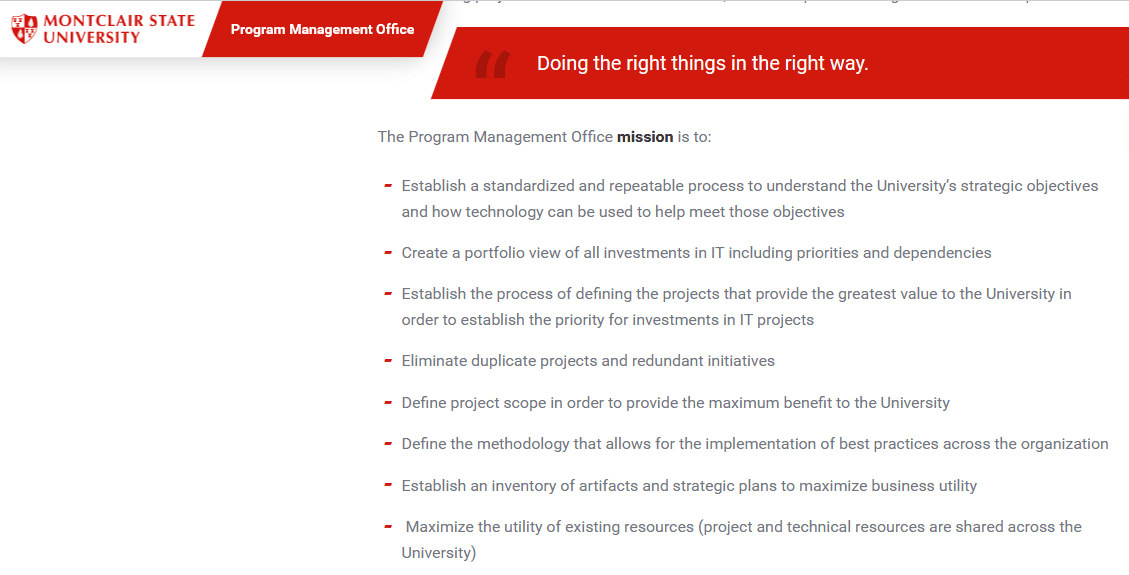
- Montclair University’s PMO: Their mission often highlights supporting academic and administrative goals, driving efficient project delivery, and fostering a culture of project management excellence within an educational context. Such a mission typically focuses on enabling faculty and staff through structured project methodologies.
- Government Ministries (e.g., Bahrain’s Ministry of Works): These PMOs frequently emphasize accountability, public service, efficient use of taxpayer money, and the successful delivery of infrastructure or public programs. Their missions are often tied to national development goals and regulatory compliance.
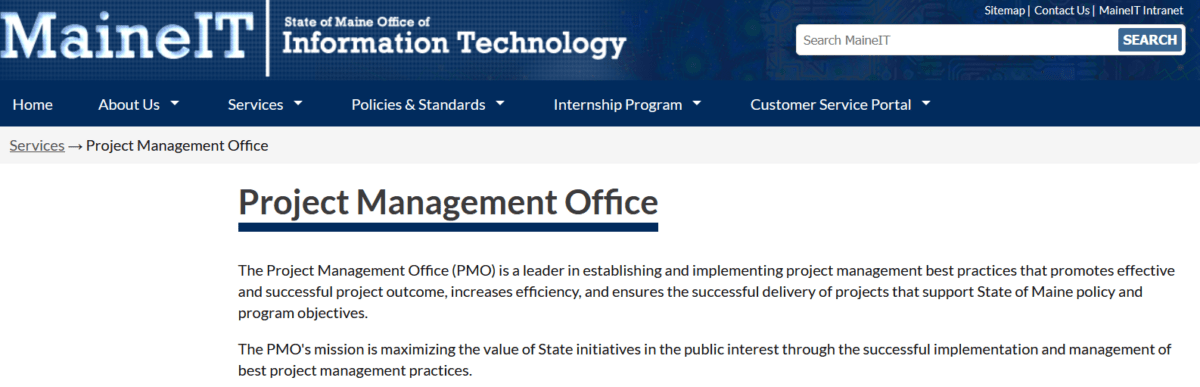
- State of Maine Office of Information Technology (MaineIT PMO): Their mission underscores maximizing the value of state initiatives in the public interest, through the successful implementation of best project management practices. This highlights a dual focus on public value and operational excellence in IT.
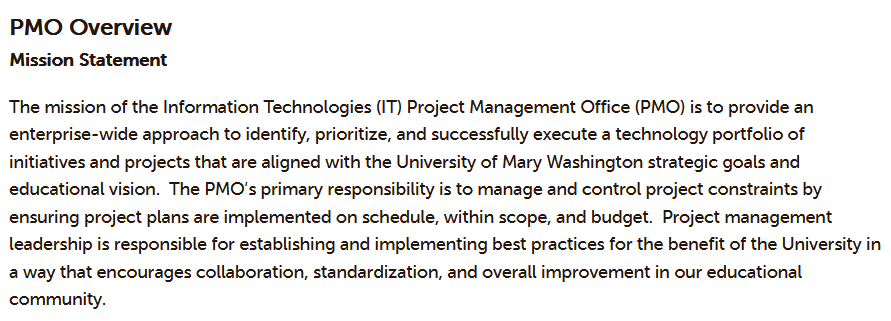
- University of Mary Washington IT Department PMO: Similar to Montclair, their vision statement emphasizes leveraging technology for educational and administrative advancement, often focusing on innovation, reliability, and user satisfaction within an academic IT environment.
These examples illustrate that while the core principles remain consistent, the specific phrasing and emphasis within a PMO mission statement will naturally reflect the unique context, strategic priorities, and organizational culture of the entity it serves. For instance, a private sector technology company’s PMO might emphasize agility, market responsiveness, and competitive advantage, whereas a non-profit’s PMO might focus on impact, resource stewardship, and community benefit.
Sustaining the Mission: Review and Adaptation
A PMO mission statement is not a static artifact to be created once and forgotten. Organizations are dynamic, and their strategies, market conditions, and operational needs evolve. Consequently, the PMO’s mission statement must be periodically reviewed and, if necessary, revised to ensure its continued relevance and effectiveness.
- Regular Review Cycle: It is advisable to schedule a formal review of the PMO mission statement (and its associated vision and values) at least annually, or biennially, alongside broader organizational strategic planning cycles.
- Triggers for Revision: Significant organizational changes (e.g., mergers, acquisitions, major strategic shifts), changes in the PMO’s maturity level or mandate, or consistent feedback indicating a disconnect between the mission and actual operations, should all trigger a review.
- Implications of Neglect: A mission statement that is out of date risks becoming a meaningless platitude, failing to guide the team or communicate value to stakeholders. This can lead to a loss of focus, misallocation of resources, and a diminished perception of the PMO’s strategic importance.
Key Takeaways
The creation of a powerful PMO mission statement is a critical undertaking for any organization committed to effective project delivery and strategic execution. It is a process that demands thought, planning, and collaborative engagement.
- A PMO mission statement is a strategic compass: It guides the PMO’s activities, decisions, and interactions.
- It clarifies purpose and defines value: It articulates why the PMO exists and what difference it makes.
- Collaboration is key: Involving the PMO team and key stakeholders ensures buy-in and relevance.
- It must align with organizational strategy: The PMO’s mission should directly support the broader corporate objectives.
- Regular review is essential: The mission statement should be a living document, updated to reflect evolving organizational needs and strategic direction.
By investing in the development of a clear, concise, and inspiring PMO mission statement, organizations empower their project management function to be a true strategic partner, driving successful outcomes and contributing significantly to long-term organizational prosperity.
Related posts: