The Ultimate Guide to 15 Essential Business Report Templates for Modern Project Management

Effective corporate governance relies fundamentally on continuous oversight and transparent communication. To maintain alignment across complex organizational structures, contemporary businesses must monitor operational milestones while providing stakeholders with accurate, digestible insights. Utilizing standardized business report templates has long served as a primary method for organizations to bridge the gap between daily task execution and executive-level strategic vision.
In an increasingly data-driven global economy, the demand for structured reporting has escalated. Industry analyses indicate that organizations utilizing standardized reporting frameworks reduce operational friction and improve cross-departmental alignment by up to thirty percent. By deploying targeted templates for project dashboards, workload analyses, balanced scorecards, and cost-benefit evaluations, enterprises can systematically map their strategies, evaluate financial viability, and mitigate risks before they escalate into critical failures.
The Evolution of Corporate Reporting and Project Monitoring
Historically, corporate reporting was confined to manual ledger entries and periodic retrospective reviews. As enterprises expanded globally through the late twentieth century, the necessity for real-time visibility into project lifecycles became paramount. Project managers and C-suite executives could no longer wait for end-of-quarter financial statements to understand operational health.
The introduction of spreadsheet software in the 1980s revolutionized how businesses processed data, laying the groundwork for customizable templates. These tools democratized data analysis, allowing small and medium-sized enterprises (SMEs) to adopt sophisticated metrics previously reserved for Fortune 500 corporations. However, while static templates solved the problem of structural organization, they introduced a new bottleneck: the time-consuming burden of manual data entry, which often leaves reports outdated by the time they reach stakeholders.
Categorizing the 15 Essential Business Report Templates
To address diverse operational needs, modern organizations rely on a comprehensive suite of reporting instruments. Below is an exhaustive breakdown of fifteen core templates utilized across industries for strategic planning, financial oversight, and performance optimization.
1. Project Dashboard Business Report Template
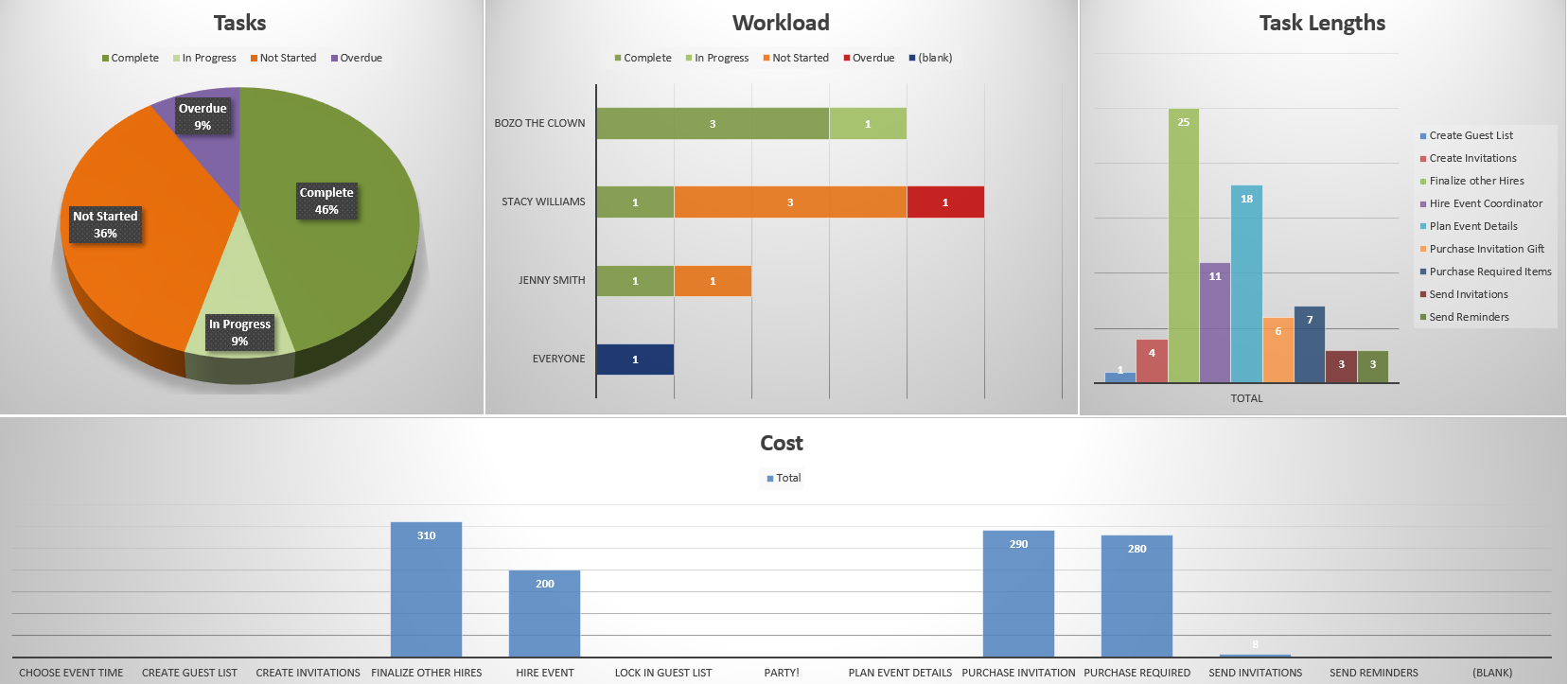
A project dashboard provides a macro-level overview of an initiative, capturing key performance indicators (KPIs) in a single visual interface. Managers utilize this tool to instantly assess schedule adherence, budgetary alignment, and core metrics. While Excel-based dashboard templates effectively monitor task durations and workloads using integrated graphs, they require manual updates, creating a time lag between real-world progress and reported data.
2. KPI Dashboard Template
Key performance indicators isolate critical business metrics from background noise. A dedicated KPI dashboard consolidates metrics across departments into a unified display, allowing executives to spot emerging trends and communicate performance health to investors efficiently. These templates use summary tables and visual indicators to compare current achievements against established benchmarks.

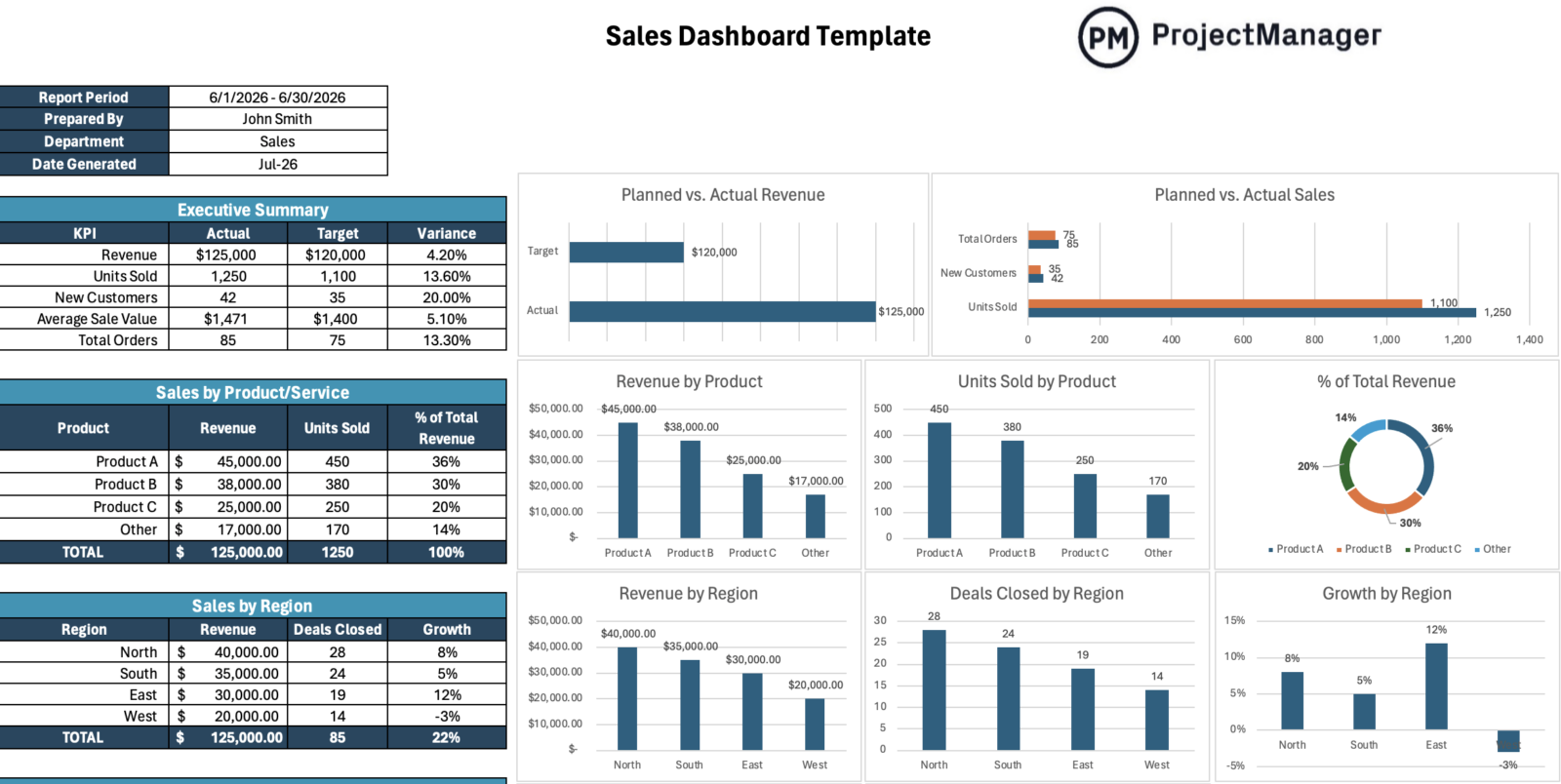
3. Sales Dashboard Template
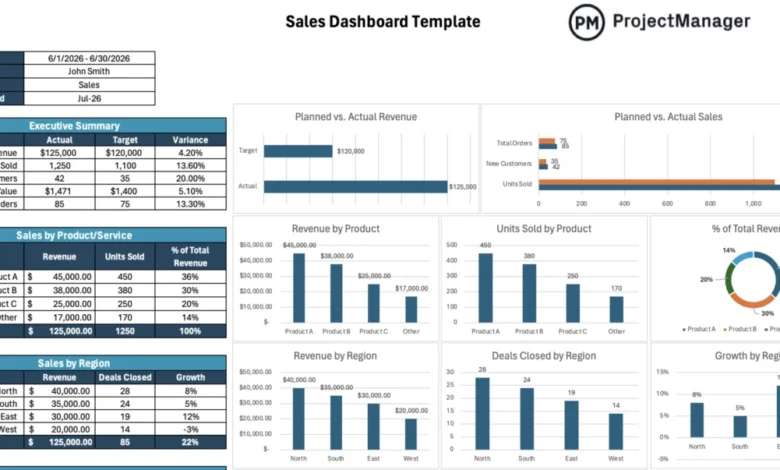
Fragmented sales data across different regions and product lines frequently leads to reactive decision-making. A sales dashboard aggregates revenue figures, conversion rates, pipeline values, and quota attainments. Sales directors deploy these templates during weekly and monthly reviews to pinpoint underperforming sectors and align teams with overarching revenue targets.
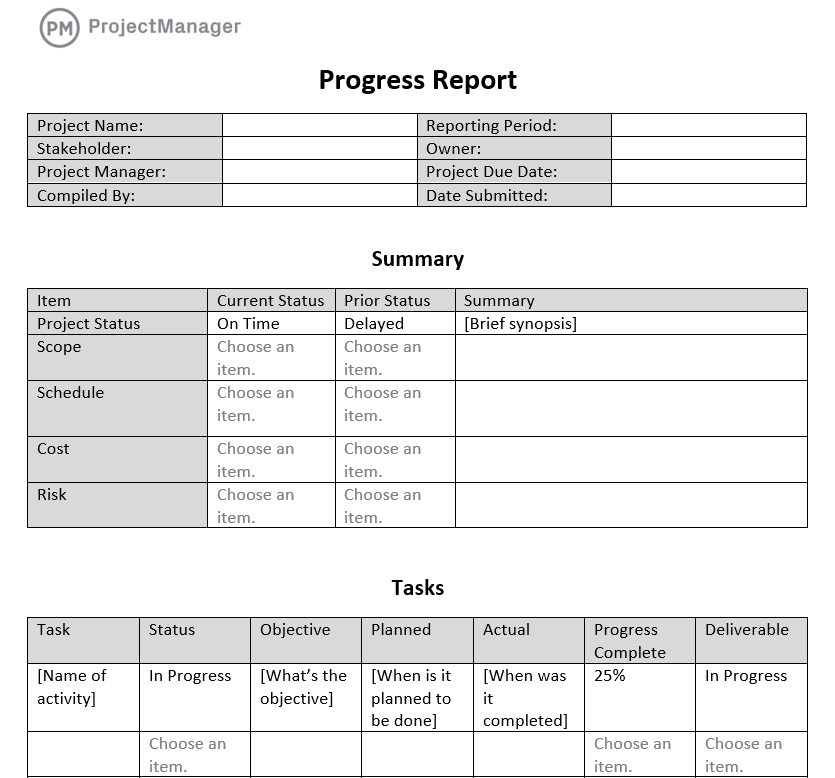
4. Progress Report Template
The progress report captures a chronological snapshot of a project over a defined timeframe, emphasizing completed activities, upcoming milestones, and immediate risks. Unlike high-level dashboards, progress reports dive into operational details. Distributed to stakeholders regularly, they facilitate early-stage discussions regarding minor roadblocks, preventing them from developing into systemic project failures.
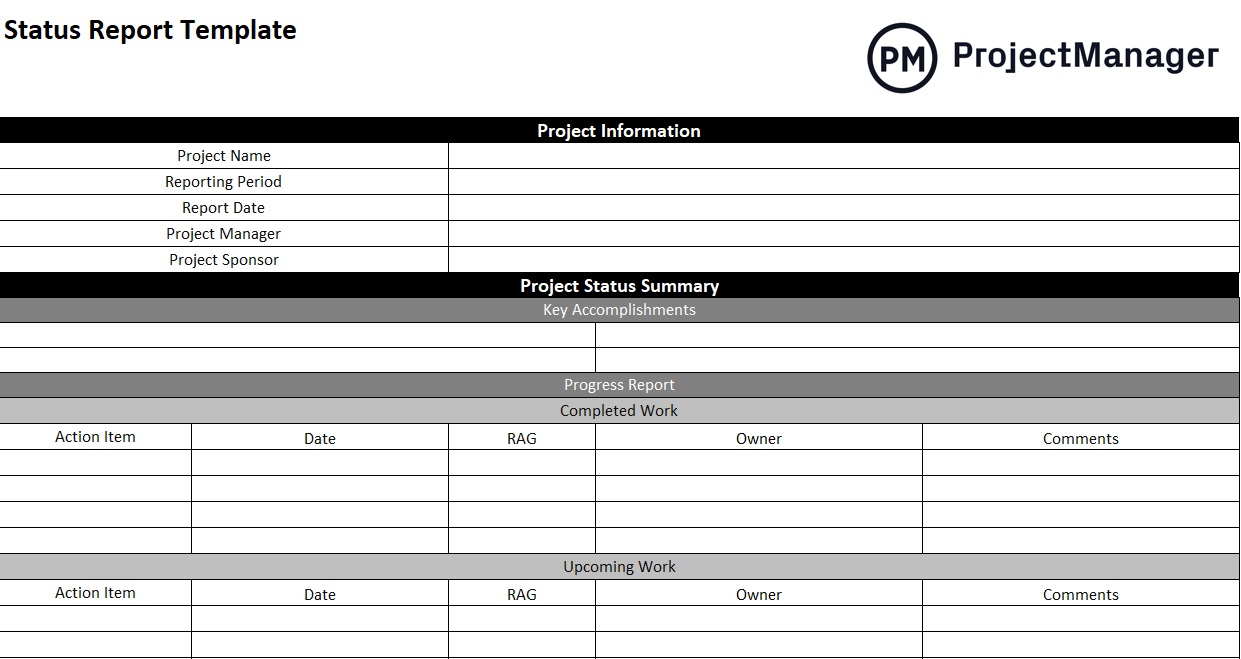
5. Project Status Report Template
While often confused with progress reports, a status report offers a broad, holistic evaluation of an entire project relative to its baseline plan. Excel-based status report templates typically integrate core project metadata, high-level health indicators, risk management overviews, and strategic recommendations for upcoming operational phases.
6. Marketing Report Template
Modern marketing campaigns operate across numerous digital and traditional channels simultaneously. A marketing report template centralizes performance metrics—including audience reach, engagement levels, conversion costs, and budget utilization—providing marketing directors with the empirical foundation needed to reallocate funds for optimal return on investment (ROI).
7. After Action Report Template
Post-mortem analysis is essential for organizational learning. An after-action report (AAR) structures the evaluation of completed projects or crisis responses, documenting initial objectives, actual outcomes, operational successes, and critical lessons learned. Documenting these findings immediately following project closure ensures institutional knowledge is preserved for future initiatives.
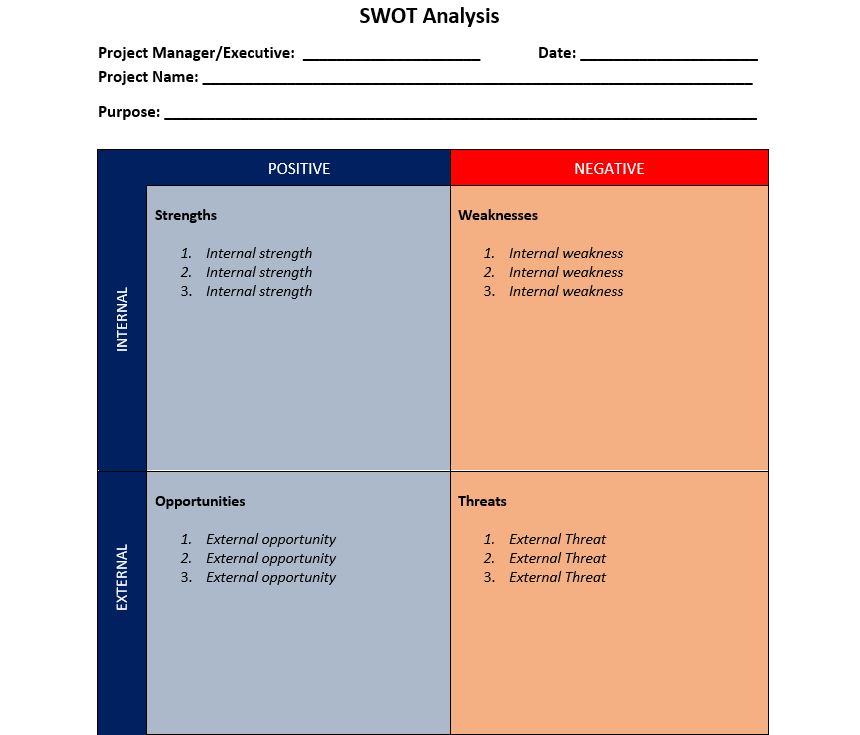
8. SWOT Analysis Business Report Template
Strategic planning begins with evaluating internal capabilities and external market conditions. A SWOT analysis template categorizes data into four distinct quadrants: Strengths, Weaknesses, Opportunities, and Threats. By mapping internal factors against external market realities, executive leadership gains a rigorous framework for long-term strategic positioning.
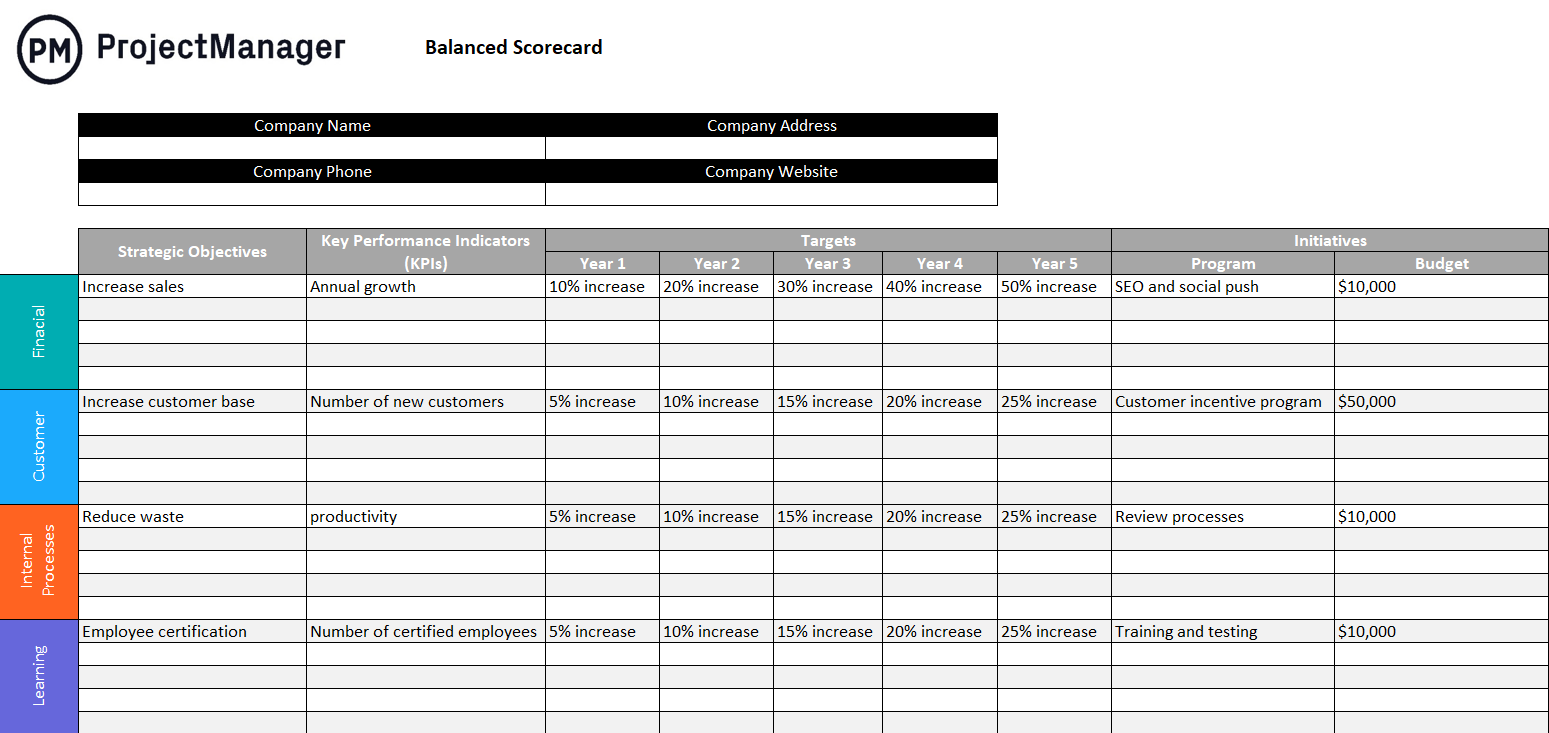
9. Balanced Scorecard Business Report Template
Traditional financial metrics alone fail to capture the holistic health of a modern enterprise. The balanced scorecard framework integrates financial data with strategic non-financial measures, evaluating performance across four distinct perspectives: financial, customer satisfaction, internal business processes, and organizational learning and growth.
10. Gap Analysis Business Report Template
To transition an organization from its current operational baseline to a desired future state, a gap analysis is required. This template isolates specific focus areas—such as workflow inefficiencies or talent shortages—calculates the variance percentage, establishes realistic timelines, and assigns actionable steps to designated personnel to close the identified operational gap.

11. Cost-Benefit Analysis Template
Before committing capital to new ventures, financial due diligence is mandatory. A cost-benefit analysis template quantifies direct, indirect, intangible, and opportunity costs against projected financial benefits. This rigorous calculation of return on investment (ROI) prevents organizations from pursuing financially unviable initiatives.
12. Root Cause Analysis Template
When operational processes fail, addressing surface-level symptoms guarantees recurrence. A root cause analysis template utilizes structured methodologies, such as the fishbone diagram, to uncover the underlying systemic failures responsible for process defects. This process is integral to total quality management and product development.

13. Workload Analysis Business Report Template
Human capital is typically an organization’s most valuable and expensive resource. Workload analysis templates track employee hours, hourly rates, and task allocations across project teams. By monitoring utilization rates, managers prevent employee burnout, eliminate underutilization, and optimize workforce productivity without sacrificing morale.
14. Operating Budget Business Report Template
Operating budgets are vital for financial forecasting across all commercial sectors. This template allows businesses to project revenues and operational expenses across quarterly and annual horizons. Comparing actual financial outcomes against projected operating budgets enables finance departments to adjust spending behaviors in response to unexpected market volatility.
15. Inventory Business Report Template
For manufacturing and retail enterprises, supply chain stability depends on precise stock management. An inventory report template records stock levels, turnover rates, unit pricing, and lead times for replenishment. Diligent inventory tracking prevents production bottlenecks and protects the commercial bottom line from unexpected supply shocks.
The Technological Shift: From Static Templates to Real-Time Software
While standardized templates offer a cost-effective entry point for structured reporting, industry experts note significant operational limitations inherent in static documents. Excel and Word templates rely entirely on manual data entry, making them vulnerable to human error and inherently retrospective. By the time a manual report is compiled, formatted, and distributed, the underlying data may already be obsolete.
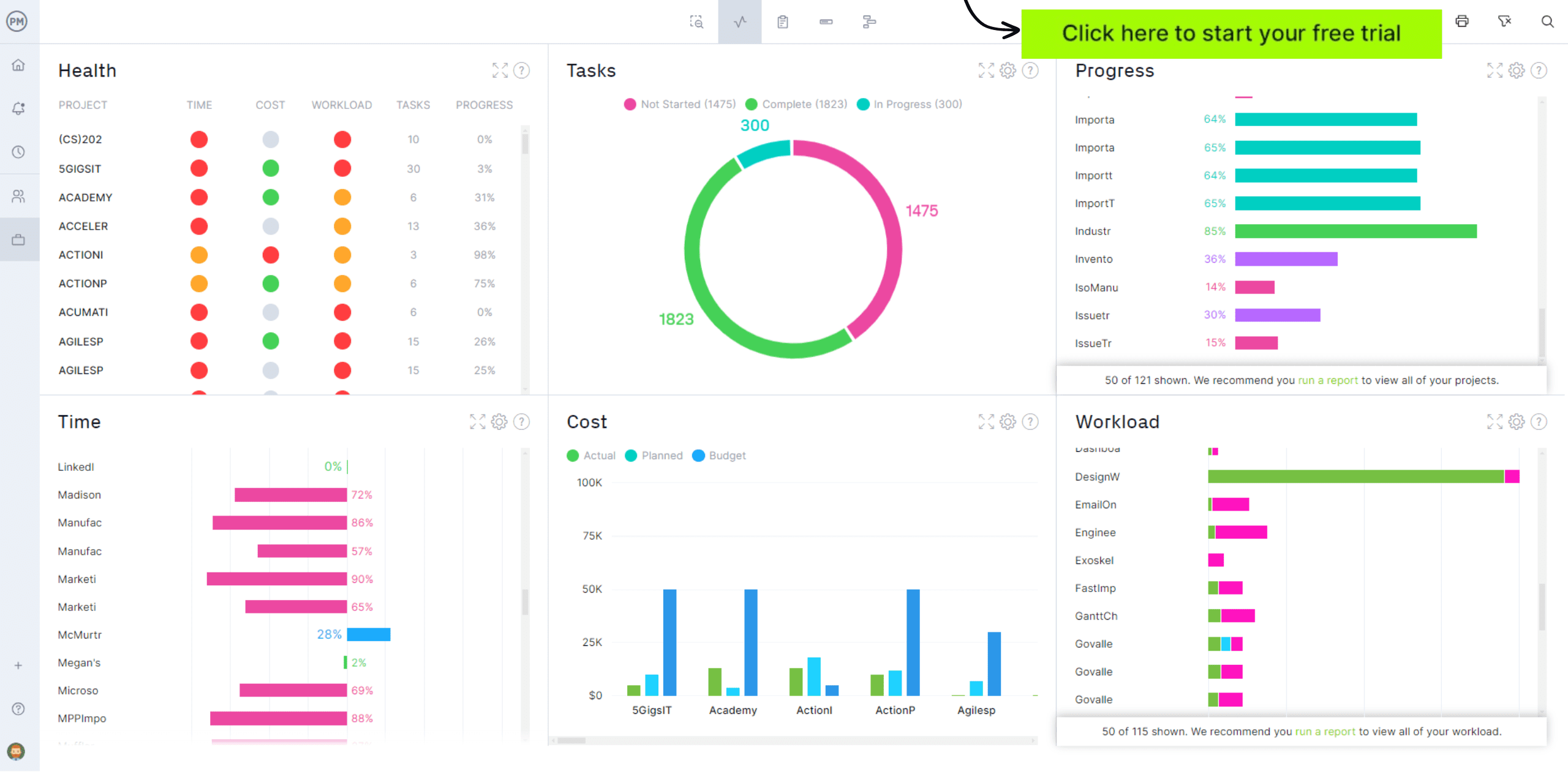
To overcome these inefficiencies, many enterprises are transitioning to integrated project and portfolio management (PPM) software platforms, such as ProjectManager. Unlike static spreadsheets, advanced software solutions automatically aggregate real-time data from across the organization, converting complex operational metrics into dynamic, customizable reports with minimal user intervention.
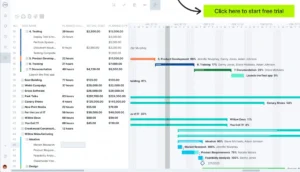
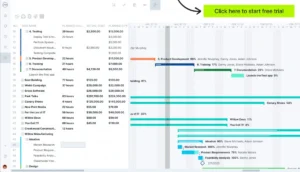
Furthermore, modern PPM platforms utilize centralized project portfolio roadmaps—visualized via interactive Gantt charts—to streamline resource allocation and cross-departmental coordination. By replacing fragmented templates with unified, cloud-based ecosystems, organizations can empower stakeholders at every level to make informed, data-driven decisions instantly, ensuring long-term competitiveness in an increasingly complex commercial landscape.