Inside the ChartMogul PLG Growth Lab: A Global Exploration of Modern Software-as-a-Service Monetization and Product-Led Strategies

The continuous evolution of the software-as-a-service (SaaS) sector has forced revenue leaders, product developers, and enterprise founders to constantly re-evaluate how products are discovered, evaluated, and monetized. In an industry historically dominated by top-down enterprise sales motions, the product-led growth (PLG) model has matured from an alternative acquisition strategy into a core operational philosophy for modern technology companies. However, bridging the gap between theoretical self-serve adoption and sustainable enterprise-level expansion remains one of the most complex challenges facing executive teams today.
To address these operational hurdles directly, ChartMogul initiated a multi-continent series titled the PLG Growth Lab. Spearheaded by Sara Archer, Chief Revenue Officer at ChartMogul, the roadshow spanned seven distinct international hubs over several months: San Francisco, Šibenik, Paris, London, Warsaw, Utrecht, and New York. Designed as an antidote to high-level keynote presentations delivered by speakers disconnected from day-to-day operations, the initiative sought to convene practitioners currently wrestling with the granular mechanics of usage-based pricing, artificial intelligence integration, and cross-functional go-to-market alignment.

Background Context and Operational Genesis
The conception of the PLG Growth Lab emerged from a recognized industry fatigue regarding outlier unicorn narratives that failed to reflect the macroeconomic realities faced by mid-market and scaling software enterprises. Throughout late 2023 and early 2024, SaaS operators faced tightening capital markets, increased scrutiny on customer acquisition costs (CAC), and the rapid commercialization of generative artificial intelligence technologies. These pressures created a dual mandate for revenue leaders: optimize internal operational efficiency while simultaneously adapting product strategies to incorporate AI capabilities without eroding customer trust.
Rather than hosting traditional, heavily sponsored trade conferences, ChartMogul structured the roadshow around closed-door workshops, peer-to-peer roundtables, and localized panel discussions. Each stop was curated in partnership with regional tech communities and local hosting partners to ensure the discussions directly addressed the regulatory, cultural, and market-specific hurdles of each geographic ecosystem.
Chronological Overview of the Seven-Stop International Tour
The global series commenced in San Francisco during the prominent Stripe Sessions conference, setting a high-stakes tone focused on enterprise expansion. Collaborating with Brenna Loury, Chief Revenue Officer of productivity software company Doist, the opening boardroom workshop tackled the operational friction of transitioning individual self-serve users into synchronized, multi-seat corporate contracts. Discussions centered on identifying behavioral inflection points that signal when a self-serve account is ready for human sales intervention, as well as equipping internal users with the internal advocacy materials required to secure budget sign-off from enterprise procurement departments.

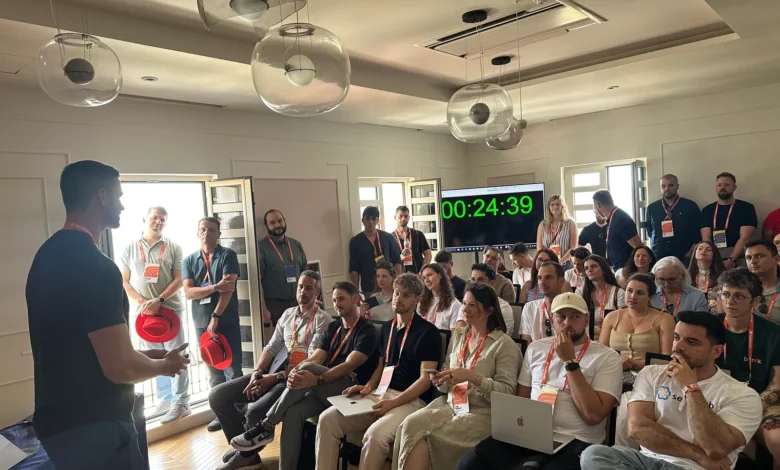
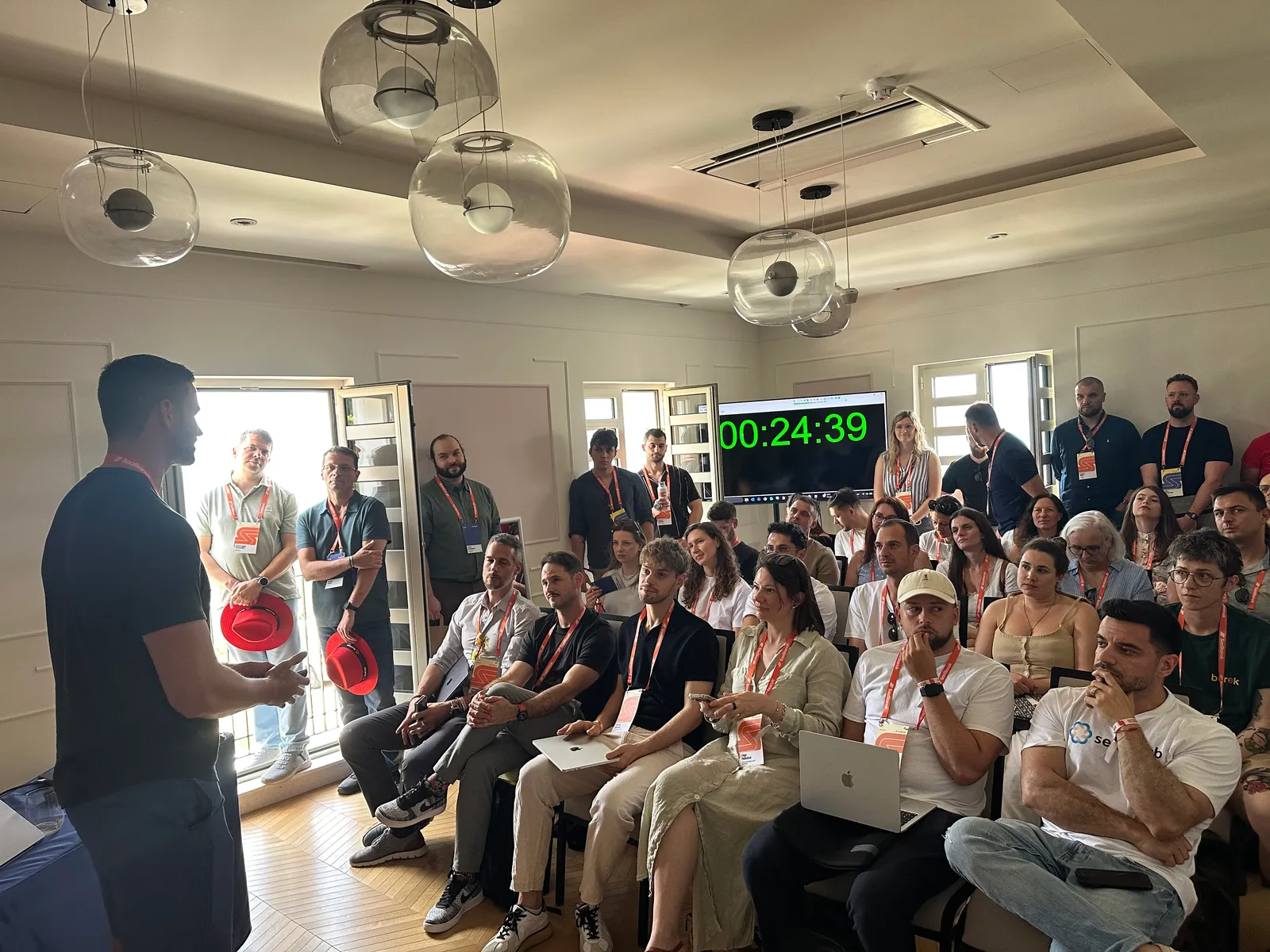
Moving from the United States to the Adriatic coast, the second stop landed in Šibenik, Croatia, in partnership with regional SaaS community SaaStanak. Operating against the backdrop of a regional heat wave, the sessions represented the tour’s most technically rigorous dive into the data infrastructure underpinning automated upsells. Industry operators analyzed how customer data platforms, product telemetry, and billing engines must integrate to trigger real-time commercial opportunities. Furthermore, quantitative analysts debated the limitations of raw behavioral data, emphasizing that failing to upgrade an account frequently masks underlying operational bottlenecks—such as internal budget freezes or missing localized features—that cannot be resolved purely through automated product nudges.
The third leg brought the tour to Paris, hosted alongside Guideflow at a venue overlooking the Eiffel Tower. Here, the discourse shifted toward the friction points of experimental go-to-market pivots. Benjamin Cahen, Chief Executive Officer of Wisepops, offered a candid look into his organization’s operational gamble: temporarily disabling self-serve freemium funnels and free trials to force all prospective traffic through a sales-led qualification process. The experiment provided critical case study material for attendees navigating the cultural and revenue-smoothing implications of altering core customer acquisition pathways. Simultaneously, Lisa Heiss contributed empirical insights regarding user activation within AI-native applications, arguing that while automation accelerates time-to-value, it simultaneously heightens the necessity for transparent algorithmic explainability to secure long-term user retention.
In London, the focus pivoted intensely toward buyer autonomy and modern onboarding paradigms. Convening a cross-functional cohort of founders and revenue executives from firms including Intruder, Physitrack, and CharlieHR, the panel interrogated the inherent rigidity of standardized onboarding flows. Modern software buyers exhibit polarized evaluation behaviors: a significant segment prefers autonomous, zero-touch exploration, while high-intent prospects frequently demand immediate human access to resolve complex compliance or integration queries. The session evaluated the potential for conversational AI layers at the point of signup to dynamically route users based on self-reported intent, aligning the vendor’s engagement velocity directly with the buyer’s preferred purchasing motion.

Technical Analysis of Artificial Intelligence Integration
The fifth stop in Warsaw, Poland—hosted in collaboration with Survicate inside a historic cinema venue—confronted the most pressing technological paradigm shift of the current software cycle: the practical measurement and monetization of artificial intelligence features. Panelists including Piotr Cygan, Krzysztof Szyszkiewicz, Daniel Korczynski, and Wojtek Strzałkowski examined the analytical limits of tracking feature adoption through standard event telemetry. While telemetry confirms execution, it fails to evaluate qualitative utility.
The panel concluded that assessing AI efficacy requires qualitative auditing, including direct analysis of generated outputs and structured customer interviews. This operational reality underscored a broader industry consensus developed throughout the tour: as commoditized foundational models lower the technical barrier to building software features, long-term competitive defensibility increasingly relies on proprietary domain expertise, architectural efficiency, and rigorous product taste rather than raw algorithmic access.
Continuing northward, the sixth installment in Utrecht faced severe meteorological conditions inside the offices of Trengo. Wolter Rebergen and Claudiu Murariu joined the panel to examine attribution modeling and the marketing challenges inherent in pioneering entirely new product categories. When target customers lack existing mental models or industry terminology for a software category, conventional inbound attribution models frequently break down. Murariu argued that while modern data tooling makes connecting marketing touchpoints to revenue more accessible than ever, leadership teams suffer from diminishing marginal returns when endlessly debating fractional attribution models (such as first-touch versus last-touch attribution), resources that are statistically better allocated toward direct market education and creative execution.
The global itinerary concluded in New York City during Pavilion’s Go-To-Market Summit. An intimate dinner gathering of 18 founders and revenue executives allowed for a synthesizing review of macroeconomic metrics governing current software performance. Archer’s keynote presentation isolated three primary financial indicators dictating survivability and valuation in the current market climate: Monthly Recurring Revenue (MRR) growth rate, Net Retention Rate (NRR), and Customer Acquisition Cost (CAC) payback periods. The analysis emphasized that departmental silos frequently lead individual teams to hit localized performance metrics while overall enterprise growth stagnates, reinforcing the necessity of holistic visibility across acquisition, retention, and expansion vectors.
Broader Economic Implications and Industry Impact
The ChartMogul PLG Growth Lab illustrates a broader structural maturation within the software industry. As zero-interest-rate policy era metrics centered purely on top-line growth have been replaced by rigorous demands for capital efficiency, growth leaders are abandoning dogmatic adherence to pure-play self-serve models or rigid enterprise sales structures. Instead, successful modern organizations are deploying hybrid go-to-market motions tailored to nuanced buyer preferences.
Furthermore, the integration of artificial intelligence into software stacks has forced a reassessment of product-led metrics. Activation can no longer be measured merely by feature utilization; it requires verifying that automated workflows generate measurable business value for end-users. By documenting and sharing these operational experiments across international tech hubs, initiatives like the PLG Growth Lab provide foundational empirical data for companies navigating complex macroeconomic headwinds, proving that sustainable software growth relies as heavily on cross-functional human alignment and rigorous operational telemetry as it does on technical innovation.