New Relic Change Tracking Brings Headless Intelligent Observability Directly into GitHub Copilot

The Growing Chasm Between Velocity and Stability
The adoption of AI coding assistants has fundamentally transformed the software development lifecycle. Tools like GitHub Copilot allow developers to write code at unprecedented speeds, effectively lowering the barrier to entry for complex feature development and accelerating release cycles. However, this shift has introduced a paradoxical challenge for engineering teams. According to New Relic’s 2026 State of AI Coding report, there is a stark disconnect between the perceived quality of AI-generated code and its actual impact on system health.
While 94% of engineering leaders report that AI-generated code appears to be of higher quality during the initial review process, 78% of these same organizations have observed a surge in production incidents following deployment. This data suggests that traditional review methods—which focus on syntax, logic, and style—are failing to account for how code behaves within a complex, distributed, and interconnected production ecosystem. When developers lack visibility into downstream dependencies or the real-time performance impact of their changes, they are forced to spend disproportionate amounts of time on manual triage and troubleshooting, effectively negating the productivity gains initially promised by AI.
Integrating Telemetry into the Workflow
The new suite of integrations introduced by New Relic is designed to address this fragmentation. By moving observability data directly into the GitHub environment, New Relic allows developers to maintain their "flow state" without needing to pivot between their IDE, GitHub, and a secondary monitoring dashboard.
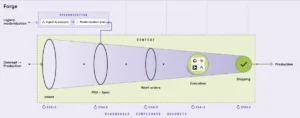
The flagship offering, New Relic Change Tracking for GitHub Copilot, creates an automated feedback loop. It correlates AI-generated deployments with production performance metrics, effectively acting as an intelligent gatekeeper. The system performs a series of automated checks: running pre-merge comparisons against performance baselines, deploying canary gates to test small segments of production traffic, and monitoring for regressions immediately following a release.
Should a performance anomaly occur, the system does not simply flag the issue; it proactively routes the regression to GitHub Issues and Copilot, providing the AI agent with the context required to suggest a fix. This "closed-loop" approach reduces the mean time to resolution (MTTR) by eliminating the manual discovery phase of incident response.
Expanding the Ecosystem: Autopilot and Preflight
Beyond deployment tracking, New Relic has expanded its reach into the coding process itself and the incident response cycle.
The New Relic Autopilot integration for the GitHub Model Context Protocol (MCP) Server is a critical advancement for Site Reliability Engineers (SREs). By leveraging the open MCP standard, Autopilot can ingest the codebase context alongside real-time incident telemetry. When an alert triggers, Autopilot doesn’t just alert the developer that a service is failing; it parses the relevant code files, correlates them with the error logs, and provides the developer with a root-cause analysis and a recommended fix. This contextual intelligence is intended to minimize the cognitive load on engineers during high-pressure incidents.
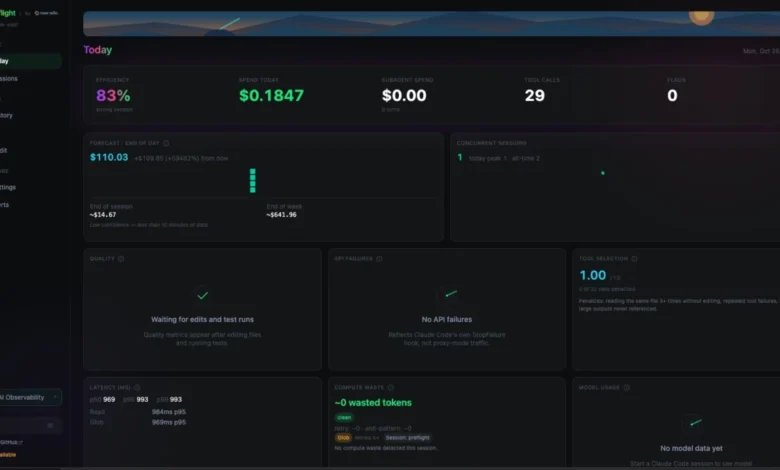
Simultaneously, the introduction of New Relic Preflight provides a granular look at how developers and agents interact. As an open-source capability, Preflight offers real-time visibility into the "efficiency" of AI usage. It tracks metrics such as token consumption, latency, and model accuracy directly within the IDE and CLI. This allows organizations to move beyond the excitement of AI adoption and into a phase of cost and performance optimization, ensuring that the AI tools being utilized are actually contributing to, rather than complicating, the development process.

Industry Context and Strategic Implications
This announcement arrives against the backdrop of the 2026 GitHub Universe conference in San Francisco, an event that serves as the primary stage for major advancements in the developer tool ecosystem. The shift toward embedding observability into the developer workflow is not merely a feature update; it reflects a broader industry move toward "Shift-Left Observability."
For years, observability was the domain of DevOps teams who maintained their own separate stacks. As development cycles have compressed, this separation has become a bottleneck. By bringing New Relic’s telemetry into GitHub, the company is positioning itself as an essential partner in the "Developer Experience" (DevEx) movement.
Analysts note that as organizations scale their use of LLMs for code generation, the risk of "black box" deployments grows. If a developer accepts an AI suggestion that creates a subtle memory leak or an inefficient API call, the impact may not be felt until the code reaches production. The New Relic approach provides a safety net, enabling teams to maintain high-velocity deployment schedules without sacrificing the reliability of their underlying infrastructure.
Perspectives from Leadership
Camden Swita, Head of AI at New Relic, emphasized that the goal is to break down the barriers between human developers, AI agents, and production data. "As AI accelerates development, engineers and agents need a shared understanding of how their software behaves in production," Swita stated. He noted that the traditional model of locking data inside isolated SaaS dashboards is no longer sufficient in an era where software is built by both humans and machines.
The vision articulated by New Relic is one where observability is not an afterthought or a diagnostic tool for post-mortems, but a proactive influence on every development decision. By providing context during the "inner loop" of coding, the company hopes to transform observability from a reactive utility into a generative one—informing the AI agents before the code is even committed to the repository.
Chronology and Availability
The release follows a period of rapid iteration within the observability sector, where competition has intensified as companies attempt to capture the AI-driven developer market.
- Pre-2026: New Relic and other observability providers focused heavily on dashboard-centric monitoring and automated alerts.
- Early 2026: The release of the "State of AI Coding" report identified the post-deployment incident surge as a primary pain point for engineering managers.
- October 2026: Official unveiling of the GitHub integrations at GitHub Universe in San Francisco.
- Current Status: New Relic Change Tracking for GitHub Copilot is currently available in public preview. The Autopilot integration for GitHub MCP Server and the Preflight capability for GitHub Copilot are now generally available to all users.
The Future of AI-Assisted Operations
As the industry moves forward, the success of these integrations will depend on the ability of engineering teams to adopt them as part of their standard operating procedures. The transition from "coding fast" to "coding reliably" is the defining challenge of the current development era.
By integrating telemetry into the workflow, New Relic is betting that the future of software development will be defined by visibility. As AI agents continue to handle larger portions of the software delivery lifecycle, the need for these agents to have an "operational conscience"—a deep understanding of the performance impacts of their own suggestions—will become non-negotiable.
Ultimately, this suite of tools represents a significant step toward a more mature implementation of AI in enterprise environments. By moving beyond the novelty of AI code generation and into the rigor of AI-monitored production, organizations are beginning to build a framework where faster development does not necessarily mean higher risk, but rather a more transparent and resilient path to innovation.