Keith Ferrazzi: Why Counting AI Tool Users Is a Waste of Time and How to Build a High-Performance Teamship Model for 2027

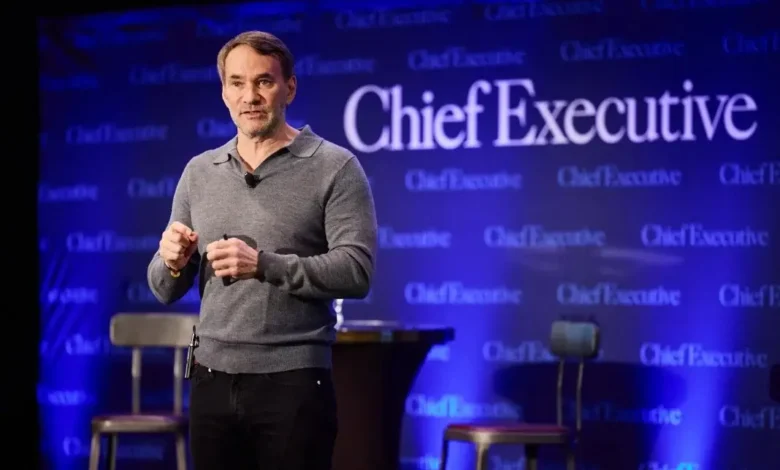
The modern corporate landscape is currently gripped by a singular, pervasive anxiety: the disconnect between massive capital expenditure on generative AI and the underwhelming realization of tangible business returns. Keith Ferrazzi, best-selling author of Never Eat Alone and his recent work, Never Lead Alone: 10 Shifts from Leadership to Teamship, posits that the struggle for AI integration stems from a fundamental misunderstanding of organizational metrics and structural design. As the keynote speaker for the upcoming Leadership Conference in San Antonio, scheduled for November 4–6, Ferrazzi is preparing to address an audience of over 500 CEOs who are grappling with the limitations of traditional, siloed management in an era of rapid technological disruption.
The Myth of Adoption Metrics
For the past twenty-four months, executive leadership teams have poured billions of dollars into AI infrastructure, largely tracking success through "token usage" or the number of employees granted access to LLM tools. Ferrazzi argues that this is a vanity metric that obscures the actual objective: business transformation.
"Counting how many people are using a tool is not a strategy; it is merely a way to make AI service providers happy by inflating usage volume," Ferrazzi notes. In his view, the preoccupation with adoption rates has blinded leadership to the necessity of structural workflow redesign. The failure to see ROI is not a failure of the technology itself, but a failure of the organizational architecture intended to support it.
The Three-Pillar Framework for AI ROI
To move beyond the current impasse, Ferrazzi advocates for a categorical separation of AI initiatives into three distinct buckets, each requiring a different management approach:
- Productivity Gains: This involves individual-level enhancements. Rather than mandating tool usage, Ferrazzi proposes a "belt system" modeled after martial arts. Employees are encouraged to document their results—not just their usage—through five-minute video case studies. Those who demonstrate measurable results become "brown belts," and those who can teach others to optimize their workflows become "black belts."
- Zero-Based Workflow Redesign: This is the most critical area for immediate ROI. It requires taking an existing, entrenched process—such as a supply chain or a go-to-market strategy—and tearing it down to its foundation to rebuild it using AI as the primary engine.
- Product Re-engineering: This represents the long-term integration of AI into the core offering of the business, a process that predates the recent generative AI boom but now requires accelerated execution.
The Shift from Leadership to Teamship
The primary impediment to executing this strategy is the traditional corporate org chart. Ferrazzi’s central thesis is that large organizations are too bound by functional silos that prevent the cross-departmental collaboration necessary for true transformation.
"The team has nothing to do with your org chart," Ferrazzi asserts. "Companies must organize around transformation, not functions." This approach, which he calls "Teamship," requires the creation of cross-functional task forces that bypass departmental hierarchies. These teams operate under a new social contract that demands radical candor, an absence of ego, and a commitment to bold, non-incremental goals.
In a professional setting, this shift is often met with resistance. Middle management, trained to protect their domain-specific budgets and authority, often view these cross-functional teams as threats to their stability. However, data from high-growth startups suggests that those who adopt asynchronous collaboration—where the bulk of the work and decision-making occurs before a meeting—achieve cycle times up to ten times faster than their traditional counterparts.
Chronology of the AI Integration Crisis
- 2022–2023 (The Era of Experimentation): Corporate focus shifts to "playing" with generative AI. Boards demand participation, leading to widespread, uncoordinated software licensing.
- 2024 (The Reality Check): CEOs face increasing pressure from boards to report ROI. The "pilot project" phase is declared a failure, as most experiments fail to scale beyond localized, low-impact tasks.
- 2025–2026 (The Pivot to Workflow): Leading organizations begin moving away from broad, company-wide tool adoption toward specialized, high-impact workflow re-engineering.
- 2027 (The Projected Landscape): Organizations that successfully integrated "AI-native" talent and shifted to teamship-based structures are projected to dominate their markets, while those still struggling with internal silos face obsolescence.
The "Swashbuckling" Intern: Lessons from AI-Native Talent
One of the most surprising findings in Ferrazzi’s recent advisory work is the role of AI-native interns. While many large companies are paying significant retainers to legacy consulting firms for digital transformation, these firms are often struggling to shed their own bureaucratic layers. In contrast, CEOs are reporting that the most effective, disruptive ideas are coming from "AI-native" young talent—often Y Combinator-trained or early-career engineers who view business processes not as established facts, but as software problems to be solved.
These individuals are being deployed into "digital services groups" that swarm business units, applying AI to specific, high-friction areas like customer support or lead generation. By focusing on metrics like Net Promoter Score (NPS) rather than simple cost reduction, these teams are achieving results that traditional systems integrators cannot replicate.
Implications for Mid-Market Firms
For mid-market companies that lack the vast resources of Fortune 500 giants, the path forward is actually clearer. Because they have fewer layers of management, they are uniquely positioned to move quickly. Ferrazzi advises these leaders to become the primary drivers of the transformation.
By running monthly agile sprints—where the CEO personally oversees the re-engineering of a specific, critical workflow—they can force the pace of change. The goal for these sessions should not be 10 or 20 percent efficiency gains, but rather "audacious goals," such as 3x or 5x improvements in revenue or productivity. If the current leadership team cannot adapt to this, or if employees refuse to engage with the new, results-oriented culture after a year, the implication is that the company must be willing to make difficult personnel changes.
The Road Ahead: The San Antonio Leadership Conference
The themes discussed by Ferrazzi will form the foundation of the upcoming Leadership Conference in San Antonio. With sessions featuring insights from former Senator Phil Gramm on the economic climate and Bob Nardelli, the former head of Home Depot and Chrysler, the conference aims to move beyond theoretical management discourse.
The focus is squarely on "disciplined execution." In a world where the velocity of technological change is outpacing the adaptability of the average firm, the conference seeks to provide a roadmap for CEOs to dismantle the "bullshit" of conflict avoidance and siloed operations. For the modern executive, the lesson is clear: in 2027, the competitive advantage will belong to those who treat AI not as a software upgrade, but as a catalyst for a total organizational restructuring. The era of passive adoption is over; the era of radical, team-centric transformation has begun.