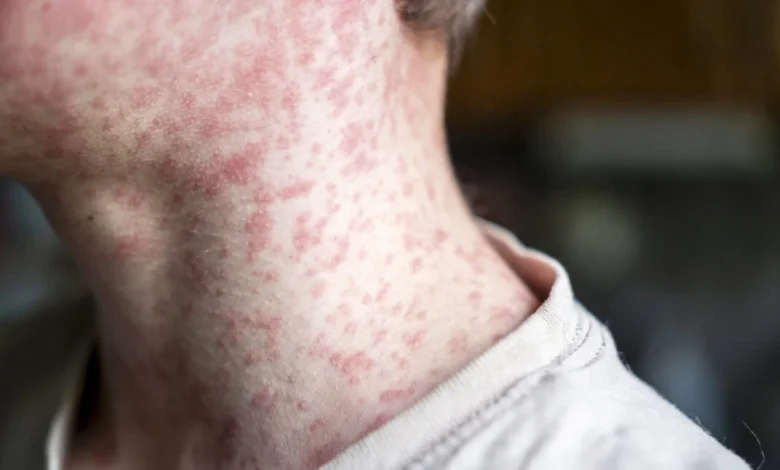
The Pennsylvania Department of Health confirmed on Tuesday that a fourth individual has succumbed to complications from measles, marking a grim milestone in an outbreak that has now persisted for several months across the Commonwealth. The latest victim was an 18-year-old resident of Mifflin County who was unvaccinated against the virus. This tragic development comes on the heels of another recent fatality: the death of an unvaccinated 40-year-old woman in Jefferson County, which was officially confirmed by state health officials following a thorough review of the coroner’s report.
These two deaths, coupled with the previously reported fatalities of two infants in Lancaster County—a newborn boy and a six-week-old girl—underscore the severity of a viral resurgence that public health experts warn is the worst Pennsylvania has experienced in more than 30 years. As the state grapples with 693 confirmed cases spanning 38 counties, the focus of the medical community has shifted toward the physiological toll of the disease and the urgent necessity of vaccination coverage to prevent further loss of life.
Clinical Complications: The Mechanics of the Tragedy
The death of the 18-year-old in Mifflin County has been officially attributed to acute disseminated encephalomyelitis (ADEM), a rare but devastating complication of the measles virus. According to Mifflin County Coroner Andrea L. Alcalde, the determination followed an extensive review of medical records and clinical history. ADEM is characterized by a rapid, autoimmune-driven inflammatory response. In individuals suffering from this condition, the immune system, triggered by the viral infection, inadvertently targets the central nervous system, stripping away the myelin—the protective sheath covering nerve fibers in the brain and spinal cord.
Prior to the widespread implementation of the measles, mumps, and rubella (MMR) vaccine in the mid-20th century, such neurological complications were far more common. While ADEM can occasionally be triggered by other viral infections, its association with measles is well-documented in medical literature. The progression of the disorder can be swift, often leading to severe neurological impairment, coma, or death, as was the case with the Mifflin County resident. Coroner Alcalde noted that no further details regarding the individual’s identity or specific medical history would be released, citing the privacy of the grieving family.
A Chronology of the Outbreak
The current epidemiological crisis in Pennsylvania did not emerge in a vacuum. It is the result of a compounding series of transmission events that have steadily outpaced the containment efforts of local and state health departments. The outbreak, which began earlier this year, has demonstrated high levels of infectivity, characteristic of the measles virus, which remains airborne for up to two hours in a closed space after an infected person has left.
The two infant deaths in Lancaster County served as an early, tragic warning of the outbreak’s reach. Because the MMR vaccine is typically not administered until a child is at least 12 months old, these infants relied entirely on "herd immunity"—the collective protection afforded when the vast majority of the population is vaccinated—to remain safe. The failure of that protective barrier, caused by pockets of low vaccination uptake, left the most vulnerable members of society defenseless against a highly preventable disease.
As the weeks have progressed, the geographical footprint of the outbreak has expanded from urban centers to rural counties, complicating contact tracing and containment strategies. With 133 hospitalizations recorded to date, the strain on local healthcare systems has been significant. Emergency departments and intensive care units have had to manage not only the volume of patients but also the complex isolation protocols required to prevent nosocomial, or hospital-acquired, transmission of the virus.
Statistical Overview and Public Health Data
The state’s data dashboard currently paints a stark picture of the outbreak’s trajectory. With 693 cases reported across 38 counties, health officials are tracking a relentless infection rate. The addition of 99 new cases in the last seven days alone indicates that the outbreak has not yet reached its peak.
Public health analysts point to a direct correlation between the number of reported cases and local vaccination rates. In many of the affected counties, vaccination coverage for the MMR series has dipped below the 95% threshold required to maintain herd immunity. This erosion of coverage, often attributed to vaccine hesitancy and the spread of medical misinformation, has created the perfect environment for the virus to circulate.
The hospitalization rate of nearly 20%—133 out of 693 cases—is particularly concerning to infectious disease specialists. Measles is not merely a "childhood rash" as some historical misconceptions might suggest; it is a systemic infection that suppresses the immune system, leaving patients vulnerable to secondary bacterial infections like pneumonia, as well as the neurological complications seen in the Mifflin County case.
Official Responses and the Call for Vaccination
Pennsylvania Secretary of Health Debra Bogen issued a formal statement on Tuesday, expressing profound condolences to the families of the deceased while emphasizing the urgency of the situation. "My thoughts are with the two families who lost loved ones to this highly contagious virus, as Pennsylvania faces the worst measles outbreak in more than three decades," Bogen stated. "We remain committed to working with our partners across Pennsylvania to stem this outbreak and prevent more deaths."
Secretary Bogen’s statement served as a pointed reminder of the role of science in public health policy. By explicitly highlighting the efficacy of the MMR vaccine—a tool that kept the virus effectively eliminated in the United States for years—she sought to provide the public with clear, actionable information. The health department continues to urge residents to check their immunization records and to consult with primary care physicians or local health clinics to ensure their families are up to date on their shots.
Beyond the state level, medical organizations, including the American Academy of Pediatrics and the Pennsylvania Medical Society, have ramped up their educational efforts. They are working to counteract the influence of anti-vaccine rhetoric, which has been particularly prominent during this outbreak. These organizations emphasize that the measles virus does not distinguish between political beliefs; it exploits gaps in immunity regardless of the socioeconomic or geographic status of the individual.
Broader Implications: Lessons for Future Preparedness
The ongoing crisis in Pennsylvania serves as a critical case study for public health officials nationwide. It highlights the fragility of immunization programs and the ease with which a once-controlled disease can re-emerge when vaccination rates falter. The economic impact of the outbreak is also mounting; between the costs of hospital care, lost productivity, and the resources diverted to contact tracing and public awareness campaigns, the financial burden is substantial.
Furthermore, the outbreak has sparked a broader debate regarding public health mandates and the balance between personal liberty and the state’s duty to protect the community. Legal scholars and public health ethicists note that while vaccination is a personal choice, the decision to remain unvaccinated has tangible, life-threatening consequences for the public at large, particularly for infants, the immunocompromised, and the elderly.
As the Pennsylvania Department of Health prepares to update its outbreak data dashboard on Wednesday, the addition of the two most recent deaths will serve as a somber reminder of the stakes. The path forward, according to health officials, is singular: a concerted effort to rebuild trust in medical science, improve access to healthcare services, and restore the high vaccination coverage levels that have historically protected the Commonwealth from such preventable tragedies. For now, the state remains in a state of high alert, as it works to contain a virus that, despite its antiquity, remains one of the most potent public health threats of the modern era.