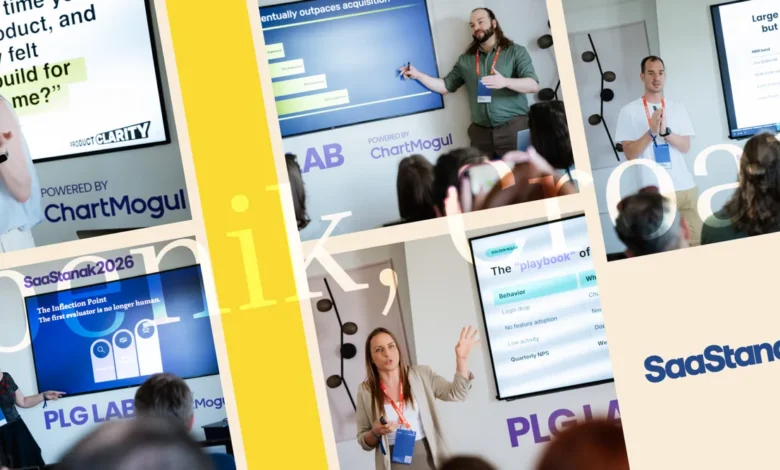
ChartMogul, a leading subscription analytics platform, recently concluded its inaugural Product-Led Growth (PLG) Lab series, a curated set of intimate, city-based meetups designed to address the intricate challenges faced by ambitious SaaS businesses. Spearheaded by Sara Archer, ChartMogul’s Chief Revenue Officer, the series aimed to move beyond theoretical discussions and delve into the practical, often "messy," operational realities of building and scaling a successful PLG company. The initiative, which began in San Francisco and culminated on the Croatian coast in partnership with SaaStanak, sought to foster a collaborative environment where founders and operators could share candid insights and actionable strategies.
The PLG Lab series emerged from ChartMogul’s consistent observation of its customer base: a vast majority of SaaS companies are built on innovative, opinionated products, often without the massive capital infusions, extensive enterprise sales teams, or six-figure initial contracts typical of traditional enterprise software models. Archer highlighted that conversations with founders and operators frequently circle back to the complexities inherent in PLG, from optimizing broken workflows to designing effective compensation plans for hybrid go-to-market (GTM) motions. The goal of the series was to provide a forum that directly confronted these operational hurdles, rather than shying away from them.
A Chronology of Insightful Gatherings
The series kicked off in San Francisco, strategically timed to coincide with Stripe Sessions. This initial meetup featured a candid discussion with Brenna Loury, CRO of Doist, who shared her experiences and challenges in moving a PLG business upmarket. The session’s engagement was so profound that attendees continued their discussions on the rooftop over refreshments, a clear indicator of the perceived value of the content and the desire for continued dialogue. This early success set a positive precedent for the subsequent events.
Following the San Francisco gathering, the PLG Lab series journeyed to the picturesque Croatian coast. In collaboration with SaaStanak, ChartMogul hosted two afternoons of intensive PLG content, set against the backdrop of the Mediterranean Sea. Despite occurring during a heatwave, each session drew standing-room-only crowds, with attendees remaining highly engaged, posing incisive questions, sharing their own company’s experiences, and forging new professional connections. The success of these coastal sessions underscored the universal relevance of the PLG challenges being addressed.
Recognizing that not all industry professionals could attend these in-person events, ChartMogul committed to making the operator-level knowledge shared widely accessible. In a move consistent with their operational ethos, the company has begun recapping each session, extracting practical takeaways, and making presentation decks available for ongoing reference. This commitment to knowledge dissemination ensures that the valuable insights generated during the PLG Lab series can benefit a broader audience within the SaaS ecosystem.
Key Themes and Actionable Insights from the PLG Lab Series
The PLG Lab series covered a spectrum of critical topics, offering deep dives into the mechanics of scaling, adapting to new technological paradigms, and refining customer engagement strategies. The presentations, now available in summary form, offer a granular look at the evolving best practices in product-led growth.
The Expansion Engine: Architecting a Scalable PLG Stack for Automated Upsells
One of the central themes explored was the critical role of expansion revenue in SaaS growth. This session, presented by Tom, emphasized that effective expansion is less about ad-hoc sales execution and more about robust infrastructure. When the right data flows seamlessly into automated workflows, opportunities for expansion become more timely, relevant, and scalable. This presentation highlighted that for many SaaS businesses, expansion is fundamentally an infrastructure problem, requiring careful design of data pipelines and workflow automation to identify and capitalize on upsell opportunities efficiently. The implication for SaaS companies is a need to invest in their data architecture to unlock latent revenue potential.
When Automations Guess Wrong: Behavior Shows What Happened. Users Tell You Why
Aleksandra’s presentation addressed a common pitfall in PLG: lifecycle automations that appear technically functional but feel generic and ineffective. The core insight presented is that while user behavior data reveals what happened, direct user feedback is crucial for understanding why. This session served as a vital reminder for teams to move beyond surface-level automation and to actively seek and integrate qualitative user insights to refine their engagement strategies. For SaaS businesses, this means prioritizing mechanisms for gathering and acting upon user feedback to ensure that automated outreach is truly resonant and impactful.
From Traditional SaaS to AI-Native in 5 Days: 3 Companies That Did It
The rapid integration of Artificial Intelligence into SaaS products was another prominent topic. This session reframed "AI-native" from a vague strategic aspiration into a concrete product development exercise. The approach advocated involved identifying the first valuable AI-driven outcome, removing extraneous user effort, preserving moments that build trust, and designing the user experience backward from that core value. The presentation offered practical prompts and frameworks for teams, such as identifying opportunities for AI to make default decisions or determining which small user actions remain essential for maintaining a sense of ownership. The implication here is that embracing AI is not just about adding features but fundamentally rethinking product architecture and user interaction to leverage AI’s capabilities for enhanced value delivery.
LTV Has a Blind Spot: Findings from 3,700 SaaS Businesses Over 6 Years
Leveraging fresh data from ChartMogul’s insights team, this session revealed critical findings regarding the limitations of Lifetime Value (LTV) as a sole metric for decision-making. While LTV remains a valuable indicator for assessing Customer Acquisition Cost (CAC), payback periods, and segment investments, the presentation underscored the importance of understanding where its predictive power breaks down. Crucially, it highlighted the necessity of cross-referencing LTV calculations with actual customer behavior. This data-driven perspective offers SaaS leaders a more nuanced understanding of customer value, encouraging a more holistic approach to strategic planning that accounts for real-world user engagement patterns.
People-Led Growth: Fixing Your Product’s First Impression and Path to Activation
This session offered a critical perspective on user onboarding, challenging the notion of it being a "set and forget" process. Paulina’s framework provides a practical, monthly reset for teams to re-evaluate their onboarding experience from the user’s viewpoint. By identifying moments where trust erodes or momentum dissipates, teams can systematically fix specific interaction points to accelerate a user’s path to their first significant win. This emphasis on continuous improvement in onboarding is vital for PLG companies, as a smooth and intuitive initial experience directly impacts activation rates and long-term customer retention.
Invisible PLG
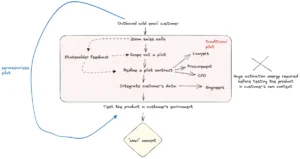
The concept of "Invisible PLG" addresses the emerging challenge for SaaS products to be discoverable and usable not just by humans, but by increasingly sophisticated AI systems. This session provided a diagnostic tool for teams to assess their product’s readiness for this new era. The core question posed is whether an AI agent could independently discover, evaluate, test, price, and integrate with the product. If the answer is no, the implication is that while the product may be visible to human users, it risks becoming invisible to the automated systems that are beginning to shape software evaluation and procurement. This highlights a significant strategic imperative for SaaS companies to build products that are not only user-friendly but also system-agnostic and easily interpretable by AI.
[Workshop] From $1M–$20M ARR: Growth Levers and New Signals for Success
This workshop transformed the ambitious goal of reaching $20 million in Annual Recurring Revenue (ARR) into a series of actionable operating questions. The key takeaway is that scaling requires a compounding set of improvements across Average Revenue Per Account (ARPA), retention, expansion, strategic focus, and execution. This requires not only tactical adjustments but also the establishment of strong leadership standards to ensure these improvements are sustainable. The workshop provided a framework for identifying and prioritizing the critical levers that drive growth through these scaling stages, offering a roadmap for sustained commercial success.
Where PLG Meets Sales: Building a Hybrid Growth Engine in Practice
Addressing the often-complex integration of Product-Led Growth with traditional sales motions, this session emphasized that a hybrid GTM is more than simply adding a self-serve funnel to a sales process. It involves solving systemic and process-related challenges that arise when different buyer segments require distinct engagement paths. Topics covered included account routing, ownership definition, incentive design, product boundary setting, and meeting customers where they are. This nuanced perspective is crucial for companies seeking to leverage the strengths of both PLG and sales to create a cohesive and effective growth engine.
The Launch to Adoption Gap: Why Fast Shipping Doesn’t Equal Product Growth
This presentation offered a fresh perspective on SaaS product marketing by identifying the critical "launch to adoption gap." The core problem highlighted is that many teams ship products faster than users can effectively absorb and utilize them. The framework presented reframes product marketing from simply announcing new features to actively designing for adoption. In a competitive landscape characterized by constant product releases, companies that excel at identifying what deserves attention, targeting the right users at the opportune moment, and driving actual behavioral change will gain a significant advantage. This approach is vital for ensuring that product development efforts translate into tangible business outcomes.
The Evolving Definition of PLG
Sara Archer’s closing thoughts synthesized the multifaceted discussions, underscoring a significant evolution in the understanding and practice of Product-Led Growth. PLG is no longer solely defined by the removal of sales from the customer journey. Instead, it has expanded to encompass a sophisticated interplay of data architecture, robust feedback loops, the psychology of onboarding, strategic hybrid GTM design, effective launch systems, and the development of agent-readable infrastructure. Crucially, it still hinges on the fundamental human element of articulating a product’s value proposition.
The PLG Lab series collectively painted a picture of a discipline that is becoming simultaneously more technical, more operational, and more deeply human. As SaaS businesses continue to innovate and adapt to a rapidly changing technological and market landscape, the insights shared at these events provide a valuable roadmap for navigating the complexities of modern growth. ChartMogul’s initiative to share these learnings broadly will undoubtedly contribute to the ongoing development and refinement of product-led growth strategies across the industry. The series has not only illuminated current challenges but has also provided concrete, actionable strategies for businesses aiming to thrive in the next era of software delivery and customer engagement.