The High Cost of the Virtual Wall: How Border Surveillance Technology Failed to Stop a Humanitarian Crisis in the American Southwest

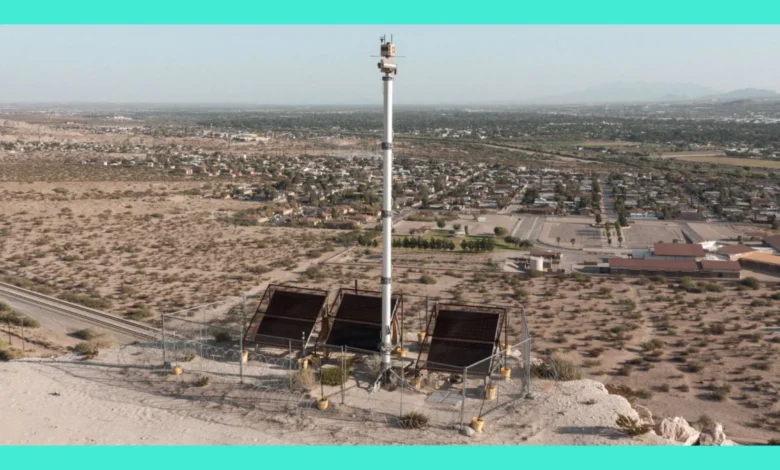
Over the past quarter-century, the United States government has poured billions of dollars into constructing a high-tech "virtual wall" along its southern boundary. Promoted by successive administrations as a modern, efficient alternative to physical barriers, this network of surveillance towers, ground sensors, and aerial drones was designed to secure the nation’s borders while safeguarding human life. The core promise was simple: advanced technology would grant law enforcement unprecedented situational awareness, enabling agents to swiftly detect, intercept, and rescue individuals crossing into remote and hazardous terrain.
However, a groundbreaking multi-year investigation by MIT Technology Review has shattered that official narrative. The investigation documented more than one thousand instances where migrants traversed areas under the direct surveillance of these high-tech towers—including newly installed systems powered by artificial intelligence designed to automatically spot human movement—yet were never intercepted, rescued, or reached in time. Instead, they ultimately perished in the unforgiving wilderness of the American Southwest. This stark discrepancy between technological capability and humanitarian outcome has exposed a profound systemic failure, revealing a humanitarian crisis unfolding in plain sight of state-of-the-art lenses.
The Evolution of the Virtual Wall: A 25-Year Chronology
The genesis of the virtual wall dates back to the mid-2000s, an era defined by heightened post-9/11 national security anxieties and a political push for "operational control" of the border. Understanding the current crisis requires examining the distinct phases of technological deployment that transformed the borderlands into a heavily monitored digital panopticon.
Phase One: The Secure Border Initiative and SBInet (2006–2010)
In 2006, under the administration of President George W. Bush, the Department of Homeland Security (DHS) launched the Secure Border Initiative (SBI). The centerpiece of this effort was SBInet, a massive contract awarded to aerospace giant Boeing. The objective was to blanket the Arizona border with radar, infrared cameras, and communication equipment linked to a centralized command center.
From its inception, the project faced severe engineering and logistical hurdles. Cost overruns plagued the initiative, and technical glitches rendered the cameras ineffective in harsh desert environments where extreme heat and dust interfered with sensors. By 2011, after spending more than $1 billion on just a fraction of the intended coverage area, the Obama administration officially canceled SBInet, labeling it an impractical and exorbitant failure.
Phase Two: Integrated Fixed Towers and the Expansion of Elbit Systems (2011–2018)
Undeterred by the collapse of SBInet, Customs and Border Protection (CBP) shifted its strategy toward more localized, proven technologies. The agency began deploying Integrated Fixed Towers (IFT), awarding major contracts to Elbit Systems of America, a subsidiary of an Israeli defense contractor.
These towers utilized advanced radar and long-range day-and-night cameras mounted on tall structures to detect movement across vast expanses of open terrain. Unlike the centralized network of SBInet, IFT systems were designed to operate semi-independently, feeding real-time video feeds directly to local Border Patrol stations. While these towers successfully increased the volume of detected crossings, critics and internal watchdogs repeatedly questioned whether the technology genuinely improved operational efficiency or merely logged crossings without corresponding interdictions.
Phase Three: The Rise of AI-Powered Autonomous Surveillance (2019–Present)
In recent years, the virtual wall entered a new paradigm defined by automation and artificial intelligence. Seeking to reduce the cognitive load on human operators who must monitor hundreds of camera feeds simultaneously, CBP partnered with various defense tech firms and Silicon Valley contractors to deploy AI-driven surveillance towers.
These modern systems employ computer vision algorithms designed to autonomously distinguish human movement from wildlife, swaying vegetation, or blowing dust. When the AI detects a human signature, it automatically alerts border agents, framing the target on a screen and tracking its trajectory. Proponents argued that AI towers would eliminate human error and ensure that no border crosser went unnoticed. Yet, as the MIT Technology Review investigation revealed, the integration of artificial intelligence has done little to bridge the fatal gap between digital detection and physical rescue.
Scrutinizing the Data: Detection Without Intervention
The core finding of the investigation centers on a disturbing paradox: the virtual wall works precisely as intended in terms of data collection, but fails catastrophically in its humanitarian mission. Thousands of migrants navigating the searing deserts of Arizona, New Mexico, and Texas have been captured on high-definition camera feeds, analyzed by AI processors, and registered by seismic sensors—only to be left to die of dehydration, exposure, or exhaustion.
According to demographic and geographic spatial analysis conducted by researchers and journalists, the distribution of migrant fatalities heavily overlaps with the operational footprints of IFT and AI-powered towers. In many documented cases, video logs and internal agency data show that cameras recorded individuals or groups in severe distress—exhibiting signs of disorientation, immobility, or severe dehydration—hours before their remains were eventually recovered.
Several systemic factors explain this lethal disconnect:
- Geographic Overload: While surveillance towers can "see" across vast distances, the number of available Border Patrol agents in remote sectors remains limited. A camera may detect a group of crossers miles away from the nearest passable road, requiring hours for agents to navigate rough terrain to reach the location.
- Prioritization Protocols: Border Patrol dispatch systems often prioritize interdiction and apprehension over search-and-rescue operations, particularly when agents are managing high-volume crossings in urban or high-traffic zones elsewhere.
- Technological Fatigue and False Positives: Despite AI advancements, the sheer volume of alerts generated by wildlife, livestock, and environmental factors frequently overwhelms operators, leading to desensitization or missed critical signals.
- The Deterrence Doctrine: Critics argue that the fundamental architecture of the border enforcement strategy relies on deterrence through environmental hostility—allowing the desert to act as an insurmountable barrier. Under this implicit framework, surveillance technology is utilized primarily to monitor rather than rescue.
Official Responses and Institutional Accountability
The release of these findings has prompted intense scrutiny from lawmakers, human rights advocates, and the public, while drawing defensive postures from federal agencies.
Customs and Border Protection has long defended its technological investments, maintaining that surveillance assets are vital tools for officer safety and national security. In public statements, agency representatives emphasize that technology allows CBP to allocate personnel more efficiently and respond to thousands of search-and-rescue calls annually. Officials frequently point to the "Missing Migrant Program," noting that agents rescue thousands of distressed individuals every year in coordination with local rescue groups.
However, federal officials have historically resisted independent audits regarding the precise correlation between tower locations and preventable deaths. DHS spokespersons maintain that every available resource is deployed to save lives, attributing migrant fatalities entirely to transnational criminal organizations (cartels) that mislead migrants about the journey’s dangers and abandon them in remote terrain.
Independent human rights organizations, such as the Tucson-based Humane Borders and the Kino Border Initiative, offer a sharply contrasting perspective. These groups argue that while cartels bear moral and criminal responsibility for smuggling vulnerable people into lethal environments, the U.S. government’s multi-billion-dollar enforcement apparatus shares systemic culpability. By funneling migrants away from urban ports of entry through heavy enforcement and surveillance, policies deliberately push people into deadlier geographic zones while failing to provide adequate humanitarian infrastructure to match the surveillance capabilities.
Broader Implications: The Ethics of Border Technology
The implications of the MIT Technology Review investigation extend far beyond the geopolitical debates surrounding U.S. immigration policy. They strike at the heart of an escalating global trend: the technocratization of borders and the increasing reliance on algorithmic governance in matters of life and death.
As governments worldwide turn to AI, biometric tracking, and automated surveillance to manage migration—from the Mediterranean Sea to the European Union’s eastern frontiers and the U.S.–Mexico border—fundamental ethical questions remain unaddressed. Chief among them is the accountability gap inherent in automated systems. When an algorithm detects a human being in mortal peril but the bureaucratic or physical infrastructure fails to respond, who is held accountable for the resulting loss of life?
Furthermore, the normalization of high-tech border surveillance transforms natural wilderness into militarized zones, altering ecosystems and eroding civil liberties in border communities. The pervasive presence of towers, tethered aerostats, and mobile surveillance units creates a permanent state of exception along the borderlands, where constitutional protections are frequently compromised in the name of national security.
Conclusion
The virtual wall was sold to the American public as a humane, modern solution to a complex geopolitical challenge—a technological shield that would simultaneously secure the border and prevent human tragedy. The accumulated evidence, underscored by rigorous investigative journalism, demonstrates the opposite reality. Billions of dollars have successfully built an intricate web of digital eyes across the desert, yet these systems have proven fundamentally incapable—or structurally unequipped—to prevent the ongoing humanitarian catastrophe taking place beneath their lenses. As researchers, journalists, and advocates continue to document the human toll of these policies, the debate over border technology shifts from a question of engineering efficiency to a profound reckoning with state accountability and human life.