In the autumn of 2010, a pivotal conversation took place at a restaurant in Southern California that would fundamentally alter the trajectory of modern startup marketing. Seated at a table at the Memphis bar, three figures—Sean Ellis, Patrick Vlaskovits, and Hiten Shah—discussed a growing disconnect between traditional marketing practices and the specific, high-velocity needs of early-stage technology companies. At the time, Ellis was serving as an advisor for rapidly scaling firms such as Dropbox and Eventbrite, while Shah was steering his own venture, KISSmetrics. Their consensus was clear: the prevailing corporate marketing playbook, which relied heavily on large-budget, top-down branding exercises, was not merely ineffective for startups—it was often detrimental to their survival.
The Failure of Traditional Marketing Models in Early-Stage Startups
For years, early-stage founders operated under the assumption that hiring "seasoned" marketing executives from Fortune 500 companies would provide the necessary expertise to scale. However, the result was frequently a drain on limited capital without a corresponding improvement in key performance indicators. These executives often prioritized brand awareness campaigns, expensive television or billboard advertising, and the assembly of large, hierarchical teams.
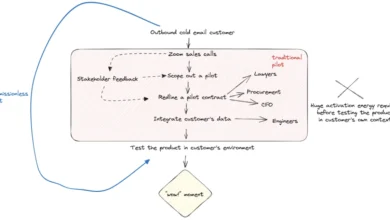
For a startup with a limited runway, this approach was effectively a death sentence. While traditional marketing relies on broad reach and long-term brand equity, startups require rapid, measurable, and iterative feedback loops. The disconnect stemmed from a difference in priorities: established firms seek to protect market share, whereas startups must prioritize user acquisition, activation, and retention with extreme capital efficiency.
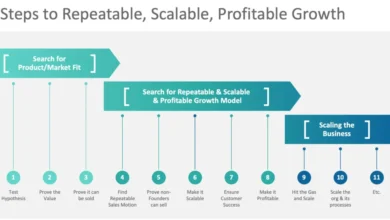
Chronology of a Paradigm Shift
The term "growth hacker" was coined as a direct response to this systemic failure. It was designed to define a new class of professional—one who prioritized data, product-led growth, and continuous testing over the tactical "carpet bombing" of channels favored by traditional marketing agencies.
- 2008-2009: Hiten Shah, while founding KISSmetrics, observed that traditional marketing channels failed to deliver the predictable, scalable growth required for software-as-a-service (SaaS) businesses.
- 2010: The seminal discussion at the Memphis bar formalized the philosophy of growth hacking. The trio identified that the most successful companies were not those spending the most on advertising, but those integrating the product experience directly with acquisition strategies.
- 2011-2015: The concept moved from the fringes of Silicon Valley to the mainstream. Job titles such as "VP of Growth" began appearing in major tech organizations, signaling a shift in organizational hierarchy where growth was no longer a department but a cross-functional discipline.
- 2017: Sean Ellis and Morgan Brown published "Hacking Growth," formalizing the frameworks and methodologies that had been developed in private labs and startup boardrooms over the preceding seven years.
Data-Driven Realities: The Risk of Stalled Growth
The necessity of adopting a growth-oriented mindset is supported by broader economic trends. A study conducted by the Harvard Business Review regarding "growth stalls" found that 87 percent of surveyed companies encountered at least one period where growth slowed significantly. The data indicated that these companies lost an average of 74 percent of their market capitalization in the decade surrounding the stall.
The primary drivers of these stalls were identified as a failure to update existing product-market fit and the "premature core abandonment" of successful business models. Growth hacking addresses these issues by emphasizing constant experimentation—testing features, messaging, and acquisition channels to ensure the product remains relevant to the user base.
From Tactical Hacks to Systematic Processes
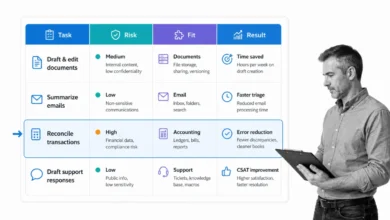
While the term "growth hacker" initially implied a focus on clever, low-cost tactics—such as viral referral loops or landing page optimization—the discipline has matured into a rigorous system. Modern growth teams are no longer comprised solely of marketers. Today, they are multi-disciplinary units consisting of data scientists, software engineers, product managers, and UX designers.

These teams function as an internal engine, dedicated to the "true north" of the business. For example, at LinkedIn, the growth team evolved into a massive, multi-faceted operation, with over 120 members divided into specialized units focusing on network growth, search engine optimization (SEO), user onboarding, and international expansion. Similarly, Uber established dedicated sub-teams to balance the two-sided marketplace of drivers and riders.
This systemic approach differs from traditional marketing in three specific ways:
- Cross-Functional Integration: Growth is embedded within the product development cycle rather than being a separate, external communication layer.
- Iterative Velocity: Success is defined by the number of high-quality experiments conducted per week, rather than the execution of a single annual campaign.
- Retention-First Focus: While traditional marketing is often front-loaded toward acquisition, growth hacking places equal, if not greater, weight on activation and retention, recognizing that sustainable growth is impossible if new users churn immediately.
Implications for the Modern Enterprise
The shift from "growth as a tactic" to "growth as a discipline" has significant implications for how companies are structured. The traditional organizational silo—where marketing, engineering, and sales operate in isolation—is increasingly viewed as an obstacle to agility.
By integrating growth teams into the core business, companies are better equipped to respond to the "shrinking half-life" of business models. As noted in the analysis provided by Ellis and Brown, the goal is to build an "unstoppable growth machine." This machine is not a secret set of tricks, but a culture of experimentation where customer behavior dictates product development.
For founders, this means the role of leadership is no longer to direct a marketing budget, but to foster an environment where failure is treated as data, and data is treated as the blueprint for future features. For established corporations, the implication is that they must adopt these small-team, rapid-iteration structures to compete with more agile, tech-native entrants.
Conclusion: The Future of Scalable Growth
Seven years after the initial coinage of the term, the field of growth has transitioned from an experimental methodology into a core business function. It is no longer an optional framework reserved for early-stage startups; it is a necessity for any firm seeking to maintain market position in a volatile digital economy.
The evolution of growth hacking suggests that the future of business belongs to those who can effectively synthesize data, engineering, and human psychology. As organizations continue to professionalize their growth efforts, the emphasis will remain on the fundamental principle that gave birth to the term: the ability to listen to the customer, analyze the data, and adapt the product in real-time. By moving away from stagnant, high-cost marketing strategies and toward a dynamic, system-based approach, companies can move beyond the threat of stagnation and build sustainable, repeatable pathways to success.